The Jeep Wrangler stands out as an icon of off-road adventure and rugged durability. One of the secrets behind its reputation is the unique suspension system designed for both challenging terrains and daily driving comfort.
Whether you’re a Jeep owner, a mechanic, or a curious enthusiast, understanding the Jeep Wrangler suspension diagram is a key step to maintaining, upgrading, or simply appreciating this legendary vehicle.
This article breaks down the main suspension components, shows how they work together, and highlights why the Wrangler’s suspension is different from most SUVs on the market.
Why The Jeep Wrangler Suspension Matters
The suspension system is not just about comfort. It directly affects how your Jeep handles bumps, rocks, mud, and even highways. On a Wrangler, the suspension must balance two things: flexibility for off-roading and stability for on-road use. This balance is why Wranglers use solid axles and coil springs, instead of independent suspension systems found in many other modern SUVs.
Many beginners focus only on ground clearance or tire size. However, the suspension’s geometry, strength, and travel distance are just as critical. A well-maintained suspension means better control, fewer breakdowns, and a safer ride.
Key Components Of The Jeep Wrangler Suspension
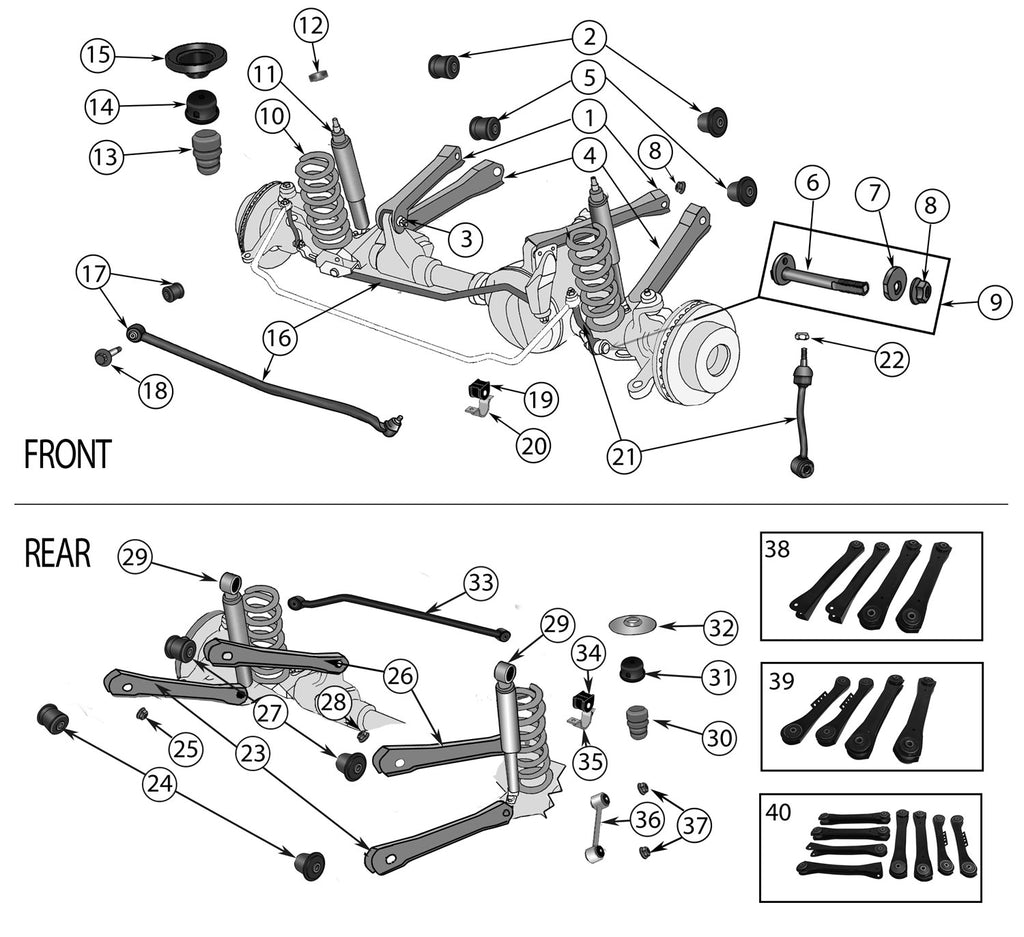
To really understand the Jeep Wrangler suspension diagram, you need to know each main part and its job. The following table provides a quick overview of the primary components you’ll find on a typical Wrangler (such as the popular JK or JL models):
| Component | Main Function | Location |
|---|---|---|
| Solid Axle | Houses wheels and supports vehicle weight | Front and rear |
| Coil Spring | Absorbs bumps, supports ride height | Above both axles |
| Shock Absorber | Controls up/down motion, reduces bounce | Near each wheel |
| Control Arm | Connects axle to frame, controls movement | Front and rear, upper/lower |
| Track Bar | Centers axle under vehicle | Front and rear |
| Sway Bar | Reduces body roll | Front and rear |
| Bump Stop | Limits axle travel, protects components | Above axles |
Each part has a specific role. For example, the control arms keep the axle in place, while the track bar prevents side-to-side movement.
Solid Axle Vs Independent Suspension
One of the most unique things about the Wrangler is its use of solid axles front and rear. Most modern SUVs use independent suspension for a smoother ride on paved roads. However, solid axles have several advantages off-road:
- Better articulation: Both wheels move together, keeping tires on the ground over obstacles.
- Stronger design: Handles heavy impacts without bending as easily.
- Simpler maintenance: Fewer moving parts means fewer things to break.
Here’s a comparison to help you see the key differences:
| Feature | Solid Axle (Wrangler) | Independent Suspension |
|---|---|---|
| Off-road ability | Excellent | Good |
| Ride comfort | Fair | Excellent |
| Strength | High | Medium |
| Maintenance | Simple | Complex |
| Cost | Lower | Higher |
Many people new to Jeeps are surprised by the solid axle’s benefits. For serious off-roading, it’s a major reason why Wranglers are so popular.
How The Suspension Diagram Comes Together
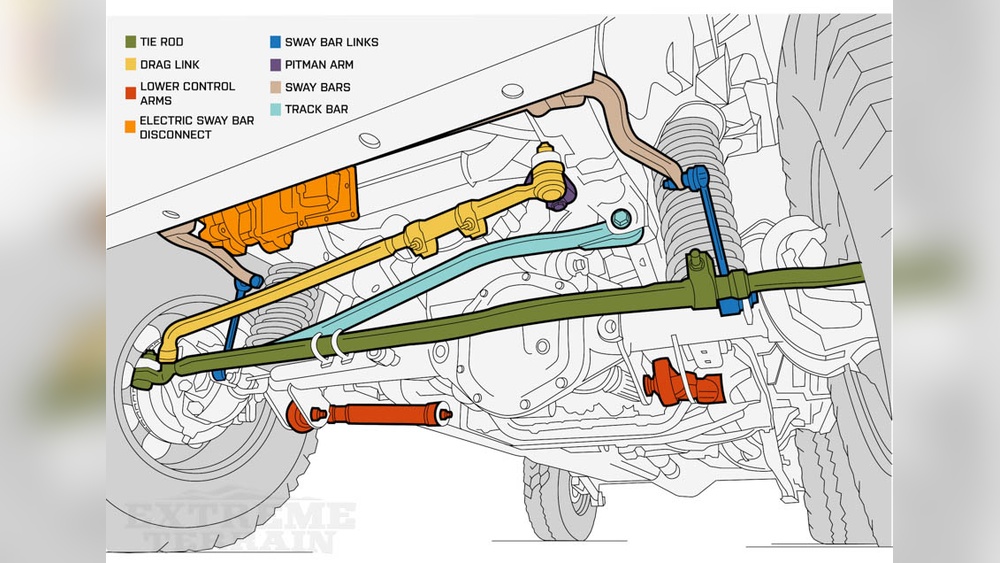
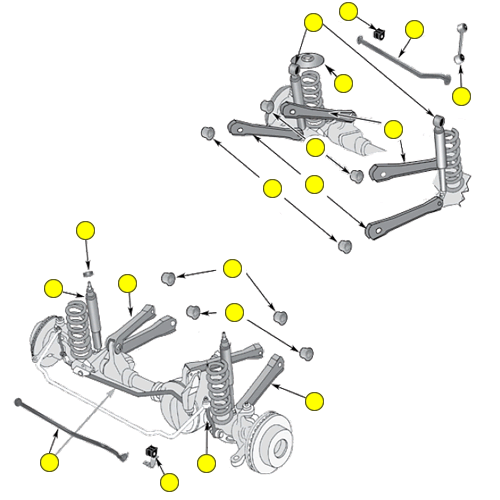
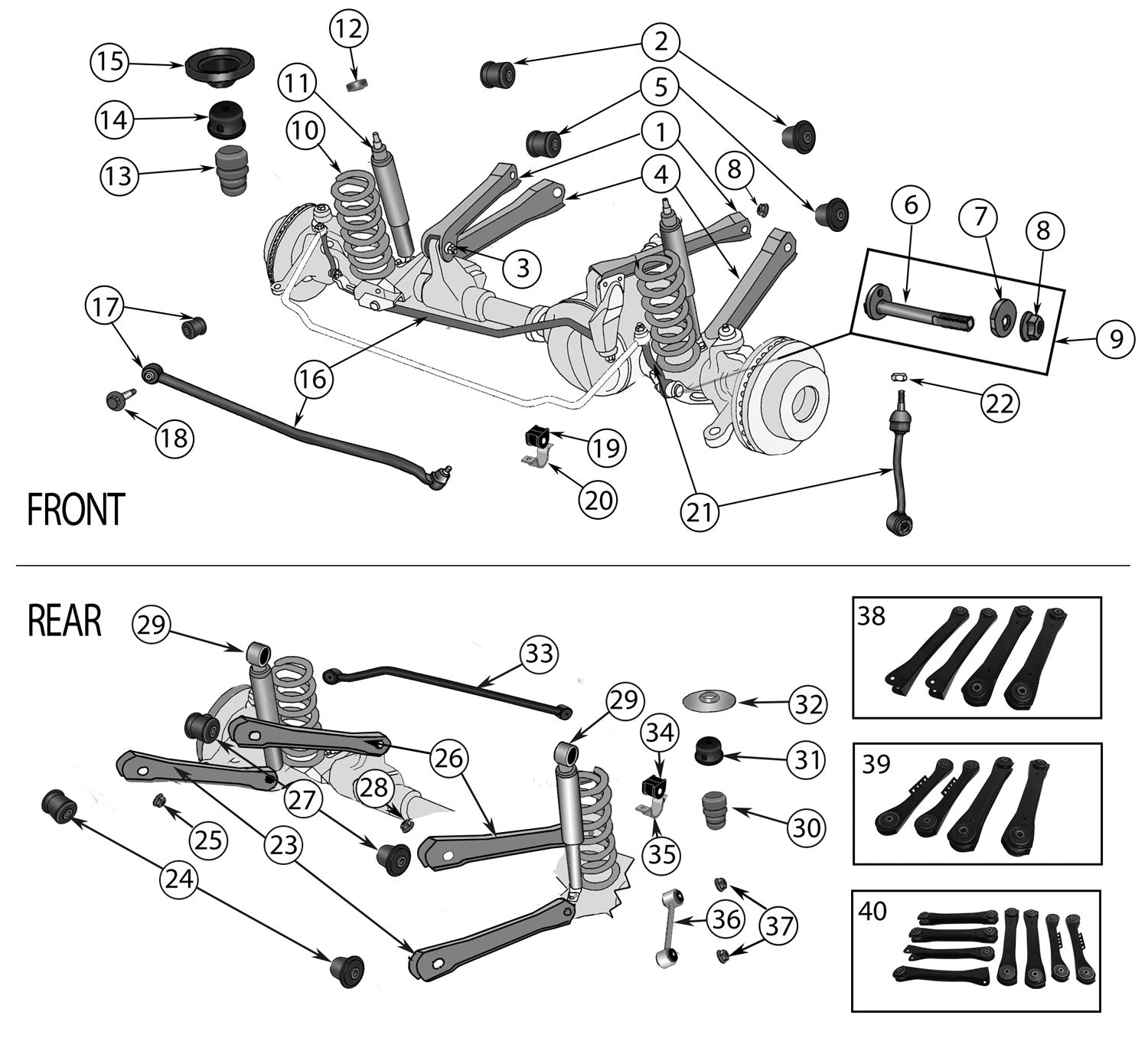
A suspension diagram shows how all the parts connect. On a Wrangler, the front and rear setups are similar, but not identical.
- Front Suspension: Solid axle is held in place by four control arms (two upper, two lower) and a track bar. Coil springs and shock absorbers sit between the axle and the frame. The sway bar runs across, linking the two sides.
- Rear Suspension: Also uses coil springs and shocks. The control arm and track bar arrangement is almost the same, but the geometry is slightly different for handling weight and traction.
The diagram might look complicated at first, but each part plays a simple role. Think of it as a team: control arms guide motion, springs support weight, shocks smooth the ride, and the track bar keeps everything centered.
Common Wrangler Suspension Upgrades
Many Jeep owners want more than the factory setup. Popular upgrades include:
- Lift Kits: Raises the body for bigger tires and better ground clearance. Usually involves longer coil springs and shocks.
- Heavy-Duty Control Arms: Stronger arms for better handling and durability.
- Adjustable Track Bars: Lets you fine-tune axle position after a lift.
- Quick Disconnect Sway Bars: Lets you remove sway bars quickly for more wheel movement off-road.
- Upgraded Shocks: Improves comfort and control, especially with bigger tires.
When upgrading, keep in mind:
- Changing one part often requires adjusting others. For example, lifting the Jeep means you may need longer brake lines, new track bars, and alignment changes.
- Not all upgrades are legal for street use in every state. Check your local laws.
Suspension Maintenance Tips
To keep your Wrangler’s suspension working well, regular maintenance is crucial:
- Inspect bushings every oil change. Worn bushings can cause clunks and loose steering.
- Check for leaks around shocks. Oil leaks mean it’s time for new shocks.
- Tighten bolts after any off-road trip. Rough terrain can loosen hardware.
- Look for rust on control arms and brackets, especially in winter climates.
- Grease joints if your suspension has grease fittings (common on aftermarket parts).
A common mistake is ignoring small noises or loose feeling in the steering. Often, these are early signs of suspension wear. Fixing them early prevents bigger problems.
Wrangler Suspension Diagram Example
Below is a simplified layout of the main suspension components as seen from the side. This gives you a mental picture of how parts fit together (for detailed diagrams, always refer to your Wrangler’s service manual):
| Frame | Coil Spring | Shock Absorber | Control Arm | Axle | Track Bar | Sway Bar |
|---|---|---|---|---|---|---|
| Top structure | Between frame and axle | Near coil spring | Connects axle to frame | Holds wheels | Diagonal bar | Crosswise bar |
This layout repeats for both the front and rear, with some small differences in shape and size.
Troubleshooting Common Suspension Problems
Jeep Wranglers are tough, but suspension issues can happen. Here are some common problems and how to spot them:
- Death wobble: Violent front-end shake, usually after hitting a bump. Often caused by worn track bar bushings or loose bolts.
- Sagging springs: If one side sits lower, the coil spring may be weak or broken.
- Excessive bouncing: Worn shocks can’t control the motion, leading to a bouncy ride.
- Uneven tire wear: Can mean alignment problems from bent control arms or worn bushings.
- Clunking or popping sounds: Usually from loose or damaged control arms or sway bar links.
Always fix suspension issues before they get worse. If you’re unsure, have a qualified mechanic check your Jeep.
Real-world Example: Off-roading Impact
Imagine driving your Wrangler over rocks or deep ruts. The solid axle allows one wheel to climb while the other drops, keeping both tires on the ground for better grip. The coil springs compress and expand, while the shocks control the speed of motion. If you had independent suspension, one wheel could lose contact, reducing traction.
This real-world advantage explains why Jeep sticks with solid axles for the Wrangler, even as other SUVs move to independent setups.
When Should You Replace Suspension Parts?
Suspension parts wear out over time, especially if you drive off-road. Here are some guidelines for replacement:
- Shocks/struts: Every 50,000–70,000 miles, or sooner if you notice leaks or a bouncy ride.
- Control arms: If bushings are worn, or if the arm is bent.
- Track bar: If you feel wandering steering or see side-to-side axle movement.
- Springs: If your Jeep sags or rides unevenly.
Don’t wait for total failure. Replacing parts early keeps your Wrangler safe and fun to drive.
Understanding Suspension Geometry
A less obvious but important point is suspension geometry—the angles and positions of all the parts. This affects how your Jeep steers, handles, and how well the tires stay in contact with the ground.
- Caster angle: Controls return-to-center steering feel.
- Pinion angle: Affects driveshaft vibration and joint life.
- Track width: The distance between left and right wheels, important for stability.
If you lift your Jeep, you may need adjustable control arms or track bars to restore correct geometry. Many beginners forget this, leading to poor handling or vibrations after upgrades.
Resources For More Information
If you want the most accurate diagrams for your exact model, always check your official Jeep service manual or trusted online resources. For a deeper look at how suspension systems work, see Wikipedia.
Frequently Asked Questions
<!– wp:rank-math/faq-block {"questions":[{"id":"faq-question-29de5097b56c","title":"What Is The Main Difference Between Jeep Wrangler Suspension And Other Suvs?","content":"The Wrangler uses solid axles with coil springs, while most SUVs use independent suspension. Solid axles are stronger and better for off-road use, but may feel less smooth on paved roads.
“,”visible”:true},{“id”:”faq-question-b3cca8e0d7b0″,”title”:”How Do I Know If My Wrangler Needs A Suspension Upgrade?”,”content”:”If you want larger tires, more ground clearance, or better off-road performance, consider upgrades. Also, if you often carry heavy loads or tow, upgraded springs and shocks can improve safety and comfort.
“,”visible”:true},{“id”:”faq-question-88ba41a4d664″,”title”:”Can I Install A Lift Kit Myself?”,”content”:”Many Wrangler owners install lift kits at home with basic tools. However, some kits require advanced skills and special tools. Always follow instructions carefully, and get a professional alignment after installation.
“,”visible”:true},{“id”:”faq-question-e01df730f03d”,”title”:”What Is “death Wobble,” And How Can I Fix It?”,”content”:”Death wobble is a violent shaking of the front wheels, usually at highway speed after hitting a bump. It’s often caused by worn track bar bushings, loose bolts, or unbalanced tires. Fixing it usually means replacing worn parts and tightening everything to factory specs.
“,”visible”:true},{“id”:”faq-question-f6267e202cf7″,”title”:”Do I Need To Change Other Parts When Upgrading Suspension?”,”content”:”Yes, lifting your Jeep or adding heavy-duty parts may require longer brake lines, adjustable track bars, or new control arms to keep the suspension geometry correct. Always check your kit and instructions before starting.
The Jeep Wrangler suspension is a key reason for its off-road success and unique driving feel. By understanding the main components, how they work together, and how to maintain or upgrade them, you’ll get the most from your Wrangler—on the trail or on the street. Whether you’re fixing a problem or planning your next adventure, knowing your suspension inside and out is one of the smartest things any Jeep owner can do.
“,”visible”:true}]} –>What Is The Main Difference Between Jeep Wrangler Suspension And Other Suvs?
The Wrangler uses solid axles with coil springs, while most SUVs use independent suspension. Solid axles are stronger and better for off-road use, but may feel less smooth on paved roads.
How Do I Know If My Wrangler Needs A Suspension Upgrade?
If you want larger tires, more ground clearance, or better off-road performance, consider upgrades. Also, if you often carry heavy loads or tow, upgraded springs and shocks can improve safety and comfort.
Can I Install A Lift Kit Myself?
Many Wrangler owners install lift kits at home with basic tools. However, some kits require advanced skills and special tools. Always follow instructions carefully, and get a professional alignment after installation.
What Is “death Wobble,” And How Can I Fix It?
Death wobble is a violent shaking of the front wheels, usually at highway speed after hitting a bump. It’s often caused by worn track bar bushings, loose bolts, or unbalanced tires. Fixing it usually means replacing worn parts and tightening everything to factory specs.
Do I Need To Change Other Parts When Upgrading Suspension?
Yes, lifting your Jeep or adding heavy-duty parts may require longer brake lines, adjustable track bars, or new control arms to keep the suspension geometry correct. Always check your kit and instructions before starting.
The Jeep Wrangler suspension is a key reason for its off-road success and unique driving feel. By understanding the main components, how they work together, and how to maintain or upgrade them, you’ll get the most from your Wrangler—on the trail or on the street. Whether you’re fixing a problem or planning your next adventure, knowing your suspension inside and out is one of the smartest things any Jeep owner can do.