Removing the serpentine belt from a Jeep Cherokee sounds intimidating, but with the right steps, it’s a straightforward job. Many owners try this themselves to save money on labor and avoid downtime at the shop.
If you’ve noticed squeaking, cracks, or slipping from your belt, it’s time to replace it. This guide will show you the safest way to remove the serpentine belt from most Jeep Cherokee models, with tips for both beginners and DIY enthusiasts.
Understanding The Serpentine Belt System
The serpentine belt powers key accessories in your engine, like the alternator, power steering pump, and air conditioning compressor. If this belt fails, your Jeep will quickly lose vital functions and could overheat. It’s important to know the layout before removal.
Here’s a quick comparison of Cherokee model years and their belt systems:
| Model Year | Engine Type | Belt Routing Diagram Location |
|---|---|---|
| 1997–2001 | 4.0L Inline-6 | On radiator support |
| 2002–2007 | 3.7L V6 | On fan shroud |
| 2014–2026 | 2.4L I4 / 3.2L V6 | Owner’s manual & under hood |
Pro tip: Always locate the belt diagram before you start. If it’s missing, take a clear photo of your belt system for reference during reassembly.
Tools And Safety Precautions
You don’t need advanced tools for this job, but using the right ones makes a big difference. Here’s what you’ll need:
- Socket wrench set (with 13mm, 15mm, or 16mm sockets depending on your engine)
- Serpentine belt tool or a long-handled ratchet (for better leverage)
- Flashlight
- Gloves
Safety first: Disconnect the negative battery terminal before starting. This prevents accidental engine startup and protects your hands from moving parts.
Step-by-step Serpentine Belt Removal
1. Park And Prepare
- Park your Jeep Cherokee on a flat surface.
- Engage the parking brake.
- Let the engine cool down for at least 20 minutes.
2. Locate The Tensioner
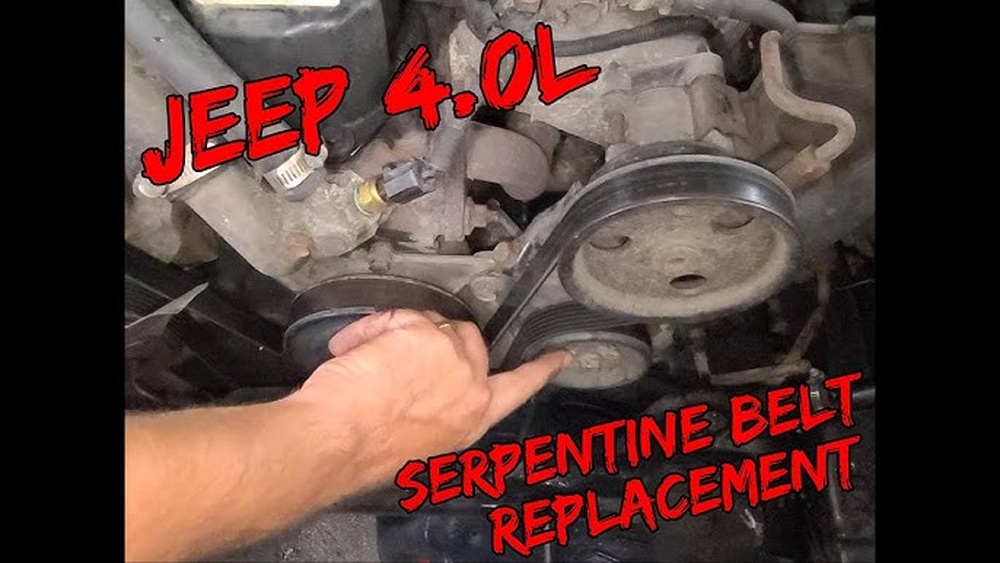
The belt tensioner keeps the serpentine belt tight. It’s usually a round pulley with a center bolt, sometimes marked by a diagram.
- On most 4.0L and 3.7L engines, it’s near the top front of the engine.
- Shine your flashlight to spot it if visibility is poor.
3. Release The Tension
- Fit your socket wrench or serpentine belt tool onto the tensioner’s bolt.
- Turn the tensioner slowly (usually counterclockwise, but check your manual or diagram).
- The tensioner will move, loosening the belt. Hold steady pressure.
4. Remove The Belt
- With the tension released, slide the belt off one pulley (typically the alternator or idler pulley).
- Slowly release the tensioner back to its rest position.
- Pull the belt free from all pulleys, noting the path.
5. Inspect Components
After removing the belt, check all pulleys and the tensioner for wear, roughness, or wobble. Spinning them by hand should feel smooth and silent.
Common Mistakes To Avoid
Many first-timers make errors that can lead to frustration or engine damage. Watch out for these:
- Forgetting the belt path: Not taking a photo or drawing the routing can cause confusion during reinstallation.
- Wrong tensioner direction: Forcing the tensioner in the wrong direction can break it.
- Ignoring pulley noise: If a pulley feels rough or noisy, replace it before installing the new belt.
- Skipping battery disconnect: This can result in accidental short circuits or injury.
Jeep Cherokee Belt Types And Replacement Tips
Jeep Cherokees have different belt designs based on year and engine. Here’s a look at common belt types and what matters when choosing a replacement:
| Engine | Number of Ribs | Typical Length (inches) |
|---|---|---|
| 4.0L Inline-6 | 6 | 93.5–98 |
| 3.7L V6 | 6 | 85–90 |
| 2.4L I4 | 5 | 78–82 |
Key insight: Always match the rib count and length exactly. A belt that’s even half an inch too short or too long can cause squealing or slip off.
When buying a new belt, stick with known brands like Gates, Dayco, or Mopar for the best fit and durability.
Signs It’s Time To Replace Your Serpentine Belt
A worn belt can cause more than just noise—it can leave you stranded. Here’s how to spot trouble:
- Cracks or fraying on the belt surface
- Glazing (shiny, hard spots) from overheating
- Squealing or chirping noises, especially on cold starts
- Accessory malfunctions like weak power steering or a dead battery
If you see any of these, don’t wait. A failed belt can cause engine overheating in minutes.

Practical Tips For A Smooth Belt Removal
- Use a belt routing diagram to avoid mistakes.
- Loosen the tensioner slowly to prevent injuries.
- If the belt is stuck, gently wiggle it back and forth—never pry with sharp tools.
- Clean all pulleys with a dry rag before installing a new belt.
Non-obvious tip: On some Cherokees, the fan shroud or air intake tubing may block access to the belt. Remove these parts if needed for better visibility and tool clearance.
When To Seek Professional Help
Not every DIY job goes smoothly. If the tensioner bolt is seized, or if pulleys wobble, don’t force them. Stripped bolts or misaligned pulleys can cause expensive repairs later. If you’re unsure, consult a certified mechanic or visit an official Jeep dealership.
For detailed diagrams and specifications, the Jeep official maintenance page is a reliable resource.

Frequently Asked Questions
<!– wp:rank-math/faq-block {"questions":[{"id":"faq-question-38b90e607475","title":"How Often Should I Replace My Jeep Cherokee Serpentine Belt?","content":"Most manufacturers recommend replacing the serpentine belt every 60,000 to 100,000 miles, but inspect it at each oil change for cracks or wear.
“,”visible”:true},{“id”:”faq-question-8a5b0fea9613″,”title”:”What Are The Signs Of A Failing Serpentine Belt Tensioner?”,”content”:”Common signs include belt squealing, visible slack, or the belt slipping off. If the tensioner pulley feels loose or makes noise, it should be replaced.
“,”visible”:true},{“id”:”faq-question-0fcb161cb81c”,”title”:”Can I Drive With A Broken Serpentine Belt?”,”content”:”No. A broken belt means your alternator, water pump, and power steering will stop working. This can quickly cause engine overheating and loss of control.
“,”visible”:true},{“id”:”faq-question-31995109b2ba”,”title”:”Is It Necessary To Replace The Tensioner With The Belt?”,”content”:”Not always, but if the tensioner is noisy, hard to move, or more than 100,000 miles old, replace it along with the belt to avoid future issues.
“,”visible”:true},{“id”:”faq-question-7d852e2d839c”,”title”:”Do I Need Special Tools To Remove The Serpentine Belt?”,”content”:”Most Cherokees only require a socket wrench or serpentine belt tool. Some newer models have tight spaces, so a longer ratchet or a low-profile tool can help.
Removing the serpentine belt from your Jeep Cherokee is a manageable job with the right preparation. Take your time, follow each step, and double-check your belt routing before reassembly. This small maintenance task can make a big difference in your Jeep’s reliability and performance.
“,”visible”:true}]} –>How Often Should I Replace My Jeep Cherokee Serpentine Belt?
Most manufacturers recommend replacing the serpentine belt every 60,000 to 100,000 miles, but inspect it at each oil change for cracks or wear.
What Are The Signs Of A Failing Serpentine Belt Tensioner?
Common signs include belt squealing, visible slack, or the belt slipping off. If the tensioner pulley feels loose or makes noise, it should be replaced.
Can I Drive With A Broken Serpentine Belt?
No. A broken belt means your alternator, water pump, and power steering will stop working. This can quickly cause engine overheating and loss of control.
Is It Necessary To Replace The Tensioner With The Belt?
Not always, but if the tensioner is noisy, hard to move, or more than 100,000 miles old, replace it along with the belt to avoid future issues.
Do I Need Special Tools To Remove The Serpentine Belt?
Most Cherokees only require a socket wrench or serpentine belt tool. Some newer models have tight spaces, so a longer ratchet or a low-profile tool can help.
Removing the serpentine belt from your Jeep Cherokee is a manageable job with the right preparation. Take your time, follow each step, and double-check your belt routing before reassembly. This small maintenance task can make a big difference in your Jeep’s reliability and performance.