Is Jeep Cherokee Body On Frame?
The Jeep Cherokee is a popular SUV known for its rugged design and strong performance. Many buyers want to know if this vehicle is built with a body-on-frame structure.
This question matters because the frame type affects durability, off-road ability, and comfort. The answer is not as simple as it seems, since the Cherokee has changed over the years.
Let’s explore what body-on-frame means, how it applies to the Jeep Cherokee, and what this means for drivers.
Understanding Body-on-frame Vs Unibody
Vehicle construction usually follows two main methods: body-on-frame and unibody.
- Body-on-frame: The vehicle’s body sits on a separate steel frame. This style is common in trucks and older SUVs. It offers more strength for towing and off-road use.
- Unibody: The body and frame are one piece. Most modern cars and SUVs use this design. It is lighter and gives better ride comfort and fuel economy.
Here is a simple comparison:
| Construction Type | Strength | Comfort | Weight | Main Use |
|---|---|---|---|---|
| Body-on-frame | High | Medium | Heavy | Off-road, towing |
| Unibody | Medium | High | Light | City driving, comfort |
Jeep Cherokee: History Of Its Frame
The Jeep Cherokee started in 1974. Over the years, it has changed its design and purpose. Let’s look at the frame type for different generations:
| Generation | Year Range | Frame Type |
|---|---|---|
| First (SJ) | 1974–1983 | Body-on-frame |
| Second (XJ) | 1984–2001 | Unibody |
| Third (KJ) | 2002–2007 | Unibody |
| Fourth (KK) | 2008–2012 | Unibody |
| Fifth (KL) | 2014–present | Unibody |
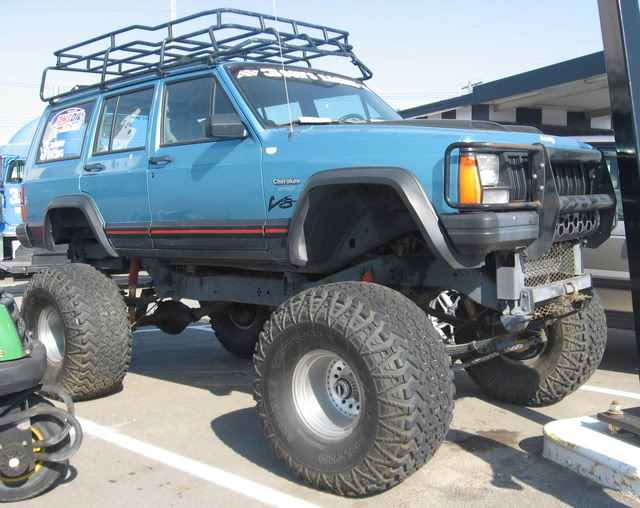
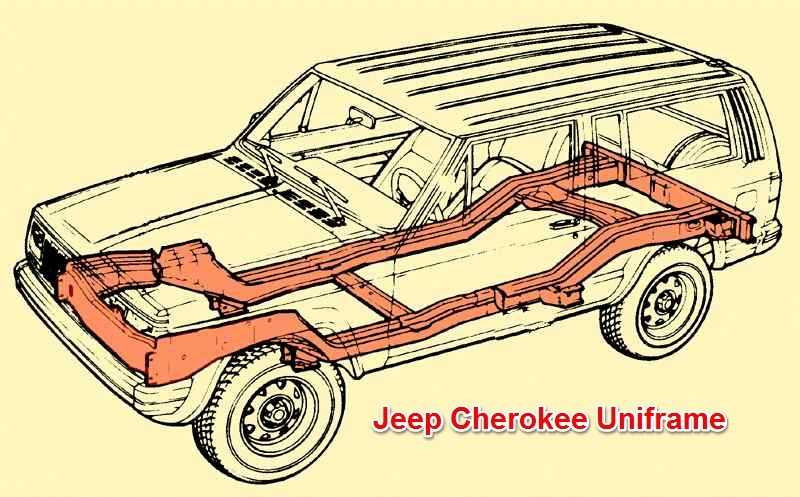
The first Jeep Cherokee (SJ) used a body-on-frame design, which made it strong for off-road and heavy use. In 1984, Jeep changed to the XJ Cherokee, which was one of the first SUVs to use a unibody design. Since then, all Cherokee models have been unibody.
Why Did Jeep Switch To Unibody?
Moving to unibody had several advantages:
- Lighter weight: This helps fuel economy. The XJ was about 500 pounds lighter than its body-on-frame competitor, the Chevy Blazer.
- Better handling: Unibody SUVs ride smoother and handle turns better.
- Cost savings: Manufacturing is easier and cheaper.
- Modern appeal: Most buyers wanted comfort and style for city driving.
But there were trade-offs. Unibody is less strong for extreme off-roading and towing. Still, Jeep found a balance Cherokee models can handle rough roads but are more comfortable for daily use.
How Frame Type Impacts Performance
The frame type affects how the Jeep Cherokee performs in real life.
- Off-road ability: Early body-on-frame Cherokees could handle tough trails and heavy loads. Modern unibody Cherokees can go off-road, but not as well as the body-on-frame Jeep Wrangler.
- Towing capacity: Body-on-frame vehicles pull heavier trailers. For example, the 1974 Cherokee could tow up to 5,000 lbs. Today’s Cherokee KL maxes out at 4,500 lbs.
- Ride comfort: Unibody Cherokees are much smoother and quieter, which is better for families and city drivers.
Here is a direct comparison of towing and comfort:
| Model Year | Frame Type | Max Towing (lbs) | Ride Comfort |
|---|---|---|---|
| 1974 SJ | Body-on-frame | 5,000 | Medium |
| 2023 KL | Unibody | 4,500 | High |
Common Misconceptions
Many people think all Jeeps are body-on-frame because the Wrangler and older models are built that way. This is not true. The Cherokee switched to unibody in 1984 and has stayed that way. Even though the Cherokee still looks rugged, its frame is different from the Wrangler or Grand Cherokee (which also uses unibody now).
Some buyers confuse frame type with off-road capability. While body-on-frame is better for extreme trails, modern unibody SUVs can still handle dirt roads and light off-roading. Cherokee’s Trailhawk trim, for example, offers advanced 4×4 systems and higher ground clearance.
What This Means For Buyers
If you want a Jeep Cherokee, knowing its frame type helps you choose the right model for your needs.
- Buy a classic SJ (1974–1983) if you want old-school strength.
- Choose a modern Cherokee (1984–present) for a smoother ride and city driving.
- For heavy off-roading, consider the Wrangler, which is still body-on-frame.
Beginners often miss that frame design changes impact not just off-roading, but also repair costs and safety. Unibody is harder and more expensive to repair after a crash, since the body and frame are one piece. Body-on-frame is easier to fix, but heavier and uses more fuel.
Another insight: Not all Jeep models are the same. Even though the Cherokee and Grand Cherokee share names, their frames and performance differ.
Frequently Asked Questions
Is The Latest Jeep Cherokee Body-on-frame?
No, the current Jeep Cherokee uses a unibody design. It has been this way since 1984.
Which Jeep Models Are Still Body-on-frame?
The Jeep Wrangler and the Gladiator pickup are still body-on-frame. Most other Jeeps use unibody construction.
Does Body-on-frame Make A Vehicle Better For Off-roading?
Yes, body-on-frame vehicles are stronger for rough trails and can handle bumps better. However, modern unibody SUVs like the Cherokee Trailhawk can still handle light off-roading.
Is A Unibody Jeep Cherokee Safer?
Unibody design can be safer in crashes because the frame absorbs impact better. However, repairs after a crash can be more expensive.
Where Can I Find More Details About Jeep Cherokee History?
You can find detailed information about the Jeep Cherokee’s evolution at Wikipedia.
The Jeep Cherokee is not body-on-frame today, but its strong unibody design still offers good performance for city and light adventure. Knowing the frame type helps you decide which model fits your lifestyle and needs.