Understanding The 98 Jeep Grand Cherokee With Offroad Wheels
The 1998 Jeep Grand Cherokee, often referred to as the ZJ generation, is a celebrated icon in the sport utility vehicle (SUV) market. Known for its blend of on-road comfort and genuine off-road capability, it remains a popular choice for enthusiasts looking to tackle challenging terrains.
A key element that transforms a stock Grand Cherokee into a formidable off-road machine is the selection of appropriate offroad wheels. These aren't just about aesthetics; they are critical for performance, durability, and the ability to conquer obstacles.
Choosing the right offroad wheels for your ’98 Grand Cherokee involves understanding various factors, from tire size and offset to material and load rating. The ZJ platform offers a good foundation for modification, and with the right wheels, it can be significantly enhanced.
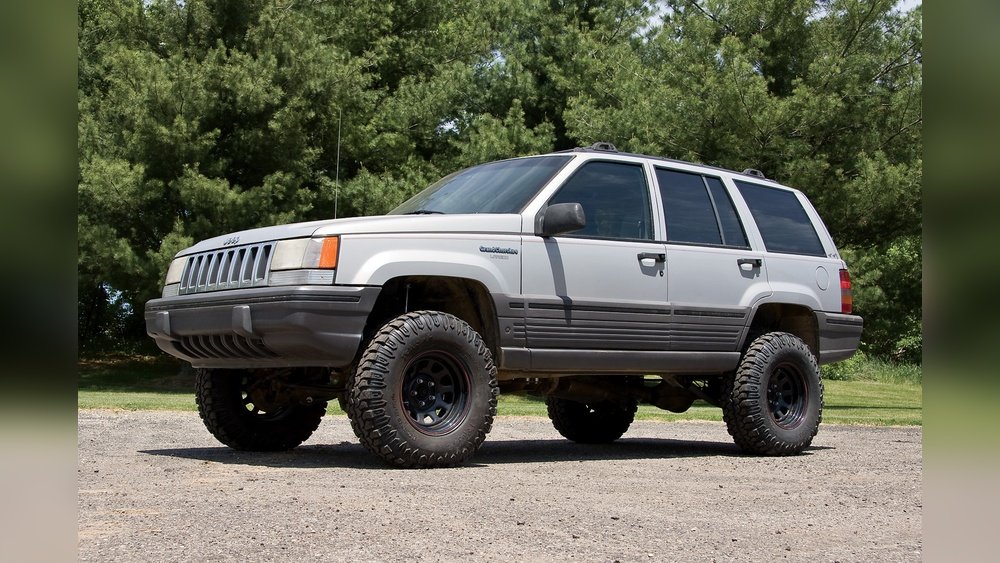
This article will guide you through the specifics of selecting and understanding offroad wheels for your 1998 Jeep Grand Cherokee, covering everything from basic concepts to specific considerations for this popular model. We will explore the impact of different wheel types, sizes, and materials on off-road performance and discuss how to make informed decisions that suit your driving needs and budget.
The Foundation: Why Wheels Matter For Off-roading
Off-roading subjects a vehicle to stresses far beyond what it encounters on paved roads. Rocks, mud, steep inclines, and uneven surfaces demand components that are not only strong but also designed to work in harmony with the terrain.
Wheels, being the direct interface between the vehicle and the ground, play a paramount role in this equation.
Strength And Durability
Standard road wheels are often made from lighter alloys designed for fuel efficiency and on-road handling. Offroad wheels, conversely, are built for resilience. They need to withstand impacts from rocks, logs, and other debris. Materials like steel are known for their sheer toughness and ability to bend rather than break under extreme stress, making them a common choice for dedicated off-roaders. Alloy wheels offer a lighter alternative, often with stronger construction than stock alloys, providing a balance between weight savings and durability.
Tire Compatibility And Performance
The wheel size directly influences the maximum tire size you can fit. Larger tires offer better ground clearance and a larger contact patch for improved traction off-road.
However, excessively large tires can strain drivetrain components. Offroad wheels are designed to accommodate the aggressive tread patterns and larger sidewalls of off-road tires, ensuring optimal performance in mud, sand, and rock crawling.
Load Rating And Safety
Off-road conditions can put immense pressure on vehicle components. Wheels must have a load rating sufficient to support the vehicle’s weight, plus the added dynamic forces encountered during off-road driving. Exceeding a wheel’s load capacity can lead to catastrophic failure, posing a serious safety risk. Always ensure the wheels you choose have a load rating that significantly exceeds your Jeep’s Gross Vehicle Weight Rating (GVWR).
Offset And Backspacing
These terms describe how the wheel mounts to the hub and how far the wheel centerline is from the mounting surface.
- Offset refers to the distance between the wheel’s mounting surface and its centerline. A positive offset pushes the wheel inward, while a negative offset pushes it outward.
- Backspacing is the distance from the rear of the wheel mounting surface to the outer lip of the wheel.
Modifying these can affect steering geometry, suspension clearance, and tire rub. For off-roading, a negative offset or increased backspacing is often preferred as it pushes the tires outward, providing more clearance for suspension components and allowing for wider tires without rubbing on the fenders or control arms. For the ’98 Grand Cherokee, understanding these is key to avoiding rubbing issues when fitting larger off-road tires.

Wheel Types For Your ’98 Grand Cherokee
The world of offroad wheels offers several options, each with its own pros and cons. For a 1998 Jeep Grand Cherokee, these choices can significantly impact its capability and appearance.
Steel Wheels
Steel wheels are the workhorse of the off-road community. They are typically cheaper, incredibly durable, and easy to repair.
If a steel wheel gets bent on the trail, it can often be hammered back into shape.
- Pros: High strength, low cost, easy repair, good for extreme use.
- Cons: Heavy, prone to rust if not coated properly, less aesthetic variety.
For a ’98 Grand Cherokee, steel wheels are a practical choice for budget-conscious builders or those who plan on very aggressive off-road use where damage is a high probability.
Alloy Wheels
Alloy wheels are made from a mix of metals, usually aluminum, often with other elements to increase strength and reduce weight. They offer a wide range of designs and finishes.
- Pros: Lighter than steel, more aesthetically pleasing, wide variety of designs, less prone to rust.
- Cons: Can be more expensive, may crack or break under extreme impact instead of bending, harder to repair.
When selecting alloy wheels for off-roading, look for those specifically designed for rugged use, often featuring thicker lips or reinforced construction.
Beadlock Wheels
Beadlock wheels are designed to clamp the tire bead to the wheel, preventing the tire from unseating (losing air pressure) at very low tire pressures. This is crucial for maintaining traction on extremely uneven terrain, like rock crawling.
- Pros: Allows extremely low tire pressures for maximum traction, prevents tire de-beading.
- Cons: More expensive, can be heavier, may require specific tire types, can be illegal for on-road use in some regions due to complexity.
While advanced, beadlock wheels are generally overkill for most ’98 Grand Cherokee owners unless they are building a dedicated rock crawler.
Key Considerations For ’98 Grand Cherokee Owners
When fitting new wheels to your 1998 Jeep Grand Cherokee, several specific factors come into play. The ZJ platform has certain limitations and popular modification paths that you should be aware of.
Bolt Pattern
The 1998 Jeep Grand Cherokee uses a 5×5.5 inch (5×139.7mm) bolt pattern. This is a common pattern shared with other Jeep models and many trucks and SUVs. Ensuring the new wheels match this pattern is the first step to a proper fit.
Center Bore
The center bore is the hole in the middle of the wheel that fits over the vehicle’s hub. While the bolt pattern must match, the center bore diameter is also important. If the wheel’s center bore is too small, it won’t fit. If it’s too large, hub-centric rings might be needed to ensure the wheel is centered properly on the hub, preventing vibrations. The ’98 Grand Cherokee’s center bore is approximately 71.5mm.
Diameter And Width
- Diameter: Common off-road wheel diameters for the ’98 Grand Cherokee range from 15 inches to 17 inches. Smaller diameters (like 15″) allow for taller sidewalls on the tires, which provide better cushioning and flexibility off-road. Larger diameters (like 17″) can offer more brake clearance and a more modern look, but often mean less sidewall.
- Width: Wheel width is usually expressed in inches (e.g., 8 inches, 9 inches). A wider wheel can support a wider tire, improving the tire’s contact patch and stability. For the ’98 Grand Cherokee, 8-inch or 9-inch wide wheels are very common.
Offset And Backspacing For Zj Grand Cherokees
As mentioned, offset and backspacing are critical. For a ’98 Grand Cherokee, especially when lifting it and fitting larger tires, a negative offset is often beneficial.
- A common setup for a mild lift might involve wheels with a -12mm to -25mm offset. This pushes the tire out by about 1 to 1.5 inches compared to a stock wheel.
- This helps clear suspension components and allows for wider tires without rubbing on the fenders or control arms.
- Backspace values typically range from 4.0 to 4.5 inches for popular off-road setups on the ZJ. Lower backspacing pushes the wheel out.
Tire Size And Fitment
The wheel choice is intrinsically linked to the tire size you want to run.
- Stock tire size for a ’98 Grand Cherokee is typically around 225/75R16.
- With a 2-inch lift, many owners fit 31-inch tires (e.g., 265/75R16 or 31×10.50R15). This usually requires minimal, if any, fender trimming.
- With a 3-4 inch lift, 33-inch tires (e.g., 285/75R16 or 33×12.50R15) become feasible, often requiring more significant fender modifications or “trimming.”
The wheel width and offset play a huge role here. A 10.
5-inch wide tire fits well on an 8-inch wide wheel, while a 12. 5-inch wide tire typically needs at least a 9-inch wide wheel for proper support and profile.
Load Rating Requirements
The GVWR for a 1998 Jeep Grand Cherokee is around 5,800 lbs. You should aim for wheels with a load rating of at least 2,000-2,500 lbs per wheel to provide a good safety margin, especially considering the stresses of off-roading. Many aftermarket off-road wheels far exceed this, offering ratings of 3,000 lbs or more.

Exploring Specific Wheel Options For The ’98 Grand Cherokee
While specific brands and models change, the types of wheels and their characteristics remain consistent. Here’s a look at popular choices and what to consider for your ’98 Grand Cherokee.
1. Pro Comp Series 69 (15-inch)
This is a classic steel wheel design, often available in a flat black finish. The 15-inch diameter is perfect for maximizing tire sidewall height.
- Bolt Pattern: 5×5.5 inch
- Diameter: 15 inches
- Width: Typically 8 inches
- Offset: Often available with negative offsets like -22mm, pushing the wheel out.
- Load Rating: Usually around 2,500-3,000 lbs.
- Pros: Very affordable, extremely durable, classic off-road look, ideal for 31-33 inch tires.
- Cons: Heavy, can rust if finish is damaged.
2. American Racing Ar23 (15-inch)
A popular alloy wheel that offers a step up in aesthetics from steel. It features a robust design suitable for off-road use.
- Bolt Pattern: 5×5.5 inch
- Diameter: 15 inches
- Width: Typically 8 inches
- Offset: Available with negative offsets.
- Load Rating: Generally around 2,000-2,200 lbs.
- Pros: Lighter than steel, attractive design, good durability for its class.
- Cons: More expensive than steel, can be damaged by severe impacts.
3. Mickey Thompson Classic Iii (15-inch)
Another iconic alloy wheel, known for its strength and distinctive styling. It’s a popular choice for Jeeps.
- Bolt Pattern: 5×5.5 inch
- Diameter: 15 inches
- Width: Typically 8 inches
- Offset: Often around -22mm.
- Load Rating: High, often exceeding 2,500 lbs.
- Pros: Strong alloy construction, stylish appearance, good off-road capability.
- Cons: Price point is moderate to high.
4. Fuel Off-road Wheels (various Models Like D538 Maverick, D558 Anza)
Fuel offers a vast array of alloy wheels with aggressive styling. Many models are designed with off-road performance in mind.
- Bolt Pattern: 5×5.5 inch is common across many of their lines.
- Diameter: Available from 16 inches up to 20 inches or more. For a ’98 Grand Cherokee, 16″ or 17″ are most practical for off-roading.
- Width: Typically 8.5 or 9 inches.
- Offset: Wide range, including popular negative offsets.
- Load Rating: Generally very high, often 3,000+ lbs.
- Pros: Huge variety of styles, aggressive designs, strong construction for many models, high load ratings.
- Cons: Can be expensive, some designs might be too flashy for a classic build.
5. Method Race Wheels (various Models Like 305 Nv, 312)
Method is highly respected in off-road racing and enthusiast circles for producing robust and stylish alloy wheels.
- Bolt Pattern: 5×5.5 inch available on many models.
- Diameter: Popular sizes include 16, 17, and 18 inches.
- Width: Often 8.5 or 9 inches.
- Offset: Typically negative offsets are available.
- Load Rating: Very high, built for demanding conditions.
- Pros: Exceptional durability, strong construction, popular with serious off-roaders, modern aesthetics.
- Cons: Premium price point.
6. Rugged Ridge (various Models)
Rugged Ridge offers a range of wheels, often focusing on Jeep-specific applications. They provide options in both steel and alloy.
- Bolt Pattern: 5×5.5 inch
- Diameter: Commonly 15, 16, and 17 inches.
- Width: Various options, often 8 inches.
- Offset: Look for negative offsets for better clearance.
- Load Rating: Generally suitable for SUVs like the Grand Cherokee.
- Pros: Jeep-focused, good value, variety of styles.
- Cons: Durability can vary by model; some may not be as robust as dedicated racing wheels.
7. Black Rock (various Models)
Black Rock offers a strong selection of steel and alloy wheels often geared towards off-road use.
- Bolt Pattern: 5×5.5 inch
- Diameter: 15, 16, 17 inches.
- Width: Common widths include 8 and 8.