The 96 Jeep Cherokee Crank Position Sensor is a small but vital component that plays a critical role in your vehicle's engine management system. Without a properly functioning crank position sensor, your Jeep Cherokee simply won't start, or if it does, it will run very poorly.
This sensor tells the engine's computer (the PCM, Powertrain Control Module) the exact position of the crankshaft and how fast it's rotating. This information is crucial for the PCM to accurately time fuel injection and spark plug firing.
If this sensor fails, the PCM loses this critical data, leading to a no-start condition or significant drivability issues.
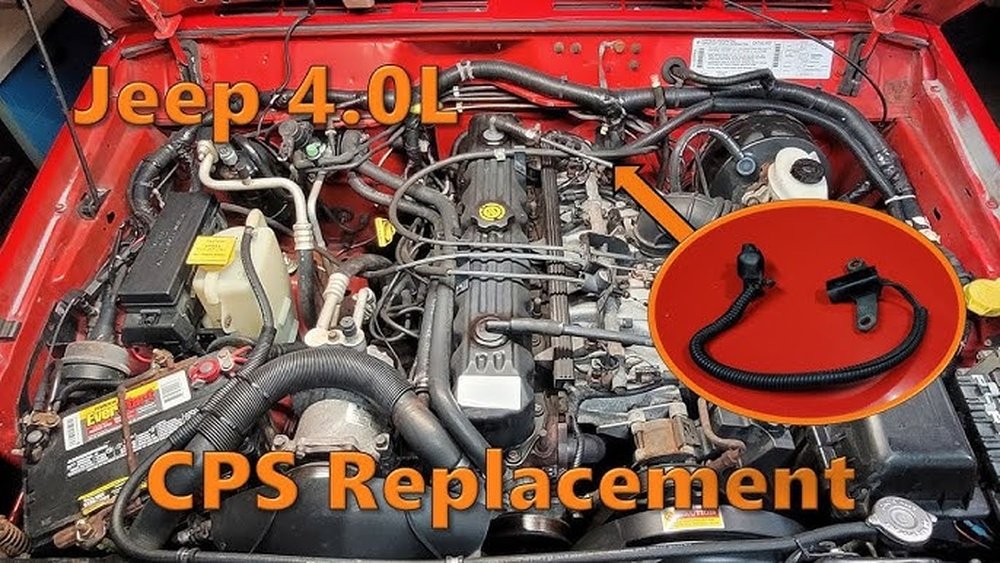
Many Jeep Cherokee owners, especially those with models from the mid-to-late 1990s, will eventually encounter problems related to this sensor. Understanding its function, common failure symptoms, diagnostic steps, and replacement procedures is essential for keeping your classic Cherokee running smoothly.
This guide will cover everything you need to know about the 96 Jeep Cherokee crank position sensor, from what it does to how to fix it when it goes wrong.
Understanding The Crank Position Sensor’s Role
The crankshaft position sensor, often abbreviated as CKP sensor, is a magnetic pickup sensor. It's typically mounted near the flywheel or flexplate, which is attached to the crankshaft.
As the crankshaft rotates, teeth on the flywheel or a special reluctor wheel attached to the crankshaft pass by the sensor.
The sensor detects these passing teeth and generates an electrical signal, a waveform, that the PCM interprets.
This signal is more than just a simple on/off switch. The PCM needs to know not only that the crankshaft is turning but also precisely where it is in its rotation. This is because the engine operates on a precise four-stroke cycle: intake, compression, power, and exhaust. For the engine to fire the spark plugs and inject fuel at the *exact* right moment, the PCM needs to know when each cylinder is approaching the top of its compression stroke. The CKP sensor’s precise timing information allows the PCM to achieve this synchronization.
Without the CKP sensor's input, the PCM has no way of knowing when to fire the ignition coils or when to pulse the fuel injectors. This is why a failed CKP sensor almost always results in a no-start situation.
The engine might crank over, but it won't "catch" or fire up because the essential timing signals are missing.
The Pcm And Ckp Sensor Interaction
The Powertrain Control Module (PCM) is the brain of your Jeep Cherokee’s engine. It receives data from various sensors, including the CKP sensor, the camshaft position sensor (CMP sensor), the throttle position sensor (TPS), the oxygen sensors (O2 sensors), and many others.
Based on this data, the PCM makes real-time adjustments to fuel delivery, ignition timing, idle speed, and other engine functions to optimize performance, fuel economy, and emissions.
The CKP sensor's signal is arguably the most critical input for the PCM. It's the foundational piece of timing information.
Think of it like a conductor leading an orchestra. The conductor (PCM) needs to know the exact tempo and beat (crankshaft rotation speed and position) to signal the musicians (spark plugs and fuel injectors) when to play their notes.
If the conductor can’t hear the rhythm or the beat, they can’t direct the orchestra.
The PCM uses the CKP sensor’s signal to:
- Determine engine speed (RPM): By counting the pulses from the CKP sensor over a specific time, the PCM calculates how fast the engine is spinning.
- Determine crankshaft position: The pattern of teeth on the flywheel or reluctor wheel, along with the CKP signal, tells the PCM the exact rotational position of the crankshaft. This is essential for timing ignition and fuel injection.
- Initiate fuel injection: The PCM uses the CKP signal to time the opening of the fuel injectors.
- Initiate spark: The PCM uses the CKP signal, often in conjunction with the CMP sensor, to time the firing of the spark plugs.
Common Symptoms Of A Failing Crank Position Sensor
When the crank position sensor on your 96 Jeep Cherokee starts to fail, it often doesn't just die suddenly. It can exhibit a range of symptoms, sometimes gradually worsening over time.
Recognizing these signs early can save you from being stranded.
Here are the most common symptoms:
- Engine Cranks But Won’t Start: This is the most definitive symptom. The starter motor engages and turns the engine over, but the engine won’t “catch” and run. You’ll hear the engine cranking, but there’s no combustion. This is because the PCM isn’t receiving the necessary timing signal from the CKP sensor to fire the spark plugs or inject fuel.
- Engine Stalls Suddenly: If the CKP sensor is failing intermittently, it might send erratic signals or no signal at all while you’re driving. This can cause the engine to suddenly shut off, leaving you without power steering or power brakes. This is a dangerous situation and requires immediate attention.
- Rough Idling: An intermittent or weak signal from the CKP sensor can cause the engine to run unevenly at idle. You might notice the engine stumbling, shaking, or running rougher than usual when the vehicle is stopped.
- Hesitation or Stumbling During Acceleration: When you press the accelerator pedal, the engine might hesitate, stumble, or feel like it’s losing power for a moment before accelerating normally. This can be due to the PCM receiving incorrect or intermittent timing data.
- Misfires: A failing CKP sensor can lead to misfires, where one or more cylinders fail to fire correctly. This can manifest as a rough-running engine, a loss of power, and potentially a check engine light.
- Check Engine Light: While not always present, a faulty CKP sensor will often trigger the “Check Engine” light. The PCM detects an anomaly in the CKP signal and stores a diagnostic trouble code (DTC). Common DTCs associated with CKP sensor issues include P0335, P0336, P0337, P0338, P0339, P0340, P0341, P0342, and P0343.
- Difficulty Starting After Engine is Hot: Some CKP sensors are more prone to failure when they get hot. This can lead to a situation where your Jeep starts fine when cold but becomes difficult or impossible to start once the engine reaches operating temperature. After it cools down, it might start again, only to fail once it heats up.
It’s important to note that these symptoms can sometimes be caused by other issues, such as a faulty camshaft position sensor, ignition coil problems, fuel pump issues, or even a bad PCM. Therefore, proper diagnosis is crucial before replacing parts.
Diagnosing A Faulty Crank Position Sensor
Diagnosing a crank position sensor issue on a 96 Jeep Cherokee requires a systematic approach. Simply replacing the sensor based on symptoms alone can be costly and time-consuming. Here’s how to approach the diagnosis:
1. Check For Diagnostic Trouble Codes (dtcs)
The first step is always to scan for trouble codes using an OBD-II scanner. As mentioned earlier, codes like P0335 (Crankshaft Position Sensor "A" Circuit Malfunction) are strong indicators.
However, a code doesn't always mean the sensor itself is bad; it could indicate a wiring issue or a problem with the PCM.
2. Visual Inspection
With the OBD-II scanner connected or after noting any codes, perform a visual inspection:
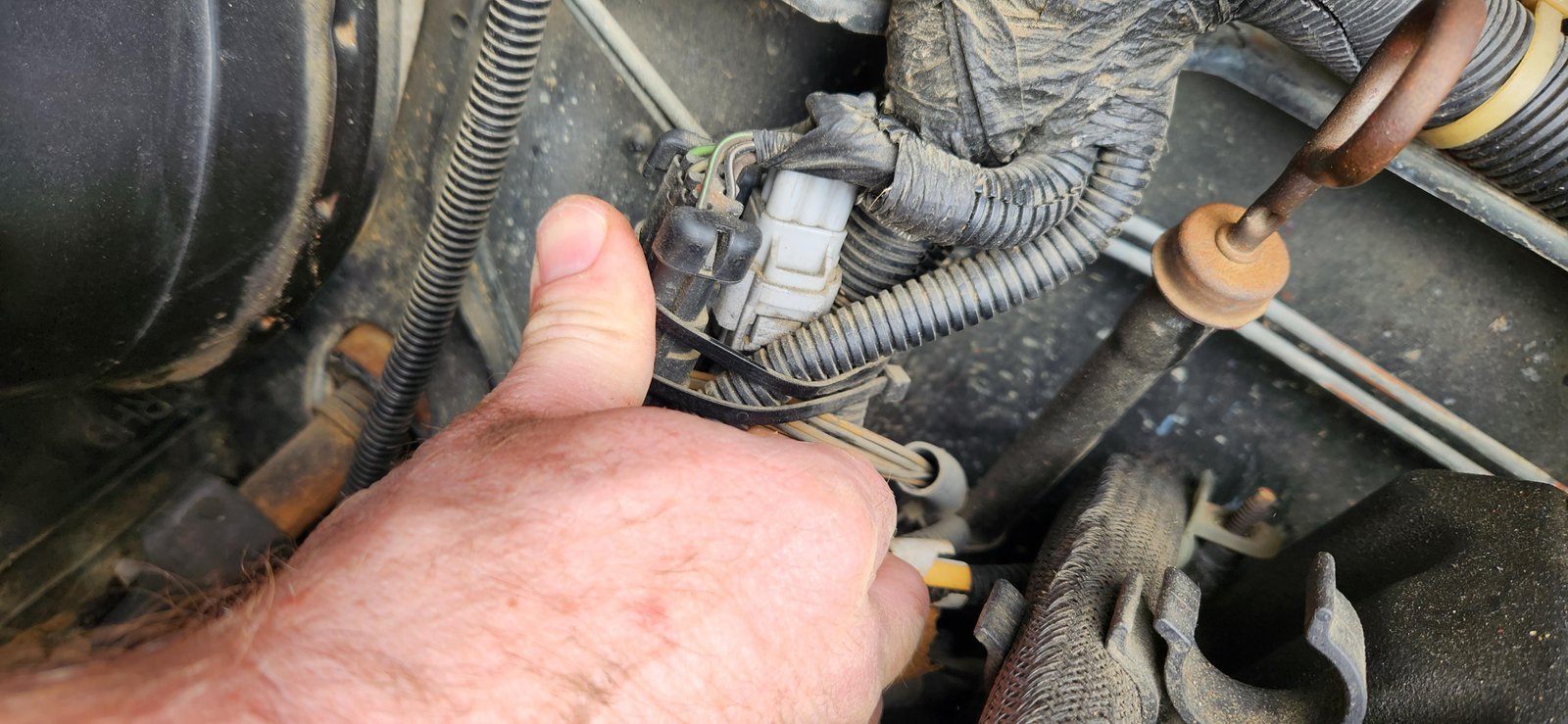
- Sensor Location: The CKP sensor on a 1996 Jeep Cherokee is typically located on the driver’s side of the engine block, near the rear, above the oil filter adapter. It’s usually held in place by a single bolt.
- Wiring and Connector: Inspect the wiring harness leading to the CKP sensor for any signs of damage, such as cuts, chafing, or corrosion. Check the electrical connector for bent pins, corrosion, or loose connections. A loose connector can cause intermittent issues.
- Crankshaft Reluctor Wheel/Flywheel: If possible, inspect the reluctor wheel or the teeth on the flywheel for any damage, debris, or missing teeth. While less common, physical damage to these components can mimic a faulty sensor.
3. Checking Sensor Resistance (requires A Multimeter)
If the wiring and connector look good, you can test the sensor’s internal resistance. This requires a multimeter.
- Disconnect the battery to prevent any electrical shorts.
- Unplug the electrical connector from the CKP sensor.
- Set your multimeter to measure resistance (Ohms Ω).
- Place the multimeter probes onto the two pins in the sensor’s connector.
- Consult your Jeep Cherokee’s service manual for the specific resistance specification. Typically, a good CKP sensor will have a resistance reading between 600 and 1200 Ohms.
- If the reading is significantly outside this range, or if it shows an open circuit (infinite resistance) or a short circuit (zero resistance), the sensor is likely faulty.
4. Checking The Sensor Signal (requires A Multimeter Or Oscilloscope)
This is a more advanced test and is best performed with an oscilloscope if available, as it can show the waveform generated by the sensor. However, a multimeter can also provide some indication.
- Reconnect the battery and the sensor connector.
- Set your multimeter to measure AC voltage (V~).
- Have a helper crank the engine while you carefully place the multimeter probes onto the sensor’s connector pins. Be extremely cautious working around a running engine.
- You should see a small AC voltage reading (typically around 1 volt AC) as the engine cranks. The voltage should fluctuate as the engine speed changes.
- If you get no voltage reading while cranking, the sensor may be faulty, or there could be an issue with the PCM’s ability to read the signal.
Pro Tip: An oscilloscope is the best tool for diagnosing CKP sensors. It will display the exact waveform generated. A healthy sensor produces a clean, consistent sine wave or square wave (depending on the sensor type). A failing sensor might produce a weak, erratic, or intermittent waveform.
5. Checking For Power And Ground At The Connector (if Applicable)
Some CKP sensors are not simple magnetic pickups; they might be Hall-effect sensors that require power and ground from the PCM to operate. If your 96 Cherokee uses such a sensor (check your service manual), you’ll need to test for power and ground at the connector while the ignition is on.
- With the ignition ON (engine OFF), test for battery voltage on the power wire and check for a good ground connection on the ground wire at the sensor’s connector.
- If power or ground is missing, the problem lies in the wiring or the PCM, not the sensor itself.
Common Pitfalls In Diagnosis
- Assuming the sensor is bad: Always verify with testing before replacing.
- Ignoring wiring issues: Damaged or corroded wiring is a very common cause of CKP sensor problems.
- Not checking for other codes: A CKP code can sometimes be a secondary symptom of another underlying engine problem.
- Using a cheap scanner: Some basic scanners may not be able to read all the necessary data or may not be reliable.
Replacing The Crank Position Sensor
Replacing the crank position sensor on a 1996 Jeep Cherokee is a moderately difficult DIY job. It requires some mechanical aptitude and the right tools.
The most challenging part is usually accessing the sensor due to its location.
Tools And Parts You’ll Need
- New Crank Position Sensor: Ensure you get the correct part for your specific 1996 Jeep Cherokee model (e.g., 4.0L inline-6 engine).
- Socket Wrench Set: You’ll likely need a 10mm or 13mm socket for the sensor bolt and potentially other sizes for related components.
- Extension Bars: For your socket wrench, to reach the sensor.
- Torque Wrench: Recommended for tightening the sensor bolt to the correct specification.
- Dielectric Grease: To protect the electrical connector from moisture and corrosion.
- Penetrating Oil (e.g., PB Blaster): To help loosen stubborn bolts.
- Safety Glasses and Gloves: Always wear appropriate safety gear.
- OBD-II Scanner: For clearing codes after replacement.
Step-by-step Replacement Guide
- Safety First: Park your Jeep on a level surface, engage the parking brake, and disconnect the negative battery terminal to prevent accidental starting or electrical shorts.
- Locate the CKP Sensor: As mentioned before, it’s usually on the driver’s side of the engine block, towards the rear, above the oil filter adapter. You might need to get under the vehicle for good access.
- Access the Sensor: This is often the hardest part. You may need to remove other components that are blocking access, such as the starter motor or parts of the exhaust system, depending on your specific Jeep’s configuration. Consult a service manual or online forums for specific advice for your year and engine.
- Disconnect the Electrical Connector: Carefully unplug the electrical connector from the CKP sensor. There might be a small locking tab that needs to be pressed or lifted. Inspect the connector for damage.
- Remove the Mounting Bolt: Use the appropriate socket and extension to loosen and remove the bolt securing the CKP sensor to the engine block. This bolt can sometimes be difficult to reach and may be rusted. Apply penetrating oil if necessary.
- Remove the Old Sensor: Once the bolt is removed, gently twist and pull the old sensor out of its mounting hole. It might be stuck due to grime or old gasket material. Be careful not to damage the mounting bore.
- Prepare the New Sensor: Ensure the new sensor is clean. Apply a small amount of dielectric grease to the electrical pins inside the new sensor’s connector. This helps ensure a good connection and protects against moisture. Do NOT apply any sealant or RTV to the sensor itself, as it’s designed to seal against the engine block.
- Install the New Sensor: Insert the new CKP sensor into the mounting hole. It should slide in smoothly.
- Install the Mounting Bolt: Reinstall the mounting bolt and tighten it snugly. Crucially, use a torque wrench to tighten the bolt to the manufacturer’s specified torque. Overtightening can damage the sensor or the engine block, while undertightening can lead to poor performance or the sensor coming loose. The typical torque specification for a CKP sensor bolt is around **20-25 ft-lbs (Newton



















