When you own a Jeep Wrangler with a manual transmission, you have a fantastic vehicle built for adventure. Many Wrangler owners love to take their Jeeps off-road and explore.
Sometimes, this means bringing another vehicle along, perhaps an RV or a larger truck. This is where 4-wheel towing, also known as dinghy towing or flat towing, comes into play.
It allows you to tow your Jeep behind another vehicle without needing a trailer.
However, not all vehicles can be towed this way, and there are specific procedures to follow to avoid damage. For a Jeep Wrangler with a manual transmission, 4-wheel towing is often possible, but it requires careful preparation and understanding.
This guide will cover everything you need to know to safely tow your manual Jeep Wrangler in all four wheels.
We’ll look at the essential equipment, the step-by-step process, and crucial considerations to ensure your Jeep arrives at your destination in perfect condition.
Understanding 4-wheel Towing (dinghy Towing)
4-wheel towing means that all four wheels of the vehicle being towed are on the ground. The towed vehicle is connected to the towing vehicle via a special tow bar. This method is popular because it eliminates the need for a large, heavy trailer, making parking and maneuvering easier. The towed vehicle essentially follows the towing vehicle like a trailer.
For a Jeep Wrangler, especially those with a manual transmission, the design lends itself well to this type of towing. The key is that the drivetrain can be put into a neutral state, preventing damage to the transmission and other components while the vehicle is being pulled. This is a significant advantage over many automatic transmission vehicles, which often cannot be dinghy towed without specialized equipment or modifications that can be costly and complex.
The popularity of dinghy towing among RVers and adventurers stems from the freedom it provides. Once you reach your campsite or destination, you can unhook your Jeep and use it for local exploration, grocery runs, or reaching trailheads that your larger RV cannot access.
It essentially doubles your mobility without requiring you to tow a separate trailer.
Why Choose 4-wheel Towing For Your Jeep Wrangler?
There are several compelling reasons why 4-wheel towing is a popular choice for Jeep Wrangler owners:
- Ease of Use: Compared to towing a trailer, a dinghy-towed Jeep is generally easier to manage, especially when backing up or parking.
- Cost-Effectiveness: While there’s an upfront investment in towing equipment, it can be more cost-effective in the long run than purchasing and maintaining a trailer.
- Maneuverability: A towed Jeep Wrangler is much more maneuverable than a trailer, allowing for easier navigation in tight spaces.
- Jeep’s Design: As mentioned, the manual transmission and transfer case design of many Jeep Wranglers are inherently suited for flat towing when properly configured.
It’s important to note that while many manual transmission Wranglers are suitable, it’s always best to consult your specific owner’s manual or a Jeep dealership to confirm your model’s towing capabilities and any specific requirements.
Essential Equipment For 4-wheel Towing
Successfully and safely 4-wheel towing your manual Jeep Wrangler requires specific equipment. Using the wrong gear or improvising can lead to serious damage to your Jeep, your towing vehicle, or even cause an accident. Here are the essential components:
1. Tow Bar
The tow bar is the primary connection between your towing vehicle and your Jeep. It’s a sturdy metal arm that attaches to a base plate installed on the front of your Jeep and a receiver hitch on the back of your towing vehicle.
- Types: There are two main types: fixed-position and retractable. Retractable tow bars can be easily stored away when not in use.
- Weight Rating: Ensure the tow bar has a weight rating sufficient for your Jeep Wrangler. Jeeps can be heavy, so choosing a robust tow bar is crucial.
- Compatibility: Tow bars are typically designed to work with standard receiver hitches (like a 2-inch receiver) on the towing vehicle.
2. Base Plate
A base plate is a custom-designed bracket system that mounts directly to the frame of your Jeep Wrangler. It provides a secure and dedicated attachment point for your tow bar.
- Vehicle-Specific: Base plates are designed for specific vehicle makes, models, and years. It’s vital to get one made for your exact Jeep Wrangler.
- Installation: Installation usually requires some mechanical skill and may involve drilling into the Jeep’s frame. Professional installation is often recommended.
- Durability: Look for a base plate made from strong, durable materials that can withstand the stresses of towing.
3. Safety Cables Or Chains
These are a critical safety feature. Safety cables (or chains) connect the towed vehicle to the towing vehicle, providing a backup connection in the unlikely event that the tow bar fails or detaches.
- Strength: They must be strong enough to hold the weight of the Jeep.
- Proper Connection: They should be connected from the frame of the Jeep to the frame of the towing vehicle, typically using carabiners or heavy-duty hooks.
- Length: Ensure they are long enough to allow for turning but not so long that they drag on the ground.
4. Towing Vehicle’s Receiver Hitch
The receiver hitch on the back of your towing vehicle is where the tow bar typically connects.
- Class Rating: Make sure the hitch has a sufficient class rating (e.g., Class III or IV for heavier vehicles like Wranglers) to handle the weight of your Jeep.
- Ball Mount: If your tow bar requires a hitch ball, ensure it’s the correct size and rating.
5. Braking System (crucial For Safety And Legality)
This is perhaps the most important safety component. Most states and provinces legally require a towed vehicle of a certain weight (often 1,500 lbs or more) to have its own braking system. A Jeep Wrangler typically exceeds this weight.
- Types of Systems:
- Portable Braking Systems: These are units that sit on the floor of the towed vehicle and use the Jeep’s existing brake pedal. They are often the easiest to install and remove. Examples include Brake Buddy, RViBrake, and Blue Ox Patriot.
- Proportional Braking Systems: These systems apply the towed vehicle’s brakes in proportion to how hard the towing vehicle’s brakes are applied. They offer smoother braking and are often considered more effective.
- Direct or Supplemental Braking Systems: These systems are wired directly into the Jeep’s braking system and require more complex installation.
- Why it’s Important: Braking systems reduce the strain on the towing vehicle’s brakes, improve stopping distance, and prevent dangerous situations where the towed vehicle could push the towing vehicle.
6. Supplemental Lighting And Wiring
When you’re towing, your Jeep’s brake lights, turn signals, and running lights need to function as if they were attached to the towing vehicle.
- Wiring Harness: A wiring harness connects the towing vehicle’s lights to the Jeep’s taillights. This can be done through a magnetic tow light kit, a plug-in system that connects to the Jeep’s trailer wiring connector (if equipped), or a more permanent wiring installation.
- Functionality: Ensure all lights are working correctly before every trip.
7. High-low Lockers Or Transfer Case Considerations
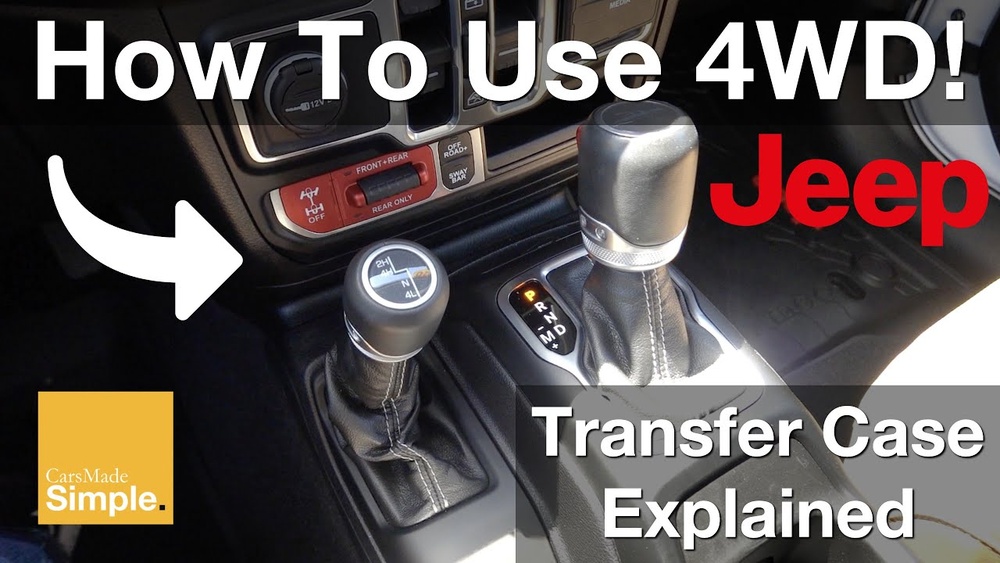
For manual transmission Jeep Wranglers, the transfer case is key. You’ll typically need to put the transfer case into neutral to allow the driveshafts to spin freely. This is often referred to as “unlocking” the drivetrain.
- NV241 Transfer Case: Many manual transmission Wranglers use the NV241 transfer case, which has a neutral position.
- Procedure: The exact procedure for engaging neutral in the transfer case is crucial and will be detailed in the next section.
8. Breakaway Kit
This is often integrated with the braking system. A breakaway kit is a safety device that ensures the towed vehicle’s brakes are applied automatically if it becomes detached from the towing vehicle. It usually involves a cable that pulls a lever on the braking system when the connection breaks.

The Step-by-step Process For 4-wheel Towing A Manual Jeep Wrangler
Towing your manual Jeep Wrangler requires a precise sequence of actions. Skipping steps or performing them out of order can lead to serious damage.
Always refer to your specific Jeep's owner's manual and the manuals for your towing equipment for the most accurate instructions.
Step 1: Prepare The Jeep Wrangler
Before connecting anything, ensure your Jeep is ready for towing.
- Park on a Level Surface: This makes it easier to engage neutral positions.
- Start the Engine: It’s often easier to shift gears with the engine running.
- Engage Neutral in the Transmission: Press the clutch pedal and shift the main gearshift into Neutral (N).
- Engage Neutral in the Transfer Case: This is the critical step for manual transmission Wranglers.
- Locate your transfer case shifter (usually a separate lever near the main gearshift).
- Shift the transfer case lever into the Neutral (N) position. This disconnects the engine from both the front and rear driveshafts, allowing all four wheels to spin freely.
- Pro Tip: Some older models or specific transfer cases might require a particular sequence. Always check your owner’s manual. For example, you might need to shift from 4-High to 2-High, then into Neutral.
- Turn Off the Engine: Once the transmission and transfer case are in Neutral, you can turn off the engine.
- Release the Parking Brake: Ensure the parking brake is fully disengaged.
- Secure the Steering Wheel: Most tow bars have a mechanism to lock the steering wheel in a straight-ahead position. If yours doesn’t, you might need to leave the ignition key in the “Accessory” position (without starting the engine) to unlock the steering column. This also powers some electrical components needed for braking systems and lights. Warning: Leaving the key in the accessory position can drain your battery if not managed properly, especially on longer trips. Consider a battery disconnect switch or a battery charger system if this is a concern.
Step 2: Connect The Tow Bar And Safety Cables
This is where you physically link your Jeep to the towing vehicle.
- Position the Towing Vehicle: Back the towing vehicle up to the Jeep until the receiver hitch is aligned with the Jeep’s base plate.
- Connect the Tow Bar: Attach the tow bar arms to the base plate on the Jeep. Ensure they lock securely into place. Most tow bars have locking pins or mechanisms.
- Connect Safety Cables: Attach the safety cables from the towing vehicle’s frame to the Jeep’s frame. Ensure they are crossed (one left to right, one right to left), this creates a cradle effect if one connection fails, preventing the towed vehicle from dropping to the ground. The cables should have a slight amount of slack but not be so long that they drag.
Step 3: Connect Electrical Systems (lights And Brakes)
This ensures your Jeep’s lights and braking system work in sync with the towing vehicle.
- Connect Wiring Harness: Plug in the wiring harness from the towing vehicle to the Jeep’s taillight connector or install your chosen lighting solution.
- Test All Lights: Have someone stand behind the Jeep and verify that the brake lights, turn signals (left and right), and running lights all function correctly when activated by the towing vehicle.
- Connect Braking System:
- If using a portable braking system, place it on the floor of the Jeep and connect its breakaway cable to the towing vehicle’s frame.
- Follow the manufacturer’s instructions for your specific braking system to ensure it’s properly engaged and calibrated.
Step 4: Perform Pre-towing Checks
Before hitting the road, double-check everything.
- Visual Inspection: Walk around both vehicles. Ensure all connections are secure, no cables are dragging, and nothing looks out of place.
- Braking System Check: Activate the towing vehicle’s brakes and check if the Jeep’s brake lights illuminate and if you feel the towed vehicle’s brakes engaging (if your system provides feedback). Test the turn signals.
- Steering Wheel Lock: Confirm that the steering wheel is unlocked and can turn freely.
- Parking Brake: Double-check that the parking brake is fully released.
Step 5: Begin Towing Slowly
The first few miles are crucial for testing the setup.
- Start Moving Slowly: Gently accelerate the towing vehicle. Listen for any unusual noises and feel for any strange pulling or swaying.
- Test Brakes: At a low speed (e.g., 15-20 mph) in a safe, open area, gently apply the towing vehicle’s brakes. Feel how the entire rig responds. The Jeep should slow down smoothly with the towing vehicle.
- Practice Turns: Make wide, slow turns to ensure the tow bar and safety cables have enough clearance and don’t bind.
Step 6: During The Tow
Maintain vigilance throughout your journey.
- Regular Stops: For longer trips, stop every couple of hours to visually inspect all connections, check tire pressures on the Jeep, and ensure the towed vehicle hasn’t overheated (though this is rare with proper towing).
- Monitor Gauges: Keep an eye on your towing vehicle’s temperature and transmission gauges.
- Driving Adjustments: Remember you are towing a significant weight. Allow for much longer stopping distances, take turns wider and slower, and avoid sudden maneuvers.
Step 7: Arriving At Your Destination
When you reach your destination, you’ll need to disconnect the Jeep.
- Park on a Level Surface: This makes disconnecting easier.
- Engage Parking Brake: Firmly apply the parking brake on the Jeep.
- Start the Engine: Start the Jeep’s engine.
- Disengage Tow Bar: Release the tow bar from the base plate.
- Disconnect Safety Cables and Wiring: Unplug the wiring harness and detach the safety cables.
- Re-Engage Transfer Case:
- Shift the transmission back into Park (if automatic) or engage a gear (if manual) and release the clutch.
- Shift the transfer case lever back into its normal driving position (usually 2WD High).
- Start the engine if it was off and you needed it to shift.
- Stow Equipment