4 Wheel Down Towing: The Jeep Wrangler’s Ultimate Guide
Towing your Jeep Wrangler can be a fantastic way to bring your adventure machine along on your travels. Whether you're heading to a remote off-road trail, a national park, or across the country, knowing the right way to tow is crucial.
Among the different towing methods, 4 wheel down towing, also known as dinghy towing or flat towing, is often the preferred choice for Jeep Wrangler owners.
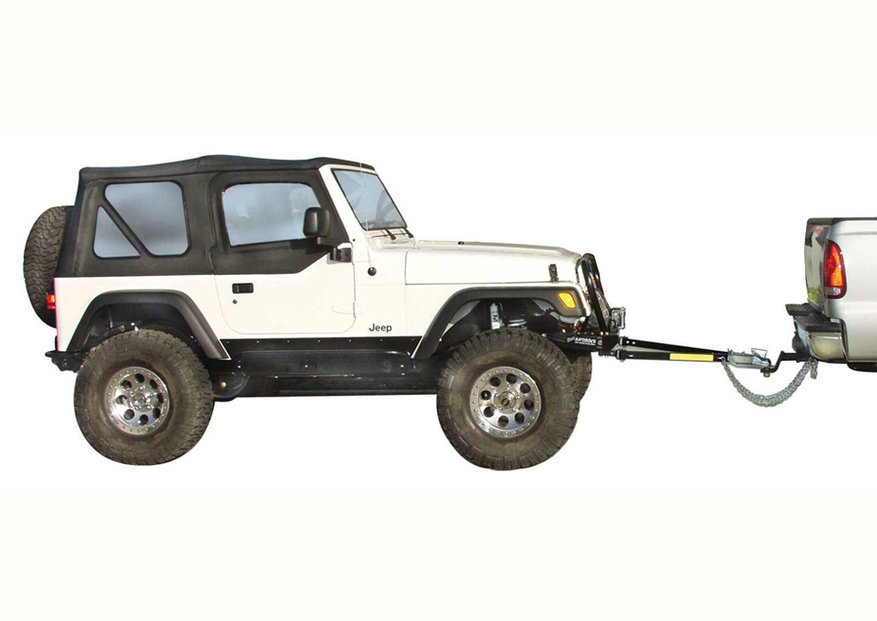
This method allows all four wheels of your Jeep to roll freely on the ground as it's being towed by an RV or another vehicle. It’s convenient, relatively simple, and generally considered the most natural way for a Wrangler to be towed.
However, 4 wheel down towing isn’t as simple as just hooking up a tow bar and driving off. There are specific procedures, equipment, and considerations that must be followed to ensure the safety of your Jeep, your tow vehicle, and everyone on the road. This guide will walk you through everything you need to know about safely and effectively 4 wheel down towing your Jeep Wrangler. We’ll cover the necessary equipment, the proper setup steps, important considerations for different Jeep models and transmissions, and what to do while on the road.
Why Choose 4 Wheel Down Towing For Your Jeep Wrangler?
The Jeep Wrangler is uniquely suited for 4 wheel down towing compared to many other vehicles. This is largely due to its robust transfer case and drivetrain design, which allows for a neutral setting that disconnects the drivetrain from the wheels. When set up correctly, this means the Jeep’s wheels can spin without causing damage to the transmission or transfer case.
Several advantages make this method popular:
- Convenience: Once set up, you can simply drive your RV and have your Jeep follow along. When you arrive at your destination, you can unhook the tow bar and drive your Wrangler off the lot, ready for exploration. This eliminates the need for a separate trailer, saving on parking space and setup time.
- Reduced Wear and Tear: Compared to towing on a trailer, where the vehicle’s tires and suspension are stationary and can develop flat spots, 4 wheel down towing allows the Wrangler’s components to roll. This is generally better for the vehicle’s tires and suspension over long distances.
- Cost-Effectiveness: While there’s an initial investment in towing equipment, it can be more cost-effective in the long run than purchasing and maintaining a trailer, especially if you tow frequently.
- Maneuverability: A towed Jeep Wrangler is much easier to maneuver in campgrounds and parking lots than a full trailer.
However, it’s essential to understand that 4 wheel down towing requires specific equipment and careful attention to detail. It’s not a universal capability for all vehicles, and even among Wranglers, there can be differences based on the specific model year and transmission.
Essential Equipment For 4 Wheel Down Towing
To safely tow your Jeep Wrangler with all four wheels on the ground, you’ll need a specific set of equipment. Each component plays a vital role in ensuring a secure and damage-free towing experience.
1. Tow Bar
The tow bar is the primary connection between your RV and your towed Jeep. It’s a heavy-duty, adjustable metal bar that attaches to a base plate installed on the Jeep and a hitch receiver on the RV. Tow bars come in various styles, including:
- A-Frame Tow Bars: These are common and feature two arms that form an A-shape when extended. They offer good stability.
- Center-Mount Tow Bars: These have a single, central attachment point on the RV and often offer a more direct connection.
When choosing a tow bar, consider its weight rating (it must be rated higher than the weight of your Jeep Wrangler), its ease of use, and its safety features. Many modern tow bars include self-aligning mechanisms that make connecting and disconnecting simpler.
2. Base Plate
A base plate is a custom-designed bracket that mounts directly to the frame of your Jeep Wrangler. It provides the secure attachment points for your tow bar. Base plates are vehicle-specific, meaning you need one designed for your exact year and model of Wrangler.
- Installation: Base plate installation typically requires removing the front bumper and sometimes modifying the grille or other front-end components. It’s a job best left to experienced mechanics or RV technicians if you’re not comfortable with automotive work.
- Durability: A properly installed base plate is crucial for safety. It needs to withstand the significant forces exerted during towing, especially during braking, acceleration, and cornering.
3. Braking System
This is arguably the most critical piece of safety equipment for 4 wheel down towing. When you tow a vehicle, especially one as heavy as a Jeep Wrangler, it adds significant weight to your RV. Without a supplemental braking system on the towed vehicle, your RV’s brakes will have to work much harder, increasing stopping distances and potentially leading to brake fade or failure. Federal regulations in many areas also mandate that towed vehicles over a certain weight must have their own braking system.
There are several types of braking systems available:
- Proportional Braking Systems: These systems apply the towed vehicle’s brakes in direct proportion to how hard the RV’s brakes are applied. They offer the most natural and safest braking experience. Examples include Blue Ox Patriot and Demco Stay-IN-Tow.
- Surge Braking Systems: These systems are activated by the inertia of the towed vehicle as it pushes against the RV during deceleration. They are less common for RV towing and can sometimes be jerky.
- Air Brake Systems: These are typically found on larger commercial vehicles and are less common for towing a Jeep Wrangler.
4. Safety Cables Or Chains
Safety cables (or chains) are a legal requirement in most places and serve as a backup connection between your RV and your towed Jeep. If the tow bar were to detach for any reason, the safety cables would prevent the Jeep from becoming a runaway vehicle.
- Attachment: They should be attached from the RV’s frame or hitch to the Jeep’s frame or base plate.
- Proper Length: Ensure the cables are long enough to allow for turns but short enough that they don’t drag on the ground. They should be crossed under the tow bar (one left, one right) to create a cradle effect if they ever need to bear the weight.
5. Wiring And Lighting
For your towed Jeep to be safely operated on public roads, it needs to have functional lights that mirror the lights of your RV. This includes brake lights, turn signals, and taillights.
- Wiring Harness: A dedicated wiring harness connects the RV’s lighting system to the Jeep’s taillight housings. This usually involves plugging into the RV’s seven-way connector and running a cable to the Jeep.
- Bulb and Bulb Kits: Some systems use diodes to prevent feedback into the Jeep’s electrical system, while others might require special bulbs or bulb kits installed in the Jeep’s taillight assemblies.
- Towed Vehicle Lighting Kit: Many RV supply stores sell kits specifically designed for this purpose, often including the necessary wiring, connectors, and sometimes even a separate light bar if direct integration is too complex.
6. Towed Vehicle Battery Protection
When towing, the Jeep’s engine is off, but some electrical components might still draw power, such as the brake controller or security system. This can drain the Jeep’s battery over time, leaving you with a dead battery at your destination.
- Battery Disconnect Switch: A manual battery disconnect switch installed on the Jeep’s battery can be used to completely shut off power when towing. This is a simple and effective solution, but it means you’ll need to remember to reconnect the battery before starting the Jeep.
- Battery Charge Line: A more advanced solution is a battery charge line that runs from the RV’s battery to the Jeep’s battery. This trickle-charges the Jeep’s battery as you drive, ensuring it stays topped up. This requires more complex wiring but offers automatic protection.
Setting Up Your Jeep Wrangler For 4 Wheel Down Towing
Proper setup is paramount. A mistake here can lead to costly damage or a dangerous situation.
The exact steps can vary slightly depending on your Jeep's model year and transmission, but the general process remains consistent.
1. Prepare The Jeep
Before you even attach the tow bar, ensure the Jeep is ready to be towed.
- Transmission: For automatic transmissions (most common in modern Wranglers), you’ll need to put the transmission into Park (P). For manual transmissions, you’ll put it into Neutral (N).
- Transfer Case: This is where the 4 wheel down towing capability for Wranglers shines. You need to shift the transfer case into Neutral (N). This is typically done by moving the transfer case lever to the designated neutral position. Consult your owner’s manual for the exact procedure for your specific model.
- Ignition: The ignition key needs to be in the ACC (Accessory) position. This does a few things:
- It unlocks the steering wheel, allowing it to turn freely.
- It powers the necessary electrical components, like the towed vehicle braking system and the lights.
- It prevents the steering wheel lock from engaging while you’re driving, which would cause serious damage.
- Important Note: Leaving the key in ACC can drain the battery if not managed properly (see battery protection above). Some systems may require the key to be removed entirely, while others need it in ACC. Always refer to your Jeep owner’s manual and the manual for your towing equipment.
2. Connect The Tow Bar
With the Jeep prepared, you can now connect the tow bar.
- Align Vehicles: Position your RV so it’s directly behind the Jeep.
- Extend Tow Bar: Extend the arms of your tow bar.
- Connect to Base Plate: Attach the ends of the tow bar to the base plate receivers on the Jeep. This usually involves inserting locking pins and securing them.
- Connect to RV: Attach the tow bar to your RV’s hitch receiver. Again, ensure pins and clips are securely in place.
3. Connect Safety Cables
Attach your safety cables or chains.
- Secure Attachment Points: Connect one end to a designated point on the RV’s frame or hitch, and the other end to a secure point on the Jeep’s frame or base plate.
- Proper Slack: Ensure there’s enough slack for turning but not so much that they drag on the ground. Cross them under the tow bar.
4. Connect And Test Lighting And Braking Systems
This is a critical step that often gets rushed.
- Wiring Harness: Plug in the wiring harness that connects your RV’s lights to the Jeep’s taillights.
- Test Lights: Have someone stand behind the Jeep while you operate the RV’s turn signals, brake lights, and taillights. Verify that all Jeep lights function correctly. If they don’t, troubleshoot the wiring connections.
- Braking System Activation: Activate your towed vehicle’s braking system according to its manufacturer’s instructions. Many systems have a test mode or require a manual check. Ensure the system engages when you apply the RV’s brakes.
5. Double-check Everything
Before you start driving, do a thorough walk-around.
- All Pins and Clips: Ensure every pin and clip used for the tow bar and safety cables is securely in place.
- Connections: Visually inspect all connections.
- Fluid Levels: Check that the Jeep’s transmission and transfer case fluids are at their proper levels.
- Steering Wheel: Confirm the steering wheel is free to move and not locked.
- Parking Brake: Make sure the Jeep’s parking brake is fully disengaged.
Specific Considerations For Jeep Wrangler Models
While the general principles of 4 wheel down towing apply to most Jeep Wranglers, there are nuances based on the model year and transmission type. It’s always best to consult your specific owner’s manual and the manuals for your towing equipment.
Manual Transmission Wranglers
Wranglers equipped with a manual transmission are generally simpler to set up for 4 wheel down towing.
- Transmission: Put the transmission in Neutral (N).
- Transfer Case: Shift the transfer case to Neutral (N).
- Ignition: Turn the ignition key to the ACC (Accessory) position to unlock the steering wheel.
- Parking Brake: Ensure the parking brake is fully released.
The main advantage here is that the manual transmission naturally allows the output shaft to spin freely when in neutral, similar to how the transfer case neutral works.
Automatic Transmission Wranglers
Automatic transmission Wranglers require a bit more attention to ensure the transmission doesn’t get damaged.
- Transmission: Put the transmission into Park (P). This is crucial for locking the internal gears of the automatic transmission.
- Transfer Case: Shift the transfer case to Neutral (N). This is what disconnects the drivetrain from the wheels.
- Ignition: Turn the ignition key to the ACC (Accessory) position to unlock the steering wheel and power accessories.
- Parking Brake: Ensure the parking brake is fully released.
Pro Tip: For automatic transmissions, it’s often recommended to engage the transfer case in 4-Hi for a few miles every so often during long towing trips. This helps to circulate the lubricant within the transfer case. However, this is not done while actively towing in neutral; it’s a maintenance step for the transfer case itself. Always check your owner’s manual for specific recommendations.
Newer Generations (jl And Jt)
For the Jeep Wrangler JL (2018+) and Jeep Gladiator JT (2020+), the process is largely the same, but the electronic transfer case controls in some trims might introduce minor variations.
- Electronic Transfer Case: Wranglers with the electronic shift-on-the-fly (ESOF) transfer case will have a button or dial to engage neutral. Ensure this is correctly engaged.
- Owner’s Manual is Key: The owner’s manual for these newer models is your most reliable source. It will detail the exact sequence for putting the transfer case into neutral and any specific requirements for the ignition or transmission.
Important Notes For All Models:
- Towing Speed and Distance: Always adhere to the recommended towing speeds and distances outlined by both your RV manufacturer and your Jeep’s owner’s manual. While Wranglers are robust, excessive speed or very long, continuous towing without breaks can still cause undue stress.
- Steering Wheel Lock: Never forget to turn the ignition to ACC. If the steering wheel locks while you’re



















