Choosing 33-inch Tires For Your Jeep Wrangler: A Comprehensive Guide
When you think of a Jeep Wrangler, you likely picture it tackling tough terrain, mud-splashed and ready for adventure. A significant part of that capability comes from the tires.
For many Wrangler owners, 33-inch tires represent a sweet spot, a noticeable upgrade in off-road performance and aggressive looks without requiring major modifications. This size offers a tangible boost in ground clearance and traction, making it a popular choice for weekend warriors and serious off-roaders alike.
But what exactly do you need to know before making the jump to 33s?
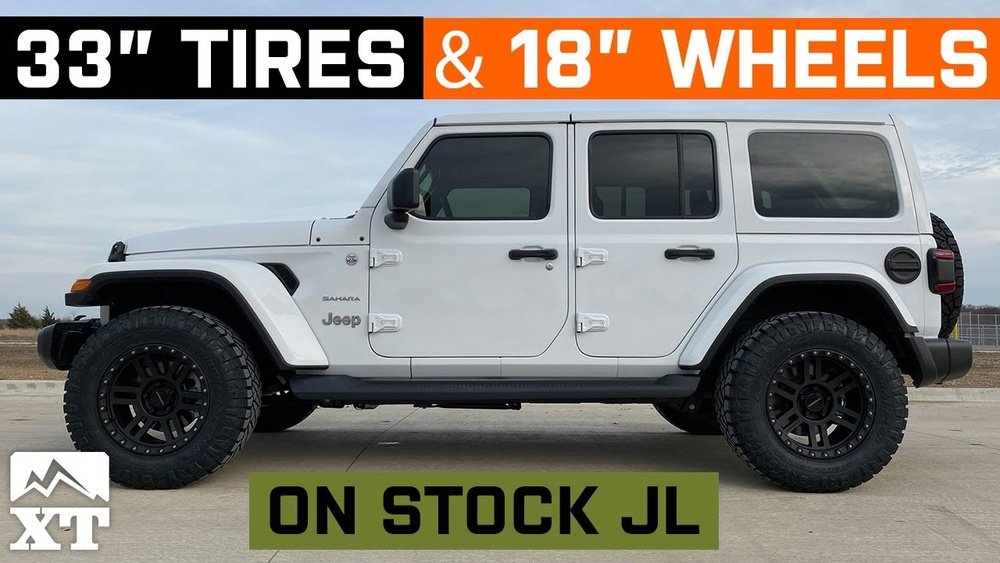
This guide will walk you through everything from understanding tire sizes to selecting the right type of 33-inch tire for your specific needs, ensuring you make an informed decision that enhances your Jeep’s capabilities and your driving experience.
Understanding Tire Size: What Does “33 Inch” Really Mean?
Tire sizes can seem confusing at first glance, but breaking them down reveals their meaning. A tire size like “33×12. 50R17” tells you a lot.
- 33: This is the overall diameter of the tire in inches when inflated and mounted on a wheel. This is the most crucial number for understanding tire size.
- 12.50: This is the tire’s width in inches, measured from sidewall to sidewall at its widest point.
- R: This indicates that the tire has a radial construction, which is standard for almost all modern vehicle tires.
- 17: This is the diameter of the wheel (rim) in inches that the tire is designed to fit.
So, 33-inch tires have a nominal diameter of about 33 inches. However, actual diameter can vary slightly based on the tire’s load, inflation pressure, and manufacturer.
This increase from the stock tire size (often around 29-31 inches) is what provides the benefits of larger tires.
Why Choose 33-inch Tires For Your Wrangler?
Upgrading to 33-inch tires offers several compelling advantages for Jeep Wrangler owners:
Improved Off-road Capability
The most significant benefit is the increased ground clearance. A larger tire lifts the Jeep’s axles and undercarriage higher off the ground, allowing you to clear obstacles like rocks, logs, and uneven terrain more easily. This reduces the risk of damaging vital components. Furthermore, 33-inch tires typically have a larger contact patch (the part of the tire touching the ground), which translates to better traction on various surfaces, whether it’s mud, sand, or rocky trails.
Enhanced Aesthetics
Let's face it, larger tires just make a Jeep look tougher. The 33-inch size fills out the wheel wells nicely, giving the Wrangler a more aggressive and purposeful stance that many owners desire.
It’s a visual upgrade that signals the Jeep is ready for adventure.
Overcoming Obstacles
With 33-inch tires, you can roll over obstacles that might stop smaller tires. The larger diameter allows the tire to climb up and over things rather than getting high-centered or stuck.
This capability is invaluable when exploring more challenging trails.
What You Need To Consider Before Going To 33s
While 33-inch tires offer great benefits, they aren’t a simple bolt-on upgrade for every Wrangler without some considerations:
Suspension And Lift Kits
For most Jeep Wranglers, fitting 33-inch tires without any modifications might result in rubbing, especially when the suspension compresses or when turning the steering wheel fully. Rubbing occurs when the tire contacts the fenders, fender flares, or the frame.
- No Lift: On some models, particularly newer ones with higher fender clearance or if you plan to do very mild off-roading, 33s *might* fit with minimal or no lift. However, you will likely experience some rubbing, especially off-road.
- Small Lift: A 2-inch lift kit is often the minimum recommended for comfortably fitting 33-inch tires and reducing rubbing. This typically involves taller springs and shocks, or spacers, to lift the body and suspension.
- Rubicon Models: Wranglers equipped with the Rubicon trim often have slightly higher factory suspension and fender clearance, making them more amenable to 33s with less modification compared to Sport or Sahara models.
Re-gearing Your Differential
Larger, heavier tires increase the load on your engine and transmission. This means your Jeep will feel sluggish, accelerate slower, and potentially consume more fuel. To compensate for this, many owners choose to re-gear their differentials.
- Stock Gears: Wranglers typically come with gears like 3.45 or 3.73. With 33-inch tires, these gears can feel inadequate, especially for automatic transmissions.
- Recommended Gears: For 33-inch tires, a common recommendation is to re-gear to 4.10 or 4.56. Lower (numerically higher) gear ratios provide more torque to the wheels, restoring lost acceleration and improving drivability.
- Manual vs. Automatic: Manual transmission Wranglers can often tolerate stock gears with 33s for longer than automatics, but re-gearing still offers a significant improvement.
Speedometer Calibration
When you change tire size, your speedometer and odometer will become inaccurate. Since the tires are larger, they travel further with each rotation than the original tires. This means your speedometer will read slower than your actual speed, and your odometer will record fewer miles than you’ve actually driven. You’ll need to recalibrate your speedometer using a programmer tool (like a Superchips, AEV ProCal, or similar device) to ensure accuracy for legal reasons and proper tracking of mileage.
Fender Flares And Body Mount Chop (bmc)
Even with a lift, the tire might still rub against the factory fender flares or the body mount (the bracket that attaches the body to the frame, located near the front wheels). For 33-inch tires, especially on models with less factory clearance, a body mount chop (BMC) might be necessary. This involves cutting a small section of the body mount and re-welding it to provide clearance. It’s a more involved modification but can prevent significant rubbing during articulation.
Cost
Upgrading to 33-inch tires involves more than just the tires themselves. Consider the costs of:
- The tires themselves.
- New wheels (if desired or necessary for the tire size).
- A lift kit.
- Re-gearing the differentials.
- A speedometer calibrator.
- Professional installation for lift kits and re-gearing.
These costs can add up quickly, so budget accordingly.
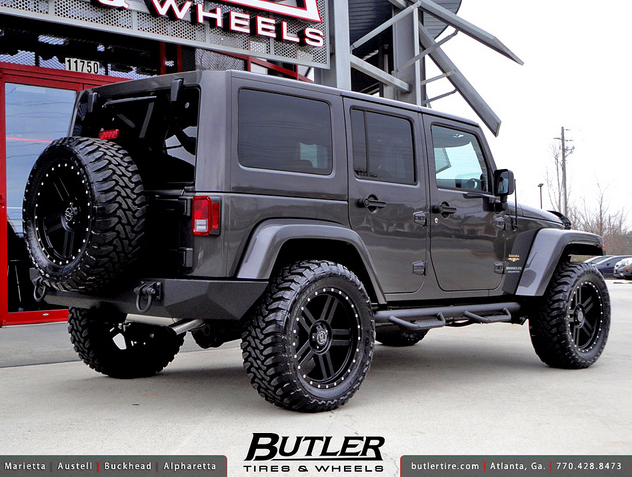
Types Of 33-inch Tires For Your Jeep Wrangler
When selecting 33-inch tires, you’ll encounter different types designed for various purposes. The main categories are All-Terrain (AT), Mud-Terrain (MT), and Hybrid-Terrain tires.
All-terrain (at) Tires
All-Terrain tires are the most popular choice for Wrangler owners looking for a balance between on-road comfort and off-road capability. They are designed to perform well in a variety of conditions, including pavement, dirt roads, gravel, and light to moderate trails.
- Tread Design: AT tires feature moderately aggressive tread patterns with sipes (small slits) for wet traction and decent void space (gaps between tread blocks) to help shed mud and debris.
- On-Road Manners: They generally offer a quieter ride and better handling on pavement compared to Mud-Terrain tires. They also tend to wear more evenly and last longer.
- Off-Road Performance: While capable on most trails, they might struggle in deep mud or highly technical rock crawling compared to dedicated MT tires.
- Examples: BFGoodrich All-Terrain T/A KO2, Falken Wildpeak A/T3W, Cooper Discoverer AT3 XLT.
Mud-terrain (mt) Tires
Mud-Terrain tires are built for extreme off-road conditions, particularly mud. They are characterized by large, widely spaced tread blocks that aggressively bite into soft surfaces and eject mud.
- Tread Design: MT tires have deep, chunky lugs with significant void space. This design is excellent for digging into mud and clearing it out quickly. They often feature aggressive sidewall patterns for added traction and protection.
- On-Road Manners: Expect a louder, rougher ride on pavement. Handling can be less precise, and they may wear faster on the road. Fuel economy will likely decrease.
- Off-Road Performance: Unmatched in mud, sand, and loose dirt. Excellent for rock crawling due to their ability to conform to surfaces and grip.
- Examples: BFGoodrich Mud-Terrain T/A KM3, Nitto Trail Grappler, Goodyear Wrangler MT/R with Kevlar.
Hybrid-terrain Tires
Hybrid-Terrain tires attempt to bridge the gap between AT and MT tires. They offer more aggressive tread than typical AT tires but are designed to be more manageable on the road than full MTs.
- Tread Design: These tires often feature a tread pattern that looks like an AT but with larger, more aggressive blocks, sometimes with sipes for on-road grip. They aim for a good balance of mud-slinging ability and street manners.
- On-Road Manners: Generally quieter and smoother than MTs, but might be slightly louder or less refined than a pure AT.
- Off-Road Performance: Offer a significant step up in off-road traction from ATs, especially in mud and loose conditions, without the extreme compromises of MTs.
- Examples: Toyo Open Country R/T, Nitto Ridge Grappler, Cooper Discoverer Rugged Trek.
Popular 33-inch Tire Options For Jeep Wranglers
Here are some of the most popular and well-regarded 33-inch tire models that fit Jeep Wranglers, categorized by type:
All-terrain (at) Tire Recommendations
- BFGoodrich All-Terrain T/A KO2: A benchmark in the AT category. Known for its durability, excellent off-road traction, and respectable on-road manners. The KO2 is a popular choice for its rugged looks and reliable performance across diverse terrains. It features advanced tread geometry for even wear and improved stone-ejecting capabilities.
- Falken Wildpeak A/T3W: Highly praised for its aggressive look, strong performance in wet conditions (indicated by the ‘W’ in its name), and good balance of on-road comfort and off-road grip. It features a 3D siping technology for enhanced biting edges and heat diffuser technology in the sidewalls to reduce heat buildup during extended highway driving.
- Cooper Discoverer AT3 XLT: Offers a robust tread design for enhanced traction and durability, especially for heavier applications. The XLT variant is designed for more demanding off-road use than other AT3 models, featuring a higher void ratio and deeper tread for better grip in loose conditions. It’s known for its quiet ride and good tread life.
- General Grabber A/T X: A strong contender offering excellent value. It provides a good mix of on-road comfort and off-road capability with a focus on durability. The tread pattern is designed for good grip in mud, snow, and rocks, while also offering a relatively quiet ride.
- Nitto Terra Grappler G2: A popular choice for its aggressive styling and consistent performance. The G2 offers improved treadwear over its predecessor and good all-around traction. It’s a solid option for those who want a tire that looks as capable as it performs, without sacrificing too much daily drivability.
- Goodyear Wrangler DuraTrac: While often considered an AT, the DuraTrac leans towards the more aggressive side, with a tread pattern that offers excellent traction in mud and snow. It features aggressive shoulder blocks for enhanced grip and stone ejectors. It’s a favorite among many Jeep owners for its capability in challenging conditions.
- Toyo Open Country A/T III: This tire aims for a well-rounded performance, excelling in wet traction, dry handling, and off-road grip. It features a wear-resistant compound and a tread design that balances aggressive looks with a reasonably quiet ride. It’s often a good choice for those who experience varied weather.
- Pirelli Scorpion All Terrain Plus: Offers a balanced performance with a focus on durability and on-road comfort. It features a symmetric tread pattern designed for good grip on various surfaces, including light off-roading and snow. It’s a good option if on-road refinement is a higher priority.
- Yokohama Geolandar A/T G015: Known for its quiet ride and comfortable on-road performance, while still providing capable off-road traction. It features a tread pattern designed for good grip in wet and dry conditions and is often praised for its longevity.
- Mickey Thompson Baja ATZ P3: A unique hybrid AT that bridges the gap between all-terrain and mud-terrain. It features an aggressive tread pattern with large voids and siping, offering robust off-road capability while aiming for better on-road manners than a dedicated MT.
Mud-terrain (mt) Tire Recommendations
- BFGoodrich Mud-Terrain T/A KM3: The latest iteration of BFG’s legendary mud-terrain tire. It offers exceptional mud traction, improved rock-climbing grip, and enhanced durability. The KM3 features a new tread compound and a redesigned tread pattern for better mud clearing and a quieter ride than previous versions, though it’s still an MT.
- Nitto Trail Grappler: A very popular MT tire known for its aggressive looks and excellent performance in mud and loose terrain. It uses a dual sidewall design (two different aggressive patterns) allowing owners to choose their preferred look. It balances aggressive off-road grip with a surprisingly manageable on-road presence for an MT.
- Goodyear Wrangler MT/R with Kevlar: Designed for extreme off-road enthusiasts, this tire features Kevlar-reinforced sidewalls for superior puncture resistance. Its aggressive tread pattern provides exceptional traction on rocks, mud, and other challenging surfaces. It’s a serious performer for serious off-roaders.
- Toyo Open Country M/T: A highly capable mud-terrain tire that offers aggressive looks and performance. It features deep, large tread blocks for excellent grip in mud and on rocks. While loud on the highway, its off-road prowess is undeniable, making it a favorite for those who prioritize dirt over pavement.
- Cooper Discoverer STT Pro: Cooper’s flagship mud-terrain tire. It boasts an aggressive tread pattern with unique features like “mud scoops” to help pull mud through the tire and a tread design that aims to reduce noise and improve wear on the highway