The 2016 Jeep Patriot 2. 4 serpentine belt is a vital component that keeps your engine running smoothly.
This single, continuous belt drives several essential accessories, including the alternator, power steering pump, air conditioning compressor, and water pump. Understanding its routing and maintenance is crucial for preventing breakdowns and costly repairs.
This guide will provide a detailed look at the serpentine belt system for the 2016 Jeep Patriot with the 2. 4L engine, including its diagram, common issues, and replacement tips.
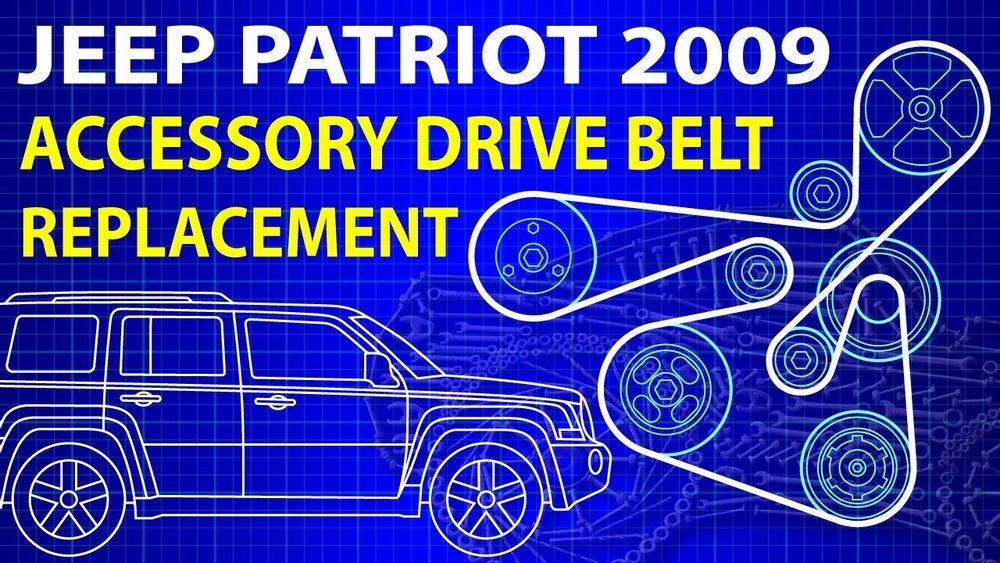
Properly identifying the serpentine belt’s path is the first step to any maintenance or repair. Without the correct diagram, you risk installing the belt incorrectly, which can lead to immediate damage or the belt slipping off while driving.
This can cause your battery to not charge, your steering to become difficult, your engine to overheat, and your air conditioning to stop working.
For the 2. 4L engine found in the 2016 Jeep Patriot, the serpentine belt follows a specific path around various pulleys.
Understanding The Serpentine Belt System
The serpentine belt system is a marvel of modern automotive engineering, consolidating the function of multiple individual belts into one robust belt. This design not only saves space and weight but also simplifies maintenance.
However, it also means that if one accessory driven by the belt fails, or if the belt itself breaks, multiple systems in your vehicle can be affected simultaneously.
Key Components Driven By The Serpentine Belt
On the 2016 Jeep Patriot 2. 4L, the serpentine belt is responsible for powering several critical components.
Each of these plays a significant role in the overall operation and comfort of your vehicle.
- Alternator: This is arguably the most critical component driven by the serpentine belt. The alternator generates electrical power to charge the battery and run the vehicle’s electrical systems while the engine is running. If the alternator isn’t spinning, your battery will drain, and eventually, your vehicle will stall.
- Power Steering Pump: This component provides hydraulic pressure to assist in steering. When the power steering pump is not operating due to a faulty belt, steering will become significantly harder, especially at low speeds.
- Water Pump: The water pump circulates coolant through the engine and radiator, preventing the engine from overheating. A non-functional water pump due to a broken or slipping serpentine belt will quickly lead to severe engine overheating and potential catastrophic damage.
- Air Conditioning (A/C) Compressor: The A/C compressor is responsible for circulating refrigerant to cool the cabin. While not essential for the vehicle’s operation, a non-functioning A/C compressor impacts driver and passenger comfort, especially in hot climates.
- Idler Pulley: The idler pulley is not directly connected to an accessory. Instead, it acts as a tensioner or a guide for the belt, ensuring it stays taut and follows the correct path around the other pulleys. Some systems use a separate tensioner pulley, while others incorporate the idler pulley into the belt’s routing.
- Tensioner Pulley: This pulley applies constant tension to the serpentine belt. It’s usually spring-loaded or hydraulic. Proper tension is essential to prevent the belt from slipping, squealing, or coming off the pulleys. A worn or failing tensioner can cause premature belt wear and noise.
How The Serpentine Belt Works
The serpentine belt is a long, flat belt, typically made of reinforced rubber. It snakes its way around the various pulleys, driven by the rotation of the crankshaft pulley.
The friction between the belt and the pulleys allows for the transfer of power to each accessory.
The tensioner pulley is crucial here, as it maintains the correct pressure on the belt, ensuring it grips the pulleys effectively. Without adequate tension, the belt can slip, leading to reduced performance of the driven accessories and a characteristic squealing noise.
2016 Jeep Patriot 2.4 Serpentine Belt Diagram
Locating an accurate serpentine belt diagram for your specific vehicle is paramount before attempting any work. The routing can vary slightly even between model years or engine options.
For the 2016 Jeep Patriot with the 2. 4L engine, the belt wraps around the crankshaft pulley, alternator pulley, power steering pump pulley, A/C compressor pulley, water pump pulley, and typically one or two idler pulleys, along with the tensioner.
*(Please note: As an AI, I cannot generate visual diagrams. However, I will describe the typical routing. You can easily find visual diagrams by searching online for “2016 Jeep Patriot 2.4 serpentine belt diagram”.)*
Typical Routing Description:
Starting from the crankshaft pulley (usually the lowest and largest pulley at the front of the engine), the belt typically goes:
- Up and around the power steering pump pulley.
- Across to the alternator pulley.
- Down and around the tensioner pulley (which applies pressure to the belt).
- Across to the water pump pulley.
- Down and around the A/C compressor pulley.
- Finally, returning to the crankshaft pulley.
An idler pulley might be present to guide the belt or take up slack in a specific section of the belt’s path. The exact path ensures optimal engagement with each pulley.
Why A Diagram Is Essential
Without a clear diagram, installing the serpentine belt correctly is nearly impossible. An incorrectly routed belt will not function and can cause damage to the belt itself or the pulleys.
It might rub against components it shouldn't, leading to premature wear or failure.
Always refer to a visual diagram specific to your 2016 Jeep Patriot 2. 4L before starting the replacement process.
You can often find these diagrams printed on a sticker under the hood of your vehicle, in your owner's manual, or readily available through online automotive forums and repair sites.

Common Serpentine Belt Problems And Symptoms
Serpentine belts are designed to last for many miles, but they are wear items and will eventually need replacement. Recognizing the signs of a failing belt can save you from unexpected roadside trouble.
Symptoms Of A Failing Serpentine Belt
- Squealing Noise: This is the most common symptom. A high-pitched squeal, especially noticeable when the engine is first started, under acceleration, or when turning the steering wheel, often indicates a worn, loose, or misaligned belt. This can be due to a lack of tension, contamination (oil or coolant on the belt), or the belt being old and hardened.
- Cracks, Fraying, or Glazing: Visually inspecting the belt can reveal wear. Cracks on the ribbed side, frayed edges, or a shiny, glazed appearance on the smooth side are all signs that the belt is nearing the end of its life. Glazing means the belt has overheated and hardened, reducing its grip on the pulleys.
- Rattling or Slapping Sound: A flapping or slapping sound can sometimes indicate that the belt is loose. This is often a sign that the tensioner pulley is failing and not providing adequate pressure.
- Accessory Failure: If the belt breaks or slips significantly, the accessories it drives will stop working. You might notice:
- The battery warning light illuminating (alternator not charging).
- Difficulty steering (power steering pump not working).
- The engine temperature gauge rising rapidly (water pump not circulating coolant).
- The A/C blowing warm air (A/C compressor not engaged).
- Visible Belt Damage: Besides cracks, look for chunks missing from the belt, or if the belt appears to be “walking” off one of the pulleys, indicating misalignment.
Causes Of Serpentine Belt Failure
- Age and Mileage: Serpentine belts degrade over time due to constant flexing, heat, and tension. Manufacturers usually recommend replacement at specific mileage intervals (e.g., every 60,000 to 100,000 miles), but this can vary.
- Contamination: Leaks from other engine components, such as oil or coolant, can contaminate the belt. This contamination breaks down the rubber, reduces grip, and can cause the belt to slip and wear prematurely.
- Pulley Issues: Worn, misaligned, or seized pulleys can cause the belt to wear unevenly or even break. A pulley bearing that’s going bad will often make a grinding or whining noise.
- Tensioner Failure: A weak or malfunctioning tensioner will not keep the belt tight enough, leading to slipping, squealing, and accelerated wear.
- Improper Installation: If a belt is installed incorrectly, it can be subject to excessive stress, misalignment, or contact with sharp edges, leading to premature failure.
Replacing The Serpentine Belt On A 2016 Jeep Patriot 2.4
Replacing a serpentine belt is a common DIY maintenance task, but it requires care and attention to detail.
Tools And Materials Needed
- New Serpentine Belt: Ensure you have the correct belt for your 2016 Jeep Patriot 2.4L.
- Serpentine Belt Tool Kit: This usually includes a long-handled wrench or breaker bar and various socket adapters to fit the tensioner pulley bolt.
- Socket Set and Ratchet: For accessing the tensioner and potentially other components.
- Gloves: To protect your hands.
- Safety Glasses: To protect your eyes from debris.
- Torque Wrench (optional, but recommended for professional results).
- Serpentine Belt Diagram: Crucial for correct routing.
Step-by-step Replacement Guide
- Park Safely and Disconnect Battery: Park your Jeep Patriot on a level surface, engage the parking brake, and turn off the engine. For safety, disconnect the negative battery terminal to prevent accidental electrical shorts.
- Locate the Serpentine Belt and Tensioner: Open the hood and locate the serpentine belt and the tensioner pulley. The tensioner is typically a spring-loaded pulley mounted on a pivoting arm.
- Identify the Belt Routing: Before removing the old belt, carefully study the serpentine belt diagram. Take a picture of the belt’s current routing with your phone as a backup.
- Release Belt Tension: Place the appropriate socket or adapter onto the bolt head of the tensioner pulley. Use a long-handled wrench or breaker bar to rotate the tensioner arm, which will loosen the tension on the belt. This is usually done by pulling the wrench towards the front of the vehicle or downwards, depending on the mounting.
- Remove the Old Belt: While holding the tensioner in the released position, carefully slip the old belt off one of the pulleys, typically the smallest or most accessible one. Once the belt is off one pulley, slowly release the tensioner back to its resting position. Then, you can fully remove the old belt from all the pulleys.
- Inspect Pulleys and Tensioner: Before installing the new belt, spin each pulley by hand. They should rotate smoothly and quietly. Listen for any grinding or rough noises, which could indicate a bad bearing in the alternator, power steering pump, water pump, or an idler pulley. Check the tensioner pulley for excessive play or a wobbly motion. If any pulley or the tensioner seems faulty, it’s best to replace it now, as a failing component can damage the new belt quickly.
- Install the New Belt: Following your diagram, begin routing the new belt around the pulleys. It’s usually easiest to leave the crankshaft pulley for last, as it’s often the most difficult to access. Drape the belt around all the pulleys except for one.
- Apply Tension and Seat the Belt: Using your wrench, again rotate the tensioner pulley to release tension. Slip the final section of the belt onto the remaining pulley (e.g., the crankshaft pulley). Ensure the belt is properly seated in the grooves of all pulleys. Slowly release the tensioner, allowing it to apply tension to the new belt. Double-check that the belt is centered on all pulleys and hasn’t jumped off any.
- Final Checks: Once the belt is installed and tensioned, visually inspect its placement on all pulleys one last time. Ensure it’s seated correctly in all the grooves. Reconnect the negative battery terminal.
- Start the Engine: Start the engine and listen for any unusual noises. Watch the belt to ensure it’s running smoothly and not wobbling or slipping. Let the engine run for a few minutes, checking the accessory functions (alternator light off, A/C blows cold if turned on, etc. ).
Pro Tip:
When replacing the belt, it's a good time to inspect all the pulleys. If a pulley bearing is noisy or feels rough when spun by hand, replace it.
A failing pulley can quickly ruin a new serpentine belt and leave you stranded.
Understanding Serpentine Belt Material And Lifespan
The material and construction of a serpentine belt play a significant role in its durability and performance. Most serpentine belts are made from EPDM (ethylene propylene diene monomer) rubber, known for its excellent resistance to heat, ozone, and weathering.
Types Of Serpentine Belts
- Standard EPDM Belts: These are the most common type and offer a good balance of durability and cost. They are suitable for most daily driving conditions.
- Reinforced Belts: Some belts have a polyester or aramid cord embedded within the rubber for added strength and resistance to stretching.
- OE (Original Equipment) Belts: These are belts manufactured to the exact specifications of the vehicle manufacturer. They are often the most expensive but ensure perfect fit and performance.
- Aftermarket Belts: Many reputable brands offer high-quality aftermarket belts that can match or exceed OE quality at a lower price point.
Expected Lifespan
The lifespan of a serpentine belt can vary greatly depending on several factors:
- Driving Conditions: Frequent short trips, stop-and-go traffic, and extreme temperatures can reduce belt life.
- Underhood Environment: Leaks of oil, coolant, or power steering fluid can drastically shorten belt life.
- Belt Quality: Higher-quality belts generally last longer.
- Pulley Condition: Misaligned or worn pulleys can cause premature belt wear.
- Tensioner Function: A faulty tensioner leads to belt slippage and accelerated wear.
As a general guideline, most serpentine belts are recommended for replacement between 60,000 and 100,000 miles. However, always consult your Jeep owner’s manual for the manufacturer’s specific recommendation for your 2016 Patriot 2.4L. Regular visual inspections are key, as you might need to replace the belt sooner based on its condition rather than mileage alone.
When To Consider Professional Help
While replacing a serpentine belt is a manageable DIY task for many, there are situations where seeking professional assistance is advisable.
Situations Requiring A Mechanic
- Lack of Proper Tools: If you don’t