Understanding the 2014 Jeep Grand Cherokee belt diagram is crucial for any owner who wants to perform basic maintenance or troubleshoot issues related to the engine's accessory drive system. This system is responsible for powering essential components like the alternator, power steering pump, air conditioning compressor, and water pump.
A correctly routed serpentine belt ensures these parts function smoothly, preventing overheating, loss of power steering, and a dead battery.
The serpentine belt is a single, long, and multi-grooved belt that snakes around several pulleys. Its design replaced older V-belts, offering a more efficient and compact solution.
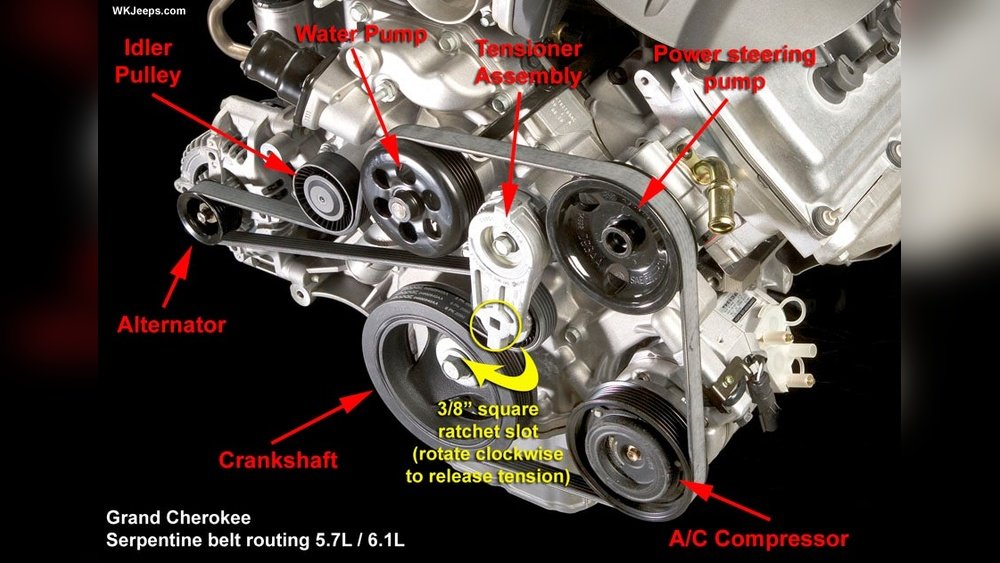
For the 2014 Jeep Grand Cherokee, knowing the exact path the belt takes around these pulleys is vital.
A misplaced belt or a worn-out one can lead to significant problems, often leaving you stranded. This guide will break down the serpentine belt system for the 2014 Grand Cherokee, covering common issues, replacement procedures, and what the belt diagram illustrates.
The Serpentine Belt System Explained
The serpentine belt system in your 2014 Jeep Grand Cherokee is a marvel of modern engineering, designed to drive multiple accessories with a single belt. Unlike older vehicles that used multiple V-belts, the serpentine belt’s continuous loop design is more efficient, compact, and often more reliable.
This belt is driven by the crankshaft pulley and, in turn, spins various accessory pulleys.
Key Components Driven By The Serpentine Belt
Several vital components rely on the serpentine belt to operate. Understanding their roles helps appreciate the importance of the belt’s condition and correct routing.
- Alternator: This component is responsible for generating electrical power to charge the battery and run the vehicle’s electrical systems while the engine is running. A failing alternator, often indicated by a dimming battery light or electrical issues, can be a symptom of a slipping or broken serpentine belt.
- Power Steering Pump: This hydraulic pump assists in steering, making it easier to turn the wheel, especially at low speeds. If the belt driving the power steering pump is loose, worn, or broken, you’ll notice a significant increase in steering effort.
- Water Pump: The water pump circulates coolant through the engine and radiator, preventing overheating. A broken serpentine belt means the water pump stops working, leading to rapid engine temperature increase and potential severe engine damage if not addressed quickly.
- Air Conditioning (A/C) Compressor: This component is responsible for compressing refrigerant to cool the cabin. While not critical for engine operation, a malfunctioning A/C compressor due to a belt issue will result in a lack of cool air.
- Tensioner Pulley: This pulley is spring-loaded or hydraulic and maintains the correct tension on the serpentine belt. A faulty tensioner can cause the belt to slip, squeal, or even come off the pulleys.
- Idler Pulleys: These pulleys are used to redirect the belt or ensure proper wrap around other pulleys. They don’t drive any accessories but are essential for the belt’s path and smooth operation.
How The Serpentine Belt Works
The engine's crankshaft, connected to the pistons, rotates when the engine is running. The crankshaft pulley is the primary pulley that the serpentine belt receives its drive from.
As the crankshaft pulley spins, it turns the serpentine belt. This belt then snakes around the other accessory pulleys (alternator, power steering pump, etc.
), causing them to spin as well.
The tensioner pulley is critical. It applies constant pressure to the belt, ensuring it grips all the pulleys without slipping. If the tensioner fails, the belt can become slack, leading to slipping, noise (often a squealing sound), and eventually, the belt can jump off its pulleys entirely.
Understanding The 2014 Jeep Grand Cherokee Belt Diagram
A belt diagram is essentially a map that shows the precise path the serpentine belt must take around all the pulleys in the engine bay. For the 2014 Jeep Grand Cherokee, this diagram is usually found in a few key locations, making it accessible for DIY mechanics.
Where To Find The Belt Diagram
- Under the Hood Decal: The most common and convenient place to find the serpentine belt routing diagram is on a sticker located in the engine bay itself. This is often on the underside of the hood, the radiator support, or a fender well. This is the best place to look when you’re physically working on the vehicle.
- Owner’s Manual: Your vehicle’s owner’s manual is another excellent resource. It typically contains detailed diagrams and information about various engine components, including the serpentine belt system.
- Service Manuals: For more in-depth information, professional service manuals (like those from Haynes or Chilton) provide comprehensive diagrams, specifications, and repair procedures. These are often available online or at auto parts stores.
What The Diagram Shows
The diagram typically uses lines to represent the belt path and labels or icons to identify each pulley and the accessory it drives. It will show how the belt wraps around the crankshaft pulley, alternator pulley, power steering pump pulley, water pump pulley, A/C compressor pulley, tensioner pulley, and any idler pulleys. Pay close attention to the direction of rotation indicated for the belt and pulleys, though most diagrams focus on the path.
Importance Of Correct Routing
Installing the serpentine belt incorrectly is a common mistake that can lead to immediate problems. If the belt is routed incorrectly:
- It May Not Fit: The belt might be too short or too long for the incorrect path.
- It Will Slip: Incorrect routing can lead to insufficient tension, causing the belt to slip and squeal.
- It Can Damage Components: A belt routed incorrectly might rub against other parts of the engine, causing damage or premature wear.
- It Won’t Drive Accessories: The most obvious consequence is that the accessories won’t be driven, leading to the issues mentioned earlier (no charging, loss of power steering, overheating).
Always refer to the diagram for the exact routing. If the sticker under the hood is missing or illegible, consulting the owner’s manual or an online resource is essential.

Credit: www.reddit.com
Common Serpentine Belt Issues And Symptoms
Serpentine belts are made of rubber and are subject to wear and tear over time. Several issues can arise, often with distinct symptoms that can help diagnose the problem.
Belt Wear And Tear
Over time, the constant flexing and friction cause the rubber to degrade. This can manifest in several ways:
- Cracks: Small cracks on the ribbed side or the flat side of the belt indicate aging and potential failure.
- Fraying: The edges of the belt may start to fray, especially if it’s rubbing against something or if the pulleys are misaligned.
- Glazing: The ribbed surface can become smooth and shiny (glazed), reducing its grip on the pulleys. This often leads to slipping and squealing.
Slipping Belt Symptoms
A slipping belt is one of the most common issues. It occurs when the belt doesn’t have enough grip on the pulleys, usually due to:
- Lack of Tension: A weak or failing tensioner is the primary culprit.
- Contamination: Oil, coolant, or power steering fluid leaking onto the belt can reduce friction.
- Worn Belt Ribs: Glazed or damaged ribs cannot grip the pulley grooves effectively.
Symptoms of a slipping belt include:
- Squealing Noise: This is the most common symptom, especially noticeable on startup or when accelerating. The squeal is the sound of the rubber belt slipping against the pulley.
- Dimming Lights: If the alternator is affected, you might notice headlights or dashboard lights dimming intermittently.
- Loss of Power Steering Assist: The steering might feel heavier than usual.
- Overheating: If the water pump is not being driven effectively, the engine temperature can rise.
- Battery Warning Light: The battery may not be charging properly.
Broken Belt
A broken serpentine belt is a sudden failure that will cause all the accessories it drives to stop working immediately.
Symptoms of a broken belt:
- Sudden Loss of Power Steering: Steering becomes very heavy.
- Engine Overheating: The temperature gauge will quickly climb.
- Battery Warning Light: The battery will not be recharged, and the car will run solely on battery power until it depletes.
- Loss of A/C: The air conditioning will stop working.
- Engine May Stall: In some cases, the loss of the water pump can lead to rapid overheating and engine shutdown.
Pro Tip: If your serpentine belt breaks while driving, pull over safely as soon as possible. Turn off the engine to prevent further damage, especially to the engine block and coolant system. Do not attempt to drive the vehicle without a serpentine belt, as critical components like the water pump and alternator will not function.
Replacing The Serpentine Belt: A Step-by-step Guide
Replacing the serpentine belt on a 2014 Jeep Grand Cherokee is a task many DIY enthusiasts can handle with the right tools and knowledge. The process involves releasing tension on the belt, removing the old belt, routing the new belt according to the diagram, and reapplying tension.
Tools And Materials Needed
- New Serpentine Belt: Ensure you have the correct belt for your specific engine (e.g., 3.6L V6 or 5.7L V8).
- Socket Wrench Set: You’ll need specific socket sizes.
- Serpentine Belt Tool Kit (Recommended): This kit usually includes various socket adapters and a long, flexible-head breaker bar or tensioner tool, which makes reaching and manipulating the tensioner much easier, especially in tight engine bays.
- Gloves: To protect your hands.
- Safety Glasses: Essential eye protection.
- Belt Diagram: Have it readily available (under the hood, owner’s manual).
Step-by-step Replacement Process
- Locate the Serpentine Belt and Tensioner: Open the hood and identify the serpentine belt and all the pulleys. The tensioner pulley is typically spring-loaded and is the key to releasing and applying tension. It often has a hex bolt head or a square drive hole designed for a specific tool. Refer to your belt diagram for its exact location.
- Release Belt Tension:
- Attach the appropriate socket or serpentine belt tool to the tensioner pulley bolt or square drive hole.
- Slowly rotate the tensioner pulley in the direction required to loosen the belt. This will move the tensioner away from the belt, creating slack. The direction (clockwise or counter-clockwise) depends on the specific tensioner design. Always refer to your vehicle’s specific diagram or a service manual for the correct direction.
- In my experience, using a long breaker bar or the specialized serpentine belt tool is crucial here. It provides the leverage needed to overcome the tensioner’s spring force.
- Remove the Old Belt: While holding the tensioner in the released position, carefully slip the old belt off one of the pulleys. It’s usually easiest to remove it from an easily accessible pulley, like the alternator or power steering pump, first. Once it’s off one pulley, you can let the tensioner slowly return to its resting position. Then, completely remove the belt from all other pulleys.
- Inspect Pulleys and Tensioner: Before installing the new belt, take a moment to inspect all the pulleys. Spin each one by hand. They should rotate smoothly and quietly. If any pulley feels rough, makes noise, or has excessive play, it may need replacement. A faulty pulley can quickly damage a new belt. Also, check the tensioner itself for smooth operation and proper spring tension.
- Route the New Belt: This is where the belt diagram is absolutely critical.
- Start by routing the new belt around the pulleys that are hardest to reach or are fixed (like the crankshaft pulley and water pump pulley).
- Carefully follow the path shown in the diagram, ensuring the ribbed side of the belt engages with the ribbed pulleys and the flat side engages with the flat pulleys.
- Leave one easily accessible pulley (like the alternator or power steering pump) for last.
- Apply Tension and Install the Belt:
- Once the belt is routed around all pulleys except the last one, use your serpentine belt tool again to rotate the tensioner pulley to release tension.
- While holding the tensioner in the released position, slip the belt onto the final pulley.
- Slowly release the tensioner, allowing it to apply tension to the new belt. Ensure the belt is seated correctly in all pulley grooves.
- Final Check:
- Double-check that the belt is properly seated on all pulleys.
- Manually rotate the engine a few times (using a socket on the crankshaft bolt) if possible and safe to do so. This ensures the belt settles into its correct position and helps identify any immediate issues.
- Start the engine and listen for any unusual noises. Watch the belt for any signs of wobbling or slipping. The squealing noise should disappear if the belt was the cause.
Warning: If you hear a loud squeal immediately after starting, shut off the engine and re-check the belt routing and tensioner operation. Ensure the belt is fully seated on all pulleys.

Credit: www.allpar.com
Common Engine Configurations And Belt Routing Variations
The 2014 Jeep Grand Cherokee came with a couple of engine options, and while the overall principle of the serpentine belt system remains the same, the number and arrangement of pulleys can differ slightly between them. This means the specific belt diagram will vary.
3.6l Pentastar V6 Engine
This is the most common engine found in the 2014 Grand Cherokee. It features a well-designed accessory drive system. The typical pulley setup includes:
- Crankshaft Pulley
- Alternator Pulley
- Power Steering Pump Pulley
- Water Pump Pulley
- A/C Compressor Pulley
- Tensioner Pulley
- One or two Idler Pulleys
The belt routing for the 3. 6L engine is usually a fairly straightforward path, designed for efficiency.
The belt wraps around the front of the engine, engaging with the necessary accessories. The tensioner is typically located near the front of the engine, making it accessible.
5.7l Hemi V8 Engine
The HEMI V8 engine also uses a serpentine belt system, but the larger displacement and different cylinder head configuration mean a potentially different pulley layout and belt length. The core accessories driven are the same:
- Crankshaft Pulley
- Alternator Pulley
- Power Steering Pump Pulley
- Water Pump Pulley
- A/C Compressor Pulley
- Tensioner Pulley
- Idler Pulleys