The 2014 Jeep Grand Cherokee 5. 7L Hemi engine is a robust powerhouse, but like any complex piece of machinery, it requires attention to its various components for optimal performance and longevity.
Among these, the serpentine belt, also known as the accessory drive belt, plays a critical role. This single, continuous belt drives multiple essential accessories, including the alternator, power steering pump, air conditioning compressor, and water pump.
Understanding the 2014 Jeep Grand Cherokee 5. 7 belt diagram is crucial for anyone performing maintenance, troubleshooting issues, or simply wanting to grasp the inner workings of their vehicle.
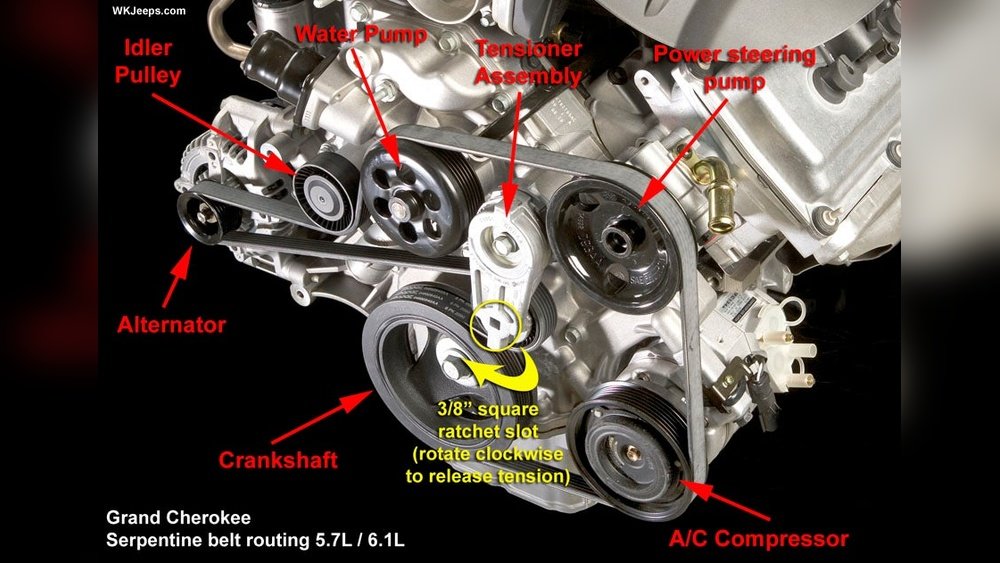
This diagram serves as a visual roadmap, illustrating the precise path the belt takes around the various pulleys, ensuring each component receives the necessary rotational power.
Proper belt routing is not just about appearance; it directly impacts the functionality of your Grand Cherokee. A misplaced belt can lead to a cascade of problems, from a dead battery due to the alternator not spinning, to overheating from a non-functional water pump, or a loss of power steering.
This guide will delve into the specifics of the serpentine belt system for the 2014 Jeep Grand Cherokee with the 5. 7L Hemi engine, providing clarity on its routing, the components it serves, and common maintenance considerations.
We aim to simplify this often-intimidating aspect of vehicle upkeep, empowering owners and DIY enthusiasts with the knowledge needed to keep their Jeep running smoothly.
Understanding The Serpentine Belt System
The serpentine belt system on your 2014 Jeep Grand Cherokee 5.7L is a marvel of engineering efficiency. Instead of multiple individual belts for each accessory, a single, long belt snakes around a series of pulleys. This design offers several advantages: it’s more compact, reduces weight, and simplifies replacement compared to older multi-belt systems. However, it also means that if the belt breaks or slips, multiple critical systems can fail simultaneously.
The belt itself is typically made of reinforced rubber, designed to withstand high temperatures, flexing, and tension. Over time, this rubber can degrade, leading to cracks, fraying, or glazing, all of which compromise its grip and integrity.
The tensioner, a spring-loaded or hydraulic pulley, is also a vital part of the system.
It maintains the correct tension on the belt, ensuring it doesn’t slip under load or become too tight, which could damage bearings in the pulleys.
Key Components Driven By The Serpentine Belt
The 2014 Jeep Grand Cherokee 5.7L Hemi engine utilizes the serpentine belt to power several vital accessories. Each of these components relies on the belt’s rotation to perform its function:
- Alternator: This is arguably the most critical component driven by the belt. The alternator’s job is to convert mechanical energy from the engine into electrical energy, which powers the vehicle’s electrical systems (lights, radio, ignition, etc.) And recharges the battery. If the alternator isn’t spinning, your battery will eventually drain, leading to a breakdown.
- Water Pump: The water pump circulates coolant through the engine block and radiator, regulating the engine’s temperature. A failure in the water pump, often due to belt slippage or the pump’s internal bearing failing, can quickly lead to engine overheating, which can cause severe damage.
- Power Steering Pump: This component provides hydraulic pressure to assist the steering system, making it easier to turn the wheels. Without the power steering pump operating, steering will become significantly harder, especially at low speeds.
- Air Conditioning (A/C) Compressor: The A/C compressor is responsible for compressing the refrigerant in the air conditioning system, allowing it to cool the cabin. While not essential for engine operation, its failure means no cold air. The pulley for the A/C compressor often has a clutch, meaning the compressor itself only spins when the A/C is engaged, although the pulley is always being turned by the belt.
- Idler Pulley(s): These are typically smooth pulleys that do not drive any accessories but are used to redirect the belt’s path, ensure proper tension, or provide clearance around other engine components. They are crucial for maintaining the correct belt tension and routing.
- Belt Tensioner: While not driven *by* the belt in the same way as the accessories, the tensioner pulley is an integral part of the system. It applies constant pressure to the belt to keep it tight and prevent slippage. The tensioner itself can wear out, leading to a loose belt and potential problems.
The 2014 Jeep Grand Cherokee 5.7 Belt Diagram Explained
Visualizing the belt's path is key to understanding its function. The 2014 Jeep Grand Cherokee 5.
7L Hemi belt diagram shows a specific, intricate route the belt must follow. Deviating from this path, even slightly, will result in the system not working correctly or the belt quickly failing.
The diagram typically illustrates the crankshaft pulley (the largest pulley at the bottom front of the engine), the alternator pulley, the power steering pump pulley, the A/C compressor pulley, the water pump pulley, the idler pulley(s), and the tensioner pulley.
Each pulley is positioned to guide the belt in a specific direction.
Common Belt Routing Scenarios
While there might be minor variations depending on specific model year updates or accessory configurations, the general routing for the 2014 Jeep Grand Cherokee 5. 7L is fairly consistent.
The belt typically wraps around the crankshaft pulley first, then travels up to the alternator, then down to the A/C compressor, then across to the power steering pump, then up to the water pump, and finally around the idler pulley before returning to the tensioner and then back to the crankshaft pulley.
Pro Tip: Always refer to the specific belt routing diagram found on a sticker under the hood of your vehicle or in the owner’s manual. These diagrams are often printed in a location meant for easy access during maintenance. If the sticker is missing or unreadable, online resources and service manuals are invaluable.
Importance Of Correct Belt Tension
The belt tensioner is a critical component in maintaining the serpentine belt’s effectiveness. It ensures the belt remains taut enough to grip the pulleys without slipping, but not so tight that it overstresses the bearings of the accessories or the tensioner itself. A worn-out tensioner can lead to a loose belt, causing squealing noises, reduced accessory performance (dim lights, poor A/C, hard steering), and premature belt wear. Conversely, a tensioner that applies too much force can damage bearings.

Credit: www.youtube.com
Routine Maintenance And Inspection
Regularly inspecting your serpentine belt is a simple yet effective way to prevent unexpected breakdowns. This inspection should be part of your routine vehicle maintenance schedule, perhaps every oil change or at least twice a year.
What To Look For During Inspection
When you check the belt, look for several signs of wear and tear:
- Cracks: Small cracks on the ribbed side of the belt are normal with age, but deep or numerous cracks indicate the belt is nearing the end of its life.
- Fraying: If the edges of the belt are fraying or unraveling, it’s a sign of excessive wear or misalignment.
- Glazing: The belt’s surface may become smooth and shiny, especially on the ribbed side. This “glazing” reduces friction and can cause slipping.
- Contamination: Oil or coolant leaks can degrade the rubber of the belt, causing it to swell or break down prematurely. If the belt is contaminated, the source of the leak should be addressed.
- Tension: You can check tension by pressing down on the longest free span of the belt. It should deflect only about 1/2 inch. If it’s much looser, the tensioner might be failing.
When To Replace The Serpentine Belt
There isn't a single mileage interval that applies to all serpentine belts, as wear depends heavily on driving conditions, climate, and the quality of the belt itself. However, most manufacturers recommend replacement between 60,000 and 100,000 miles.
It's always best to err on the side of caution.
If you notice any of the signs of wear mentioned above, or if the belt starts to squeal, it’s time for a replacement, even if it hasn’t reached the mileage recommendation.
Replacing The Serpentine Belt
Replacing a serpentine belt on a 2014 Jeep Grand Cherokee 5.7L is a task that many DIY enthusiasts can tackle. It requires basic tools and careful attention to the 2014 Jeep Grand Cherokee 5.7 belt diagram.
Tools And Materials Needed
Before you start, gather the necessary tools and parts:
- New Serpentine Belt: Ensure you have the correct belt for your specific vehicle model and engine.
- Serpentine Belt Tool Kit: This is highly recommended. It includes a long breaker bar and various pulley sockets or adapters that make it easier to release the tensioner.
- Socket Set and Ratchet: For removing any covers or components if necessary, and for working with the tensioner.
- Gloves and Safety Glasses: For protection.
- Flashlight: To see clearly in the engine bay.
- The Belt Diagram: A printed copy or accessible on your phone.
Step-by-step Replacement Guide
- Locate the Belt and Tensioner: Open the hood and identify the serpentine belt and the tensioner pulley. The tensioner usually has a bolt head or a square hole where you can attach a tool to rotate it.
- Consult the Diagram: Before touching anything, confirm the belt’s routing by looking at the diagram located on the vehicle (often on the underside of the hood) or in your owner’s manual. Take a picture with your phone if needed.
- Release Belt Tension: Attach the serpentine belt tool (or a suitable socket and breaker bar) to the bolt head or square hole on the tensioner. Apply steady pressure to rotate the tensioner, which will loosen the belt. The direction to rotate the tensioner to release tension varies, but it’s usually towards the front of the vehicle or downward.
- Remove the Old Belt: While holding the tensioner in the released position, carefully slip the old belt off one of the pulleys. A common choice is the alternator or water pump pulley, as they are often easier to access. Once the belt is off one pulley, you can slowly release the tensioner back to its resting position. Then, fully remove the old belt from all the pulleys.
- Install the New Belt: Begin by routing the new belt around the pulleys according to the diagram. It’s often easiest to start with the crankshaft pulley (the lowest and largest) and work your way around. Leave one of the easier-to-access pulleys (like the alternator) for last.
- Apply Tension and Finish: Once the belt is routed around all pulleys except the last one, use your serpentine belt tool again to rotate the tensioner to release its spring pressure. Slip the belt onto the final pulley. Slowly release the tensioner back to its normal position. The belt should now be taut.
- Verify Routing and Tension: Double-check that the belt is seated correctly in the grooves of all pulleys and that it follows the exact path shown in the diagram. Give the belt a gentle tug to ensure it’s properly tensioned.
- Start the Engine: Start the engine briefly and listen for any unusual noises, such as squealing, which might indicate improper tension or routing. Turn off the engine and re-inspect the belt and its path.

Credit: www.jeepcommander.com
Troubleshooting Common Belt Issues
Even with proper maintenance, you might encounter issues with your serpentine belt system. Understanding these problems can help you diagnose and fix them faster.
Squealing Noises
A common symptom of a failing serpentine belt system is a high-pitched squeal, especially upon startup or when accelerating. This noise often indicates:
- Loose Belt: The belt is not tight enough and is slipping on the pulleys. This could be due to a worn tensioner or improper installation.
- Glazed Belt: The belt surface has become smooth and lacks grip.
- Contaminated Belt: Oil or coolant on the belt reduces friction.
- Misaligned Pulley: One of the pulleys is not perfectly aligned with the others, causing the belt to rub or slip.
Accessory Malfunctions
If one or more accessories are not working correctly, the serpentine belt or its related components are often the culprits:
- Dimming Lights or Battery Warning Light: This almost always points to a problem with the alternator or its belt.
- Overheating Engine: A slipping or broken water pump belt will prevent the water pump from circulating coolant.
- Hard Steering: If the power steering pump isn’t receiving power from the belt, steering will become very difficult.
- No Air Conditioning: If the A/C compressor pulley isn’t spinning, the system won’t cool.
Belt Breakage
A broken serpentine belt is an immediate and critical failure. The engine will likely continue to run for a short time, but all accessories driven by the belt will stop functioning.
This means no charging for the battery, no cooling for the engine, and no power steering.
If your belt breaks while driving, pull over safely as soon as possible and shut off the engine to prevent further damage.
Comparing Belt And Tensioner Components
When replacing components, it’s important to understand the quality differences between parts. Not all belts and tensioners are created equal, and choosing the right ones can impact longevity and performance.
| Component | Material/Type | Key Features | Common Issues |
|---|---|---|---|
| **Serpentine Belt** | EPDM Rubber (Ethylene Propylene Diene Monomer) | Durable, heat-resistant, flexible, good resistance to oil and ozone. | Cracking, fraying, glazing, stretching, noise. |
| Aramid Fiber Reinforced | Enhanced strength and durability for high-stress applications. | Similar wear issues as EPDM, but often lasts longer. | |
| **Belt Tensioner** | Spring-Loaded | Uses a spring to maintain tension. Simpler design, can weaken over time. | Spring fatigue, erratic tension, noise, premature belt wear. |
| Hydraulic/Automatic | Uses hydraulic fluid or a self-adjusting mechanism for consistent tension. | Leaks, seal failure, inconsistent tension, bearing wear. | |
| **Idler Pulleys** | Steel or Aluminum with Bearing | Smooth rotation, redirects belt path. | Bearing failure (noise, seized pulley), wobble, or misalignment. |
| **Accessory Pulleys** | Steel or Aluminum | Driven by the belt to power specific components (alternator, water pump, etc.) | Bearing wear, damage from belt misalignment or over-tensioning. |