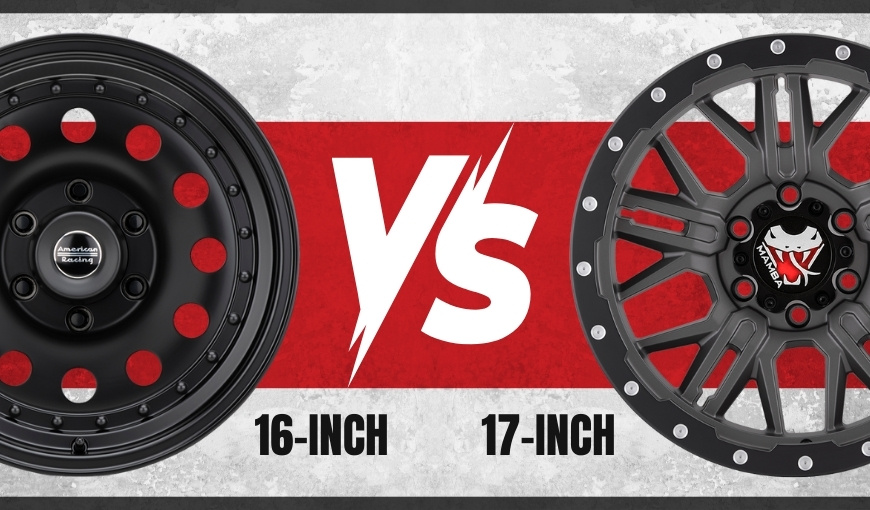
If you own a Jeep Wrangler, choosing the right wheels is more than just style. The debate between 16 inch wheels and 17 inch wheels is common in forums, especially for off-road lovers. Both sizes affect performance, comfort, and looks. There are 16 main factors people discuss when comparing these wheels. This article breaks down each factor so you can decide which fits your needs best.
1. Tire Selection
16 inch wheels offer fewer tire choices, especially for modern Jeeps. Many tire brands focus on 17 inch tires because newer Wranglers come with 17s from the factory. If you want more options for mud, all-terrain, or highway tires, 17 inch wheels make it easier.
2. Ride Comfort
A larger tire sidewall on 16 inch wheels absorbs bumps better. This can make your Wrangler feel softer on rough roads. However, 17 inch wheels usually have shorter sidewalls, which may feel firmer but slightly less forgiving over potholes.
3. Handling
17 inch wheels improve cornering and steering response. The shorter sidewall helps the tire stay stable in turns. If you drive mostly on pavement, this can make your Jeep feel more controlled.
4. Off-road Performance
For serious off-roading, 16 inch wheels allow taller sidewalls. This gives better flex and grip on rocks or dirt. Sidewalls are less likely to get damaged. Many experienced off-roaders prefer 16s for this reason.
5. Brake Clearance
Modern Wranglers often have larger brakes. 17 inch wheels provide more space for these bigger brake calipers. If your Jeep has upgraded brakes, 16s might not fit without modifications.
6. Wheel Weight
16 inch wheels tend to be lighter, especially in steel. This can help fuel economy and acceleration. But the difference is not always huge; some 17 inch wheels are made with lightweight alloys.
7. Appearance
Wrangler owners care about looks. 17 inch wheels usually look more modern and fill the wheel wells nicely. 16s can appear smaller, especially with big tires, but some prefer the classic, rugged look.
8. Fuel Economy
Heavier wheels and tires can lower MPG. Because 17 inch wheels often use wider, heavier tires, you might see a small drop in mileage compared to lighter 16 inch setups.
9. Price
16 inch wheels are sometimes cheaper, but fewer tire options can mean paying more for specialty tires. 17 inch wheels are common, so both wheels and tires may cost less overall.
10. Availability
It’s easier to find 17 inch wheels and tires at shops or online. 16 inch wheels are less common, so getting replacements or upgrades may take longer.
11. Load Capacity
Some 16 inch wheels have higher load ratings, especially steel ones. This can matter if you carry heavy gear. Still, most 17 inch wheels meet Wrangler needs unless you’re doing extreme towing.
12. Road Noise
Tire choice matters more than wheel size, but 16 inch wheels with bigger sidewalls often run quieter. 17 inch wheels with low-profile tires may transmit more noise.
13. Tire Pressure Adjustments
Off-roaders air down tires for traction. 16 inch wheels with taller sidewalls can handle lower pressure without risking damage. 17 inch wheels need careful monitoring to avoid pinching the tire.
14. Speedometer Accuracy
Changing wheel size can affect your speedometer reading. Larger wheels (like 17 inch) make your Jeep’s speedometer read slightly lower than real speed, unless you adjust it. This is often solved with a programmer.
15. Suspension Compatibility
Most lift kits and suspension upgrades are designed around 17 inch wheels. If you use 16s, check compatibility, especially for high lifts or aftermarket parts.
16. Resale Value
Many buyers expect 17 inch wheels on newer Wranglers. Upgrading to 17s can help resale value, while rare 16s may limit buyer interest unless marketed to off-road enthusiasts.
Comparison: Wheel Size Vs Tire Sidewall
Here’s how wheel size affects tire sidewall height for a Jeep Wrangler:
| Wheel Size | Tire Size (Popular) | Approx. Sidewall (inches) |
|---|---|---|
| 16 inch | 285/75R16 | 8.4 |
| 17 inch | 285/70R17 | 7.9 |
This difference influences ride comfort and off-road performance.
Real-world Example: Jeep Wrangler Upgrade
A 2018 Wrangler owner switched from 16 inch steel wheels with all-terrain tires to 17 inch alloy wheels with mud-terrain tires. The result was:
- Slightly better handling and looks on the road
- Easier to find tires locally
- Minor decrease in ride comfort off-road
This shows how wheel choice impacts daily use.
Brake Clearance Comparison
Many Jeep owners worry about brake fit. Here’s a quick look:
| Wheel Size | Brake Clearance | Fits Factory Brakes? |
|---|---|---|
| 16 inch | Limited | Older Models Only |
| 17 inch | Plenty | All Models |
Always check brake specs before buying wheels.
Common Mistakes When Choosing Wheels
- Ignoring brake clearance with 16 inch wheels
- Not checking tire availability for preferred wheel size
- Forgetting to adjust speedometer after changing wheel size
- Choosing looks over off-road function
- Assuming all shops carry both sizes
Many beginners miss these points and regret later.
Frequently Asked Questions
Will 16 Inch Wheels Fit All Jeep Wranglers?
No. 16 inch wheels fit older Wranglers and some base models. Newer Wranglers with large brakes may need 17 inch wheels for proper clearance.
Is There A Big Difference In Off-road Performance?
Yes, 16 inch wheels allow taller sidewalls, which help off-road. This means better grip and less risk of tire damage compared to 17 inch wheels.
Are 17 Inch Wheels Better For Daily Driving?
Generally, yes. 17 inch wheels offer more tire options, better handling, and fit modern brake setups. They are popular for both city and light off-road use.
Will Changing Wheel Size Affect My Speedometer?
Yes. Larger wheels like 17 inch can make your speedometer read lower than actual speed. Many owners use a programmer to fix this.
Where Can I Learn More About Jeep Wheel Sizes?
You can read detailed guides and community advice on Jeep Wrangler Forum, which covers wheel fitment, tire choices, and real-world experiences.
Choosing between 16 and 17 inch wheels on your Jeep Wrangler depends on how you drive, your off-road needs, and your budget. Both sizes have clear strengths.
Think about tire availability, brake clearance, and resale value. With the right information, you’ll make a confident choice that fits your lifestyle and your Jeep.