The 2008 Jeep Liberty, a popular choice for adventurers and everyday drivers alike, relies on a well-functioning serpentine belt system to power essential components.
This belt, often called a serpentine belt, is a single, continuous loop that drives accessories like the alternator, power steering pump, air conditioning compressor, and water pump. Understanding the Jeep Liberty belt diagram for your 2008 model is crucial for proper maintenance, troubleshooting, and replacement.
A worn or damaged belt can lead to a cascade of problems, leaving you stranded. This guide will break down the serpentine belt system, explain the diagram, and offer practical advice for keeping your 2008 Jeep Liberty running smoothly.
Understanding The Serpentine Belt System In Your 2008 Jeep Liberty
The serpentine belt is a marvel of modern automotive engineering. Instead of multiple individual belts, one long, multi-ribbed belt snakes around various pulleys, transferring rotational power from the engine's crankshaft to different accessories.
This design is more efficient, takes up less space, and reduces the chances of a single belt failure disabling the entire system, although a broken serpentine belt will still stop many critical functions.
In your 2008 Jeep Liberty, the serpentine belt plays a vital role in the operation of several key systems:
- Alternator: This component generates electricity to charge the battery and power the vehicle’s electrical systems. If the alternator isn’t driven by the belt, your battery will eventually drain, and the car will stop.
- Power Steering Pump: This pump provides hydraulic pressure to assist in steering. Without it, steering becomes extremely difficult, especially at low speeds.
- Water Pump: This circulates coolant through the engine to prevent overheating. A non-functional water pump will quickly lead to severe engine damage.
- Air Conditioning (A/C) Compressor: This compresses refrigerant to cool the cabin. While not essential for driving, its failure is noticeable and uncomfortable in warmer climates.
A properly routed belt ensures all these components receive the necessary rotational force. The 08 Jeep Liberty belt diagram is essentially a map of how this belt should be positioned.
Decoding The 2008 Jeep Liberty Belt Diagram
The serpentine belt diagram for your 2008 Jeep Liberty is a visual representation of the belt’s path around the various pulleys. While specific diagrams can vary slightly depending on the engine configuration (e.g., 3.7L V6), the general layout and the components involved remain consistent. When you look at a diagram, you’ll typically see:
- The Crankshaft Pulley: This is the largest pulley and is directly connected to the engine’s crankshaft. It’s the source of rotational power.
- The Alternator Pulley: Located on the alternator, this pulley receives power from the belt.
- The Power Steering Pump Pulley: Connected to the power steering pump.
- The Water Pump Pulley: Attached to the water pump.
- The A/C Compressor Pulley: Found on the air conditioning compressor.
- The Idler Pulley(s): These are smooth pulleys that help maintain tension on the belt and guide it along its path. They do not drive any accessories.
- The Tensioner Pulley: This pulley is attached to a spring-loaded or hydraulic tensioner mechanism. Its job is to keep the belt taut, preventing slippage and ensuring proper power transfer.
The diagram illustrates how the belt wraps around these pulleys, showing which ribs engage with which grooves. This routing is critical; installing the belt incorrectly will prevent it from driving the accessories and could even cause damage.
You can usually find the belt routing diagram printed on a sticker under the hood of your Jeep Liberty, often near the radiator support or on the fan shroud.
If that sticker is missing or illegible, consulting a service manual or an online resource specific to your vehicle is essential.
Common Visual Representations
When you find a Jeep Liberty serpentine belt routing diagram 2008, it will typically be a line drawing. The engine pulleys are represented by circles, and the belt’s path is shown by a line with ribs indicating the grooves. Arrows often show the direction of rotation.
- Engine Off: In this state, the belt will appear slack on the tensioner side, as the tensioner is holding it in place.
- Engine Running: When the engine is running, the belt will be taut and moving at high speed, driving all the accessories.
Understanding these visual cues is your first step in diagnosing belt-related issues or preparing for a replacement.

Identifying Symptoms Of A Failing Serpentine Belt
A failing serpentine belt rarely gives a lot of warning before it causes a problem. However, there are several signs you can look out for that indicate it's time for a replacement.
Acting quickly can prevent more serious damage and inconvenience.
- Squealing Noise: This is the most common symptom. A high-pitched squealing or chirping sound, especially when you first start the engine or when accelerating, often points to a worn, glazed, or loose belt. The noise occurs when the belt slips on the pulleys.
- Cracks, Glazing, or Fraying: Visually inspecting the belt can reveal significant wear. Look for:
- Cracks: Small cracks on the ribbed side of the belt are normal with age, but deep or numerous cracks indicate the belt is becoming brittle and is close to failure.
- Glazing: A shiny, smooth appearance on the ribbed side of the belt means the rubber has hardened and lost its grip.
- Fraying: If the edges of the belt are becoming frayed or threads are showing, it’s a clear sign of imminent failure.
- Missing Ribs: If part of a rib breaks off the belt, it can cause uneven running and reduce the belt’s contact area with the pulleys, leading to slippage.
- Accessory Malfunction: If an accessory stops working, it could be due to the belt breaking or slipping. For example:
- The battery warning light on the dashboard illuminates (alternator issue).
- Steering becomes unusually heavy (power steering issue).
- The temperature gauge climbs rapidly (water pump issue).
- The A/C stops blowing cold air (A/C compressor issue).
- Belt Vibration or Wobbling: If the belt appears to be vibrating or wobbling excessively while the engine is running, it could indicate a problem with the tensioner, an idler pulley, or the belt itself.
In my experience, the squealing noise is the most frequent indicator that drivers notice. However, visual inspection is equally important, as a belt can be severely degraded without making noise.
Serpentine Belt Replacement: A Step-by-step Guide
Replacing the serpentine belt on your 2008 Jeep Liberty is a task that many DIYers can tackle with the right tools and a clear understanding of the process. The key is to accurately follow the Jeep Liberty belt diagram 2008 to ensure correct routing.
Tools and Materials You’ll Need:
- New serpentine belt (ensure it’s the correct part number for your specific engine)
- Serpentine belt tool kit (includes a long-handled tensioner wrench and various socket attachments) or a breaker bar and appropriate socket for the tensioner.
- Gloves
- Safety glasses
- Flashlight
Steps for Replacement:
- Safety First: Park the Jeep on a level surface, engage the parking brake, and turn off the engine. Allow the engine to cool down completely, as components can be very hot.
- Locate the Belt and Tensioner: Open the hood and find the serpentine belt. Identify the automatic belt tensioner. It’s usually a spring-loaded arm with a pulley on the end.
- Refer to the Diagram: Locate the belt routing diagram (often on a sticker under the hood). Take a clear picture of it with your phone or make a detailed sketch. This is your most important reference.
- Release Belt Tension: Attach the serpentine belt tool or breaker bar to the designated hex head or bolt on the tensioner arm. Apply steady pressure to rotate the tensioner, which will release the tension on the belt. You’ll typically be pulling the wrench in a direction that moves the tensioner pulley away from the belt.
- Remove the Old Belt: While holding the tensioner released, slip the old belt off one of the pulleys, usually the easiest one to access, such as the alternator or power steering pulley. Once the belt is off one pulley, you can slowly release the tensioner. Then, carefully remove the old belt from all the pulleys.
- Inspect Pulleys: With the belt off, spin each pulley by hand. They should spin freely and quietly. If you hear grinding, roughness, or excessive play, the corresponding component (alternator, idler, tensioner, etc.) May need replacement.
- Install the New Belt: Drape the new belt around the pulleys according to the diagram you noted. Start with the crankshaft pulley and work your way around, leaving the tensioner pulley for last.
- Re-engage Tensioner: Once the belt is routed around all pulleys except the tensioner, rotate the tensioner again to release its tension. Slip the belt onto the tensioner pulley.
- Release Tensioner Slowly: Slowly and carefully release the tensioner. The belt should become taut. Ensure the belt is properly seated in the grooves of all pulleys.
- Double-Check Routing: Compare the installed belt to your diagram one last time. Ensure it’s correctly routed and seated on every pulley.
- Start the Engine: Start the engine briefly and listen for any unusual noises. Check that all accessories are functioning. Turn off the engine and re-inspect the belt to ensure it’s still properly seated.
Pro Tip: If your tensioner feels weak or overly stiff, it might be time to replace it along with the belt. A faulty tensioner can cause premature belt wear or even allow the belt to slip off.
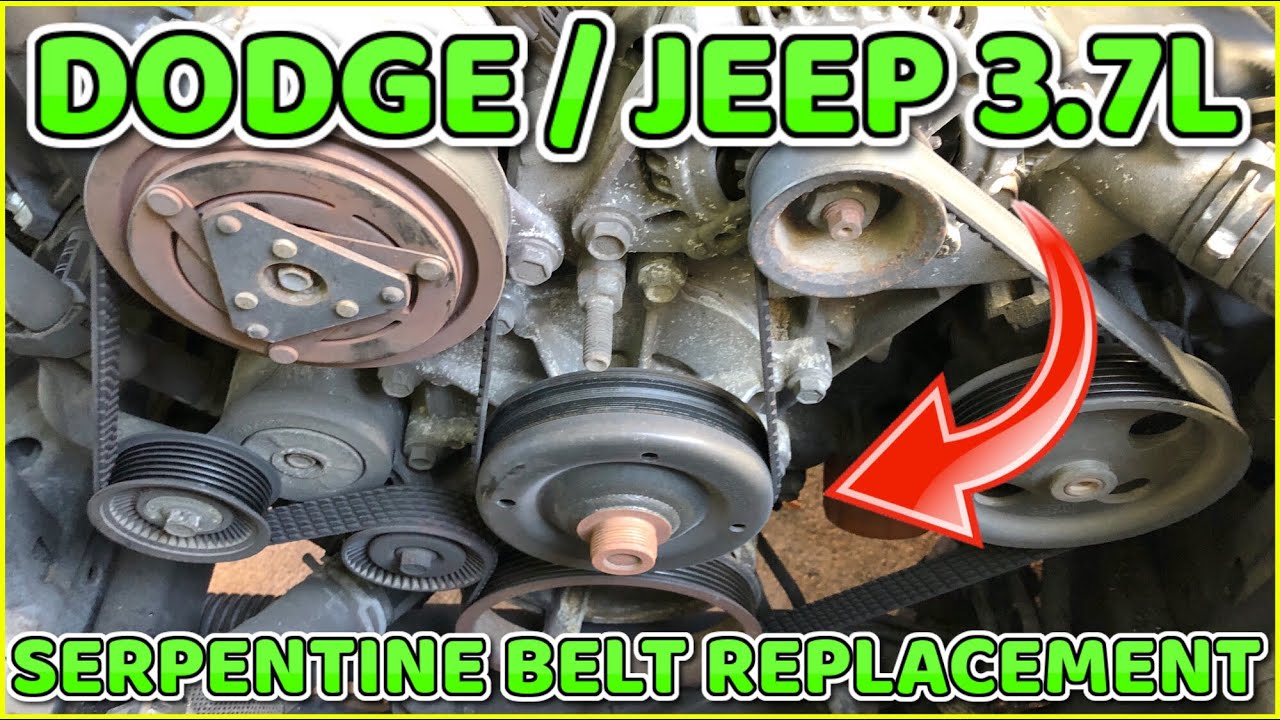
Understanding Belt Tension And The Tensioner Mechanism
The serpentine belt tension is critical for its proper function. Too loose, and it will slip, causing squealing and inefficient operation of accessories. Too tight, and it can put excessive strain on the bearings of the accessories and the tensioner itself, leading to premature failure.
The 2008 Jeep Liberty uses an automatic belt tensioner. This mechanism is designed to constantly maintain the correct tension on the serpentine belt as it heats up, cools down, and wears over time. It typically consists of:
- A Pulley: The pulley that rides on the belt.
- A Spring or Hydraulic Damper: This provides the force to keep the pulley pressed against the belt.
- A Pivoting Arm: The pulley is mounted on this arm, which is allowed to move.
- A Mounting Point: Where the tensioner assembly bolts to the engine.
When you release tension to remove the belt, you are essentially compressing the spring or forcing the hydraulic damper within the tensioner. When you release it, the mechanism pushes the pulley against the belt, keeping it snug.
Signs Of A Failing Tensioner
A failing automatic tensioner can manifest in several ways:
- Excessive Movement: The tensioner pulley may bounce or move erratically when the engine is running.
- Weak Spring: The tensioner may not provide enough force, leading to belt slippage and noise, even with a new belt.
- Stiff Operation: The tensioner might be difficult to move when you’re trying to release tension, or it may not return smoothly.
- Physical Damage: Cracks in the tensioner housing or visible damage to the pulley bearing can indicate a problem.
It is highly recommended to replace the tensioner if it shows any signs of wear or malfunction, especially when replacing the belt. This is because the tensioner is a wear item, and its failure can lead to a broken belt or improper operation of the new belt.
Common Issues And Troubleshooting
When dealing with the serpentine belt system on your 2008 Jeep Liberty, several common issues can arise. Understanding these problems and their potential causes can help you diagnose and fix them more efficiently.
1. Persistent Squealing
If you replace the belt and still hear squealing, the problem might not be the belt itself.
- Misaligned Pulley: One or more pulleys might be slightly out of alignment, causing the belt to run at an angle and squeal.
- Worn Pulley Bearing: A failing bearing in an accessory pulley (alternator, A/C, etc.) Or an idler/tensioner pulley can create drag or wobble, leading to noise.
- Faulty Tensioner: As mentioned, a weak or damaged tensioner won’t keep adequate pressure on the belt.
- Incorrect Belt: Ensure you have the correct belt for your specific Jeep Liberty model and engine. An incorrectly sized belt can cause issues.
2. Belt Slipping Off
If the belt repeatedly slips off its pulleys, it’s a serious issue.
- Severely Worn Tensioner: The tensioner may have lost its ability to hold the belt securely.
- Misaligned Pulleys: This is a common culprit. A pulley that is not perfectly perpendicular to the belt’s path will push it off.
- Damaged Pulleys: A pulley with a damaged groove or a missing piece can snag or misguide the belt.
- Improper Installation: If the belt wasn’t seated correctly on all pulleys during installation, it might work its way off.
3. Accessory Not Working
If an accessory suddenly stops functioning, the first thing to check is the serpentine belt.
- Broken Belt: The most obvious cause.
- Belt Slipped Off: The belt may have come off one or more pulleys.
- Belt Slipping: If the belt is worn or the tension is too low, it might be spinning on the pulley without driving the accessory.
4. Overheating
Overheating is a critical issue that can quickly damage your engine.
- Water Pump Pulley: If the serpentine belt is not driving the water pump pulley effectively (due to slippage or breakage), coolant won’t circulate. This is a direct cause of overheating.
Example: On a hot summer day, if you notice your temperature gauge climbing into the red zone and you also hear a distinct squealing noise from the front of the engine, it’s highly likely your serpentine belt is slipping or has failed, preventing the water pump from working.
When troubleshooting, always start with the simplest and most common causes. A visual inspection of the belt and pulleys, along with a check of the belt diagram, should be your initial steps.

Factors Affecting Serpentine Belt Lifespan
The lifespan of a serpentine belt can vary significantly based on several factors. While manufacturers often provide a recommended