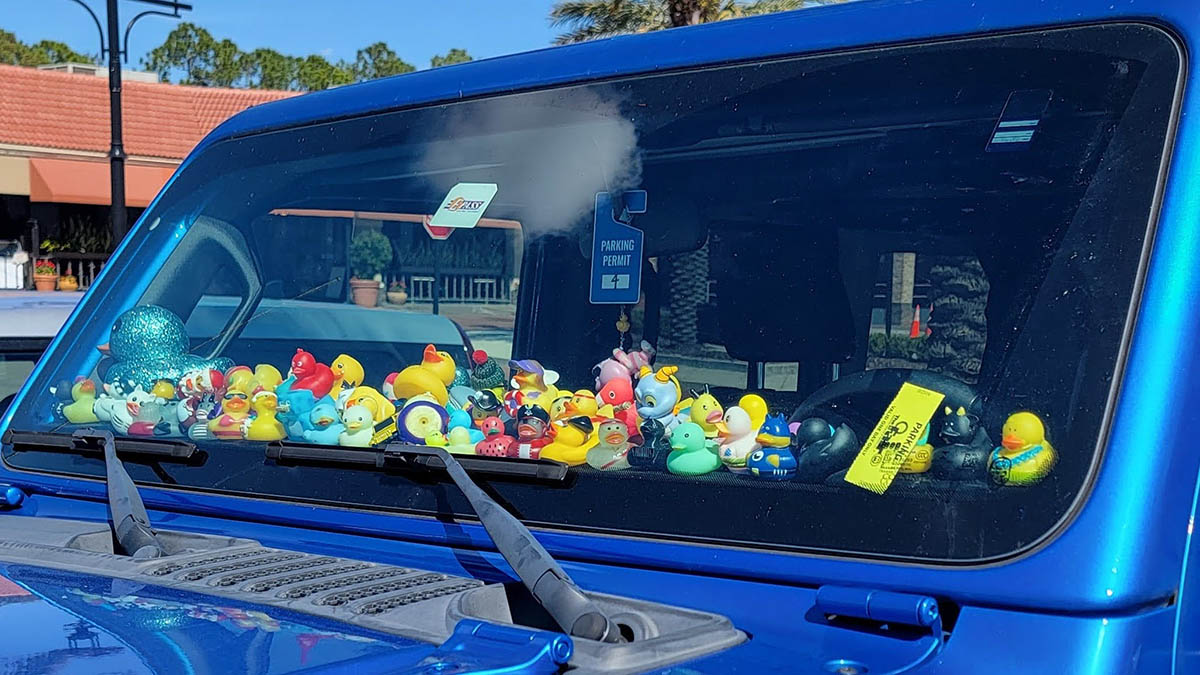
Jeeps are famous for their rugged looks, off-road power, and a strong sense of community. But if you look inside many Jeep vehicles, you might spot something surprising: a small, colorful rubber duck sitting on the dashboard.
This playful trend has caught the attention of both Jeep drivers and curious onlookers. Why do Jeeps have rubber ducks on the dash?
The answer is more interesting than you might think—and it says a lot about the culture behind the wheel.
The Origin Of The Jeep Ducking Trend
The story of Jeep ducking starts in 2020, during the COVID-19 pandemic. A Canadian Jeep owner named Allison Parliament wanted to spread kindness in a difficult time. She placed a rubber duck on a stranger’s Jeep with a friendly note. The idea was simple: make someone smile. The gesture caught on quickly, spreading through social media with the hashtag #duckduckjeep.
Soon, Jeep owners across North America joined in. They began placing rubber ducks on other Jeeps as a sign of appreciation and connection.
The tradition became a global movement, showing how small acts can build a community.
What Does The Rubber Duck Mean?
A rubber duck on a Jeep’s dash is more than just a decoration. It’s a symbol with several meanings:
- Friendship: It shows that someone appreciated your Jeep or wanted to brighten your day.
- Community: It’s a sign that you’re part of the worldwide Jeep family.
- Positivity: It’s meant to make people smile and encourage kindness, even between strangers.
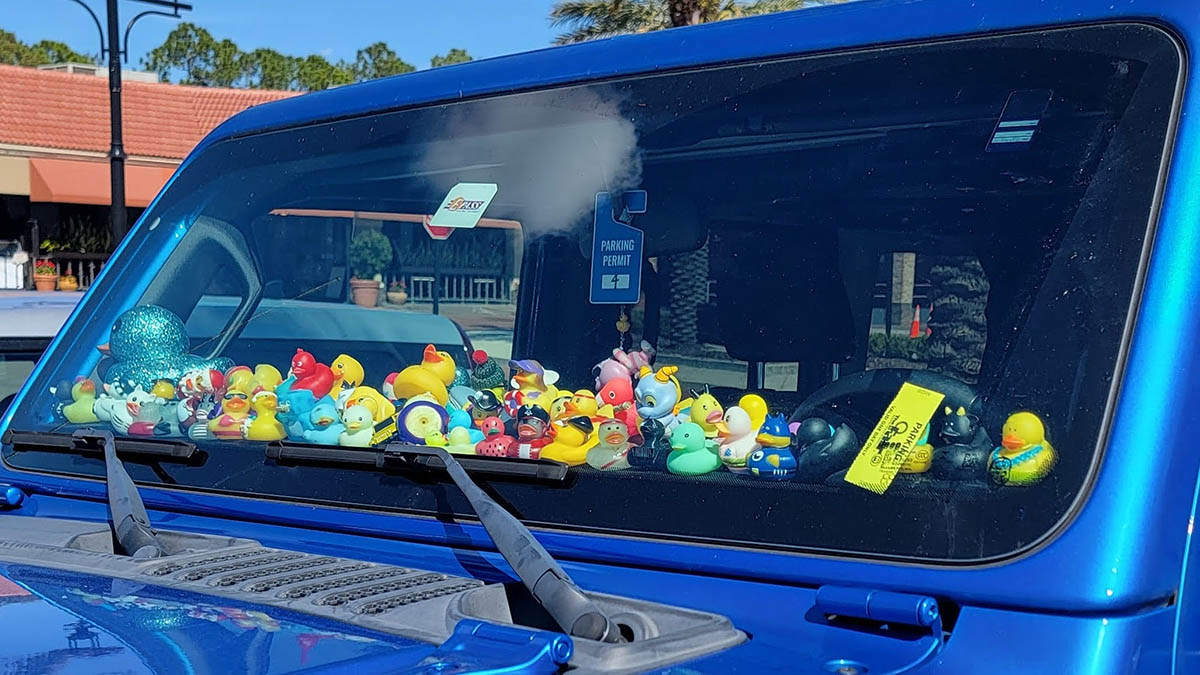
Some Jeep owners collect the ducks they receive, while others re-gift them to keep the cycle going.
How Jeep Ducking Works
The rules of Jeep ducking are simple, but the impact is big. Here’s how it usually happens:
- A Jeep owner buys a pack of rubber ducks—usually small, colorful, and easy to spot.
- When they see a parked Jeep they like, they put a rubber duck on the dash, door handle, or window.
- Some add a note, such as “You’ve been ducked!” or include their Instagram handle.
- The Jeep owner finds the duck, smiles, and often posts a photo online.
The process is easy, but the sense of surprise and connection makes it special.
Popularity And Statistics
Jeep ducking has grown quickly. Posts with the hashtag #duckduckjeep appear on Instagram, Facebook, and TikTok every day. According to a 2023 survey by Duck Duck Jeep, over 500,000 ducks were exchanged in the United States alone. The trend has also reached countries like Australia, the UK, and Germany.
Jeep dealerships and events now embrace the idea. Some even give out ducks to new buyers as a welcome to the community.
Comparing Ducking With Other Car Cultures
Different car brands have their own traditions. Jeep ducking stands out for its playful and positive style. Here is a comparison with other popular car community traditions:
| Brand | Tradition | Main Purpose |
|---|---|---|
| Jeep | Rubber Ducking | Kindness & Community |
| Volkswagen Beetle | Beetle Wave | Driver Recognition |
| Mini Cooper | Mini Wave | Brand Camaraderie |
| Subaru | Subie Wave | Enthusiast Connection |
Compared to the simple wave used by other groups, giving a rubber duck feels more personal and memorable.
Why The Duck On The Dash?
Some people wonder why the duck goes on the dashboard and not somewhere else. The dash is easy to see, safe from rain, and unlikely to damage the car. It’s also a spot where the duck will greet the driver immediately, adding a moment of surprise and cheer.
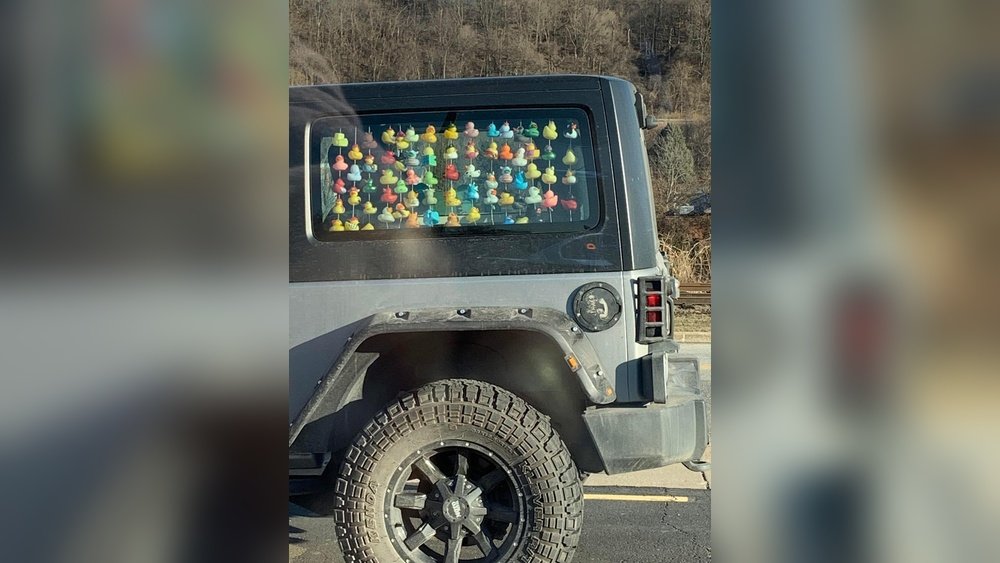
Over time, some Jeep drivers collect dozens of ducks and display them across the dash or even the entire interior. Each duck can remind the owner of a special trip, a Jeep event, or a random act of kindness.
Tips For Joining The Duck Duck Jeep Movement
Want to join in? Here’s how to start:
- Buy a pack of small, safe rubber ducks—avoid ducks with sharp edges or toxic materials.
- Write a kind note, but keep it short. You can add your name or social media.
- Place the duck gently on a visible spot, like the dash or side mirror.
- Never put a duck where it could block the driver’s view or cause distraction.
- Always respect private property—only duck parked Jeeps in public areas.
A little creativity can make your duck stand out, but safety and respect come first.
Jeep Ducking: Fun Facts And Surprising Details
Some facts about Jeep ducking that even long-time fans may not know:
- The most common duck color is yellow, but themed ducks (pirates, nurses, superheroes) are also popular.
- Some Jeep clubs organize “duck runs,” where groups deliver ducks to many Jeeps in one day.
- Jeep ducking has inspired charity events, with ducks sold to raise money for hospitals and animal shelters.
- There are now smartphone apps to track and share ducking experiences with other Jeepers.
Here’s a look at the most popular duck sizes:
| Duck Size | Percentage Used | Reason for Popularity |
|---|---|---|
| Mini (1-1.5 in) | 60% | Fits on dash, easy to carry |
| Standard (2-3 in) | 35% | Easy to see, good for notes |
| Large (4+ in) | 5% | Special occasions only |

The Spirit Of The Jeep Community
At its heart, Jeep ducking isn’t about the toy duck itself. It’s about building a culture of respect and friendliness among drivers. The Jeep wave—a hand gesture between Jeep drivers—has been a tradition for years. Ducking adds a modern, creative twist.
Not every car brand has such a strong sense of belonging. Jeep owners often say the real value is in the connections they make, not just the vehicles they drive.
How Ducking Affects Jeep Owners
Many Jeepers say that finding a duck made them feel noticed and happy. It can brighten a tough day or turn a simple drive into a memorable experience.
Some parents use the ducks to teach kids about kindness and sharing.
Interestingly, the trend has helped people make new friends at Jeep meetups, off-road trails, and even in parking lots. A simple rubber duck can start a conversation and lead to lasting friendships.
Responsible Ducking: What To Avoid
While the trend is positive, there are some things to keep in mind:
- Don’t leave ducks where they could block airbags or controls.
- Avoid putting ducks on cars that aren’t Jeeps—owners may not understand the gesture.
- Don’t put ducks inside locked vehicles unless you’re at a public event with permission.
- Use clean, new ducks to avoid spreading germs.
Following these tips keeps the tradition fun and safe for everyone.
Frequently Asked Questions
Is Jeep Ducking Only For Jeep Wranglers?
No, ducking is for all Jeep models Wrangler, Cherokee, Renegade, Gladiator, and more. Any Jeep can participate in the tradition.
Do You Have To Keep The Duck, Or Can You Pass It On?
You can do either. Some people collect their ducks, while others pass them to other Jeeps. Both ways are part of the fun.
How Did Ducking Become So Popular?
Social media played a big role. Photos and hashtags like #duckduckjeep spread the trend quickly. Jeep clubs and dealerships also helped it grow. To learn more about its history, see Wikipedia.
Are There Official Jeep Ducking Rules?
There are no strict rules, just guidelines: be friendly, use clean ducks, and don’t put them in risky spots. The main goal is to spread positivity.
Can Non-jeep Owners Join In?
The tradition is for Jeep owners, but anyone can appreciate the kindness. Some other car groups have started similar trends.
A simple rubber duck may seem small, but in the Jeep world, it represents something bigger—friendship, fun, and community. The next time you see a Jeep with a duck on the dash, you’ll know there’s a story behind that cheerful little symbol.