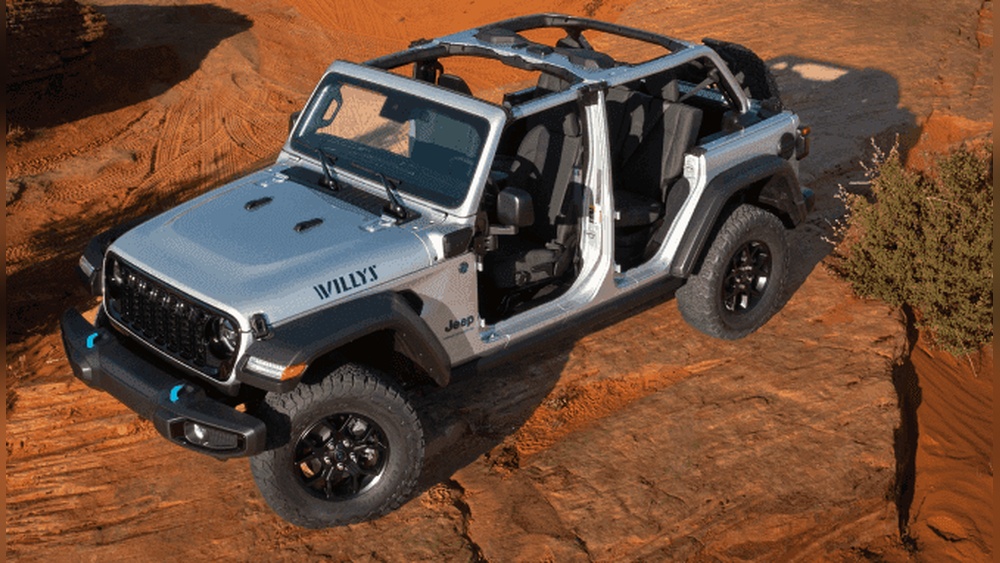
The Jeep Wrangler is known for its strong off-road ability and classic style. One big reason for its performance is the front suspension.
If you want to understand how your Wrangler handles bumps, turns, and trails, learning about the front suspension diagram is a smart first step.
Whether you plan to upgrade your Jeep, fix a problem, or just want to know how things work under the hood, this guide will break down the key parts, their roles, and how they all fit together.
Why Front Suspension Matters On A Jeep Wrangler
The front suspension is more than just a set of springs and shocks. It keeps your tires on the ground, helps absorb impacts from rocks or potholes, and gives you control when steering. For off-road fans, the right suspension setup can be the difference between getting stuck or conquering a trail. Even for daily driving, a healthy suspension means a smoother, safer ride.
Many Jeep Wrangler owners are surprised to learn that the front suspension is also a major factor in tire wear, steering response, and overall comfort. If any part gets damaged or worn, it can affect the whole system.
Main Components Of The Jeep Wrangler Front Suspension
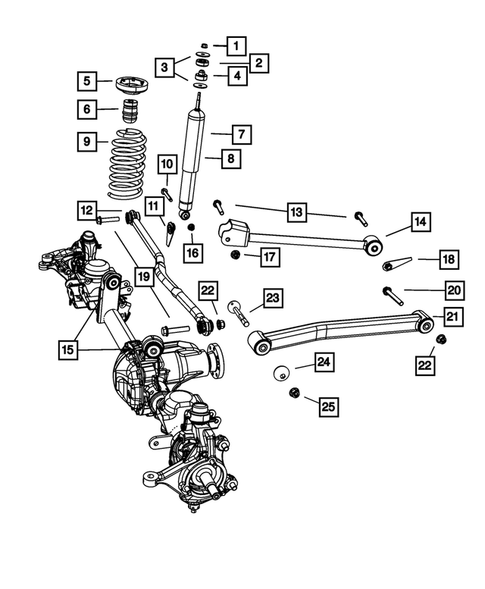
The Wrangler’s front suspension uses a solid axle (also called a live axle) with a coil spring setup. This is different from the independent suspension found in many modern cars. Let’s look at the main parts you’ll find on a typical Wrangler (such as the popular JK and JL models).
1. Axle Housing
The axle housing is a tough, hollow tube that holds the axle shafts and supports the wheels. On the Wrangler, the front axle is solid—both wheels are connected by this single housing, which helps with strength and articulation (up and down movement).
2. Coil Springs
These coil springs sit between the axle and the frame. Their job is to absorb bumps and keep the Jeep at the right height. Springs are a key part of ride comfort and load-carrying.
3. Shock Absorbers
Shocks are cylinders filled with oil and gas. They slow down the up-and-down movement of the springs, stopping the Jeep from bouncing too much after hitting a bump.
4. Control Arms
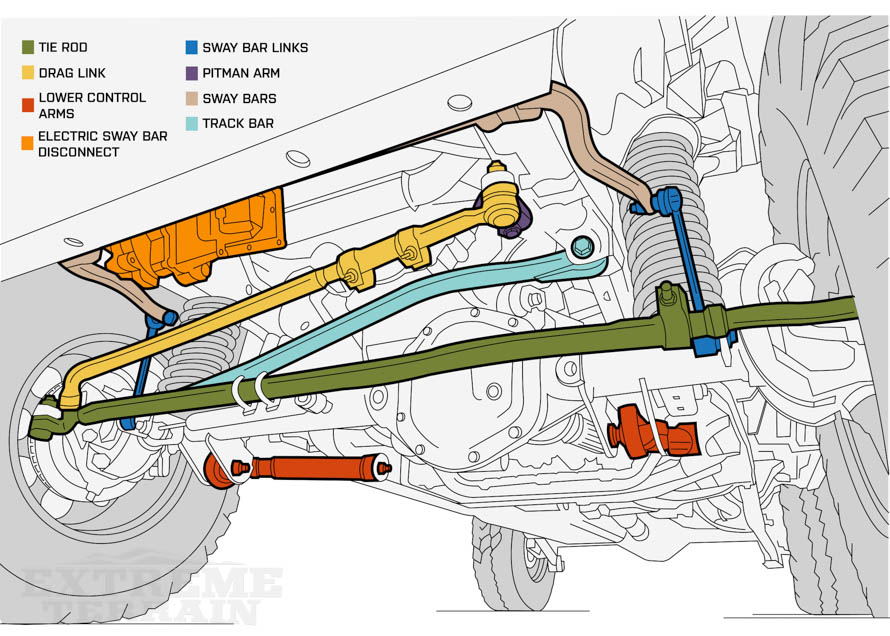
Wrangler front suspensions usually have four control arms (two upper, two lower). They connect the axle to the frame and control its forward and backward movement. Strong control arms help keep the axle in place during hard turns or off-road driving.
5. Track Bar (panhard Rod)
The track bar runs sideways from the frame to the axle. It keeps the axle centered under the Jeep, stopping it from shifting left or right, which is especially important when turning.
6. Sway Bar (stabilizer Bar)
The sway bar connects both sides of the suspension. It reduces body roll during turns, helping the Jeep stay level. Many Wranglers have a sway bar disconnect system for off-roading, allowing more wheel movement.
7. Steering Linkages
This includes the drag link, tie rod, and related parts. These connect the steering wheel to the wheels themselves, so your inputs are translated into movement.
8. Ball Joints And Knuckles
Ball joints let the wheels turn left and right while still moving up and down. The steering knuckle holds the wheel hub and connects to the ball joints.
9. Bump Stops
Bump stops are small rubber or foam blocks that limit how far the axle can travel upward, protecting the suspension from damage during hard hits.
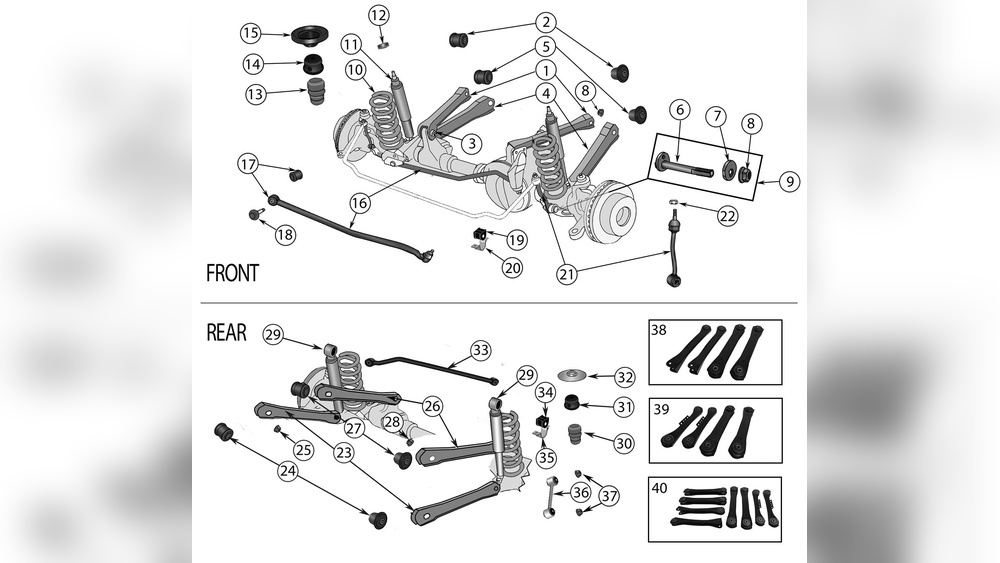
Typical Jeep Wrangler Front Suspension Diagram
While each model year has small differences, most Wrangler front suspensions follow this basic layout:
| Component | Main Function |
|---|---|
| Coil Spring | Absorbs bumps, supports vehicle height |
| Shock Absorber | Controls bounce and rebound |
| Upper/Lower Control Arms | Locates axle, manages movement |
| Track Bar | Keeps axle centered |
| Sway Bar | Reduces body roll |
| Steering Linkages | Transfers steering input |
| Ball Joints | Allows up/down and steering movement |
| Bump Stops | Limits axle travel |
Differences Between Jeep Wrangler Generations
The Wrangler has seen several generations, each with updates to the front suspension. Here’s how the YJ, TJ, JK, and JL compare:
| Generation | Years | Main Front Suspension Type | Notable Features |
|---|---|---|---|
| YJ | 1987–1995 | Leaf Springs | Simple, strong, less comfortable |
| TJ | 1997–2006 | Coil Springs | Smoother ride, better articulation |
| JK | 2007–2018 | Coil Springs | Wider axle, improved geometry |
| JL | 2018–Present | Coil Springs | Lighter, more advanced materials |
Insight: Many beginners think all Wranglers use the same suspension, but the YJ used leaf springs, while all later models use coil springs up front. This change made a big difference in ride comfort and off-road flex.
How The Front Suspension Works Together
Each part of the suspension has a job, but they only work well when they’re in sync. When your tire hits a bump, the coil spring compresses and the shock absorber controls how fast it rebounds. The control arms let the axle move up and down but stop it from twisting. The track bar keeps the axle from shifting side to side. The sway bar keeps the Jeep from leaning too much in turns.
On rough trails, the suspension allows each tire to move independently (up to a limit), so you keep traction even if one wheel is high on a rock. Disconnecting the sway bar (a feature on Rubicon models) lets each wheel move even more, helping with extreme off-roading.
Common Problems And What To Watch For
Even the tough Wrangler suspension can wear out or break. Here are some typical problems:
- Worn ball joints – This can cause loose steering or clunking noises.
- Leaking shocks – If you see oil on the shock body, they’re likely done.
- Broken or sagging springs – The Jeep may lean to one side or bottom out easily.
- Loose track bar – Can cause the dreaded “death wobble,” a violent shaking of the steering wheel at speed.
- Damaged control arm bushings – Leads to poor handling and extra noise.
- Sway bar disconnect failure – May cause unwanted body roll or less control.
Tip: After any off-road trip, check for bent parts or leaks. Catching problems early can save money and keep you safe.
Upgrading Your Wrangler’s Front Suspension
Many Jeep owners upgrade their suspension for better off-road ability or a higher ride. Some popular upgrades include:
- Heavy-duty control arms for added strength
- Adjustable track bars to re-center the axle after lifting
- Lifted coil springs for more ground clearance
- Performance shocks for smoother rides on rough terrain
- Quick disconnect sway bar links for easy off-road setup
But be careful: Lifting a Jeep changes the angles of the control arms and track bar. If you don’t fix these angles (with adjustable arms or brackets), you could end up with steering and handling problems.
Key Statistics For Jeep Wrangler Front Suspension
The Wrangler’s front suspension is built for abuse, but it’s also carefully tuned for on-road use. Here are some quick stats:
| Model | Front Suspension Travel | Ground Clearance (Rubicon) | Stock Axle Type |
|---|---|---|---|
| JK | Up to 8.1 in (206 mm) | 10.3 in (262 mm) | Dana 30/44 |
| JL | Up to 9.7 in (246 mm) | 10.8 in (274 mm) | Dana 30/44 Advantek |
Non-obvious Insight: Many people focus only on lift height, but suspension travel is just as important for off-road use. More travel means your Jeep can handle bigger obstacles without losing traction.
Maintenance Tips For A Healthy Front Suspension
- Inspect regularly: Look for leaks, worn bushings, or bent parts, especially after off-roading.
- Grease fittings: Some control arms and ball joints have grease fittings—keep them lubricated.
- Torque bolts: Suspension bolts can loosen over time. Check torque specs after hard use.
- Check alignment: After any work on the suspension, get a professional alignment to avoid uneven tire wear.
- Replace in pairs: If one shock or spring is bad, replace both sides for balanced handling.
Pro tip: Use only quality replacement parts. Cheaper options may not last as long, especially if you take your Wrangler off-road.
Reading And Understanding A Suspension Diagram
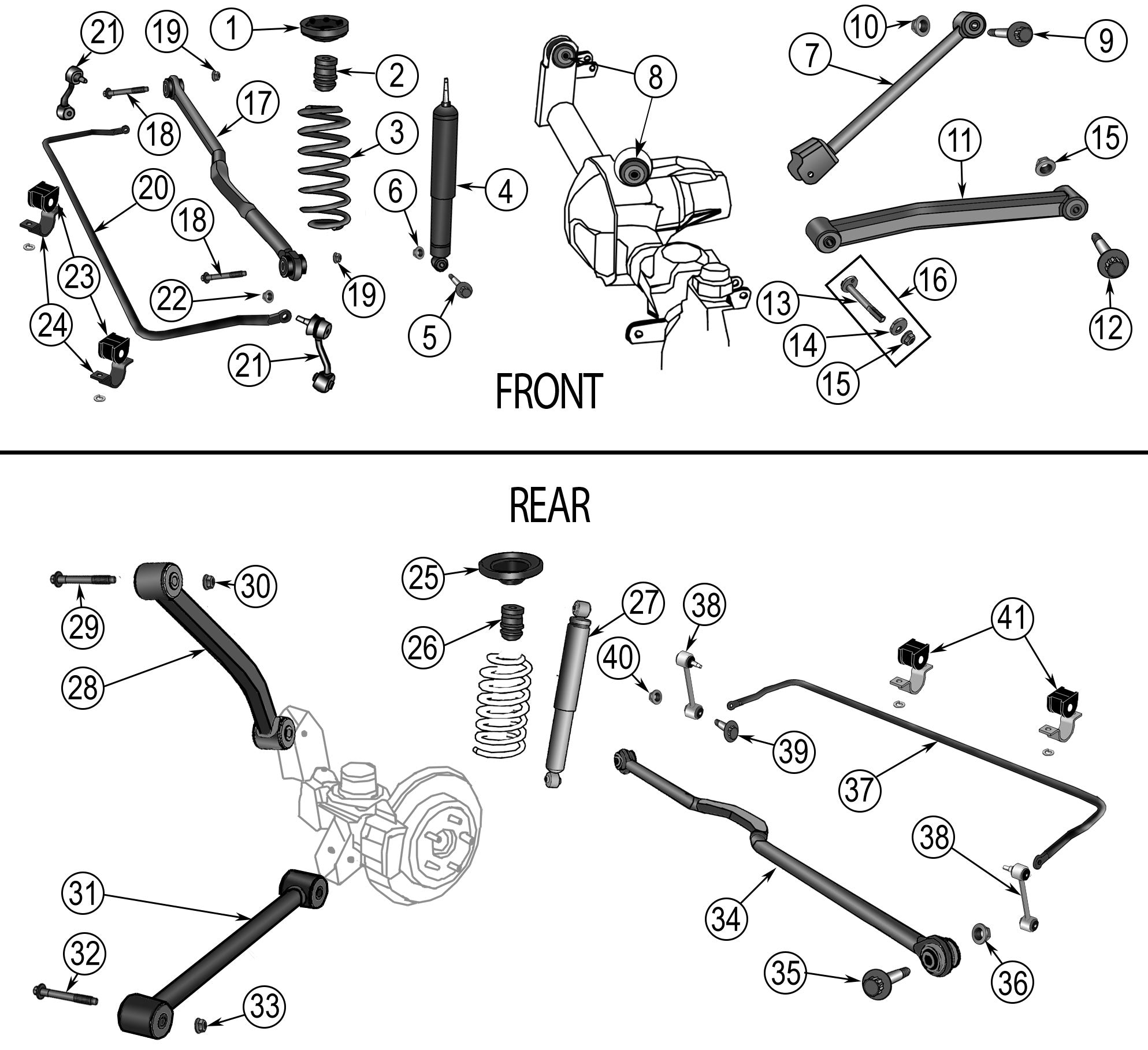
A front suspension diagram shows where each part fits on your Jeep. These diagrams can be found in owner’s manuals, repair guides, or online. They’re useful when diagnosing problems or planning upgrades.
When looking at a diagram:
- Parts connected to the frame are usually fixed (like brackets).
- Parts connected to the axle move as the wheels go up and down.
- Arrows may show movement or force.
- Labels help you match parts to real-world names.
If you’re unsure, cross-reference diagrams from trusted sources, like the official Jeep service manual or well-known Jeep forums. For a detailed example, visit the Wikipedia entry on vehicle suspension.
Frequently Asked Questions
<!– wp:rank-math/faq-block {"questions":[{"id":"faq-question-ce735b13b599","title":"What Is The Main Difference Between The Wrangler’s Front Suspension And Most Modern Suvs?","content":"Most modern SUVs use independent front suspension (IFS), where each wheel moves separately. The Wrangler uses a solid front axle, which is better for off-road strength and articulation but can be less smooth on pavement.
“,”visible”:true},{“id”:”faq-question-0b1f6afcddc2″,”title”:”Can I Lift My Jeep Wrangler Without Changing The Front Suspension Parts?”,”content”:”A small lift (up to 2 inches) can often be done with just new springs or spacers. For bigger lifts, you’ll need to upgrade track bars, control arms, and possibly brake lines to keep safe handling and alignment.
“,”visible”:true},{“id”:”faq-question-1559552f9602″,”title”:”What Causes “death Wobble” In A Wrangler’s Front Suspension?”,”content”:”Death wobble is often caused by loose or worn front-end parts—usually the track bar, tie rod ends, or ball joints. Poor alignment or unbalanced tires can make it worse.
“,”visible”:true},{“id”:”faq-question-18da77b975fc”,”title”:”How Often Should I Check Or Service My Front Suspension?”,”content”:”It’s a good idea to check your suspension every oil change (about every 5,000 miles), and after any hard off-road use. Listen for new noises and look for leaks or bent parts.
“,”visible”:true},{“id”:”faq-question-5bb9f9f7e295″,”title”:”Where Can I Find A Detailed Jeep Wrangler Front Suspension Diagram?”,”content”:”You can find diagrams in your Jeep owner’s manual, official service manuals, or trusted Jeep forums. The Wikipedia page on vehicle suspension systems is also a helpful resource for understanding how the system works.
The Jeep Wrangler’s front suspension is a unique and tough design that’s central to its performance. By understanding each part, how they work together, and what to watch out for, you can keep your Jeep running strong on any road or trail.
Whether you’re planning upgrades or just want to maintain your ride, knowing your suspension is key to enjoying everything your Wrangler can do.
“,”visible”:true}]} –>What Is The Main Difference Between The Wrangler’s Front Suspension And Most Modern Suvs?
Most modern SUVs use independent front suspension (IFS), where each wheel moves separately. The Wrangler uses a solid front axle, which is better for off-road strength and articulation but can be less smooth on pavement.
Can I Lift My Jeep Wrangler Without Changing The Front Suspension Parts?
A small lift (up to 2 inches) can often be done with just new springs or spacers. For bigger lifts, you’ll need to upgrade track bars, control arms, and possibly brake lines to keep safe handling and alignment.
What Causes “death Wobble” In A Wrangler’s Front Suspension?
Death wobble is often caused by loose or worn front-end parts—usually the track bar, tie rod ends, or ball joints. Poor alignment or unbalanced tires can make it worse.
How Often Should I Check Or Service My Front Suspension?
It’s a good idea to check your suspension every oil change (about every 5,000 miles), and after any hard off-road use. Listen for new noises and look for leaks or bent parts.
Where Can I Find A Detailed Jeep Wrangler Front Suspension Diagram?
You can find diagrams in your Jeep owner’s manual, official service manuals, or trusted Jeep forums. The Wikipedia page on vehicle suspension systems is also a helpful resource for understanding how the system works.
The Jeep Wrangler’s front suspension is a unique and tough design that’s central to its performance. By understanding each part, how they work together, and what to watch out for, you can keep your Jeep running strong on any road or trail.
Whether you’re planning upgrades or just want to maintain your ride, knowing your suspension is key to enjoying everything your Wrangler can do.