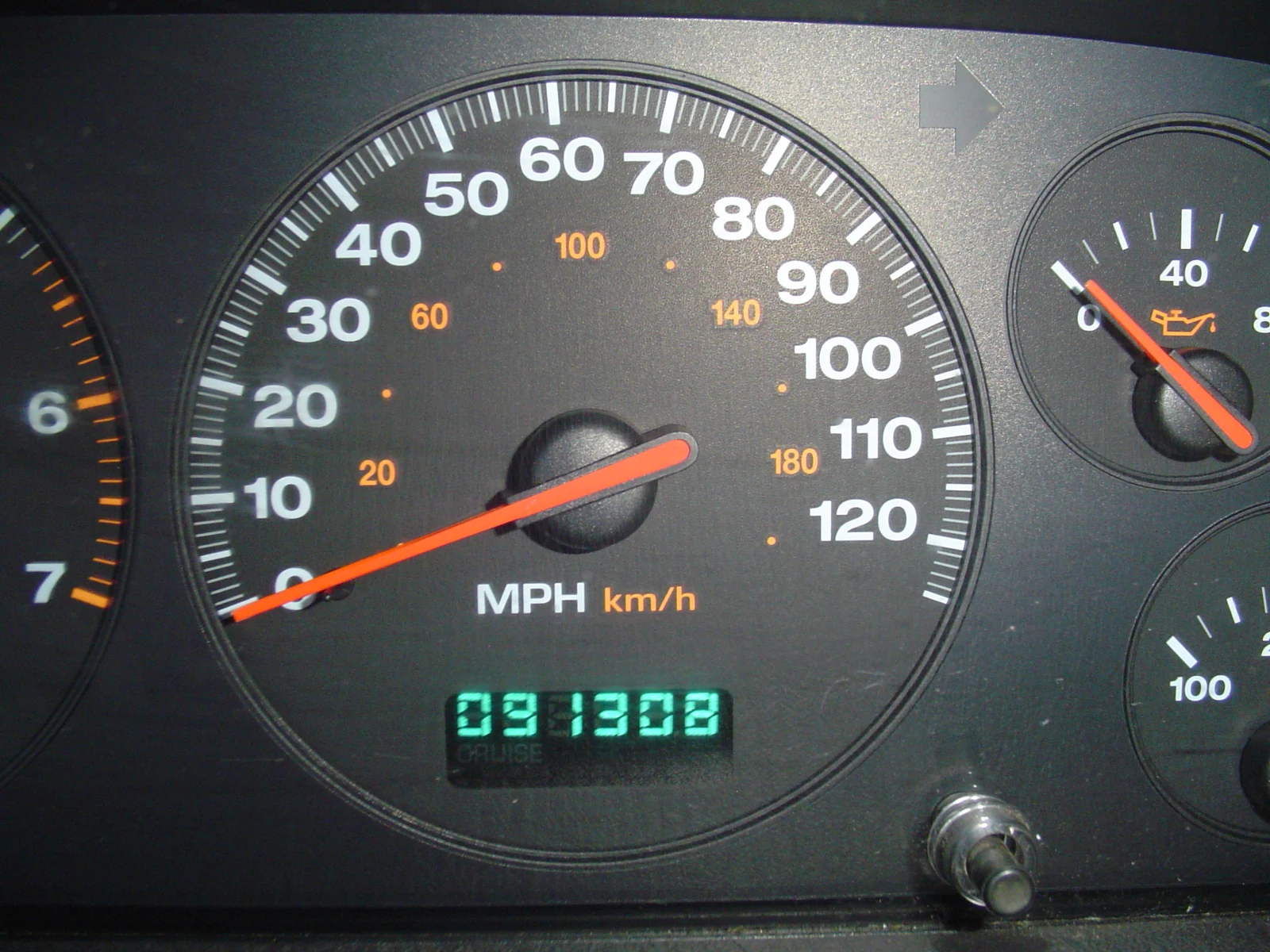
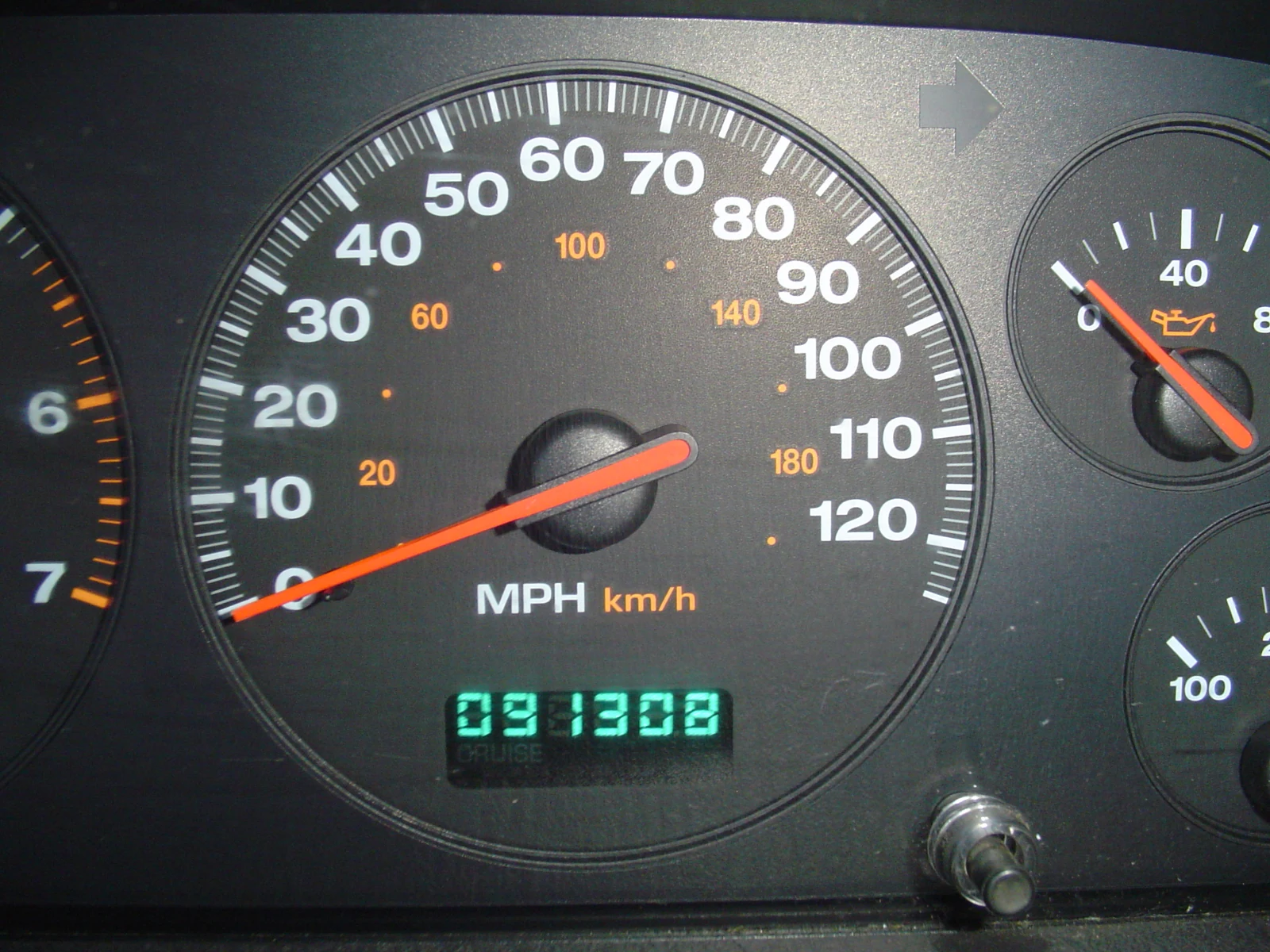
A Jeep low-fuel warning does not guarantee a fixed number of miles. The remaining distance depends on the model, model year, fuel left when the warning appears, recent fuel economy, road grade, traffic, idle time, temperature and towing load.
Quick Answer
Refuel as soon as practical. Do not use the warning light as a routine range extension tool.
Some Mopar user guides, including the 2018 Cherokee and 2019 Grand Cherokee guides, state that the warning turns on at approximately 2.4 gallons. Other Jeep models may use a different threshold.
Estimate Miles Remaining
Use this formula only as a planning estimate:
Estimated miles remaining = reserve fuel × recent mpg
| Reserve fuel example | Recent economy example | Theoretical distance |
|---|---|---|
| 2.4 gallons | 18 mpg | 43 miles |
| 2.4 gallons | 24 mpg | 58 miles |
| 2.4 gallons | 30 mpg | 72 miles |
Those figures are not safe targets. A steep road, traffic jam, cold start, fuel slosh or inaccurate display may reduce the usable distance.
Why the Dashboard Range May Change Quickly
The distance-to-empty estimate reacts to recent driving. Highway cruising may produce a reassuring number, then stop-and-go traffic or idling may lower it quickly.
When the warning appears far from a station, reduce unnecessary load and choose the nearest safe refueling option.
Confirm the Rule for Your Jeep
- Open the owner guide for the exact model year.
- Search for “Low Fuel Warning Light.”
- Check whether the manual lists an approximate gallon threshold.
- Track your real fill-up volume and recent mpg over several tanks.
Cherokee owners may also use the Cherokee tank-capacity guide when planning a full-tank estimate.
What to Do When the Light Appears
Find a station promptly. Do not detour for a preferred brand when the fuel level is uncertain.
If the vehicle begins losing power or sputtering, pull over safely and arrange fuel delivery rather than continuing until the engine stalls in traffic.
Use Your Recent MPG, Not a Perfect-Weather Number
The best estimate comes from the way the Jeep has been driven recently. A vehicle that averages 18 mpg in city traffic should not be treated as a 30-mpg vehicle because it once achieved a good highway trip.
When the warning appears, use the lower realistic number.
Situations That Shrink the Remaining Range
- Long idle time in traffic
- Cold weather and short trips
- Towing or roof-rack cargo
- Steep climbs
- Off-road driving at low speed
- Driving past a nearby station to search for a cheaper price
What If the Gauge Seems Wrong?
Track several fill-ups. Write down the odometer, gallons added and whether the warning was on.
If the gauge behavior becomes inconsistent, diagnose the sender, wiring and cluster rather than assuming the tank suddenly changed size.
Frequently Asked Questions
Can I drive until the estimated range reaches zero?
Do not plan around zero. The display is an estimate and conditions change. Refuel while you still have choices.
Does every Jeep warn at 2.4 gallons?
No. That figure appears in specific Cherokee and Grand Cherokee guides.
Check the guide for your exact model year.
Why did the distance-to-empty number drop quickly?
The calculation reacts to recent driving. Traffic, idle time, hills and speed may lower the estimate after the warning appears.
Why the Low-Fuel Number Is Only an Estimate
The remaining-distance display reacts to recent driving. Highway cruising, idling, traffic, hills, cold weather, towing, and aggressive acceleration all change the estimate.
The warning should trigger a fuel stop, not a challenge to see how far the Jeep will travel.
| Condition | Effect on remaining range | Best response |
|---|---|---|
| Heavy traffic | Range may fall faster than expected | Choose the nearest practical station |
| Highway cruising | Estimate may look more stable | Keep a reserve for exits and detours |
| Towing or roof cargo | Fuel use may increase sharply | Refuel earlier than usual |
| Cold weather | Warm-up and winter conditions reduce efficiency | Avoid relying on the last few miles |
Create a Personal Reserve Rule
Use your normal route and measured fuel economy to set a conservative limit. A driver who travels through rural areas should refuel earlier than someone with stations every few miles.
Keep more reserve during storms, long trips, towing, or unfamiliar travel.
If the gauge, warning light, and distance estimate behave inconsistently over several fill-ups, inspect the fuel-level sending system rather than guessing.
What to Do When the Warning Appears
- Reduce unnecessary detours and aggressive acceleration.
- Search for a safe nearby station.
- Avoid long idling while deciding where to stop.
- Do not assume the previous trip’s remaining range will repeat.
- Refuel before the estimate reaches zero.
Do Not Run the Tank Dry
Repeatedly driving until the engine starves for fuel creates avoidable risk. You may become stranded in an unsafe location, and the vehicle may need attention before it restarts normally. Treat the warning as an early reminder.
How to Test the Warning Without Taking Risks
You do not need to run the Jeep nearly empty to learn how the warning behaves. Over several normal tanks, note the gauge position, miles-to-empty estimate, trip distance, and gallons added when you refuel soon after the warning.
That record shows whether the warning is consistent.
If the numbers change sharply without a clear reason, inspect the fuel-level system. A sticking sender, wiring issue, or dashboard fault may create misleading information.
Emergency Planning for Remote Driving
When traveling in remote areas, refuel earlier and identify stations before leaving the main road. Carry a charged phone, share the route, and keep seasonal conditions in mind.
A warning light becomes more serious when the next safe stop is far away.
Do not store loose fuel containers inside the passenger area. Follow local rules and safe transport practices when extra fuel is genuinely needed for remote travel.
Why Dashboard Range Changes After Refueling
The miles-to-empty display may move noticeably after a fill-up because it uses recent fuel-consumption data. A week of city driving produces a different estimate from a long highway trip.
Treat the display as a planning tool, not a laboratory measurement.
After refueling, compare the estimate with your trip odometer and receipt. Over time, those records show how the Jeep behaves on your routes and help you choose a sensible personal reserve.
Signs the Fuel-Level Reading Needs Attention
- The gauge drops suddenly or remains stuck.
- The warning appears much earlier than usual.
- The display shows large swings during normal driving.
- Fill-up volume repeatedly conflicts with the gauge position.
- The Jeep runs low on fuel while the display still shows a large reserve.
- How Many Miles Does A Jeep Wrangler Last
- How Many Miles Can A Grand Cherokee Jeep Last 2
- How Many Miles Can Jeep Wrangler Last
Final Takeaway
There is no universal “Jeep low fuel” mileage number. Some Cherokee and Grand Cherokee guides cite an approximate 2.4-gallon warning threshold, but your safe response is simple: estimate conservatively and refuel soon.