Choosing between the Jeep Grand Cherokee and the Hyundai Palisade isn’t easy. Both are popular midsize SUVs, but they offer different strengths. If you want power and off-road capability, the Grand Cherokee leads the way. If comfort, space, and value matter more, the Palisade grabs attention. Let’s break down how these two SUVs stack up in the real world, so you can decide which one fits your lifestyle.
Design And Interior Comfort
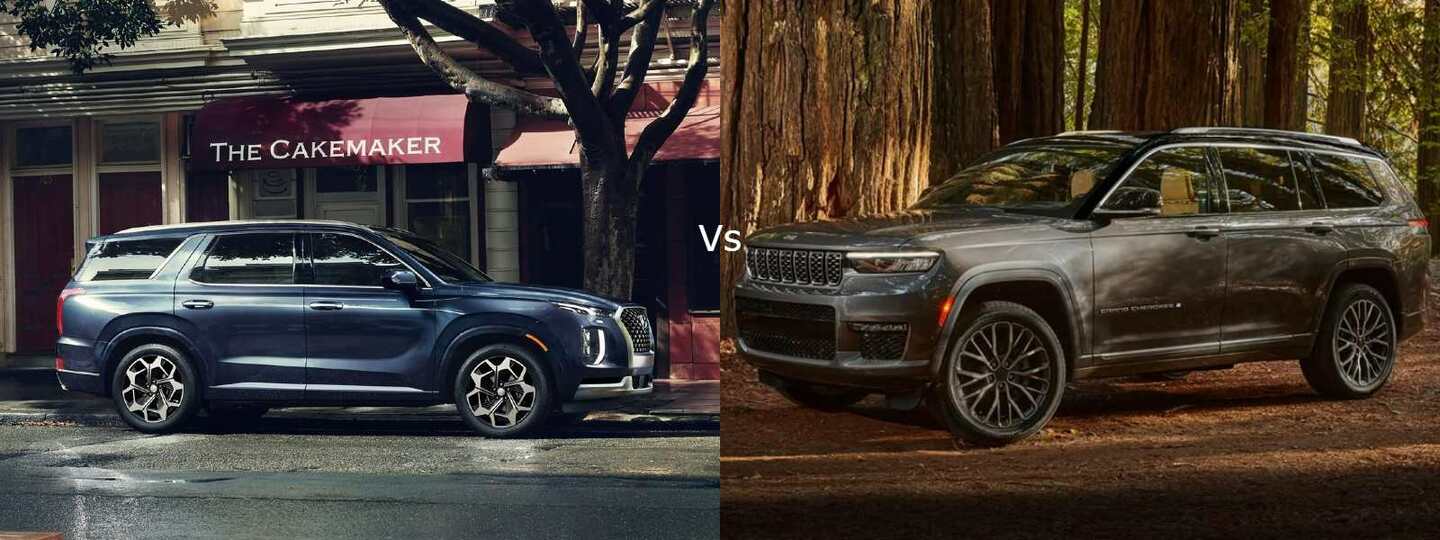
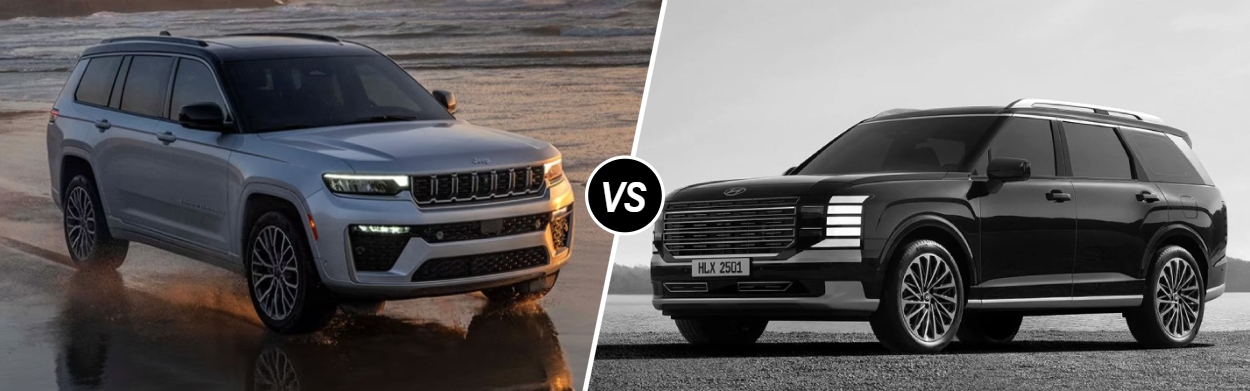
The Jeep Grand Cherokee has a rugged, classic look. It’s instantly recognizable, with a bold grille and muscular stance. Inside, materials feel upscale, especially in higher trims. Leather seats, real wood trim, and a driver-focused layout give it a luxury vibe.
The Hyundai Palisade goes for a modern, family-friendly style. It’s less aggressive outside, with soft lines and a big presence. Inside, the Palisade shines. Even base models come with quality materials, and the three-row layout fits up to eight people. The second-row captain’s chairs in higher trims make long trips more comfortable.
Space Comparison
Here’s how their interiors compare:
| Feature | Jeep Grand Cherokee | Hyundai Palisade |
|---|---|---|
| Seating Capacity | 5 (up to 7 in L version) | 7-8 |
| Legroom (2nd Row) | 38.2 inches | 42.4 inches |
| Cargo Space (Behind 2nd Row) | 37.7 cu ft | 45.8 cu ft |
Insight: The Palisade is more spacious, especially for families who use the third row and need extra cargo room.
Performance And Handling
If you want off-road strength, the Grand Cherokee is famous for it. It comes with three engine options: a V6, a V8, and a plug-in hybrid (4xe). With the V8, towing maxes at 7,200 lbs. The available four-wheel-drive systems and air suspension make rough terrain feel easy.
The Palisade uses a single 3. 8L V6 engine with 291 horsepower. It’s not meant for serious off-roading, but it gives smooth, confident performance on highways and city roads. Maximum towing is 5,000 lbs, which covers most boats and small trailers.
Engine And Towing Comparison
| Spec | Jeep Grand Cherokee | Hyundai Palisade |
|---|---|---|
| Base Engine | 3.6L V6 (293 hp) | 3.8L V6 (291 hp) |
| Optional Engine | 5.7L V8 (357 hp), 2.0L PHEV (375 hp) | None |
| Max Towing | 7,200 lbs | 5,000 lbs |
| Drivetrain | RWD / 4WD | FWD / AWD |
Non-obvious tip: Many buyers overlook the Palisade’s AWD—while it’s not for rock crawling, it handles rain and snow better than many expect.
Technology And Features
Both SUVs are packed with tech, but the Palisade stands out for value. Every trim includes a 12. 3-inch touchscreen, wireless charging, and a suite of safety features. Top trims add Nappa leather, a digital key, and a premium sound system.
The Grand Cherokee also has a modern infotainment system, with a 10. 1-inch touchscreen (larger in some trims), wireless Apple CarPlay/Android Auto, and a digital instrument cluster. Advanced driver aids are available, but some require higher trims or packages.
Notable Features Comparison
| Feature | Jeep Grand Cherokee | Hyundai Palisade |
|---|---|---|
| Touchscreen Size | 8.4 to 10.1 inches | 12.3 inches |
| Surround-View Camera | Optional | Standard on top trims |
| Adaptive Cruise Control | Optional | Standard |
| Head-Up Display | Available | Available |
Real-world example: Palisade’s “Quiet Mode” lets you mute the rear speakers for sleeping kids—something families love but rarely notice in the specs.
Safety And Reliability
Both SUVs score well in crash tests. The Hyundai Palisade is a Top Safety Pick+ from IIHS, with standard forward-collision warning, lane-keep assist, and blind-spot monitoring. The Grand Cherokee also has strong safety ratings, but some features cost extra.
Reliability is where Hyundai has an edge. The Palisade comes with a 5-year/60,000-mile basic warranty and 10-year/100,000-mile powertrain coverage. Jeep’s warranty is 3 years/36,000 miles (basic) and 5 years/60,000 miles (powertrain).
Common mistake: Many buyers focus only on initial price and forget to check warranty length. Over 5-7 years, Hyundai’s better coverage can save real money.

Pricing And Value
The Hyundai Palisade starts around $37,000 and tops out near $54,000 for fully loaded Calligraphy trims. Even base models feel upscale and offer excellent safety.
The Jeep Grand Cherokee starts about $39,000, but higher trims and options can push it past $70,000. The plug-in hybrid (4xe) and high-end Summit models get expensive fast.
True cost insight: Insurance and maintenance are usually lower for the Palisade. Grand Cherokee’s V8 and 4WD systems cost more to service and fuel.
Who Should Choose Each Suv?
- Choose the Jeep Grand Cherokee if you want serious off-road ability, powerful towing, or a luxury feel in higher trims. It’s ideal for adventure, rough weather, or pulling heavy trailers.
- Choose the Hyundai Palisade if you value space, comfort, safety, and overall value for family use. It’s the better pick for most daily drivers and long trips.
For more details on crash safety ratings and specific model years, visit the official IIHS website.
Frequently Asked Questions
Is The Jeep Grand Cherokee Or Hyundai Palisade Better For Families?
The Hyundai Palisade usually suits families better. It has more space for passengers and cargo, plus family-friendly features like a quiet cabin and easy third-row access.
Which Suv Has Better Off-road Capability?
The Jeep Grand Cherokee wins easily here. Its 4WD systems, ground clearance, and special Trailhawk trim make it one of the best off-road SUVs in this class.
How Do Their Fuel Economies Compare?
The Palisade gets around 19 mpg city / 27 mpg highway. The Grand Cherokee’s V6 offers similar numbers, but the V8 is less efficient. The plug-in hybrid Grand Cherokee 4xe gets up to 56 MPGe when using electric power.
Which Has Lower Maintenance Costs?
The Hyundai Palisade is usually cheaper to maintain. Its longer warranty and simpler drivetrain mean fewer surprises over the years.
Are Both Suvs Good For Towing?
Both can tow, but the Grand Cherokee has a higher maximum (7,200 lbs vs 5,000 lbs). If you need to tow heavy trailers often, the Jeep is better.
In the end, both SUVs have strong points. Picking the right one depends on what you need most—rugged adventure or comfortable family travel.