Your Jeep Grand Cherokee uses an air suspension system that lifts, lowers, and levels the body through air springs, height sensors, valves, and an onboard compressor.
When the system glitches, you face sagging corners, uneven height, warning lights, slow lifting, or a complete suspension lockout.
A reset clears stored faults, refreshes height readings, and restores normal operation. This post gives you a full breakdown of symptoms, causes, reset steps, relearn cycles, costs, preventive steps, and full troubleshooting for long-term reliability.
Air suspension gives your Jeep a smoother ride, better control, and automatic height adjustment. It reacts to road conditions and weight changes. It raises for rough roads and falls for highway driving.
Sometimes the system shows faults. You notice suspension alerts, rough ride height, slow lift, front nose drop, or the famous “Service Air Suspension” message. These issues disrupt comfort and ride stability. A reset helps restore the system.
This guide gives you a complete process for Jeep Grand Cherokee Air Suspension Reset with step-by-step instructions, detailed checks, repair paths, and maintenance routines.
What Air Suspension Does in Your Jeep Grand Cherokee
Air suspension uses these parts:
- Air compressor
- Air lines
- Air struts or springs
- Ride height sensors
- Valve block
- System module
Your Jeep adjusts height based on load, speed, terrain, and drive mode. It switches between Park, Aero, Normal, and Off-Road heights.
Air suspension failure affects ride comfort, steering, traction, safety, and fuel usage. Quick action protects the system from expensive damage.
Symptoms Before an Air Suspension Reset
Below are the most common signs your Jeep Grand Cherokee’s air suspension needs attention. Each symptom points to a clear pressure, sensor, or control problem. These issues grow worse with time, so early action protects the system.
1. Slow Rise or No Rise
You select a higher height mode, but nothing happens.
The Jeep lifts slowly or stalls halfway.
A weak compressor, clogged valve, or low system pressure triggers this.
This is one of the earliest signs of pressure loss.
2. Jeep Drops Overnight
You park the Jeep, and by morning, one corner sits low.
Air escapes through leaking springs, cracked fittings, or worn valves.
A slow leak becomes a fast leak if ignored.
This confirms the suspension cannot hold pressure when parked.
3. Random Height Changes
The Jeep lifts or lowers without your input.
A height sensor sends wrong data to the control module.
The system tries to fix the wrong reading, so the movement looks random.
Sensors cause these problems more often than compressors.
4. “Service Air Suspension” Alert
The dashboard shows a warning.
The control module detects a mismatch between expected and actual pressure.
The system stops itself before hardware overloads.
This alert appears when the problem reaches a serious level.
5. Stiff or Rough Ride
The Jeep feels harder on bumps.
Air pressure inside one or more springs drops.
Low pressure removes the softness that air suspension provides.
The ride becomes harsh instead of smooth.
6. Uneven Stance While Driving
The Jeep leans left, right, front, or rear.
One spring receives less pressure than the others.
Height sensors also trigger uneven leveling when they misread heights.
This often leads to a warning message if you ignore it.
7. Loud Compressor Operation
The compressor runs longer and louder.
It works extra hard to replace the pressure that keeps leaking out.
A loud cycle shows the system struggles to maintain normal pressure.
This symptom usually appears before complete system failure.
8. Complete System Lockout
All height buttons stop working.
The suspension freezes to protect itself.
The system does this when pressure stays too low or when electronics detect a fault. A reset often restores function unless hardware is damaged.
Why Air Suspension Problems Start
Air suspension problems usually begin with small issues that grow if ignored. Knowing the common triggers helps you catch problems early and avoid major repairs. Below are the most common triggers.
- Moisture inside air lines
- Weak compressor
- Cracked air springs
- Faulty sensors
- Valve block failure
- Electrical issues
- Low voltage supply
- Calibration drift
- Temperature impact
- Aged seals
Moisture Inside Air Lines
Water can enter the air lines from worn dryers or filters. Cold weather can freeze the moisture and block airflow. This slows or stops the suspension from raising properly.
Weak Compressor
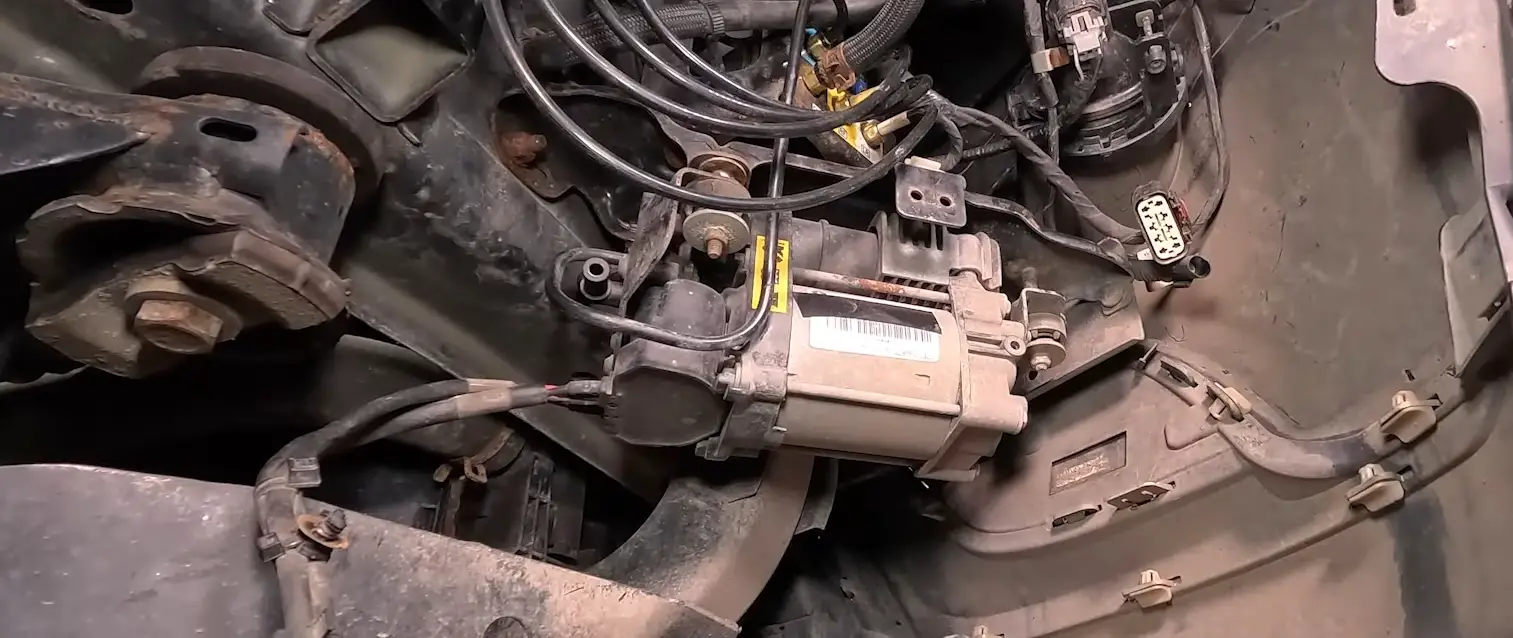
The compressor pushes air into the springs. Over time, it loses strength. A weak compressor makes the Jeep lift slowly or struggle to reach the correct height.
Cracked Air Springs
Rubber air springs dry out and develop cracks. Air leaks through the cracks, causing the Jeep to sag, especially after parking.
Faulty Sensors
Height sensors measure ride height and tell the system how much to lift or lower. If a sensor fails, the Jeep may lift or lower randomly or unevenly.
Valve Block Failure
Valve blocks control the air flow to each spring. If a valve gets stuck or clogged, air cannot reach the springs properly. This can make one side of the Jeep drop or prevent the Jeep from rising.
Electrical Issues
Damaged wires, loose connectors, or bad grounds disrupt signals between the control module and compressor or valves. This causes slow, inconsistent, or frozen suspension behavior.
Low Voltage Supply
If the battery is weak or the charging system fails, the compressor cannot get enough power. The suspension may fail to lift or enter a safety lock mode.
Calibration Drift
Over time, sensors lose accuracy. The system thinks the Jeep is higher or lower than it actually is. This causes an uneven stance and unexpected adjustments.
Temperature Impact
Extreme cold lowers air pressure and slows the system. Extreme heat increases pressure, which may confuse sensors. Both extremes affect ride height.
Aged Seals
Seals in springs, valves, and lines shrink with age. Small leaks form, forcing the system to run more often and wear out faster.
Small issues like these can escalate into bigger failures. Early checks, simple fixes, and a proper air suspension reset prevent costly repairs and keep the Jeep riding smoothly.
How the Grand Cherokee Air Suspension Reset Helps
A Jeep Grand Cherokee Air Suspension Reset restores the system to proper working order. It helps in several key ways:
- Ride height calibration: Ensures all corners sit evenly.
- Sensor alignment: Lets the suspension respond correctly to load and terrain.
- Compressor logic refresh: Helps the pump operate efficiently without overworking.
- Valve block response: Ensures air flows properly to each spring.
- Safety mode release: Allows normal system operation after an error.
A reset clears stored logic errors and refreshes the electronic system. It does not fix air leaks, cracked springs, or worn valves. Instead, it ensures all working components perform correctly, giving you a smooth, stable ride and preventing further errors.
Full Jeep Grand Cherokee Air Suspension Reset Guide
Resetting your Jeep Grand Cherokee’s Air Suspension can solve uneven ride height, sagging corners, or system warnings. It recalibrates sensors, refreshes compressor logic, and restores proper valve response. Performing a reset properly ensures smooth operation and avoids long-term wear.
Step 1: Park on Level Ground
Always park on a flat surface.
The suspension measures height relative to the ground. Uneven parking can give false readings, causing the system to calibrate incorrectly. Keep the steering wheel straight to prevent sensor misalignment.
Step 2: Set the Parking Brake
The system expects a stable, fixed vehicle. Engaging the parking brake prevents rolling and allows the air suspension to operate safely during the reset.
Step 3: Close All Doors
Open doors interrupt the calibration process. The system may think a fault has occurred if a door is open. Ensure all doors, the hood, and trunk are closed before continuing.
Step 4: Turn Ignition On
Switch to ignition on without starting the engine. The suspension module powers up and performs initial self-checks. This step allows the system to detect any stored errors.
Step 5: Wait for the Cluster to Load
Give the dashboard and suspension module a few seconds to complete self-tests. Watch for warning lights; they should stabilize. If a warning remains, take note; it may indicate a hardware problem rather than a logic error.
Select Normal Ride Height. The system should respond by leveling the Jeep.
- If it lifts slowly, it may indicate a weak compressor, an air leak, or a stuck valve.
- This step helps the system “sense” the current height before performing a full reset.
Step 7: Start the Engine
Let the engine idle for 1 minute.
Idle operation stabilizes voltage, ensuring the compressor gets consistent power. Low voltage can cause incomplete calibration or erratic behavior.
Step 8: Toggle Height Modes
Switch through all modes:
- Normal
- Aero
- Off-Road 1
- Off-Road 2
Pause 20 seconds between each mode. This allows sensors and the module to recalibrate for each ride height. Skipping this step can leave your Jeep at uneven heights or cause false alerts.
Some models support a soft reset by holding the button.
This clears minor stored errors and refreshes system logic without disconnecting the battery. It’s useful if the system is sluggish but not completely locked.
Step 10: Turn the Engine Off
Do not open any doors yet. The module finalizes calibration internally. Opening doors too early can interrupt this process.
Step 11: Disconnect the Negative Battery Terminal
Disconnect the negative terminal for 10 minutes.
This clears stored air suspension logic and forces the module to relearn all parameters from scratch. It’s especially important after multiple failed attempts to correct height issues.
Step 12: Reconnect the Battery
Tighten the terminal securely.
Restart the engine and ensure the system powers up without warnings. This resets the module’s memory and prepares it for the relearn cycle.
Step 13: Drive for a Relearn Cycle
Drive for 15 minutes at mixed speeds.
During this time, the system relearns:
- Correct ride height for all four corners
- Valve timing for smooth transitions
- Target pressures for each air spring
- Load compensation for weight changes
After this cycle, the Jeep should return to normal operation with even ride height, responsive suspension, and restored comfort.
Extra Tips for a Successful Air Suspension Reset
- Check Air Lines and Springs before resetting. A leak or damaged spring will prevent a proper reset.
- Ensure Battery is Fully Charged. Low voltage affects compressor performance.
- Avoid Towing During Reset. Added weight can throw off calibration.
- Perform a Reset in Mild Weather. Extreme cold or heat can affect pressure readings.
- Monitor the Dashboard. If “Service Air Suspension” remains after reset, inspect hardware components.
This expanded guide not only walks you through the step by step Grand Cherokee Air Suspension Reset but also explains why each step is important, helping you avoid mistakes and get consistent results.
Advanced Jeep Air Suspension Reset with an OBD Tool
Some suspension issues cannot be fully corrected with a standard manual reset. In these cases, an advanced Jeep Grand Cherokee Air Suspension Reset using an OBD scan tool is recommended. This method allows you to clear deeper faults, recalibrate the system precisely, and refresh module logic.
Why Use an OBD Tool?
Professional scan tools communicate directly with the suspension control module. They can detect hidden faults, monitor live sensor data, and perform resets that the manual procedure cannot. This reduces guesswork, prevents unnecessary parts replacement, and ensures a more reliable result.
What You Can Do with a Scan Tool
- Clear Stored Height Faults: Resets error codes caused by sagging or uneven ride height.
- Run Calibration Mode: Re-teaches the suspension module the correct ride height for all corners.
- Reset Valve Block Logic: Ensures each air spring receives the proper airflow.
- Reset Compressor Cycle Values: Refreshes the pump’s memory to prevent overworking.
- Refresh Module Communication: Re-establishes proper data exchange between sensors, valves, and the control unit.
Tips for Using a Scan Tool
- Use a scanner that explicitly supports air suspension functions.
- Follow the manufacturer’s instructions for calibration and resets.
- Perform the reset with the Jeep on level ground, and all doors closed.
- Check live sensor readings before and after the reset to confirm successful recalibration.
Using an OBD tool allows for a more precise and professional Jeep Grand Cherokee Air Suspension Reset, helping prevent recurring issues and extending the life of your air suspension components.
Pre-Reset Inspections
Before performing an Air Suspension Reset, it’s important to inspect the system. A quick pre-reset check can save time, reduce repair costs, and prevent repeated failures.
1. Listen for Compressor Noise
The air suspension compressor provides critical pressure to lift the vehicle.
- Silent compressor: May indicate a power issue, blown fuse, or module fault.
- Loud or continuously running compressor: Signals air leaks or weak pressure output, which can prevent the system from reaching proper ride height.
Listening carefully gives you early insight into whether the system has electrical or mechanical problems.
2. Check Fuses and Relay
The air suspension relies on dedicated fuses and a relay.
- Fuses can fail under heavy load or after a short circuit.
- A faulty relay prevents the compressor from starting.
Checking these components first ensures the reset process works properly.
3. Inspect Air Lines
Air lines carry pressurized air to each spring.
- Look for cracks, loose fittings, or moisture in the lines.
- Spray soapy water on suspected spots; bubbles indicate leaks.
Even small leaks reduce system efficiency and can cause uneven height or repeated compressor operation.
4. Check Ride Height Sensors
Height sensors tell the system how high or low each corner of the Jeep sits.
- Broken sensor arms or loose clips give false readings.
- Misaligned sensors can make the suspension drop unexpectedly or lift unevenly.
A simple visual check avoids unnecessary resets when sensors are the actual problem.
5. Inspect Air Springs
Air springs support the weight of the Jeep and maintain ride height.
- Look for cracks, wrinkles, or small leaks.
- Replace any compromised springs before performing a reset; otherwise, the system will not stabilize correctly.
6. Check for Moisture in the Valve Block
Moisture in the valve block can disrupt airflow to individual springs.
- Signs include inconsistent ride height, sudden drops, or noisy valves.
- Drying or replacing components prevents repeated faults.
7. Inspect Battery Voltage
The air suspension relies on a stable voltage for the compressor and module.
- Low battery voltage can cause slow or failed lifts.
- Ensure the battery is fully charged before starting the reset procedure.
By performing these pre-reset checks, you ensure a smooth Jeep Grand Cherokee Air Suspension Reset and reduce the risk of recurring issues.
Common Errors After Reset
Even after performing a Jeep Air Suspension Reset, mistakes can cause issues or prevent the system from functioning properly. Avoid these common errors to ensure reliable operation:
1. Starting the Reset With a Weak Battery
A low battery prevents the compressor and module from receiving sufficient power.
- This can cause incomplete calibration.
- Always check battery voltage before initiating the reset.
2. Opening Doors During Height Calibration
Opening doors mid-reset interrupts sensor readings and stops the calibration process.
- The system may pause or stall.
- Keep all doors, trunk, and hood closed until the reset is fully complete.
3. Skipping the Relearn Drive
The post-reset relearn cycle teaches the system the correct ride heights and pressure targets.
- Skipping this drive can cause uneven height or unstable suspension behavior.
- Drive at mixed speeds for about 15 minutes to allow the system to fully relearn.
4. Replacing Parts Without Diagnosis
Replacing springs, valves, or compressors without identifying the root cause can waste money and time.
- Perform inspections and diagnostics first to ensure the repair is necessary.
5. Ignoring Moisture
Moisture in air lines or valve blocks can damage internal components and cause repeated faults.
- Check for condensation or water ingress before and after the reset.
- Dry or replace affected components to maintain long-term system health.
Avoiding these errors ensures your Jeep Air Suspension Reset is successful and prolongs the life of your suspension components.
Jeep Grand Cherokee Height Calibration Relearn Guide
After performing a Jeep Air Suspension Reset, the system must relearn accurate ride heights. This relearn process ensures smooth operation, correct sensor readings, and proper compressor behavior.
Following these stages helps your suspension stabilize quickly.
Stage 1: Idle Level Check
When the Jeep is idling, the suspension records the ground height for each corner.
- Ensures a baseline for all future adjustments.
- Detects uneven terrain or sagging before driving.
Stage 2: Speed-Based Adjustment
The system fine-tunes ride height while driving at 20 to 45 km/h.
- Helps the suspension adapt to dynamic loads and road conditions.
- Ensures proper clearance for normal city and highway driving.
Stage 3: Low Load Test
At slower speeds with minimal cargo or passengers, the Jeep adjusts internal air pressures.
- Confirms sensors and valves respond correctly under light loads.
- Prevents uneven stance or soft corners during normal driving.
Stage 4: High Load Compensation
When carrying passengers or cargo, the system automatically modifies air spring pressure.
- Maintains level ride height despite extra weight.
- Ensures handling, comfort, and safety are preserved.
Stage 5: Steering Angle Correction
Suspension sensors sync with steering movements to maintain proper cornering behavior.
- Prevents leaning or rolling in turns.
- Keeps the Jeep stable on winding roads or off-road trails.
Following this height calibration relearn process ensures your Jeep Grand Cherokee suspension functions properly, delivering a smooth, even, and safe ride after any reset.
Grand Cherokee Air Suspension Repair Paths
After diagnosing issues and performing an Air Suspension Reset, some problems may require repairs. Choosing the correct repair path ensures the system operates reliably and prevents repeated failures.
1. Single Air Spring Replacement
- Purpose: Fixes a sagging corner or leaking spring.
- When to Use: Only one corner is affected.
- Benefit: Lowest-cost repair with minimal downtime.
2. Valve Block Replacement
- Purpose: Controls airflow to each air spring.
- When to Use: Suspension rises or lowers randomly, or some corners fail to maintain height.
- Benefit: Restores accurate height control and prevents erratic behavior.
3. Compressor Replacement
- Purpose: Provides pressurized air for lifting the Jeep.
- When to Use: Vehicle rises slowly, fails to rise, or compressor runs continuously.
- Benefit: Ensures proper pressure and smooth operation across all ride heights.
4. Height Sensor Replacement
- Purpose: Measures ride height at each corner.
- When to Use: Sensors give incorrect readings, causing uneven stance or false alerts.
- Benefit: Restores accurate height detection for safe, level driving.
5. Air Line Repair
- Purpose: Delivers air from the compressor to the springs.
- When to Use: Leaks or damaged lines cause slow drops or inconsistent height.
- Benefit: Prevents constant compressor operation and uneven ride.
6. Full Air Suspension Overhaul
- Purpose: Complete replacement of springs, valves, and the compressor.
- When to Use: Older vehicles with repeated faults or multiple failing components.
- Benefit: Restores system reliability and extends suspension lifespan.
Selecting the right repair path based on inspection and diagnostics avoids unnecessary replacements and ensures your Grand Cherokee Air Suspension performs optimally.
Jeep Air Suspension Cost Breakdown
Repair costs for the air suspension system vary depending on the component, labor, and your Jeep’s model year.
Understanding typical costs helps you plan repairs effectively and decide whether a reset, partial repair, or full overhaul is needed.
Component Costs Explained
- Air Spring: Medium cost; needed for sagging corners or leaks.
- Valve Block: Medium-high; required for random height shifts or faulty airflow control.
- Compressor: High; needed if the vehicle rises slowly or fails to lift.
- Height Sensors: Medium; replaced when sensors give incorrect readings.
- Air Line Kit: Low; fixes leaks in tubing that cause slow drops.
- Full Overhaul: Highest; recommended for older vehicles with multiple failing components.
Reset Costs: Performing a suspension reset is usually inexpensive since it requires little labor. It can often resolve minor calibration or sensor issues without replacing hardware.
Cost Table
| Component / Service | Typical Cost Range | Notes |
|---|---|---|
| Single Air Spring | Medium | For corner sag or minor leaks |
| Valve Block | Medium-High | Fixes random height shifts |
| Compressor | High | Needed for slow or failed lift |
| Height Sensors | Medium | Corrects false readings or uneven stance |
| Air Line Kit | Low | Repairs leaks or damaged tubing |
| Full Air Suspension Overhaul | Highest | Complete system rebuild for older models |
| Suspension Reset | Low | Quick, inexpensive calibration procedure |
This breakdown helps you budget repairs accurately and choose the most cost-effective solution based on the symptoms your Jeep shows.
Full Checklist Before You Reset
Keep a checklist for quick use.
- Record symptoms
- Check battery voltage
- Look for leaks
- Test compressor sound
- Inspect sensors
- Inspect air lines
- Inspect the valve block
- Scan codes
- Clear faults
- Reset height modes
- Perform a relearn drive
A full checklist removes guesswork.
Why does the Jeep show “Service Air Suspension”?
Faulty sensors, air leaks, low pressure, or electrical issues trigger this alert. The system shuts down to protect suspension components until the problem is resolved.
Does a reset fix air leaks?
No. A reset only restores system logic and recalibration. Physical leaks in air springs, lines, or valves must be repaired to maintain proper ride height.
Why does the Jeep drop overnight?
A sagging corner after parking is usually caused by air leaks or weak valves, allowing pressure to escape slowly when the vehicle is stationary.
Is it safe to drive with an air suspension fault?
Short distances: Generally safe at low speeds.
Long distances: Not recommended, as ride height may drop further, affecting handling and comfort.
Does cold weather affect air suspension?
Yes. Low temperatures can slow compressor performance and reduce air pressure. The Jeep may take longer to rise or struggle to maintain ride height until the system warms up.
Conclusion
Your Jeep Grand Cherokee air suspension gives smoother travel, better safety, and full height control. When faults start, the SUV sags, rises slowly, or shows alerts. A proper reset restores normal operation and clears logic problems.
Follow the reset steps, inspect all parts, and perform a relearn drive. Combine regular checks with preventive habits for long system life.
Quick action saves money, protects the compressor, and keeps your Jeep stable and safe on every trip.