The Jeep Cherokee engine temperature hot won’t start issue happens when the cooling system fails or when sensors detect unsafe heat levels. Drivers face sudden stalls and no-start conditions.
This fault increases repair costs. High heat damages gaskets, hoses, and internal parts.
You control the risk. This guide explains the causes and gives you simple fixes for the Jeep Cherokee engine temperature hot won’t start problem.
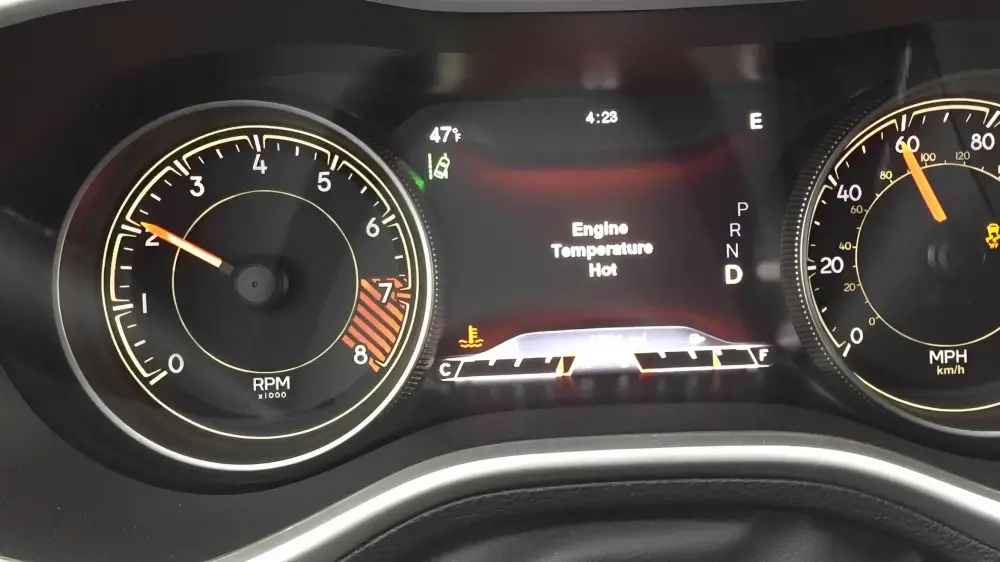
The Jeep Cherokee engine temperature hot won’t start problem often comes from low coolant, thermostat faults, radiator clogs, sensor errors, or water pump failure. Check coolant, inspect hoses, test sensors, and repair flow issues to restore normal starting.
What Causes the Jeep Cherokee Engine Temperature Hot Won’t Start
Short overheating events block engine starts. Longer overheating breaks internal parts. You must find the source early. Most problems start in the cooling system. Others come from sensors or electrical faults.
Below are the most common causes:
- Low Coolant Level: Heat builds fast when the coolant drops.
- Stuck Thermostat: Coolant stays trapped, and temperature rises.
- Clogged Radiator: Dirt blocks heat transfer.
- Faulty Temperature Sensor: The ECU misreads heat levels.
- Weak Water Pump: Coolant flow slows and leads to overheating.
Follow each point in detail below.
1. Low Coolant Level
Low coolant stops heat movement from the engine to the radiator. This raises the temperature and triggers the warning.
You may also smell coolant or see leaks. Fill the reservoir and watch the level for the next few days. If the level drops fast, check hoses and clamps.
2. Stuck Thermostat
The thermostat opens and closes to control coolant flow. A stuck closed unit traps coolant inside the engine. This leads to quick overheating and a no-start condition.
Replace the thermostat if you see irregular temperature spikes. New units improve warm-up time and stability.
3. Clogged Radiator
Dirt, rust, and debris block airflow and coolant flow. A clogged radiator raises engine temperature under load or during slow traffic.
Inspect both sides of the radiator. Clean the fins. Flush coolant if you see heavy deposits. Good radiator flow prevents heating cycles that trigger starting limits.
4. Faulty Temperature Sensor
The temperature sensor sends heat data to the ECU. Wrong readings block fuel or spark to protect the engine. This results in the engine temperature hot won’t start alert.
Test the sensor with a scan tool. Replace if the readings jump or stay locked. Reliable data keeps the system stable.
5. Weak Water Pump
The water pump pushes coolant through the engine. A worn pump reduces flow. You may hear whining noises or see coolant dripping from the pump area.
Replace it if you notice wobbling or leaks. Good flow prevents repeated overheating and no-start events.
6. Air Pockets in the Cooling System
Air stops coolant from touching hot surfaces. This creates false overheating and can shut down the engine. Bleed the cooling system after any repair.
Follow the factory bleeding steps. Stable coolant flow removes hot spots and prevents false alerts.
7. Electrical or ECU Protection Mode
The ECU blocks starting when the heat looks unsafe. Faulty wiring or scan data can trigger this.
Inspect ground straps, connectors, and wiring near the radiator fan and sensors. Reset the ECU after repairs. Clean signals restore normal starting behavior.
7 Fixes for Jeep Cherokee Engine Temperature Hot Won’t Start
A short explanation helps you choose the right fix. These steps solve the problem fast.
1. Add Coolant
Top up the reservoir. Use the correct coolant type. Watch for leaks. Stable coolant levels prevent instant overheating.
2. Replace the Thermostat
Swap the old thermostat if stuck. A working unit restores flow and keeps the temperature stable.
3. Flush the Radiator
Remove old coolant and deposits. Clean the fins. Radiator flow improves temperature control.
4. Test the Temperature Sensor
Scan the engine. Replace sensors with irregular signals. Accurate readings restore safe starts.
5. Install a New Water Pump
Replace worn pumps. Airflow and coolant movement return to normal.
6. Bleed the Cooling System
Remove air. This prevents hot pockets and false alerts.
7. Reset the ECU
Disconnect the battery for a few minutes. This clears temporary blocks caused by heat alerts.
Symptoms Linked to Overheating and No Start
Your Jeep shows clear signs before failure. Watch these:
- Temperature gauge rising
- Steam from the engine bay
- Sweet coolant smell
- Rough idle before shutdown
- Slow crank or no crank after cooling
These signs point toward restricted coolant flow or sensor faults.
Preventive Tips
Use simple habits to avoid the engine temperature hot won’t start problem.
- Check the coolant every month
- Inspect hoses each season
- Flush coolant on schedule
- Clean the radiator regularly
- Watch temperature changes during towing
Small checks protect the cooling system and prevent breakdowns.
When to Visit a Mechanic
Seek help when:
- The engine overheats again
- Coolant leaks often
- The radiator fan does not run
- The engine fails to start after cooling
- You smell burning coolant under load
Shops have pressure testers, scan tools, and flow meters. They detect hidden faults faster.
Conclusio
Your Jeep overheats for simple reasons that start in the cooling system. Quick checks help you control the problem early.
Focus on coolant flow, thermostat health, radiator cleanliness, and sensor accuracy. Fix faults before they damage internal parts. A stable system keeps your Cherokee safe on the road.