How To Tow A Jeep Wrangler: Complete Beginner’s Guide
Towing a Jeep Wrangler is something many drivers need to do, whether for a road trip, moving, or bringing your Jeep to the shop. But it’s not as simple as just hooking up and going.
Doing it wrong can damage your vehicle or even put you and others at risk.
If you’re new to towing, don’t worry. This guide explains how to tow a Jeep Wrangler safely, step by step, using clear language and real examples.
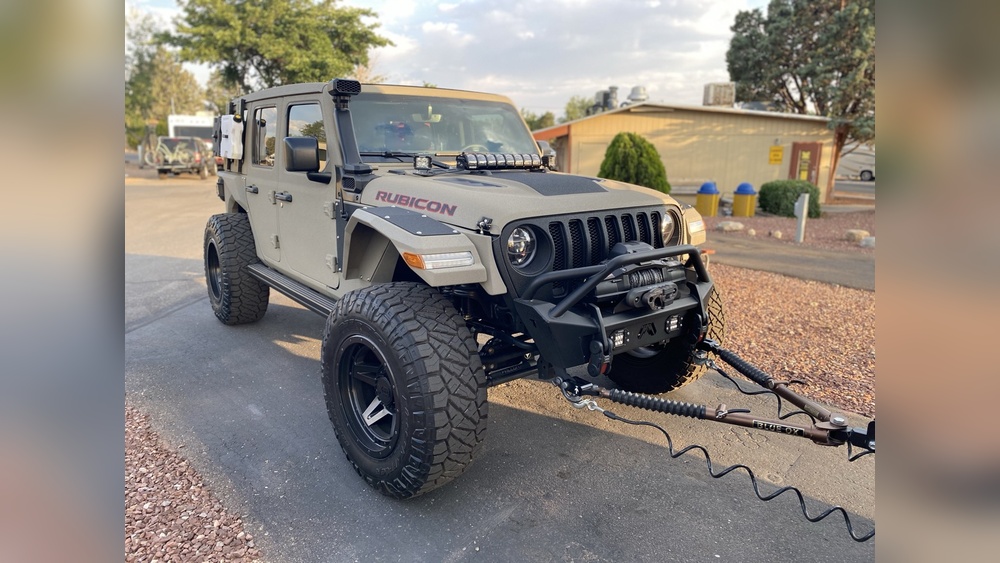
You’ll learn about the right equipment, towing methods, cost, common mistakes, and practical tips. Whether you want to tow with all four wheels down (flat towing), on a dolly, or on a trailer, we’ll help you choose the best way for your situation.
Understanding Jeep Wrangler Towing Basics
The Jeep Wrangler is known for its off-road capabilities, but towing it needs some special care. Most Jeep Wranglers are designed to be flat towed, which means all four wheels roll on the road. This is possible because they have a neutral transfer case. However, not all Wranglers are the same, and using the wrong method can damage the transmission or drivetrain.
It’s important to check your owner’s manual before you start. Look for sections about “Recreational Towing” or “Flat Towing.” Newer Wranglers (like the JL and JK models) are often tow-friendly, but older or modified Jeeps may need extra steps.
Key Terms You Need To Know
- Flat towing: Towing with all four wheels on the ground. Also called “dinghy towing.”
- Trailer towing: Loading your Wrangler fully onto a trailer.
- Tow dolly: A small trailer that lifts the front wheels off the ground.
- Transfer case: Part of the drivetrain that allows you to select 2WD, 4WD, or Neutral.
Towing Methods For Jeep Wrangler
There are three main ways to tow a Jeep Wrangler. Each has pros, cons, and costs.
Flat Towing (all Four Wheels Down)
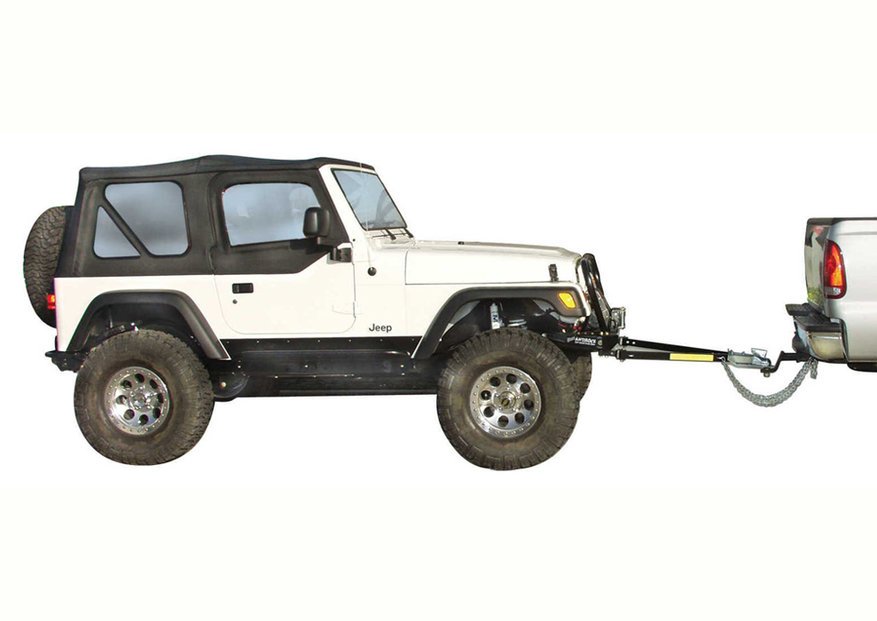
This is the most popular way to tow a Jeep Wrangler. It’s fast and easy if your Jeep is set up for it.
Pros:
- Quick to hook up and disconnect
- No need for ramps or heavy equipment
- Keeps your Jeep ready for off-roading at your destination
Cons:
- Requires a transfer case with true Neutral
- Needs a special base plate and tow bar setup
- Not recommended for some automatic transmissions
Estimated Cost:
- Tow bar: $300, $1,000
- Base plate kit: $400, $800
- Brake system: $300, $1,200
Common mistake: Not setting the transfer case to Neutral. This can destroy the transmission.
Trailer Towing
With this method, you load the Jeep Wrangler onto a flatbed or car hauler trailer.
Pros:
- Works for any Jeep, even those not designed for flat towing
- No wear on tires or drivetrain
- Best for long distances
Cons:
- Requires a large trailer
- Higher cost and weight
- Need a powerful tow vehicle
Estimated Cost:
- Trailer rental: $80, $150 per day
- Buying a trailer: $2,000, $6,000
Pro tip: Secure the Wrangler with ratchet straps or chains at four points.
Tow Dolly (front Wheels Up)
A tow dolly lifts the front wheels off the ground while the rear wheels roll.
Pros:
- Cheaper than a full trailer
- Easy to rent
Cons:
- Not recommended for 4WD Wranglers
- Can damage the transfer case or drivetrain
Estimated Cost:
- Dolly rental: $50, $100 per day
Warning: Never use a dolly unless the rear wheels can spin freely, which is usually not the case for most Wranglers.
Here’s a quick comparison of the three main towing methods:
| Method | Cost Range | Best For | Main Drawback |
|---|---|---|---|
| Flat Towing | $1,000, $3,000 (setup) | Quick trips, off-roading | Setup required, not for all Jeeps |
| Trailer Towing | $2,000, $6,000 (purchase) | Any Jeep, long distances | Heavy, expensive |
| Tow Dolly | $50, $100/day (rental) | 2WD vehicles | Not for most Wranglers |
What Equipment Do You Need?
Towing a Jeep Wrangler safely needs the right equipment. Here’s what you’ll need for flat towing, the most popular method:
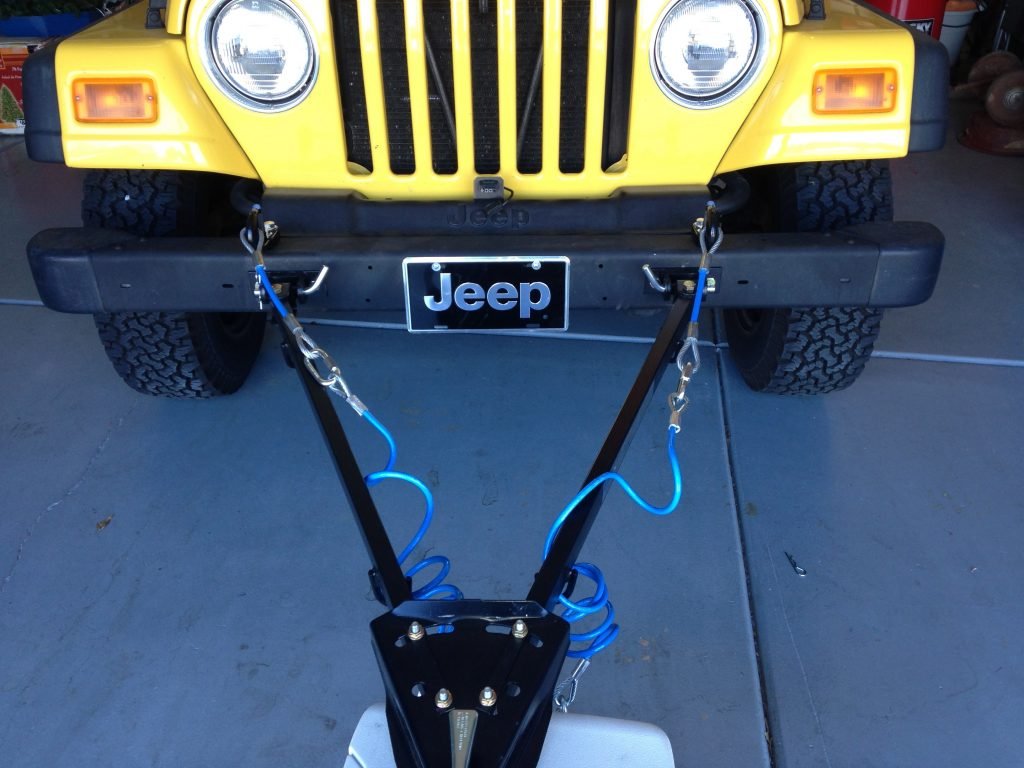
- Tow bar: Connects the Jeep to the tow vehicle.
- Base plate kit: Attaches to the Jeep’s frame for a secure connection.
- Safety cables: Backup in case the tow bar disconnects.
- Tow lights: Required by law for safe signaling.
- Supplemental brake system: Helps stop the Jeep when towing.
- Hitch receiver: Must match the weight rating of your Jeep.
For trailer towing, you’ll need a trailer rated for your Wrangler’s weight (usually 4,000 5,000 lbs), strong tie-down straps or chains, and wheel chocks.
Here’s a table showing typical costs for each key item:
| Equipment | Purpose | Average Cost |
|---|---|---|
| Tow Bar | Connects Jeep to tow vehicle | $300, $1,000 |
| Base Plate Kit | Frame mount for tow bar | $400, $800 |
| Brake System | Helps stop towed Jeep | $300, $1,200 |
| Tow Lights | Legal signaling | $50, $200 |
| Trailer Rental | Full vehicle transport | $80, $150/day |
Non-obvious insight: Many states require a supplemental braking system for any vehicle over 3,000 lbs being towed. Not using one can lead to a ticket or an accident.
Step-by-step: How To Flat Tow A Jeep Wrangler
If your Jeep is flat-towable, follow these steps to do it safely:
- Check your manual: Confirm your model and transmission are approved for flat towing.
- Install the base plate: Attach the base plate kit to your Wrangler’s frame. This may require drilling and is often done by professionals.
- Attach the tow bar: Connect the tow bar to the base plate and the tow vehicle’s hitch receiver.
- Connect safety cables: Cross the cables under the tow bar for extra safety.
- Hook up tow lights: Plug into the tow vehicle’s electrical system or use magnetic lights.
- Set the transfer case to Neutral: This is critical. For most Wranglers, with the engine running and foot on the brake, shift the transmission to Neutral, move the transfer case lever to Neutral, then turn off the engine.
- Shift transmission to Park (automatic) or Gear (manual): Follow your manual’s instructions exactly.
- Double-check everything: Walk around your setup, check connections, and test lights.
- Install the brake system: Place it inside your Jeep and test it.
- Start slow: Drive slowly at first and check for problems.
Pro tip: After 50 miles, stop and re-check all connections and straps.
Towing Safety Tips
Towing a Jeep Wrangler involves more than just hooking up and driving. critical safety tips:
- Know your limits: Don’t exceed the tow rating of your tow vehicle. For example, a Jeep Wrangler can weigh 4,000 to 5,000 lbs.
- Watch your speed: Most states limit towing speed to 55 to 65 mph.
- Increase stopping distance: Allow at least double the usual distance.
- Check tire pressure: Both vehicles must have properly inflated tires.
- Signal early: Let other drivers know when you plan to turn or stop.
- Practice turning: Towing adds length and changes how you turn.
- Avoid sudden moves: Quick lane changes or hard braking can cause sway.
Non-obvious tip: If you’re driving at high altitudes or in hot weather, check your transmission temperature. Towing adds stress and can cause overheating.
Common Mistakes To Avoid
Many beginners make these errors when towing a Jeep Wrangler:
- Forgetting to set the transfer case to Neutral: This can destroy the transmission in just a few miles.
- Not using a brake system: The extra weight can overwhelm your tow vehicle’s brakes.
- Improper equipment: Using a tow bar or trailer not rated for your Wrangler’s weight.
- Ignoring tire condition: Old or underinflated tires can blow out.
- Skipping safety checks: Rushing can lead to loose connections and accidents.
Cost Breakdown: What To Expect
The total cost to tow a Jeep Wrangler depends on your method and how often you tow.
Flat towing setup:
- Equipment: $1,000, $3,000 (one-time)
- Installation: $300, $600 (optional)
- Occasional towing: Just fuel and wear
Trailer towing:
- Renting: $80, $150 per day
- Buying: $2,000, $6,000 (one-time)
Tow dolly:
- Rental: $50, $100 per day
Remember, using the right equipment protects your Jeep and saves money in the long run.
Pros And Cons Of Towing A Jeep Wrangler
Before you decide, consider these points:
Pros:
- Flexibility to bring your Jeep anywhere
- Can use your Jeep at your destination
- Avoids extra rental or shipping costs
Cons:
- Initial cost for equipment
- Increased fuel use
- Setup time and learning curve
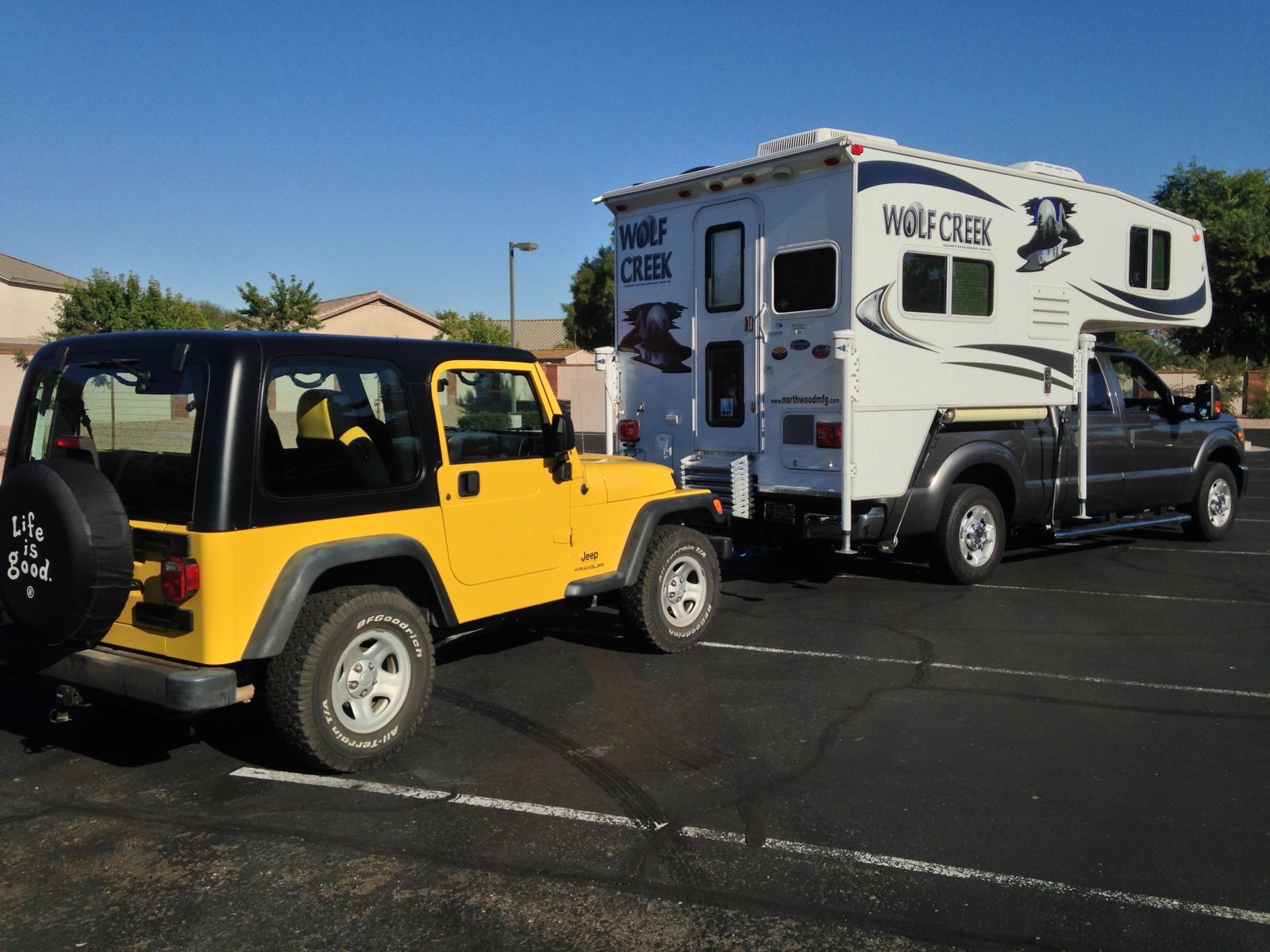
Example: Many RV owners prefer flat towing a Wrangler because it’s reliable and lets them explore off-road at their destination.
What To Check Before Every Tow
Before hitting the road, always:
- Inspect tow bar and base plate for damage
- Test all lights and signals
- Verify tire pressure and tread
- Confirm transfer case is in Neutral
- Secure all loose items inside the Jeep
A quick pre-tow checklist helps avoid problems on the road.
When Should You Use A Trailer Instead?
Sometimes, flat towing isn’t the best option. Consider a trailer if:
- Your Jeep has a damaged transfer case
- You’re towing a lifted or heavily modified Wrangler
- You need to cover a long distance (over 500 miles)
- Your Jeep isn’t flat-towable (check your manual!)
Tip: Trailers are also safer in icy or snowy conditions.
Legal Requirements And Insurance
Each state has its own laws about towing. Most require:
- Tow lights and signals
- Breakaway brake systems for heavy vehicles
- Safety chains
- Proper registration and insurance
Call your insurance company before you tow. Some policies cover towing, others require extra coverage.
For more details on state laws, check the National Highway Traffic Safety Administration.
<!– wp:rank-math/faq-block {"questions":[{"id":"faq-question-b1c8a303584b","title":"Is It Safe To Flat Tow A Jeep Wrangler Behind An Rv?","content":"Yes, if your Wrangler is flat-towable and you follow the steps above. Always check your model’s manual for exact instructions, use the correct equipment, and never skip safety checks.
“,”visible”:true},{“id”:”faq-question-46c4c7eeafcc”,”title”:”Can You Tow A Jeep Wrangler With An Automatic Transmission?”,”content”:”Most newer Wranglers with automatic transmissions can be flat towed if you set the transfer case to Neutral. Some older models may have limits. Always follow your Jeep’s manual closely.
“,”visible”:true},{“id”:”faq-question-5cb82fc555f3″,”title”:”What Is The Best Speed For Towing A Jeep Wrangler?”,”content”:”Stay under 65 mph. Many states have lower towing speed limits, and higher speeds can cause sway or tire problems.
Slower speeds are safer for both your tow vehicle and Jeep.
“,”visible”:true},{“id”:”faq-question-caa4c58f7dee”,”title”:”Do I Need A Braking System When Towing My Wrangler?”,”content”:”Yes, a supplemental braking system is required in most states for vehicles over 3,000 lbs. It’s also much safer and reduces wear on your tow vehicle’s brakes.
“,”visible”:true},{“id”:”faq-question-d367860f913a”,”title”:”Can I Tow My Jeep With A Regular Tow Strap?”,”content”:”No, using a tow strap is only for short, emergency situations (like getting unstuck). For highway or long-distance towing, always use a tow bar or trailer.
A little planning and the right equipment make towing a Jeep Wrangler safe and simple. Take time to check your setup, follow the rules, and enjoy the road ahead.
With these tips, you can tow your Wrangler with confidence on your next adventure.
“,”visible”:true}]} –>Is It Safe To Flat Tow A Jeep Wrangler Behind An Rv?
Yes, if your Wrangler is flat-towable and you follow the steps above. Always check your model’s manual for exact instructions, use the correct equipment, and never skip safety checks.
Can You Tow A Jeep Wrangler With An Automatic Transmission?
Most newer Wranglers with automatic transmissions can be flat towed if you set the transfer case to Neutral. Some older models may have limits. Always follow your Jeep’s manual closely.
What Is The Best Speed For Towing A Jeep Wrangler?
Stay under 65 mph. Many states have lower towing speed limits, and higher speeds can cause sway or tire problems.
Slower speeds are safer for both your tow vehicle and Jeep.
Do I Need A Braking System When Towing My Wrangler?
Yes, a supplemental braking system is required in most states for vehicles over 3,000 lbs. It’s also much safer and reduces wear on your tow vehicle’s brakes.
Can I Tow My Jeep With A Regular Tow Strap?
No, using a tow strap is only for short, emergency situations (like getting unstuck). For highway or long-distance towing, always use a tow bar or trailer.
A little planning and the right equipment make towing a Jeep Wrangler safe and simple. Take time to check your setup, follow the rules, and enjoy the road ahead.
With these tips, you can tow your Wrangler with confidence on your next adventure.