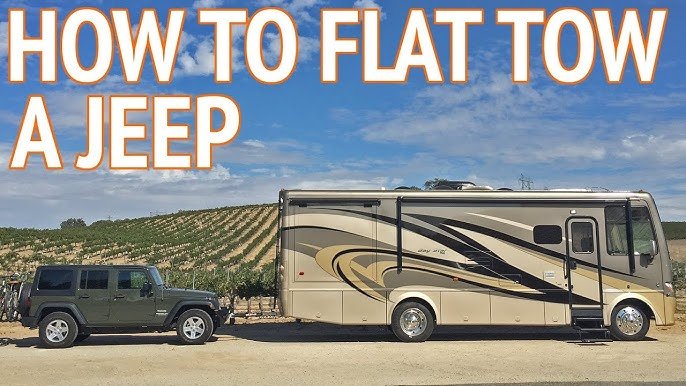
Towing a Jeep Wrangler behind an RV is a popular choice for adventurers who want flexibility on their trips. The Wrangler is known for its rugged build and ability to handle almost any terrain, making it a great companion for camping and road travel.
But before you hook up your Jeep and hit the road, it’s important to follow the right steps for safe and legal towing. This guide will help you understand what’s needed, how to prepare your vehicle, and what mistakes to avoid.
Choosing The Right Towing Method
Not all towing methods are suitable for a Jeep Wrangler. The main options are:
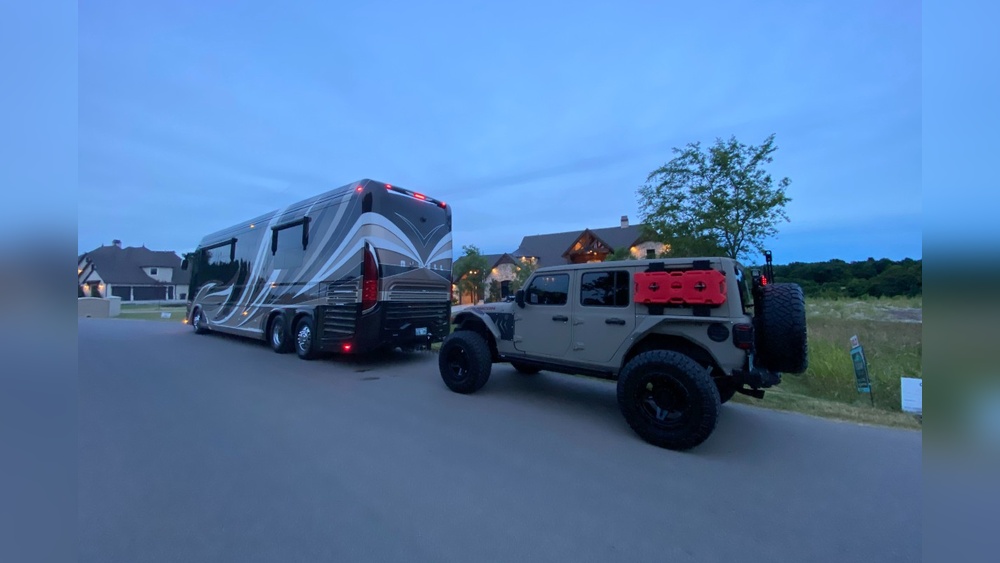
- Flat towing (four wheels down)
- Trailer towing (all wheels off the ground)
- Dolly towing (two wheels up, two down)
Most Jeep Wrangler models from 1997 onward can be flat towed. This is the easiest and most common way. You don’t need a trailer or dolly, and setup is simple. However, always check your Jeep’s manual to confirm if your model is approved for flat towing. Older Wranglers or modified versions might need a different approach.
| Towing Method | Wrangler Compatibility | Cost | Setup Time |
|---|---|---|---|
| Flat Towing | Most Models | Low | Quick |
| Trailer Towing | All Models | High | Long |
| Dolly Towing | Some Models | Medium | Moderate |
Essential Equipment For Towing
To tow your Jeep Wrangler safely, you need the right gear. Here are the main items:
- Tow bar: Connects the Jeep to your RV. Make sure it is rated for the Jeep’s weight.
- Base plate: Installed on the Jeep, allows tow bar attachment.
- Safety cables: Extra security in case the tow bar fails.
- Wiring harness: Links the Jeep’s lights to the RV for brake and turn signals.
- Brake system: Some states require a supplemental braking system for the towed vehicle.
A good tow bar can cost $300 $800. Base plates usually run $400 $600.
Supplemental brake systems are around $500 $1,200, but they are crucial for safety.
| Equipment | Estimated Price | Purpose |
|---|---|---|
| Tow Bar | $300–$800 | Connects RV to Jeep |
| Base Plate | $400–$600 | Mounts tow bar |
| Safety Cables | $40–$80 | Backup connection |
| Wiring Harness | $60–$200 | Links lights |
| Brake System | $500–$1,200 | Extra braking |
Preparing Your Jeep Wrangler For Towing
Before towing, you must set up the Jeep properly to avoid transmission or transfer case damage. Here’s what to do:
- Check owner’s manual: Look for flat towing instructions.
- Shift transfer case to Neutral (N): This disconnects the wheels from the engine.
- Put transmission in Park (automatic) or gear (manual): This prevents movement.
- Release parking brake: Never tow with the parking brake engaged.
- Disconnect battery (if required): Some models need this to avoid electronics draining.
Always double-check the transfer case position. If it’s not fully in neutral, the transmission can overheat and break down.
Some Jeep owners forget to release the parking brake, which can cause tire and brake damage.
Setting Up The Tow Bar And Connections
Setting up your tow bar correctly is vital. Follow these steps:
- Attach base plate to Jeep frame.
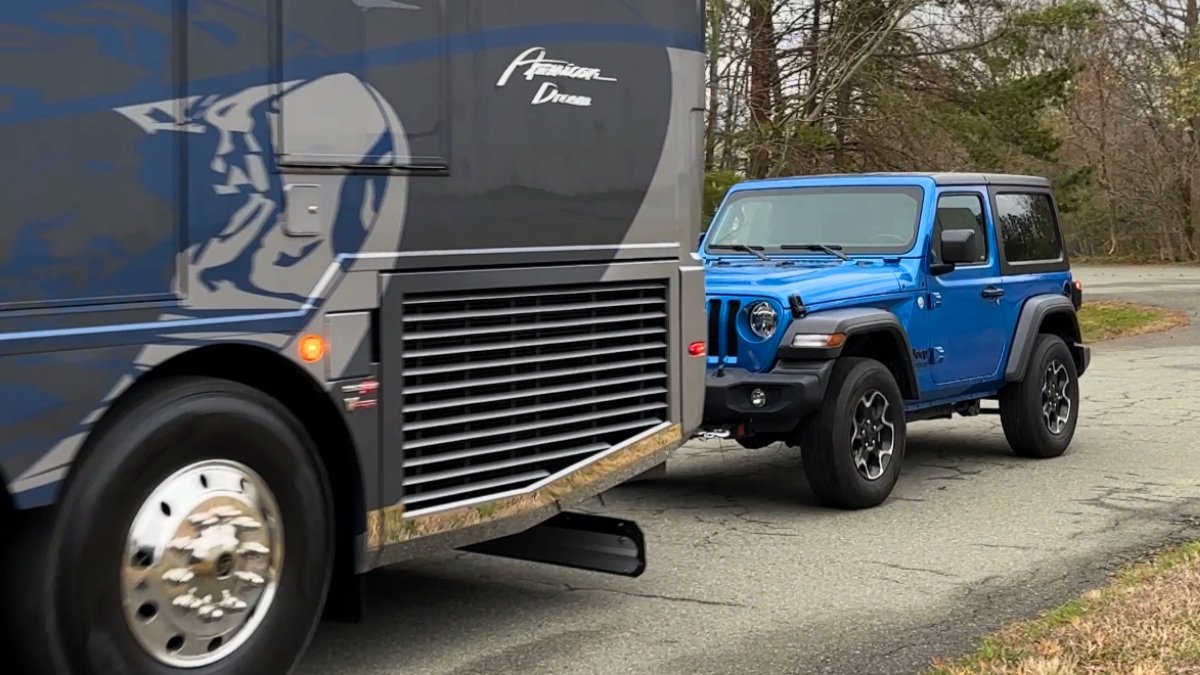
- Connect tow bar to base plate and RV.
- Attach safety cables in a crisscross pattern. This keeps the Jeep from drifting if the tow bar disconnects.
- Plug in wiring harness for lights.
- Install supplemental brake system.
The crisscross cable pattern is a small detail many beginners overlook. It’s designed to keep the Jeep centered behind your RV if something goes wrong.
Driving Tips And Legal Requirements
Towing changes how your RV handles. Here are some tips:
- Drive slower: Keep your speed under 65 mph. High speeds can make towing unstable.
- Increase stopping distance: Your RV will need more room to stop.
- Watch turns: The Jeep follows, but make wider turns to avoid curb hits.
- Check state laws: Some states require brake systems or special lights.
In the US, towing laws differ from state to state. For example, California and Texas require supplemental brakes for vehicles over 1,500 pounds. Always check before traveling across state lines.
Common Mistakes To Avoid
- Not checking transfer case position: Can ruin your Jeep’s transmission.
- Skipping brake system: This can lead to accidents and legal trouble.
- Wrong tow bar rating: Make sure your tow bar can handle your Jeep’s weight (usually 3,500–5,000 lbs).
- Forgetting safety cables: Never tow without them.
- Incorrect wiring setup: This can cause brake and turn signals to fail.
One non-obvious tip: Don’t rely only on visual checks. Test your brake lights and turn signals with someone outside before every trip.
Maintenance And After-towing Care
After towing, inspect your Jeep for wear. Look at the tires, brakes, and undercarriage.
Long trips can cause unexpected damage. If you tow often, check tow bar bolts and base plate mounts every month.
Many RVers overlook the Jeep’s battery. If you disconnect it for towing, reconnect and start the vehicle as soon as possible to keep electronics healthy.
Frequently Asked Questions
Can All Jeep Wranglers Be Flat Towed?
Most modern Jeep Wranglers from 1997 onward can be flat towed. Always check your owner’s manual for your specific model. Some older or modified Wranglers may need extra equipment.
Do I Need A Supplemental Brake System?
Yes, most states require a brake system for towed vehicles over 1,500 lbs. It improves safety and meets legal rules. Check local laws before you travel.
How Much Does It Cost To Set Up For Towing?
Expect to spend $1,000–$2,500 for all equipment, including tow bar, base plate, brake system, and wiring. Prices vary by brand and installer.
Is Towing A Jeep Wrangler Behind An Rv Safe?
Yes, if you follow all preparation steps and use the right equipment. Always double-check connections and test lights and brakes before starting.
Where Can I Find Official Towing Guidelines?
You can read official Jeep towing guidelines at the Jeep website or check your manual. For more details on flat towing, see Wikipedia.
Towing a Jeep Wrangler behind your RV lets you explore more places and enjoy greater freedom. With the right setup and careful preparation, you’ll travel safely and avoid costly mistakes.
Take your time, follow each step, and check your gear before every trip.
This way, your adventure stays smooth and trouble-free.