Towing a 4×4 Jeep on a dolly isn’t as simple as towing a regular car. Four-wheel-drive systems, weight, and vehicle design make the process different and sometimes risky if done wrong.
For Jeep owners who need to move their vehicle without driving it, using a tow dolly can save time and money. But it’s important to know the right steps and avoid costly mistakes.
This guide explains what you need, how to prepare, and the safest way to tow your 4×4 Jeep on a dolly.
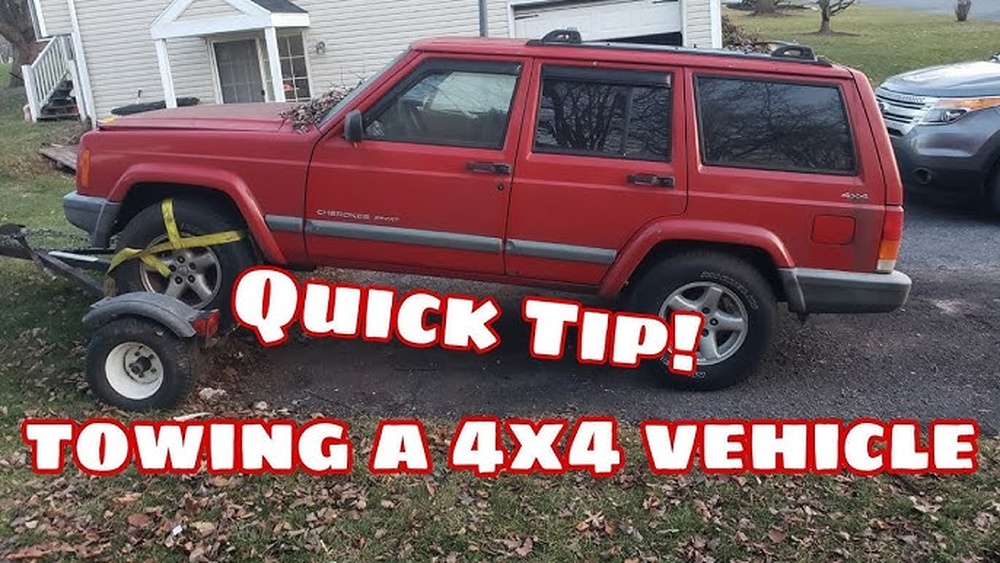
Understanding Your 4×4 Jeep
Before you tow, know your Jeep’s drivetrain type. Most Jeep 4x4s use either part-time or full-time four-wheel drive. This matters because towing incorrectly can damage the transfer case, transmission, or other parts.
Read your owner’s manual for towing instructions. Many Jeep models are not designed to be towed with two wheels on the ground (dolly towing).
However, some older or specialized models allow it if you follow certain steps. If unsure, contact your dealer.
Key Jeep Drivetrain Types
| Drivetrain | Can You Dolly Tow? | Precautions |
|---|---|---|
| Part-time 4×4 | Sometimes | Transfer case must be in Neutral, some models require driveshaft removal |
| Full-time 4×4 | Rarely | Usually not recommended, check manual |
| AWD | No | Use flatbed trailer instead |
1. Preparing The Jeep
The first step is to prepare your Jeep for safe towing. This is not just about loading it onto the dolly. It’s about making sure no mechanical parts get damaged.
- Shift your Jeep’s transfer case into Neutral (N). This disconnects the wheels from the transmission.
- Put the transmission in Park (automatic) or first gear (manual).
- If possible, disconnect the rear driveshaft. For many Jeeps, this is the only way to prevent transmission damage. Not all models require this, but it’s safer.
- Double check that the parking brake is OFF.
Many beginners forget to disconnect the driveshaft. Even with the transfer case in Neutral, some models still spin parts inside the transmission, causing heat and wear.
Driveshaft removal is a simple but often-missed step.
2. Loading The Jeep Onto The Dolly
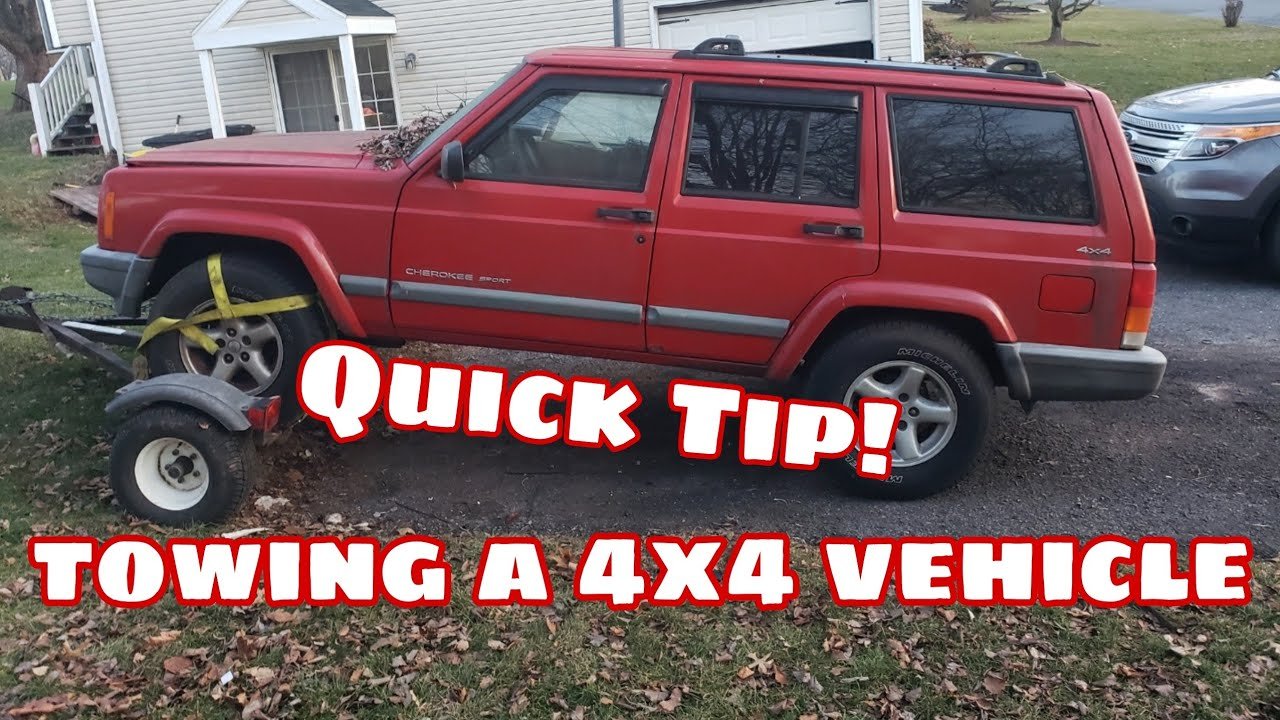
Once the Jeep is prepared, it’s time to load it onto the dolly. Dolly towing means only the front or rear wheels are on the dolly—never all four.
- Always load the drive wheels on the dolly. For most 4×4 Jeeps, this means the front wheels.
- Secure the Jeep using the dolly’s built-in straps and safety chains.
- Make sure the Jeep is centered and balanced on the dolly.
| Step | Details |
|---|---|
| 1. Position dolly | Flat surface, close to Jeep |
| 2. Align Jeep | Drive or push until wheels are on ramps |
| 3. Secure wheels | Use ratchet straps tightly |
| 4. Attach safety chains | Extra security in case straps fail |
A common error is loading the wrong wheels on the dolly. For a 4×4 Jeep, always check which wheels are connected to the driveshaft and follow the manufacturer’s advice.
3. Setting Up For Safe Towing
With the Jeep on the dolly, you need to prepare your towing vehicle and check everything before moving.
- Check that the towing vehicle is strong enough. Most Jeeps weigh between 4,000 and 5,000 lbs. Your tow vehicle must be heavier and rated for the load.
- Inspect the dolly’s tires, lights, and brakes. Make sure all connections are secure.
- Check the tongue weight—the downward force on the hitch. Too much or too little can cause sway.
- Attach any required safety equipment like extra lights or breakaway cables.
Some tow dollies have built-in brakes; others do not. It’s safer to use a dolly with brakes, especially for heavy vehicles like a Jeep.
Beginners often forget to check state towing laws, which can require certain safety gear or speed limits.
4. Towing Techniques And Safety
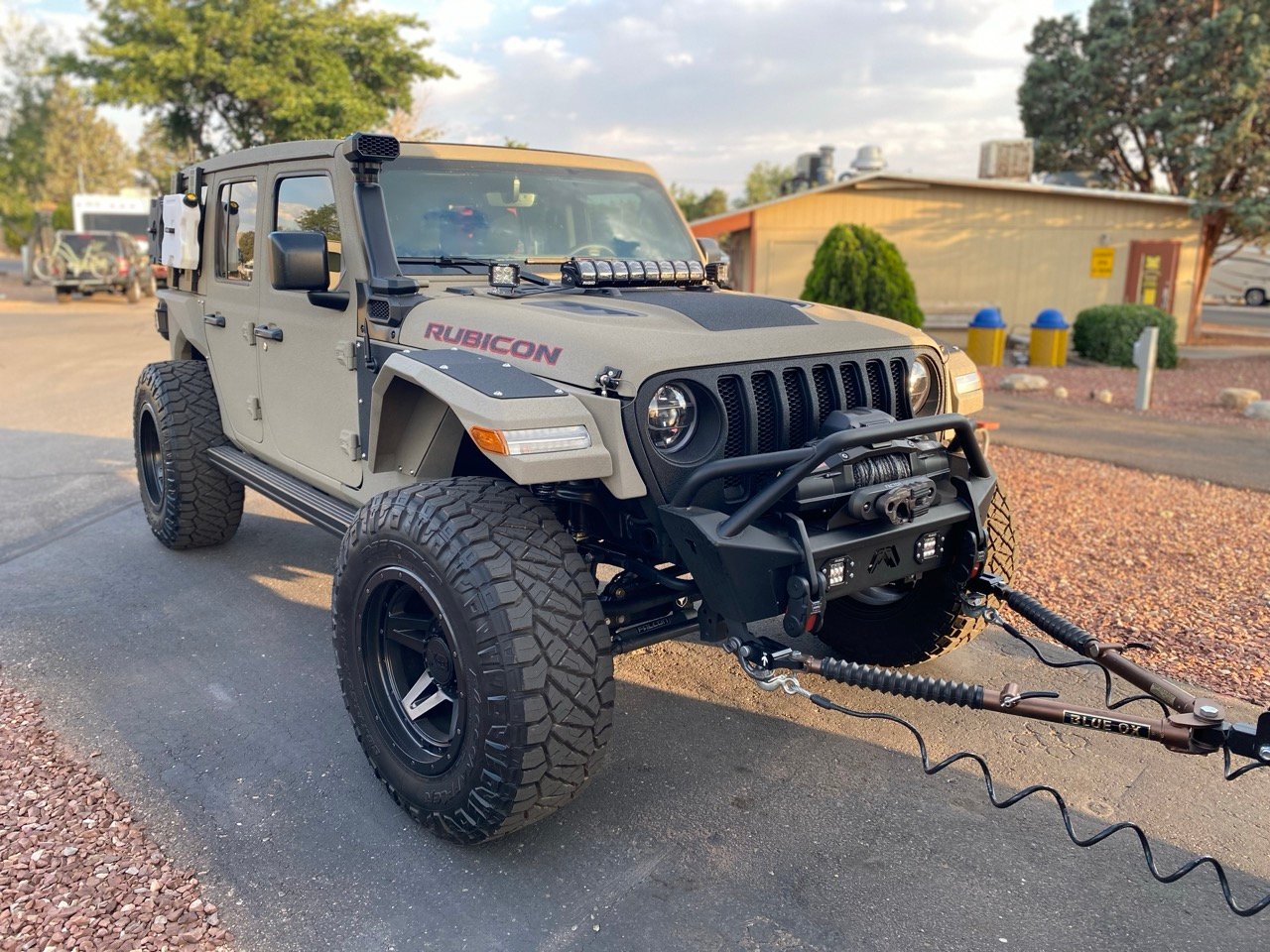
Now you’re ready to tow. Driving with a Jeep on a dolly is different from normal driving. Here’s what to focus on:
- Drive slowly and keep your speed under 55 mph. Fast driving puts stress on the dolly and Jeep.
- Avoid sharp turns. Tow dollies can jackknife if you turn too tightly.
- Brake early and gently. You have much more weight behind you.
- Check your mirrors often. Make sure the Jeep stays centered on the dolly.
- Stop frequently (every 50-100 miles) to check straps, chains, and tires.
Many people are surprised by how quickly tow straps can loosen or how small turns can shift the Jeep on the dolly. Regular stops and careful driving prevent accidents.
Flat Towing Vs Dolly Towing
Some Jeep owners consider flat towing (all four wheels on the ground) instead of a dolly. But not all Jeeps can be flat-towed, especially newer models with complex transmissions. Dolly towing is safer for most 4x4s if you follow the right steps.
| Method | Pros | Cons |
|---|---|---|
| Flat towing | Quick setup, less gear | Not suitable for all models, can damage drivetrain |
| Dolly towing | Protects transmission, more universal | Heavier, requires loading/unloading |
Frequently Asked Questions
Is It Safe To Tow A 4×4 Jeep On A Dolly?
It can be safe if you follow the right steps: transfer case in Neutral, driveshaft disconnected (if needed), and follow all Jeep and dolly instructions. Using the wrong method can cause damage.
Do I Need To Disconnect The Driveshaft Every Time?
For most 4×4 Jeeps, disconnecting the rear driveshaft is recommended when dolly towing. This prevents transmission and transfer case damage. Check your specific model’s manual.
Can I Tow A Jeep Wrangler On A Dolly?
Some older Jeep Wranglers can be dolly towed if set up correctly. Newer models may require flat towing or a trailer. Always check the manual for your model year.
What Speed Should I Keep When Towing?
Stay under 55 mph when towing a Jeep on a dolly. Higher speeds increase the risk of sway, accidents, and equipment failure.
Where Can I Learn More About Towing Laws?
Visit the National Highway Traffic Safety Administration (NHTSA) for up-to-date information on towing laws and safety equipment.
Moving a 4×4 Jeep with a dolly takes planning and care. By following each step and double-checking your setup, you can protect your Jeep and travel safely.
Always review your owner’s manual and consult experts if you’re unsure safe towing is worth the extra effort.