Testing your Jeep ignition coil is a smart way to diagnose engine problems before spending money on new parts. A faulty ignition coil can cause misfires, rough idling, poor fuel economy, and even leave you stranded. But many drivers are unsure how to check this part safely and accurately. The good news is, with simple tools and a step-by-step approach, you can test your Jeep’s ignition coil at home—even if you’re not a mechanic. Let’s explore the process, the signs of a bad coil, and the best practices to ensure your Jeep keeps running strong.
Why Testing Your Jeep Ignition Coil Matters
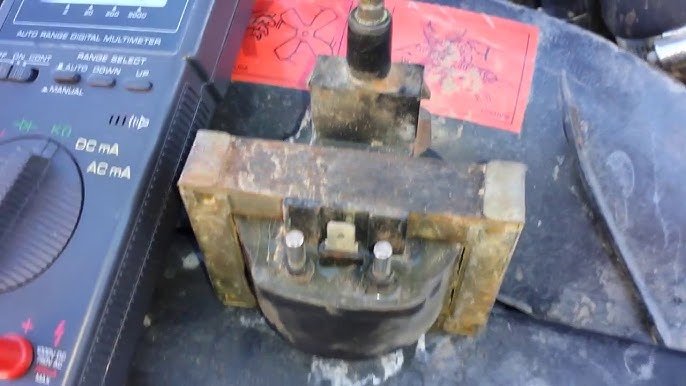
The ignition coil is a small but critical part of your Jeep’s ignition system. It transforms the battery’s low voltage into the high voltage needed to create a spark in the spark plugs. If the coil fails, your Jeep might not start or could run poorly. Ignoring a bad coil can also damage other engine parts, like the catalytic converter, due to unburned fuel.
Here’s a look at how a bad ignition coil affects your Jeep:
| Symptom | Possible Cause | Risk if Ignored |
|---|---|---|
| Engine misfire | Weak/no spark from coil | Engine damage |
| Hard starting | Intermittent coil failure | Stranded vehicle |
| Poor fuel economy | Incomplete combustion | Higher fuel costs |
What You Need Before Testing
Before starting, gather these basic tools:
- Digital multimeter (measures resistance and voltage)
- Insulated screwdriver (for safety)
- Socket set/wrenches (to remove coil if needed)
- Gloves and safety glasses
Never test the coil with bare hands when the engine is running. High voltage can be dangerous.
Step-by-step Guide To Testing A Jeep Ignition Coil
1. Locate The Ignition Coil
Most modern Jeeps use coil-on-plug systems, meaning each spark plug has its own coil. Older models may use a single coil. Check your owner’s manual to find the coil location.
2. Visual Inspection
Before using tools, look for:
- Cracks or burn marks on the coil housing
- Corrosion on the coil terminals or connectors
- Loose wires or damaged plugs
Visible damage often means the coil needs replacing.
3. Testing Primary And Secondary Resistance
The primary winding connects to the battery; the secondary winding sends high voltage to the spark plug. You’ll check both.
A. Remove The Coil
Disconnect the negative battery terminal. Remove the coil from the engine using a socket or wrench.
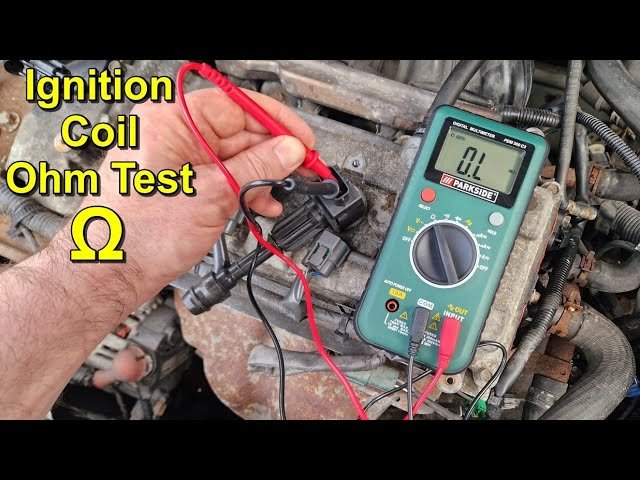
B. Check Primary Resistance
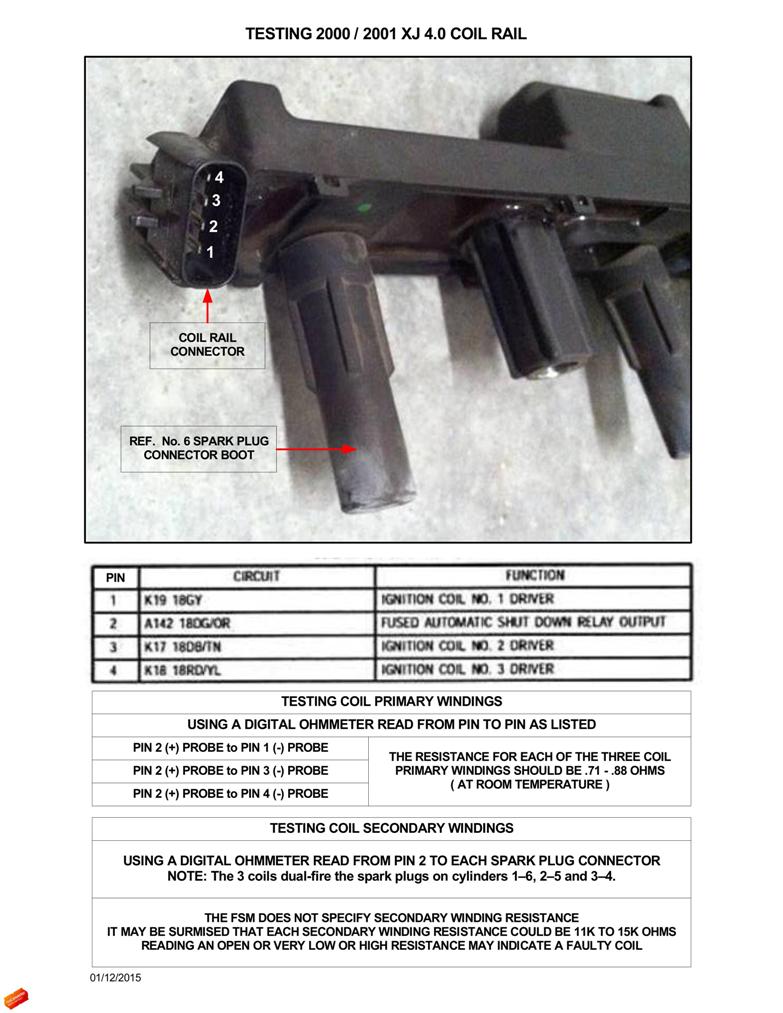
Set your multimeter to the lowest ohms (Ω) setting. Touch the meter leads to the coil’s primary terminals (usually marked + and -). For most Jeep coils, the reading should be 0.4–2 ohms.
C. Check Secondary Resistance
Switch the meter to a higher ohms setting. Touch one lead to the positive terminal and the other to the high-voltage output (where the spark plug wire connects). Expect a reading between 6,000–15,000 ohms.
| Test Type | Expected Range | What It Means |
|---|---|---|
| Primary resistance | 0.4–2 ohms | Low voltage side is good |
| Secondary resistance | 6,000–15,000 ohms | High voltage side is good |
If your readings are outside these ranges, the coil is likely faulty.
4. Testing Coil Output With A Spark Test
If resistance readings are normal but you still suspect coil issues, a spark test can help.
- Reconnect the coil and spark plug wire.
- Remove the spark plug and reconnect it to the wire.
- Hold the plug’s metal body against a grounded part of the engine using insulated pliers.
- Have someone crank the engine. You should see a strong blue spark. A weak or orange spark means the coil is failing.
Tip: Always use insulated tools for this test to avoid electric shock.
Common Mistakes When Testing Jeep Ignition Coils
- Testing with the battery connected: Always disconnect the battery to avoid shorts.
- Using wrong meter settings: Set the multimeter to ohms, not volts, for resistance tests.
- Ignoring small cracks: Even minor damage can cause coil failure under load.
- Not testing under load: Some coils only fail when hot or under pressure, so consider testing after a drive.
How To Tell If You Need A New Ignition Coil
Not sure if your Jeep needs a new coil? Look for these warning signs:
- Engine shakes or vibrates at idle
- Check engine light with codes like P0351–P0356 (coil circuit faults)
- Poor acceleration or stalling
- Noticeable drop in fuel mileage
If you see these symptoms and your coil fails the above tests, it’s time to replace it.
Comparing Jeep Ignition Coil Types
Different Jeep models use different coil types. Here’s a quick comparison:
| Coil Type | Used On | Pros | Cons |
|---|---|---|---|
| Single Coil | Older Jeeps | Easy to replace | One fails, all cylinders affected |
| Coil Pack | 1990s–2000s models | Modular, more reliable | Costlier to replace |
| Coil-on-Plug | Modern Jeeps | Individual control per cylinder | Harder to access |
Knowing your coil type helps you test and replace it correctly.
Pro Tips For Testing And Replacing Jeep Ignition Coils
- Label wires before removal to avoid mix-ups.
- Always use the correct replacement part number for your Jeep’s year and engine.
- If one coil fails on a high-mileage Jeep, others may soon fail—consider replacing all at once for reliability.
- Keep your coil and plug connections clean and dry to prevent future problems.
For deeper technical information, the Jeep service manual or trusted online sources like Wikipedia can provide more details.
Testing your Jeep ignition coil isn’t complicated, but it does require patience and attention to detail. By following these steps, you can save time, money, and avoid getting stranded.
Remember, a healthy ignition coil means smoother starts, better fuel economy, and a more reliable ride.
Frequently Asked Questions
How Often Should I Test My Jeep Ignition Coil?
It’s wise to check your ignition coil every 30,000–50,000 miles, or if you notice engine trouble. Regular checks can prevent bigger issues.
Can I Drive With A Bad Ignition Coil?
You can, but it’s risky. Driving with a bad coil can cause engine misfires, damage the catalytic converter, and leave you stranded.
What Causes A Jeep Ignition Coil To Fail?
Common causes include heat, vibration, moisture, and old age. Using the wrong spark plugs or poor quality fuel can also stress the coil.
Do I Need Special Tools To Test My Coil?
No, just a digital multimeter and basic hand tools. For a spark test, you’ll need insulated pliers. Always prioritize safety.
Will A Bad Coil Trigger The Check Engine Light?
Yes. A bad coil often triggers the check engine light with codes like P0351 or P0352, which point to ignition problems.


















