Switching your Jeep into 4 wheel drive can make a big difference, especially when the road gets tough. Many Jeep owners love the freedom to explore, but not everyone knows how to use 4WD correctly. Using the right setting at the right time helps you stay safe and protects your vehicle. In this article, you’ll learn how to switch into 4 wheel drive in a Jeep, including the four main 4WD modes, when to use each, and how to avoid mistakes that could damage your Jeep.
Understanding Jeep 4 Wheel Drive Modes
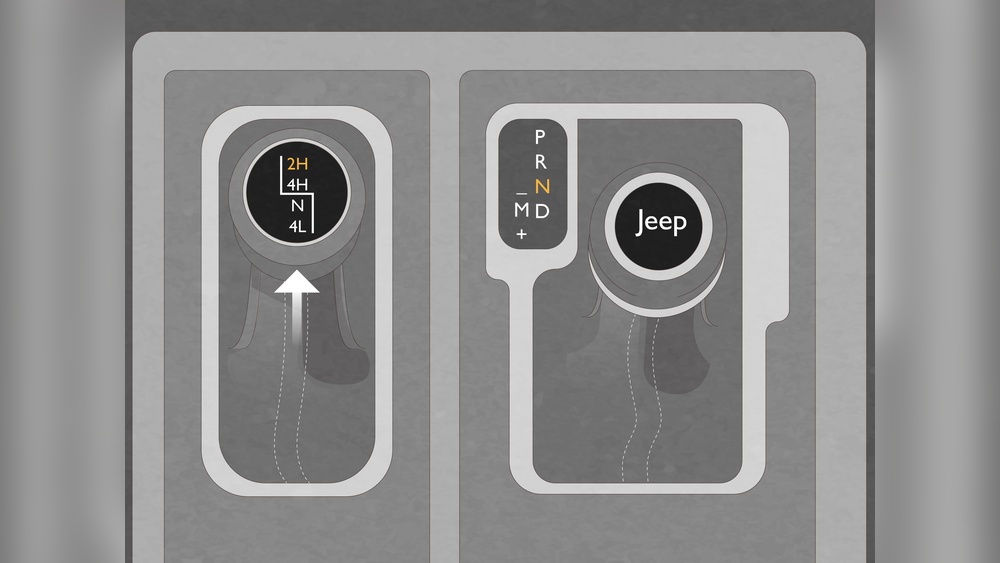
Most modern Jeeps come with four key 4WD modes: 2H (Two High), 4H (Four High), N (Neutral), and 4L (Four Low). Each mode is made for specific driving conditions. Choosing the right one helps your Jeep perform better and keeps you in control.
2h (two Wheel Drive High)
This is the default setting for everyday driving on dry, paved roads. In 2H, only the rear wheels get power. It gives you better fuel economy and a smoother ride.
- When to use: City driving, highways, or any normal dry road.
- How to switch: Make sure your Jeep is in gear (Drive for automatic, 2nd or 3rd for manual). The lever or switch should be set to 2H.
4h (four Wheel Drive High)
4H is for when the road is slippery or loose, like snow, mud, or gravel. It sends power to all four wheels, helping with traction.
- When to use: Rain, snow, sand, or muddy roads. Use when you need extra grip but not crawling speed.
- How to switch: You can shift from 2H to 4H while driving at speeds under 55 mph. Just slow down, take your foot off the gas, and shift the 4WD lever or knob to 4H.
N (neutral)
The Neutral position disconnects the drivetrain from the wheels. The Jeep won’t move under its own power, but the wheels can turn freely.
- When to use: Only when towing the Jeep behind another vehicle (flat towing).
- How to switch: Stop the vehicle, set the transmission to Neutral, then move the transfer case lever to N.
4l (four Wheel Drive Low)
4L is for the toughest conditions—steep hills, deep mud, rocks, or sand. It uses lower gears to give you more torque and control at very low speeds.
- When to use: Off-road, deep snow, deep mud, or when you need to crawl up or down a steep hill.
- How to switch: Stop the Jeep, shift the transmission to Neutral, then move the lever or knob firmly to 4L.
Step-by-step: How To Switch Into Each 4wd Mode
Switching between modes is simple, but you need to follow the right steps to avoid damage.
1. Switching To 4h
- Keep your speed below 55 mph.
- Take your foot off the accelerator.
- Move the 4WD lever or dial from 2H to 4H.
- Wait for the indicator light on the dashboard.
Tip: You can shift “on the fly” between 2H and 4H in most newer Jeeps.
2. Switching To 4l
- Bring the Jeep to a complete stop.
- Put the transmission in Neutral (N).
- Move the 4WD lever from 4H directly to 4L. You may hear or feel a clunk.
- Shift the transmission back to Drive or 1st gear and continue.
Note: Never shift into 4L while moving; it can damage the transfer case.
3. Returning To 2h
- Slow down and, if in 4L, come to a full stop and shift to Neutral.
- Move the lever or dial from 4L to 4H, then to 2H.
- Place the transmission back in Drive or the right gear.
4. Engaging Neutral (n)
- Park the Jeep and set the transmission to Neutral.
- Move the transfer case lever to N.
- Make sure the vehicle is secure before towing.
Insight: Many beginners forget to shift the main transmission to Neutral before moving the transfer case. This can cause loud noises or even get the lever stuck.
When And Why To Use Each Mode
Picking the right mode depends on road conditions.
- Use 2H for dry, flat pavement.
- Use 4H when you need traction but are still moving at moderate speeds.
- Use 4L for technical, off-road, or slow-speed situations.
- Use N only for towing.
If you use 4WD on dry pavement, you risk “driveline binding,” which can damage your Jeep. Always switch back to 2H when conditions improve.
Common Mistakes To Avoid
- Shifting to 4L while moving: Always stop completely.
- Using 4WD on dry pavement: Can harm the drivetrain.
- Forgetting to shift transmission to Neutral when using 4L or N.
- Ignoring dashboard lights: Warning lights mean something is wrong.
- Not practicing: Try shifting modes in a safe area before hitting tough trails.

Quick Comparison: Jeep 4wd Modes
Here’s a simple comparison:
| Mode | When to Use | Speed | Wheels Powered |
|---|---|---|---|
| 2H | Dry pavement | Any | Rear |
| 4H | Snow, mud, sand | < 55 mph | All |
| 4L | Off-road, steep hills | Very low | All |
| N | Towing | 0 | None |
Practical Example: Handling Snowy Roads
Imagine you’re driving your Jeep and hit a patch of snow. In 2H, the rear wheels may spin. By slowing down and shifting to 4H, power goes to all four wheels, and you regain control. If you get stuck in deep snow, stop, shift to Neutral, and move into 4L for maximum torque to get out.

4wd System: Manual Vs. Automatic
Some newer Jeeps use a dial or button instead of a lever. Both work similarly, but always check your owner’s manual for details.
| Selector Type | How to Operate | Common Models |
|---|---|---|
| Lever | Move by hand | Wrangler, older models |
| Switch/Dial | Turn or press button | Cherokee, Grand Cherokee |
Tip: If your Jeep uses a dial, listen for clicks and watch the dashboard for confirmation.
Maintenance Tips For Your Jeep’s 4wd System
- Regularly check the transfer case fluid.
- Listen for unusual noises when switching modes.
- Test all modes in a safe area at least once a season.
- Consult your owner’s manual for model-specific advice.
Non-obvious insight: Many drivers forget to engage 4WD every few months. If 4WD sits unused, internal parts can stick, making it hard to switch when you finally need it.

Frequently Asked Questions
How Fast Can I Drive In 4h?
You can drive up to 55 mph in 4H. However, avoid sharp turns at high speeds, as handling changes in 4WD.
Can I Switch To 4h While Moving?
Yes, you can shift from 2H to 4H “on the fly” at low speeds (below 55 mph). Always let off the gas and shift smoothly.
When Should I Use 4l?
4L is only for off-road situations, deep mud, sand, or steep hills where you need high torque and low speed.
Is It Ok To Leave My Jeep In 4wd All The Time?
No. Using 4WD on dry pavement can damage the drivetrain and tires. Return to 2H when you don’t need extra traction.
Where Can I Learn More About Jeep 4wd Systems?
Check the official Jeep 4×4 guide for more details and tips.
Switching your Jeep into 4 wheel drive is not hard, but it’s important to use the right mode for the right situation. Practice in a safe place, follow your owner’s manual, and you’ll be ready for any road or trail ahead.