Taking the hardtop off a Jeep is a popular job for owners who want to enjoy open-air driving. Many Jeep models, like the Wrangler and Gladiator, are designed so you can remove the roof.
But the process needs care and the right steps to avoid damage. Whether you’re preparing for summer or need access for repairs, learning how to remove your Jeep hardtop safely can save time and money.
Understanding Jeep Hardtop Removal
Jeep hardtops are made from fiberglass or plastic and can weigh between 80–150 pounds. Most models have similar removal steps, but there are small differences depending on year and style. Some owners do the job alone, but having a helper makes it safer and easier. Removing the top lets you enjoy fresh air, but you must store it correctly to prevent cracks or scratches.
Tools And Supplies Needed
Before you start, gather these items:
- Torx bit set (usually T40 and T50)
- Ratchet wrench
- Safety gloves
- Soft cloth or blanket for protection
- Storage cart or hoist (optional, but helpful)
- Screw bag/container to keep bolts safe
Some Jeep models include a toolkit in the glove box. Always check your owner’s manual for your exact model’s requirements.
Step-by-step Guide To Removing A Jeep Hardtop
Follow these steps to remove the hardtop safely and efficiently:
- Prepare the Jeep
- Park on a flat surface.
- Turn off the ignition and remove the keys.
- Open all doors and windows for easy access.
- Remove Freedom Panels (if equipped)
- Many modern Wranglers have two removable front panels.
- Unlock latches and unscrew bolts using the Torx bit.
- Lift panels gently and set them aside.
- Disconnect Electrical Connections
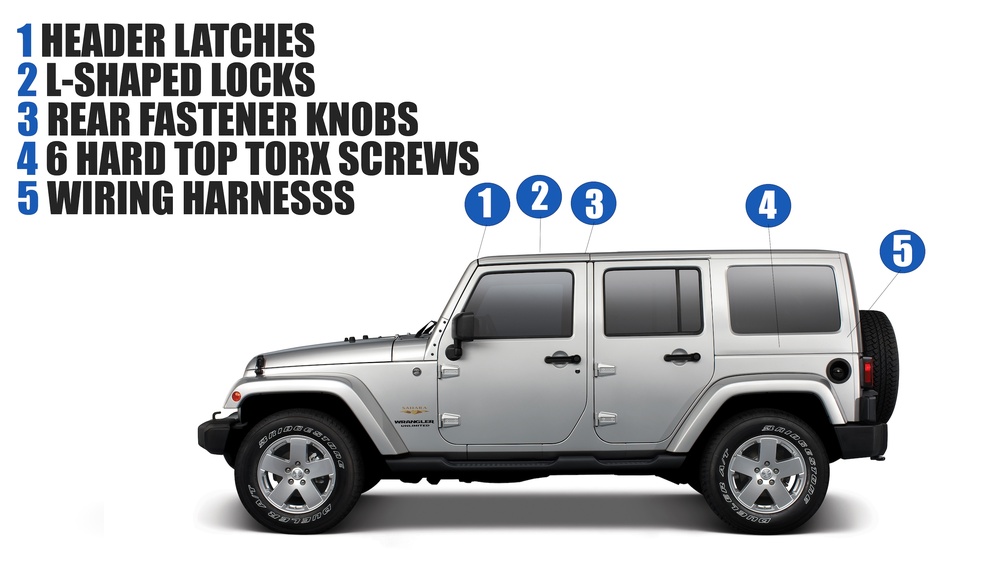
- Locate the wiring harness and washer fluid hose at the rear driver’s side.
- Press the release tabs and unplug both connections.
- Tuck wires away to avoid snagging.
- Unscrew Hardtop Bolts
- Find bolts inside the cargo area and above the rear wheel wells.
- Use the ratchet wrench with the correct Torx bit.
- There are usually 6–8 bolts depending on your Jeep model.
- Lift and Remove Hardtop
- With help, grip the sides of the hardtop.
- Lift carefully to avoid scratching paint.
- Move it away from the vehicle and place it on a soft surface or storage cart.
- Store the Hardtop
- Keep the top in a dry, shaded place.
- Cover with a blanket to protect from dust and UV damage.
- Never store it upright; always lay it flat to prevent warping.
Common Mistakes To Avoid
- Forgetting to disconnect the electrical harness
- Losing bolts or screws (always use a labeled bag)
- Trying to lift the hardtop alone if it weighs over 100 pounds
- Scratching the paint by dragging the top
Comparing Hardtop Removal By Model
Some Jeep models require different steps or tools. Here’s a quick comparison:
| Model | Number of Bolts | Weight (lbs) | Special Features |
|---|---|---|---|
| Wrangler JL | 8 | 120 | Freedom Panels |
| Wrangler JK | 6 | 140 | Single-Piece Top |
| Gladiator JT | 8 | 150 | Truck Bed Compatibility |
Safety And Storage Tips
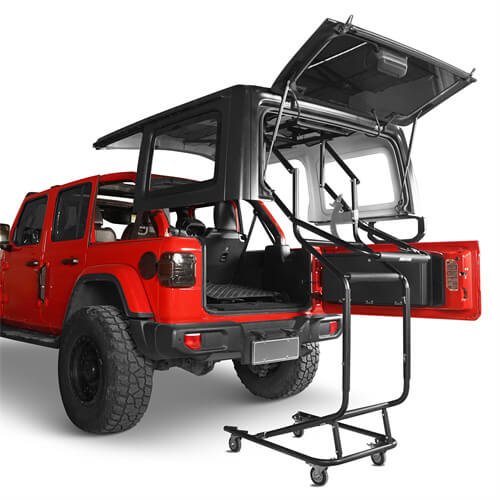
Proper handling keeps your Jeep and hardtop in good shape. If you don’t have a helper, a storage hoist can make lifting easier.
Some owners use DIY pulley systems in garages. Avoid exposure to rain, as moisture can damage seals and paint.
If you plan to drive with the top off, check local laws about seat belts and cargo.
Hardtop Storage Options Compared
Here’s a look at common storage methods:
| Method | Cost | Ease of Use | Protection Level |
|---|---|---|---|
| Garage Floor | Free | Easy | Low |
| Hardtop Cart | $150–$300 | Moderate | High |
| Ceiling Hoist | $200–$500 | Difficult | Very High |
Practical Advice For Beginners
Many first-timers overlook the importance of keeping bolts organized. Using a magnetic tray or separate bags for each step makes reinstallation smoother. Another non-obvious tip: inspect the weather seals around the roof after removal. If seals are dirty or damaged, clean or replace them before reinstalling. Taking photos during removal can help you remember bolt locations.
Troubleshooting And Special Cases
Sometimes bolts get stuck or wiring harnesses are hard to reach. Spraying a little WD-40 on stubborn bolts can loosen them. For wiring, use a flashlight to see connectors clearly. If your hardtop is damaged, avoid forcing it off—consult a mechanic. Owners in cold climates may need extra care; cold plastic can crack more easily, so work in a warm garage if possible.
If you want detailed official instructions, the Jeep website provides model-specific guides. You can find further details at Jeep Official Site.
Frequently Asked Questions
How Long Does It Take To Remove A Jeep Hardtop?
Most people spend 30–45 minutes on the process. With experience and the right tools, it can take less than 20 minutes.
Can You Remove A Jeep Hardtop By Yourself?
It’s possible for some models, especially if you use a hoist. But for hardtops over 100 pounds, a helper is recommended to avoid injury or damage.
What Should I Do With The Bolts After Removal?
Keep all bolts in a labeled container or bag. Some owners tape the bag to the inside of the hardtop for easy access.
Is It Safe To Drive With The Hardtop Off?
Yes, as long as you follow safety rules. Always use seat belts and check local laws.
Make sure the wiring harness and washer fluid hose are tucked away.
Will Removing The Hardtop Affect My Jeep’s Warranty?
No, Jeep designs hardtops for removal. However, damage caused during the process may not be covered. Always follow the manufacturer’s instructions.
Taking the hardtop off your Jeep can give you a new driving experience and help with maintenance. By using the correct tools, following each step, and storing the top carefully, you protect your investment.
With practice, the process gets easier every time.