If you own a Jeep, you’ve probably heard about 4 wheel drive (4WD) and how it helps you drive on tough roads. But if you’re new, you might wonder: “How do I put my Jeep in 4 wheel drive?”
The answer depends on your model and the type of 4WD system you have. help you understand the steps, the differences between 4WD modes, and what mistakes to avoid.
Whether you face snow, mud, or off-road trails, learning to use 4WD gives you more control and safety.
Why 4 Wheel Drive Matters For Jeep Owners
A Jeep’s 4 wheel drive system is designed to help you handle slippery, rough, or steep roads. It sends power to all four wheels, not just two, which gives you better grip. This is especially useful on snow, sand, mud, or rocky paths.
Beginners often miss that using 4WD the wrong way can actually harm your Jeep. For example, using 4WD on dry pavement puts stress on your drivetrain. Also, not all 4WD systems are the same, some are full-time, some are part-time, and some are automatic. Knowing your system is the first step to using it correctly.
The Four Main 4wd Modes In Jeeps
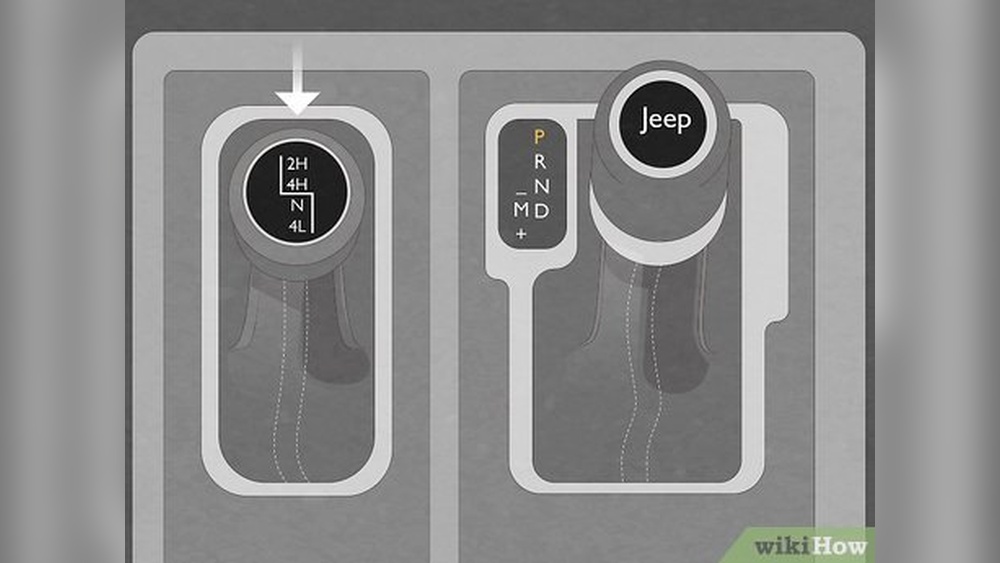
Most modern Jeeps offer four main 4WD modes. Understanding each mode is key before you try to switch.
| 4WD Mode | Best For | When To Use |
|---|---|---|
| 2H (Two-High) | Normal roads, dry pavement | Everyday driving |
| 4H (Four-High) | Snow, sand, light off-road | Slippery or loose surfaces |
| N (Neutral) | Towing Jeep | Flat-towing behind RV |
| 4L (Four-Low) | Deep mud, rocks, steep hills | Slow, tough terrain |
Let’s go step-by-step through how to put your Jeep in each 4WD mode.
1. How To Put Your Jeep In 2h (two-high)
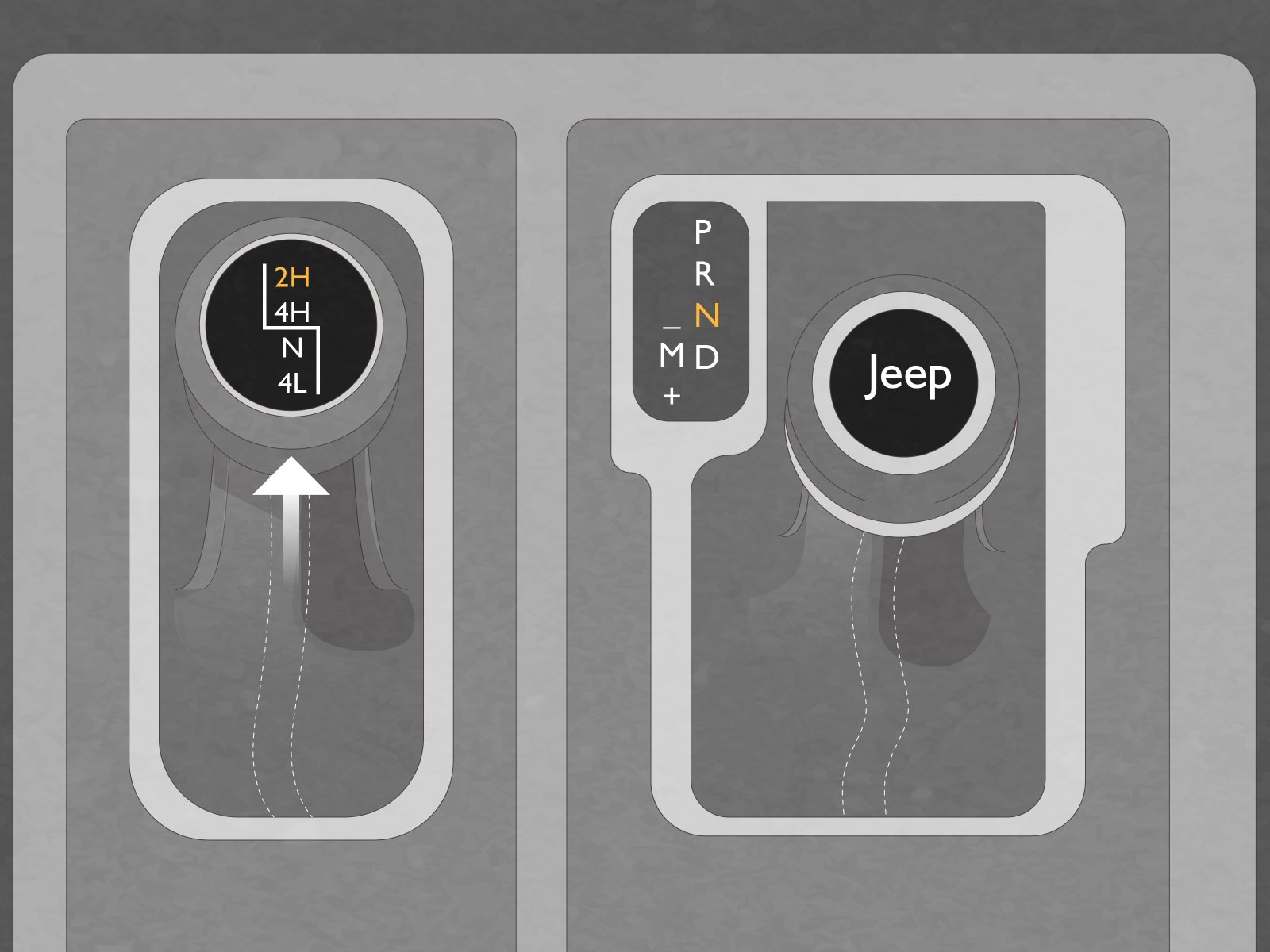
2H is the default mode for most Jeeps. In 2H, the engine sends power only to the rear wheels. This is best for regular roads and highways.
How to select 2H:
- Make sure your Jeep is stopped or moving straight.
- Move the 4WD lever to 2H or select 2H on your electronic switch.
- You can do this with the transmission in Drive (automatic) or Neutral (manual).
Pros:
- Saves fuel
- Less wear on 4WD parts
- Smooth handling on pavement
Cons:
- Less grip on slippery surfaces
Tip: If you’re not sure, start in 2H. Only switch to 4H or 4L when you need more traction.
2. How To Put Your Jeep In 4h (four-high)
4H gives you power to all four wheels. This is ideal for snow, sand, gravel, or wet grass. Many beginners switch to 4H only after they get stuck, but it’s better to switch before you lose traction.
Steps to engage 4H:
- Slow down to below 55 mph (some Jeeps recommend 45 mph, check your manual).
- Keep your wheels straight.
- Move the 4WD lever from 2H to 4H (or turn the electronic switch).
- Most Jeeps let you shift “on the fly”, you don’t need to stop or shift to Neutral.
You’ll know you’re in 4H when the 4WD light comes on your dashboard.
Pros:
- Extra grip in slippery conditions
- Can switch while moving (in most Jeeps)
Cons:
- Should not use on dry pavement (can damage drivetrain)
- Slightly lower fuel economy
Non-obvious insight: In some older Jeeps, you may hear a “click” or feel a slight bump when 4H engages. That’s normal.

3. How To Put Your Jeep In 4l (four-low)
4L is for tough, slow situations, like deep mud, steep hills, or rocky trails. 4L gives you maximum power but at low speed. This mode is not for normal roads.
How to shift into 4L:
- Stop your Jeep completely.
- Shift your transmission to Neutral (N).
- Firmly pull the 4WD lever from 2H/4H into 4L. (Or turn the dial, depending on your Jeep.)
- Wait for the 4L light on your dashboard.
- Return the transmission to Drive or 1st gear (manual).
Pros:
- Maximum torque for climbing or pulling
- Essential for serious off-roading
Cons:
- Can’t drive fast (usually under 25 mph)
- Not for regular roads
Important tip: Never shift into 4L while moving. This can damage your Jeep’s transfer case.
4. How To Put Your Jeep In Neutral (n)
Neutral in the 4WD system is not the same as the “N” on your transmission. This is used mainly for flat-towing your Jeep behind another vehicle, like an RV.
Steps to engage N:
- Park your Jeep and apply the parking brake.
- Shift the transmission into Neutral.
- Move the 4WD lever or switch into N.
- Confirm the “N” light on the dashboard.
Pros:
- Allows safe towing without spinning the drivetrain
Cons:
- Jeep can roll freely, always use the parking brake
Non-obvious insight: If you accidentally put your Jeep in 4WD Neutral, you won’t be able to drive. Make sure to shift back to 2H or 4H before moving.
Comparing Jeep 4wd Systems
Different Jeep models use different 4WD systems. Here’s a simple comparison:
| Jeep Model | 4WD System | Type |
|---|---|---|
| Wrangler | Command-Trac / Rock-Trac | Part-time |
| Grand Cherokee | Quadra-Trac / Quadra-Drive | Full-time / Auto |
| Cherokee | Active Drive | Auto |
| Gladiator | Command-Trac | Part-time |
Part-time systems need you to select 2H, 4H, or 4L. Full-time systems can switch automatically or let you use 4WD on pavement. Always check your manual to know your Jeep’s system.
Common Mistakes When Using 4 Wheel Drive
Even experienced drivers make these errors:
- Using 4WD on dry pavement. This causes binding and can break parts.
- Switching to 4L while moving. Always stop first.
- Not reading the manual. Every Jeep is a bit different.
- Forgetting to switch back to 2H. Driving in 4WD all the time wastes fuel and adds wear.
- Ignoring warning lights. If something feels wrong, stop and check.
Practical example: If you drive on wet roads and forget to return to 2H after, your tires may wear out faster and your Jeep may not handle as well.
How Much Does Jeep 4wd Maintenance Cost?
Regular maintenance keeps your 4WD system working. Costs can vary:
- Fluid change: $80, $200 every 30,000 to 60,000 miles
- Transfer case inspection: Often included in major service
- Drivetrain repairs: Can be $300, $1,500 if you break a part
Pro tip: Most 4WD repairs are preventable with regular checks and using the system correctly.
Real-world Example: When To Use Each 4wd Mode
Let’s say you’re planning a mountain trip:
- On the highway: Use 2H for best fuel economy.
- Snow starts to fall: Shift to 4H before the road gets slick.
- Steep, muddy trail to the cabin: Stop and switch to 4L for slow, controlled climbing.
- Flat-towing behind an RV: Set 4WD to N after following the steps.
Switching at the right time keeps you safe and avoids damage.

Pros And Cons Of Jeep 4wd
Here’s a summary to help you decide when to use each mode:
| Mode | Pros | Cons |
|---|---|---|
| 2H | Best fuel economy, smooth drive | No extra grip in bad conditions |
| 4H | Extra grip, easy to engage | Not for dry roads, uses more fuel |
| 4L | Max power, great for off-road | Low speed only, cannot use on roads |
| N | Safe for towing | Jeep cannot drive in this mode |
Practical Tips For Beginners
- Read your owner’s manual. Every Jeep is a little different.
- Practice shifting in a safe, empty area.
- Listen for clicks or lights. These help confirm the shift worked.
- Don’t force the lever. If it won’t move, check if you’re stopped, and try again gently.
- Use 4H before you need it. Don’t wait until you’re stuck.
- Check tires and fluids. Good tires and proper fluids help 4WD work smoothly.
When Should You Avoid 4 Wheel Drive?
- On dry pavement, risk of damage.
- At high speeds, 4L is not for fast driving.
- When turning sharply on hard surfaces (can cause “driveline binding”).
If you hear strange noises or feel the Jeep “fighting” you, stop and check your settings.
Where To Learn More
For deeper information, the Jeep Owner’s Manual or official Jeep website has detailed guides for every model. You can also check Wikipedia’s Four-Wheel Drive page for extra technical details.
Final Thoughts
Learning how to put your Jeep in 4 wheel drive is not just about shifting a lever. It's about knowing when, why, and how to use each mode safely.
Start by understanding your Jeep's system and practicing in low-risk conditions.
Respect your vehicle’s limits, keep up with maintenance, and you’ll enjoy safe, confident driving no matter the road.
<!– wp:rank-math/faq-block {"questions":[{"id":"faq-question-362b70710a74","title":"How Do I Know If My Jeep Is In 4wd?","content":"Look for the 4WD light on your dashboard. It should turn on when 4H or 4L is active. If you feel more grip or hear a click, that’s a good sign too.
“,”visible”:true},{“id”:”faq-question-d320efe06911″,”title”:”Can I Shift To 4h While Driving?”,”content”:”Yes, most Jeeps let you shift to 4H on the fly while driving straight at low speeds (usually under 55 mph). Check your manual to be sure.
“,”visible”:true},{“id”:”faq-question-9d0c23c9a0fc”,”title”:”What Happens If I Use 4wd On Dry Pavement?”,”content”:”Using 4WD on dry roads can damage your drivetrain and cause “binding.” Only use 4WD on slippery or loose surfaces.
“,”visible”:true},{“id”:”faq-question-a2151d7cb8e6″,”title”:”How Often Should I Use 4wd In My Jeep?”,”content”:”Use 4WD whenever you need more grip, like on snow, mud, or trails. It’s good to engage 4WD every few months to keep the parts working smoothly.
“,”visible”:true},{“id”:”faq-question-2eb82d892224″,”title”:”Is Maintenance For 4wd Expensive?”,”content”:”4WD maintenance is not costly if you follow the schedule, fluid changes and inspections are usually under $200 each. Repairs from misuse are much more expensive.
“,”visible”:true}]} –>How Do I Know If My Jeep Is In 4wd?
Look for the 4WD light on your dashboard. It should turn on when 4H or 4L is active. If you feel more grip or hear a click, that’s a good sign too.
Can I Shift To 4h While Driving?
Yes, most Jeeps let you shift to 4H on the fly while driving straight at low speeds (usually under 55 mph). Check your manual to be sure.
What Happens If I Use 4wd On Dry Pavement?
Using 4WD on dry roads can damage your drivetrain and cause “binding.” Only use 4WD on slippery or loose surfaces.
How Often Should I Use 4wd In My Jeep?
Use 4WD whenever you need more grip, like on snow, mud, or trails. It’s good to engage 4WD every few months to keep the parts working smoothly.
Is Maintenance For 4wd Expensive?
4WD maintenance is not costly if you follow the schedule, fluid changes and inspections are usually under $200 each. Repairs from misuse are much more expensive.
Meta Title: How To Put My Jeep In 4 Wheel Drive: Step-By-Step Guide For Beginners
Meta Description: Learn how to put your Jeep in 4 wheel drive with clear steps for 2H, 4H, 4L, and Neutral. Understand when to use each mode, common mistakes, and expert tips for safe off-roading.