Measuring ground clearance is a basic yet important task for anyone interested in vehicles. Whether you drive a sedan, SUV, or truck, understanding your vehicle’s ground clearance helps you handle rough roads, avoid damage, and even choose the right parking spots. Many car owners, off-road enthusiasts, and mechanics need to know this measurement, but the process is often misunderstood. Let’s break down how to accurately measure ground clearance and why it matters.
What Is Ground Clearance?
Ground clearance is the distance between the lowest point of your vehicle (except for tires) and the flat ground beneath it. This value tells you how easily your car can pass over obstacles like speed bumps or rocks without scraping the undercarriage. Typical passenger cars have a clearance of 5–8 inches, while SUVs and trucks may offer 8–12 inches or more.
Why Ground Clearance Matters
A vehicle’s ground clearance affects its off-road ability, handling, and even fuel efficiency. Low ground clearance means better stability at high speeds but a higher chance of undercarriage damage. High ground clearance helps with rough terrain but can make the car less stable in turns.

Here’s a quick comparison of typical ground clearance values:
| Vehicle Type | Average Ground Clearance (inches) |
|---|---|
| Sedan | 5–6 |
| Compact SUV | 7–8 |
| Pickup Truck | 8–10 |
| Off-Road SUV | 10–13 |
Tools Needed For Measuring Ground Clearance
You don’t need advanced tools. Here’s what you should have:
- Tape measure (preferably metric and imperial)
- Flat ground (a level driveway or garage floor is best)
- Chalk or masking tape (to mark points)
- Helper (optional, but makes the job easier)
Many people forget to check if the ground is truly flat. Even a small slope can change your measurement by half an inch or more.
Step-by-step Guide To Measure Ground Clearance
1. Park The Vehicle On Level Ground
Make sure your car is parked on a flat, hard surface. Remove any extra load from the car except the driver, if you want to measure the real-world clearance.
2. Set The Tires Straight
Turn the steering wheel so the front wheels are straight. This prevents uneven body height.
3. Find The Lowest Point
Crawl beside the vehicle and look underneath. Common lowest points are the exhaust pipe, oil pan, or suspension components. The lowest point is not always in the center.
4. Mark The Spot
Use chalk or masking tape to mark the exact spot on the ground directly below the lowest part of the vehicle.
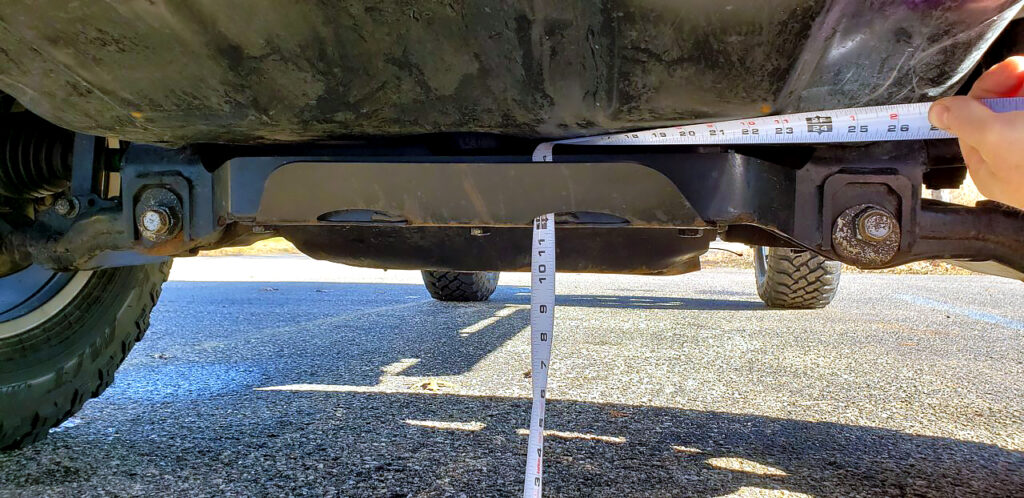
5. Measure The Distance
Hold the tape measure vertically from the marked ground spot up to the lowest vehicle part. Record the measurement in both inches and centimeters for convenience.
6. Double-check
Repeat the measurement at the front, middle, and rear of the car. Sometimes the lowest point is not where you expect.
Here’s a summary of the process:
| Step | Key Action |
|---|---|
| 1 | Park on level ground |
| 2 | Straighten the wheels |
| 3 | Locate the lowest point |
| 4 | Mark the spot below |
| 5 | Measure vertically |
| 6 | Repeat and confirm |
Tips For Accurate Measurement
- Check tire pressure: Under-inflated tires lower ground clearance.
- Empty the trunk: Extra load changes the height.
- Measure after parking: Suspension can settle after a drive.
- Repeat measurements: Small errors are common, so average your results.
A common mistake is measuring from the bumper or side skirt. These parts may not be the true lowest point and can give you a false sense of safety.
How Vehicle Modifications Affect Ground Clearance
Changing tire size, adding lift kits, or heavy aftermarket parts can change ground clearance. Larger tires raise the body, but heavy accessories (like skid plates or winches) may lower it.
Here’s a quick comparison of how common modifications affect ground clearance:
| Modification | Effect on Ground Clearance |
|---|---|
| Bigger Tires | Increase (if suspension allows) |
| Lift Kit | Increase |
| Heavy Skid Plate | Decrease |
| Lowering Springs | Decrease |
After modifications, always re-measure your ground clearance to know your car’s new limits.
Manufacturer Specifications Vs Real Measurements
Manufacturers often publish ground clearance in their brochures. However, these numbers may not reflect real-world conditions. They usually measure at the lowest fixed point with standard tires and no extra load. If you carry heavy passengers or gear, your clearance will be lower.
It’s smart to do your own measurement, especially if you drive off-road or in areas with high curbs and speed bumps.
Non-obvious Insights For Accurate Results
- Account for Suspension Sag: Older vehicles may have worn springs that lower the body more than you expect, so compare with the factory spec.
- Measure with a Full Tank: Fuel weight can lower the car by half an inch or more, which is often forgotten.
- Check After Long Drives: Heat can soften suspension components, especially in older cars, affecting ground clearance.
When You Should Measure Ground Clearance
- After adding or removing heavy parts
- Before going off-road
- When buying a used car
- If you notice scraping sounds
- Before installing custom wheels or tires
Knowing your true ground clearance can prevent costly repairs and embarrassing parking lot scrapes.
Frequently Asked Questions
How Often Should I Check My Car’s Ground Clearance?
It’s a good idea to check at least once a year or after any major modification. If you drive on rough roads often, check more regularly.
Does Tire Pressure Affect Ground Clearance?
Yes, low tire pressure slightly lowers your car’s body, reducing ground clearance. Always measure with tires at the recommended pressure.
Is The Manufacturer’s Ground Clearance Number Always Accurate?
Manufacturer figures give a good starting point, but real-world clearance can change due to wear, load, or modifications. Always measure your own vehicle.
Can I Increase My Vehicle’s Ground Clearance?
Yes, you can use larger tires, install a lift kit, or adjust suspension (if possible). Be aware this can change your vehicle’s handling and warranty.
What Is A Safe Ground Clearance For City Driving?
For most cities, 5–6 inches is enough to clear speed bumps and curbs. If you drive on poor roads, aim for 7 inches or more.
If you’d like more details on vehicle ground clearance standards, see the Wikipedia entry on Ground Clearance.
Measuring ground clearance is simple but important. It helps protect your car, boosts confidence on rough roads, and even improves daily driving. With careful measurement and a little attention, you’ll avoid surprises and keep your vehicle safe for the road ahead.