A careful Jeep auxiliary 12-volt battery charging check should answer a practical question, not create another guess. Use model year as the starting point, confirm manual, and document the first result before the Jeep returns to normal use.
Quick Answer
An auxiliary-battery question is model-specific. Some Jeep electrical systems use a secondary 12-volt battery or managed charging arrangement.
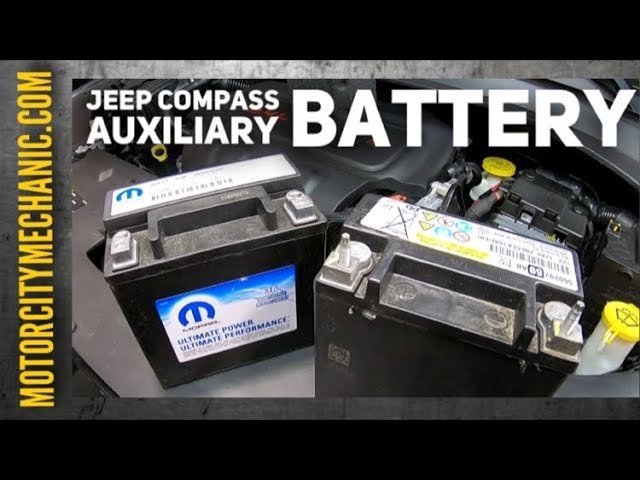
Do not connect a charger until the exact Jeep manual identifies the approved connection points and procedure.
Identify the Electrical System
Record the model year, engine, start-stop equipment and any hybrid designation. A Wrangler, Grand Cherokee and Compass should not be treated as the same circuit.
Use Approved Connection Points
The correct charger location may be a labeled post rather than direct access to a battery terminal. Follow the matching manual and charger instructions.
Test Before Replacing Parts
A weak main battery, auxiliary battery, charging issue or parasitic draw may create overlapping symptoms. Diagnosis is more useful than repeated battery replacement.
Treat Hybrid Systems Separately
Do not open or probe high-voltage components. Orange cables and high-voltage battery parts belong to qualified technicians.
Key Details to Check
| Item | What to verify | Why it matters |
|---|---|---|
| Model year | Exact Jeep year and powertrain | Electrical layouts differ |
| Manual | Approved charging or jump points | Supports safer connection |
| Battery test | Main and auxiliary 12-volt results | Separates overlapping failures |
| Charger | Correct 12-volt mode and instructions | Avoids equipment misuse |
| Hybrid warnings | High-voltage labels and orange cables | Requires qualified service |
Step-by-Step Review
- Confirm the Jeep model, year and electrical equipment.
- Read the matching manual before connecting a charger.
- Inspect battery posts, ground points and labeled remote terminals.
- Use a compatible charger only at the approved points.
- Allow the charger to complete the proper cycle and review its result.
- Arrange testing when the battery discharges again.
- Use qualified service for high-voltage warnings or unclear wiring.
Common Mistakes to Avoid
- Guessing which terminal belongs to the auxiliary battery.
- Using an incompatible charging mode.
- Replacing the auxiliary battery without testing the main battery.
- Ignoring repeated discharge.
- Touching high-voltage components on a hybrid Jeep.
A Better Decision Rule for Jeep Auxiliary 12-Volt Battery Charging
Open the correct Jeep manual before charging anything. A model-specific connection plan and battery test protect both the vehicle and the repair budget.
For Jeep auxiliary 12-volt battery charging, begin with model year and manual. Read the matching manual before connecting a charger.
This keeps the next Jeep auxiliary 12-volt battery charging decision connected to evidence from the same Jeep.
When to Stop and Get Help
Stop when terminals are unclear, cables are damaged, a battery overheats or hybrid warnings appear.
When Jeep auxiliary 12-volt battery charging moves beyond a routine owner check, save the latest observation and use qualified help. That handoff is more useful than changing several parts or settings at once.
Keep a Useful Vehicle Record
Save battery-test results, charger settings and the manual page used for the procedure.
Add the Jeep model year, VIN, mileage and the date of the Jeep auxiliary 12-volt battery charging review. A focused Jeep auxiliary 12-volt battery charging note helps the next owner, parts counter or workshop understand what was checked.
Match the Follow-Up to the Risk
The next Jeep auxiliary 12-volt battery charging action should be proportional to the risk. Review Model year, then look at Hybrid warnings. When the Jeep auxiliary 12-volt battery charging checks point toward safety-sensitive or specialist work, pause the owner-level process. Bring the Jeep auxiliary 12-volt battery charging notes to a qualified technician so the first workshop visit begins with useful evidence.
Before You Finish
- Confirm model year: Exact Jeep year and powertrain.
- Review manual: Approved charging or jump points.
- Check battery test: Main and auxiliary 12-volt results.
- Complete this follow-up step: Use qualified service for high-voltage warnings or unclear wiring.
- Avoid this common mistake: Guessing which terminal belongs to the auxiliary battery.
What to Save With the Jeep Records
For How to Charge a Jeep Auxiliary Battery: Model-Specific Safety Guide, save the model year, VIN, mileage, one photo or screenshot, and the result of the final check. Add any receipt, scan report, alignment sheet, battery test, part number or manual page that applies to this Jeep auxiliary 12-volt battery charging topic. These Jeep auxiliary 12-volt battery charging details reduce confusion when the Jeep needs seasonal setup, resale research or another workshop visit.
Battery-Test Results Worth Keeping
A charger result is more useful when it sits beside a battery test. Record resting voltage, charger mode, charging time and any test result for the main and auxiliary 12-volt batteries.
Note whether the Jeep had been parked overnight, used only for short trips or fitted with accessories. Repeated discharge after a verified charge deserves diagnosis for battery condition, charging-system behavior or an electrical draw.
Do not treat a second battery purchase as the only answer.
Short-Trip Use and Battery Health
Repeated short journeys may not give the charging system enough time to recover from starts, accessories and stop-start operation. Record the type of driving before blaming the auxiliary battery alone.
A Jeep used for brief errands may behave differently from one driven for longer trips. When battery tests are borderline, discuss the full usage pattern with the technician.
The correct repair may involve battery condition, charging performance, an electrical draw or a change in operating routine.
Accessory Loads Deserve Attention
Dash cameras, lighting, audio equipment and chargers may change the parked electrical load. List accessories before the battery test and note whether any device remains active after shutdown.
A technician can compare the draw with the Jeep in a normal locked state. Removing accessories at random is less useful than documenting which circuits and devices remain awake.
Frequently Asked Questions
Can I charge the auxiliary battery directly?
Use the approved procedure for the exact model. Do not guess from another Jeep.
Why does the new auxiliary battery fail again?
The main battery, charging system or an electrical draw may still need diagnosis.
Should I work on orange cables?
No. High-voltage components require qualified service.
Final Takeaway
Treat Jeep auxiliary 12-volt battery charging as a model-specific decision. For Jeep auxiliary 12-volt battery charging, the correct manual, a controlled inspection and a clear follow-up note are more valuable than a shortcut copied from another Jeep.