Taking off your Jeep’s hardtop can be tough. It’s heavy, awkward, and often a two-person job.
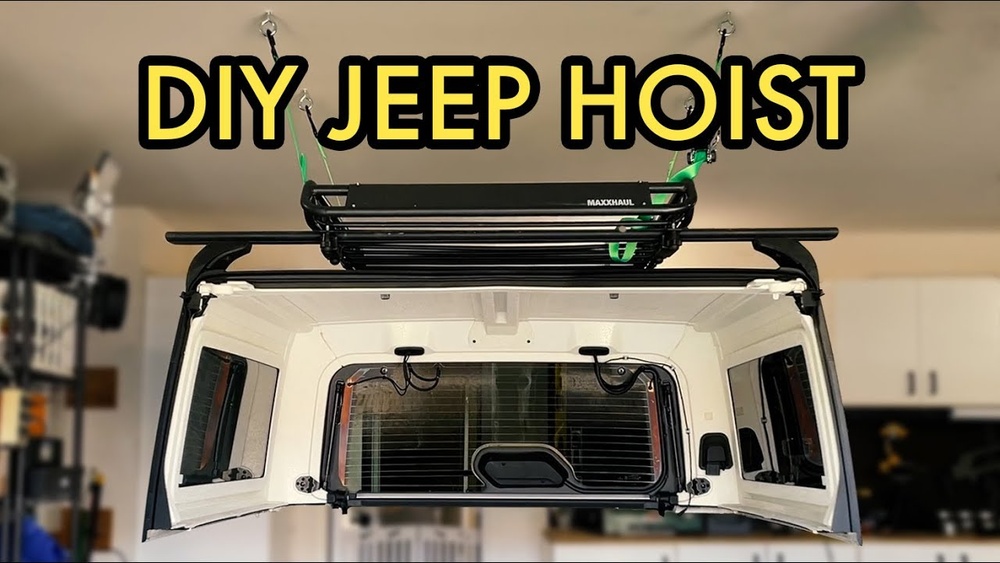
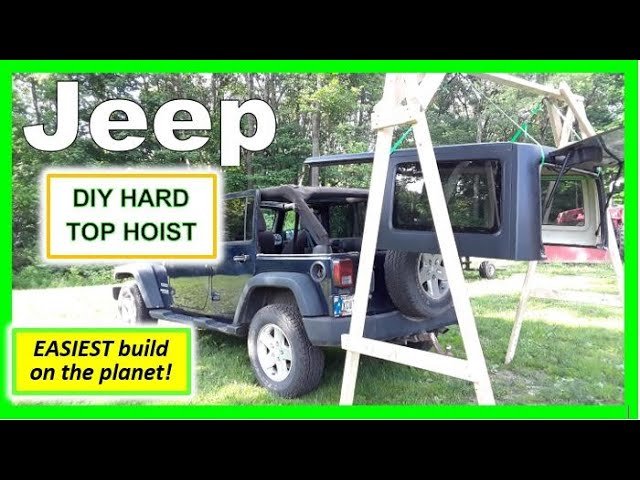
But you don’t always have help around, and you want to store the hardtop safely. Building your own hoist for Jeep hardtop solves this problem.
With the right plan, you can lift, lower, and store your hardtop alone. This guide walks you through building a reliable hoist step-by-step, explains what materials you’ll need, and gives real-world tips.
Whether you drive a Wrangler or Gladiator, you’ll soon have a solution that saves your back and your time.
Planning Your Hoist Design
Before you start buying parts, think about your space and needs. Most Jeep hardtops weigh between 100 140 lbs.
You need a hoist that can handle at least this weight, plus a safety margin. Measure your garage ceiling height most hoists need at least 9 feet clearance for smooth operation.
There are three main types of hoists:
| Hoist Type | Operation | Cost Range |
|---|---|---|
| Manual Pulley | Hand-powered rope system | $40–$100 |
| Electric Winch | Button-controlled motor | $120–$300 |
| Hydraulic Lift | Foot-pedal or electric | $300–$700 |
Most DIYers use a manual pulley or electric winch. Manual systems are cheaper but require more effort. Electric winches are faster and safer, especially if you work alone.
Materials And Tools Needed
Gather everything before you start. Missing parts can slow you down or cause safety risks. Here’s what you’ll need for a basic manual pulley hoist:
- Heavy-duty pulley system (rated for 200+ lbs)
- Nylon rope or steel cable (at least 3/8” thick)
- Ceiling mounting hardware (lag bolts or anchors)
- 4-point lifting straps or webbing harness
- Carabiners (locking, heavy-duty)
- Drill and wrench
- Stud finder (for safe ceiling mounting)
- Measuring tape
If you use an electric winch, substitute the pulley and rope with a winch kit.
Here’s a quick comparison of materials for manual vs. electric hoists:
| Material | Manual Pulley | Electric Winch |
|---|---|---|
| Rope/Cable | Nylon or steel | Steel cable |
| Pulleys | Required | Not needed |
| Mounting Hardware | Lag bolts | Lag bolts |
| Power Source | None | 120V outlet |
Step-by-step Hoist Assembly
Building your hoist takes careful measuring and secure installation. Follow these steps for a safe, working system:
1. Find Ceiling Studs
Use a stud finder to locate strong beams in your garage ceiling. Never mount into drywall or weak materials. Mark the beam positions clearly.
2. Install Mounting Hardware
Drill pilot holes into the beams. Secure the lag bolts or anchors firmly. These will hold the pulley or winch, so double-check their strength.
3. Attach Pulley Or Winch
Mount your pulley system or electric winch on the hardware. If using a pulley, make sure it spins freely and is rated for the weight.
4. Thread Rope Or Cable
Loop the rope or steel cable through the pulley. Attach the ends to carabiners. For electric winches, thread the cable as directed in the manual.
5. Set Up Lifting Straps
Lay the lifting straps under the hardtop. Connect all four corners to the carabiners. Make sure the straps are flat and evenly spaced.
6. Test The Hoist Without Load
Pull or activate the hoist without the hardtop first. Check for smooth movement, cable tension, and any wobbling. Fix any issues now.
7. Lift The Hardtop
Position the Jeep under the hoist. Slide the straps under the hardtop and connect.
Slowly lift, watching for balance. Stop and adjust straps if the hardtop tilts.
8. Store Safely
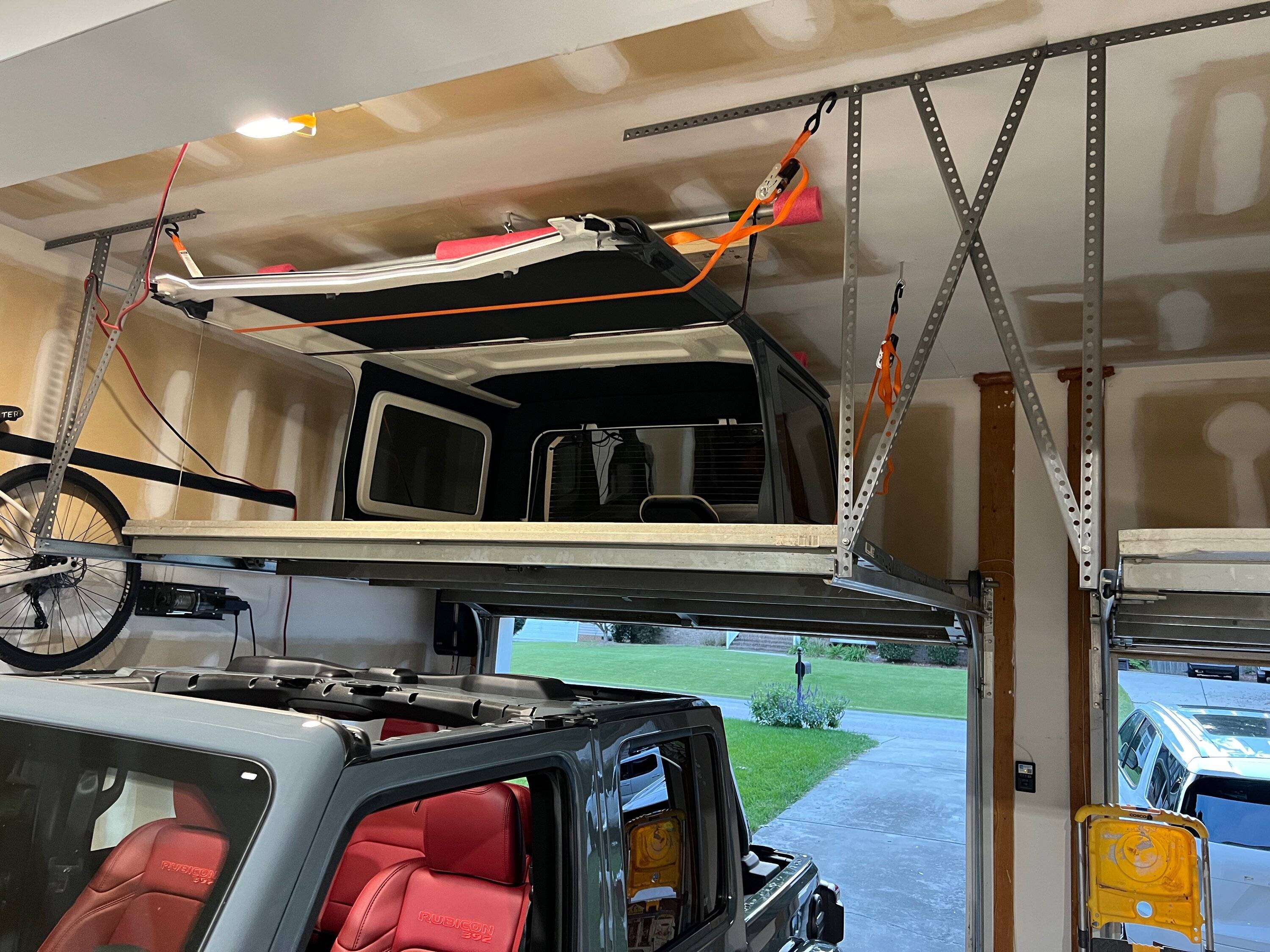
Once lifted, secure the hardtop in place. Lock carabiners and check all connections.
Never leave the hardtop hanging without checking stability.
Practical Tips And Common Mistakes
Building a hoist is simple, but mistakes can cause damage or injury. Here are some tips:
- Always use rated hardware. Cheap parts can break.
- Mount into solid wood beams—never just drywall.
- Test with a light load first to catch mistakes.
- Use a spotter when lifting for the first time.
- Electric winches make solo operation much safer.
A common mistake is using thin rope or weak straps. This risks dropping your hardtop or hurting yourself. Another overlooked issue: not checking for ceiling obstructions (lights, pipes). Plan your hoist location carefully.
Safety Considerations
Your Jeep hardtop is valuable. Safety is critical. Always check:
- Weight ratings of every part
- Secure connections before lifting
- Emergency release (for electric winches)
- No children or pets nearby during operation
Here’s a quick reference for common safety ratings:
| Component | Minimum Safe Rating |
|---|---|
| Pulley/Winch | 200 lbs |
| Rope/Cable | 250 lbs |
| Straps | 250 lbs |
| Carabiners | 200 lbs |
Check these ratings before buying. Overbuilding is safer than risking a failure.
Real-world Examples
Many Jeep owners build their own hoists for under $100. For example, a Wrangler owner in Texas used a $60 pulley kit, $25 lifting straps, and $10 carabiners.
The hoist lifts the hardtop smoothly and stores it above the Jeep all summer.
Some go for electric winches. A Gladiator owner installed a $150 winch and remote control. He can lift the hardtop alone in under two minutes. Electric systems cost more but add convenience.
A non-obvious insight: some people use rubber mats under the hardtop while lifting. This prevents scratches if the hardtop tilts or lowers too quickly.
Another tip: mark the strap positions with tape on your garage floor. You’ll always know exactly where to set them for quick lifts.

Frequently Asked Questions
How Much Weight Can A Typical Hoist Handle?
Most manual pulley hoists handle 200–250 lbs safely. Always check the rated load before buying. Electric winches often handle more, up to 300 lbs.
Can I Use A Bike Hoist For My Jeep Hardtop?
Bike hoists are usually too weak. They may be rated for 50–100 lbs only. Always use a system rated for at least 200 lbs.
Is It Safe To Leave The Hardtop Hanging For Long Periods?
Only if the hardware is properly rated and checked. Inspect the hoist monthly for wear. If unsure, lower and store the hardtop on a padded surface.
What Is The Best Strap Material For Lifting?
Nylon webbing is strong, flexible, and resists stretching. Avoid ropes that can cut into the hardtop. Use wide straps for better weight distribution.
Can I Install A Hoist Without Drilling Into The Ceiling?
Not safely. Ceiling mounts require secure attachment to beams. Adhesive hooks or wall mounts are not reliable for heavy loads.
Building a hoist for your Jeep hardtop is a smart investment. It saves your back, protects your hardtop, and gives you more freedom. With the right materials and careful installation, you’ll have a safe, reliable system you can trust. For more in-depth engineering specs, check Wikipedia’s hoist device article. Whether you choose a manual pulley or an electric winch, your garage will be ready for the next adventure.