How Safe Is A Jeep Wrangler? Real-world Data, Tests & What Owners Should Know
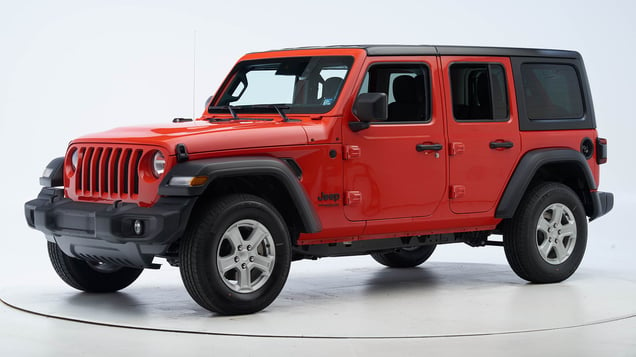
If you love adventure, you’ve probably thought about driving a Jeep Wrangler. This SUV is famous for its rugged looks, off-road skills, and unique design.
But is a Jeep Wrangler safe for daily driving and family trips? Many people wonder about its crash test results, accident data, and protection.
how safe a Jeep Wrangler really is, with simple explanations and real facts to help you decide.
What Makes A Vehicle Safe?
Before looking at Wrangler’s safety, it helps to know what makes any car safe. Experts check several things:
- Crash test ratings from trusted groups like the IIHS and NHTSA
- Accident data from real roads
- Safety features (like airbags, brakes, electronic aids)
- Vehicle design (structure, height, and weight)
- Visibility for the driver
- Technology that helps avoid crashes
A safe car should protect you in a crash and help you avoid one when possible.
Jeep Wrangler Crash Test Ratings
Crash tests are a big part of measuring car safety. Here’s how the Jeep Wrangler scores with the two main US groups.
Nhtsa Ratings
The National Highway Traffic Safety Administration (NHTSA) gives new cars a star rating (1 to 5). The 2024 Jeep Wrangler has these scores:
| Test | 2024 Jeep Wrangler | Typical Midsize SUV |
|---|---|---|
| Not Rated | 4-5 Stars | |
| Frontal Crash | 4 Stars | 4-5 Stars |
| Side Crash | 3 Stars | 5 Stars |
| Rollover | 3 Stars (21.2% risk) | 4-5 Stars (12 to 16% risk) |
The Wrangler’s side impact and rollover scores are lower than most SUVs. This shows it may be riskier in these crash types.
Iihs Ratings
The Insurance Institute for Highway Safety (IIHS) does more detailed tests. In 2023, the Jeep Wrangler got these marks:
- Moderate Overlap Front: Good
- Side Crash: Marginal
- Roof Strength: Good
- Head Restraints: Good
- Small Overlap Front (Driver Side): Marginal
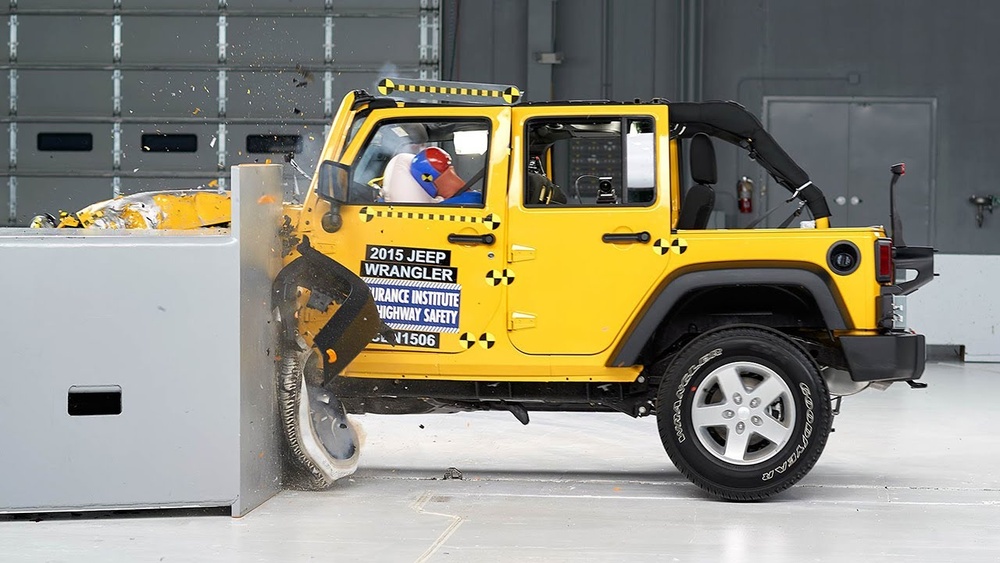
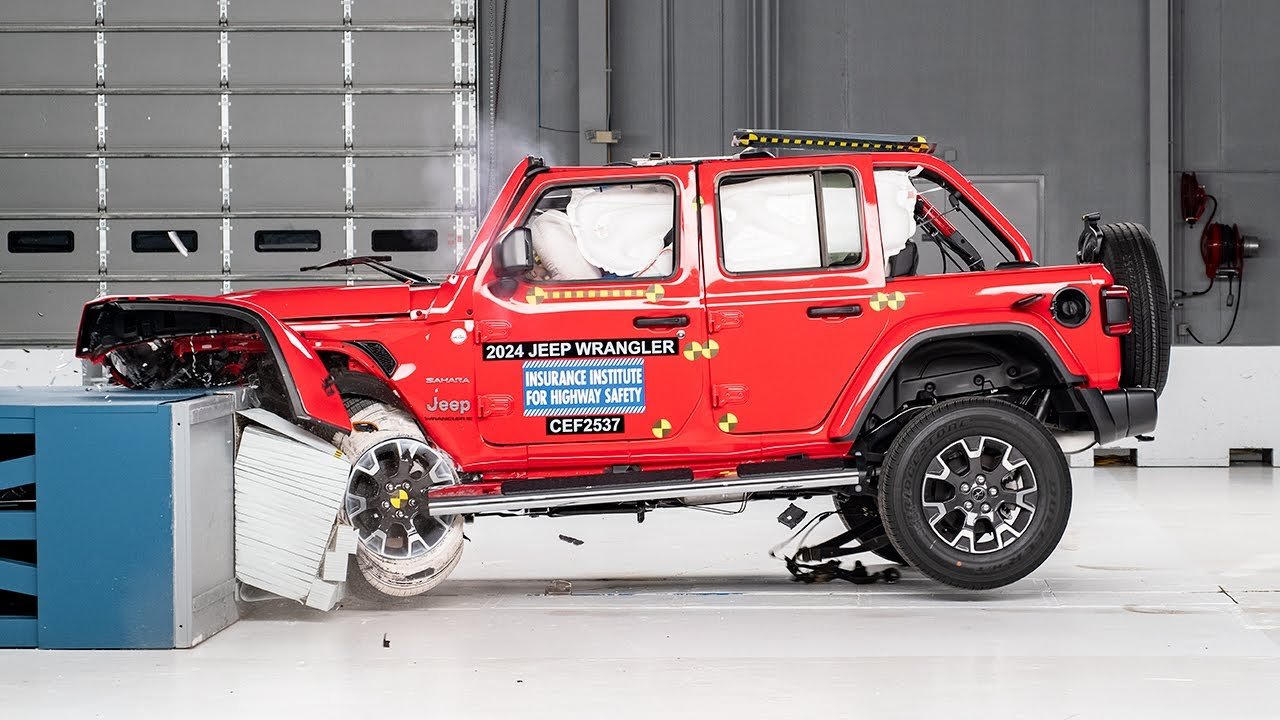
A big concern: In the small overlap front test, the Wrangler tipped onto its side, a rare result that points to stability issues during certain crashes.
Real-world Accident Data
Crash tests show what happens in labs, but what about real roads? Let’s look at what happens to Jeep Wranglers in real accidents.
Rollover Risk
The Wrangler’s design gives it great off-road ability, but also a higher center of gravity. This makes it easier to roll over in a crash or sudden swerve. In fact, NHTSA says the Wrangler’s rollover risk is about 21%, while most other SUVs are closer to 15%.
Accident Fatality Rates
According to IIHS and national data, the Jeep Wrangler’s driver death rate is not among the highest for SUVs. However, injury rates can be higher in certain types of crashes, especially side impacts and rollovers.
Example: Real-life Rollover
In 2021, a Wrangler rolled over during a highway crash. The driver was wearing a seatbelt and survived with minor injuries, but the passenger without a seatbelt was seriously hurt.
This shows how important seatbelt use is in a Wrangler.
Key Safety Features In A Jeep Wrangler
Jeep has added more safety features in recent years. Here are the main options available on new Wranglers:
- Front and side airbags
- Anti-lock brakes (ABS)
- Electronic stability control (ESC)
- Traction control
- Rearview camera
- Blind spot monitoring (optional)
- Forward collision warning (optional)
- Automatic emergency braking (optional)
- Adaptive cruise control (optional)
But it’s important to know that some features, like automatic emergency braking, only come with higher trim levels or extra packages not on the basic models.
| Safety Feature | Standard | Optional |
|---|---|---|
| Front Airbags | Yes | No |
| Side Airbags | Yes | No |
| Rearview Camera | Yes | No |
| Blind Spot Monitoring | No | Yes |
| Automatic Emergency Braking | No | Yes |
| Adaptive Cruise Control | No | Yes |
If you want the best safety, choose a Wrangler with these advanced options.
Design Choices That Affect Wrangler Safety
The Wrangler’s unique style and off-road focus change how it handles safety in daily life.
Body-on-frame Construction
Unlike most SUVs, the Wrangler uses a body-on-frame build. This is strong for off-roading, but it can be less safe in certain crashes compared to modern unibody SUVs.
Removable Roof And Doors
The Wrangler lets you take off the roof and doors. It’s fun for adventure, but it also means:
- Less side protection during a crash
- More noise and wind inside, which can distract the driver
- If you drive without doors, you lose side airbags and beams
Tall Ride Height
A higher ride gives a great view off-road. But on the highway, it raises the risk of rollovers and can make sharp turns less stable.
Wrangler Safety Vs. Other Suvs
How does the Jeep Wrangler compare to other popular SUVs? Here’s a quick look:
| Model | Crash Rating | Rollover Risk | Advanced Safety Features |
|---|---|---|---|
| Jeep Wrangler | Not Rated | 21.2% | Optional |
| Toyota 4Runner | 4 Stars | 24.6% | Optional |
| Subaru Outback | 5 Stars | 15.2% | Standard |
| Honda CR-V | 5 Stars | 14.7% | Standard |
The Wrangler’s rollover risk is similar to the Toyota 4Runner, another off-road SUV. More family-focused SUVs, like the CR-V or Outback, score better in safety and have more standard safety tech.
Pros And Cons Of Jeep Wrangler Safety
Let’s summarize the key strengths and weak points safety.
Pros
- Strong frame for off-road crashes
- Good roof strength
- Modern airbags and stability control
- Advanced safety tech available on higher trims
Cons
- High rollover risk compared to most SUVs
- Lower side impact ratings
- Some safety features cost extra
- Removable doors/roof reduce protection
- Not the best choice for child seats (short rear seats, limited anchor points)
Common Safety Mistakes With Jeep Wranglers
Many new owners make simple mistakes that can raise risk:
- Driving without seatbelts, thinking the Wrangler is always safe because it’s big.
- Removing doors and roof on public roads, which is legal in some states but always less safe.
- Ignoring tire pressure, bad tires raise rollover and crash risk.
- Overloading the vehicle with gear for camping or off-roading.
- Not using child seats correctly, the Wrangler’s back seat is tight, so correct installation is extra important.
Tips For Making Your Wrangler Safer
If you own or plan to buy a Jeep Wrangler, these tips can help improve your safety:
- Always wear seatbelts, this is the most important step.
- Keep the doors and roof on for daily driving, especially with passengers.
- Choose a trim with advanced safety tech if your budget allows.
- Drive carefully on highways and in rain; Wranglers handle differently from cars.
- Install good tires and check them often.
- Don’t overload, follow the weight limits in your manual.
- Use child seats properly; have them checked at a local inspection station.
How Much Does Safety Add To Wrangler Cost?
Safety features can change the price of a new Jeep Wrangler. The base price (2024) is around $33,000 for a 2-door Sport model. If you want the best safety features, you’ll likely spend:
- $38,000, $42,000 for a 4-door model with options like blind spot monitoring and automatic braking
- $1,000, $2,000 extra for advanced safety packages
It’s smart to check if your chosen trim includes the features you want. Sometimes, used Wranglers may have fewer safety options.
Two Non-obvious Safety Insights
- Hardtop vs. Soft Top: Many buyers do not realize that a hardtop Wrangler gives better protection in a rollover or crash than a soft top. If safety is your priority, choose a hardtop model.
- Tire Upgrades: Changing to larger off-road tires looks cool, but it can raise rollover risk and reduce braking ability on pavement. Always use tire sizes recommended by Jeep for your model.
Should You Buy A Jeep Wrangler If You Care About Safety?
The Jeep Wrangler is not the safest SUV on the market. If you want the highest crash scores, low rollover risk, and the latest safety tech, a modern crossover like the Subaru Outback or Honda CR-V is a better fit. But if you love off-roading and want a unique, fun vehicle, a Wrangler can still be a safe choice, if you drive carefully and use all safety features.
For most families, it’s a good idea to test drive the Wrangler and compare it to other SUVs. Make sure it fits your lifestyle and safety needs.
For more details on crash ratings, you can visit the official NHTSA website.
<!– wp:rank-math/faq-block {"questions":[{"id":"faq-question-c3ef8c36d2ae","title":"Is A Jeep Wrangler Safe For Families?","content":"
The Wrangler is not the best SUV for families who want top crash ratings and lots of safety tech. Its back seat is small, and installing car seats can be hard.
But with seatbelts, doors, and safety options, it can be safe for careful drivers.
“,”visible”:true},{“id”:”faq-question-a944812d1922″,”title”:”How Does The Wrangler’s Rollover Risk Compare To Other Suvs?”,”content”:”The Wrangler’s rollover risk is about 21%, which is higher than most midsize SUVs (usually 12 16%). Only some off-road vehicles, like the Toyota 4Runner, are similar.
“,”visible”:true},{“id”:”faq-question-3a7869f89b71″,”title”:”Are Jeep Wranglers Safe In Snow And Rain?”,”content”:”Wranglers have strong four-wheel drive, which helps in snow and mud. But their short wheelbase and high center of gravity mean they can slide or tip more easily on slippery roads.
Good tires and careful driving are very important.
“,”visible”:true},{“id”:”faq-question-56368fab9a7f”,”title”:”What Safety Features Should I Look For In A Wrangler?”,”content”:”Look for features like blind spot monitoring, automatic emergency braking, and side airbags. These are not always standard. Also, a hardtop gives better crash protection than a soft top.
“,”visible”:true},{“id”:”faq-question-011d73a72840″,”title”:”Can You Add More Safety Features To An Older Wrangler?”,”content”:”Some safety tech can be added (like a backup camera), but things like airbags and advanced braking are hard to add to old models. For the best safety, choose a newer Wrangler with factory-installed features.
Choosing a Jeep Wrangler is about knowing the trade-offs. With the right options and smart driving, it can be a fun and safe vehicle for many owners.
Always think about your needs, compare models, and put safety first on every trip.
“,”visible”:true}]} –>Is A Jeep Wrangler Safe For Families?
The Wrangler is not the best SUV for families who want top crash ratings and lots of safety tech. Its back seat is small, and installing car seats can be hard.
But with seatbelts, doors, and safety options, it can be safe for careful drivers.
How Does The Wrangler's Rollover Risk Compare To Other Suvs?
The Wrangler’s rollover risk is about 21%, which is higher than most midsize SUVs (usually 12 16%). Only some off-road vehicles, like the Toyota 4Runner, are similar.
Are Jeep Wranglers Safe In Snow And Rain?
Wranglers have strong four-wheel drive, which helps in snow and mud. But their short wheelbase and high center of gravity mean they can slide or tip more easily on slippery roads.
Good tires and careful driving are very important.
What Safety Features Should I Look For In A Wrangler?
Look for features like blind spot monitoring, automatic emergency braking, and side airbags. These are not always standard. Also, a hardtop gives better crash protection than a soft top.
Can You Add More Safety Features To An Older Wrangler?
Some safety tech can be added (like a backup camera), but things like airbags and advanced braking are hard to add to old models. For the best safety, choose a newer Wrangler with factory-installed features.
Choosing a Jeep Wrangler is about knowing the trade-offs. With the right options and smart driving, it can be a fun and safe vehicle for many owners.
Always think about your needs, compare models, and put safety first on every trip.