If you’re planning to take your 2017 Jeep Cherokee on a road trip, you might wonder if you can flat tow it behind your RV or truck. Flat towing means pulling a vehicle with all its wheels on the ground, without a trailer or dolly. This method is popular among campers and travelers because it’s simple and saves space. But not all cars are designed for flat towing. Let’s look at the facts, risks, and steps so you can decide if flat towing a 2017 Jeep Cherokee is right for you.
Understanding Flat Towing
Flat towing—sometimes called “dinghy towing”—lets you pull a car behind another vehicle, usually an RV. People like it because the setup is quick and you don’t need extra equipment like a trailer. However, not every car is built for this kind of towing. Some cars can get serious transmission damage if towed with their wheels on the ground.
Can You Flat Tow A 2017 Jeep Cherokee?
The 2017 Jeep Cherokee comes in several trims and with different drivetrains. Whether you can flat tow it depends mainly on its drivetrain and transmission type.
Which 2017 Jeep Cherokees Can Be Flat Towed?
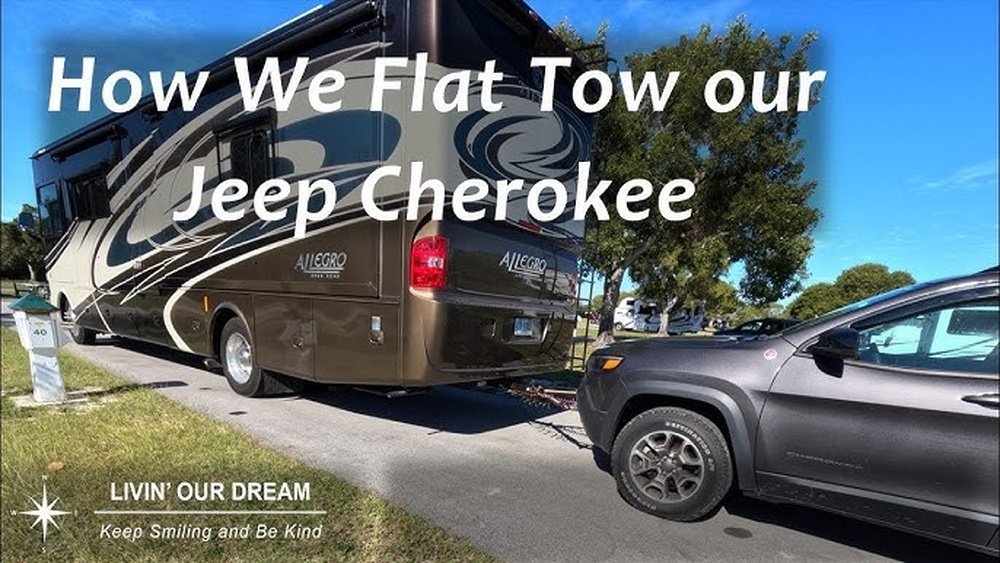
- 4WD with Active Drive II: This is the only version Jeep officially allows to be flat towed. The Active Drive II system includes a neutral mode in the transfer case, which disconnects the drivetrain for safe towing.
- FWD or Active Drive I: These versions cannot be flat towed. Towing them with wheels on the ground can cause major damage to the transmission.
Always check your owner’s manual to confirm your Cherokee’s system. Many owners miss this detail and end up with costly repairs.
Why Only Some Cherokees Can Be Flat Towed
The reason is simple: mechanical design. The Active Drive II system’s transfer case has a neutral setting. This disconnects the wheels from the transmission and engine, so the moving wheels don’t force the transmission to turn. Without this, flat towing will grind internal parts and lead to expensive breakdowns.
Flat Towing Setup For A 2017 Jeep Cherokee
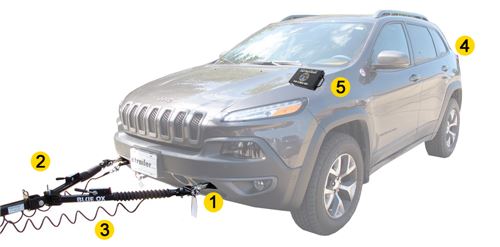
If you have the right Cherokee, you’ll need:
- Tow bar: A special bar connecting your RV and Jeep.
- Base plate: Mounted to your Jeep’s frame for secure towing.
- Wiring harness: For brake lights and turn signals.
- Auxiliary braking system: Required by law in many states.
A common mistake is skipping the auxiliary brake. This can make stops unsafe and is illegal in many places.
Steps To Flat Tow A 2017 Jeep Cherokee
- Start your Jeep and press the brake.
- Shift the transmission into neutral.
- Activate the transfer case neutral mode (see owner’s manual).
- Turn off the engine, but leave the key in the “off” position to unlock the steering.
- Connect tow bar, wiring, and braking system.
- Double-check all connections.
Some owners forget to unlock the steering. This can cause tire drag and damage.
Towing Speed And Distance Limits
Jeep recommends flat towing at speeds up to 65 mph. There’s no strict distance limit, but you should stop every few hours to check connections and tire pressure. Long trips can cause wear and tear on tires and brakes, so regular inspection is important.
Comparison: Flat Towing Vs. Trailer Towing
Here’s a quick look at the differences:
| Method | Pros | Cons |
|---|---|---|
| Flat Towing | Less equipment, quick setup, lighter load | Only certain models allowed, risk of damage |
| Trailer Towing | Works for all vehicles, protects transmission | Heavy, needs storage space, more cost |
Common Mistakes When Flat Towing
- Not confirming the drivetrain type
- Forgetting to activate the transfer case neutral mode
- Ignoring auxiliary braking laws
- Leaving the steering wheel locked
Each of these can lead to costly repairs or safety risks.
Practical Tips For Flat Towing
- Always check tire pressure before you start.
- Inspect tow bar and base plate for any signs of wear.
- Stop every 2–3 hours to check connections.
- Use a checklist so you don’t miss any steps.
- Read your owner’s manual carefully—Jeep’s guidance is specific.
Data: How Many People Flat Tow Cherokees?
According to a survey by FMCA, about 15% of RV owners flat tow a Jeep Cherokee, making it one of the most popular dinghy vehicles. Most choose the Active Drive II trim for its towing capability.
Cost Comparison: Flat Towing Setup
Let’s compare estimated costs for flat towing vs trailer towing:
| Equipment | Flat Towing | Trailer Towing |
|---|---|---|
| Tow Bar | $500–$1,000 | Not needed |
| Base Plate | $400–$600 | Not needed |
| Trailer | Not needed | $2,000–$5,000 |
| Wiring Harness | $200–$350 | Included |
| Auxiliary Brake | $300–$900 | Not needed |
Real Example: Owner Experience
One owner shared that after towing his Cherokee without checking the transfer case neutral mode, he needed a $4,500 transmission repair. Another owner, using the correct setup, drove over 20,000 miles with zero issues. This shows how critical it is to follow all steps.
Where To Find Official Guidance
You’ll find the best information in your owner’s manual or the official Jeep website. For more technical details, visit Jeep Official Site.
Frequently Asked Questions
Can I Flat Tow Any 2017 Jeep Cherokee?
No. Only the 4WD with Active Drive II system can be flat towed. Others will get transmission damage.
Do I Need A Braking System When Flat Towing?
Yes. An auxiliary braking system is required by law in most states and makes towing safer.
Is It Safe To Flat Tow At Highway Speeds?
Yes, up to 65 mph as recommended by Jeep. Always check your connections and tire pressure regularly.
What Happens If I Don’t Activate The Transfer Case Neutral Mode?
You risk severe transmission damage. Always follow the correct steps in your owner’s manual.
Can Flat Towing Void My Jeep Warranty?
If you tow a Cherokee not designed for flat towing, you may void the warranty. Use the proper setup to protect your vehicle.
Flat towing a 2017 Jeep Cherokee can be a great option if you have the right trim and follow all steps carefully. Confirm your drivetrain, use the correct equipment, and never skip safety checks.
With proper care, your Cherokee can be a reliable companion on the road.