Calibrating the speedometer on your Jeep Wrangler is more important than many owners realize. When you change tire size or gear ratios, your speedometer can show the wrong speed. This can lead to speeding tickets, incorrect mileage, and even issues with your Jeep’s computer. Many Jeep drivers don’t know that fixing this problem is possible and not as hard as it seems. In this article, you’ll learn how to calibrate your speedometer step by step, which tools you need, common mistakes, and how to check your work. Whether you have a lifted Wrangler, bigger tires, or just want accuracy, this guide will help you drive with confidence.
Why Speedometer Calibration Matters
Changing your tire size or axle gear ratio changes how fast your Jeep thinks it’s moving. The speedometer uses the rotation of the wheels and gear ratios to calculate speed. If these change, the numbers are off. For example, switching from stock 29-inch tires to 35-inch tires can make your speedometer read 10% slower than your real speed. This means if your speedometer shows 60 mph, you could be driving at 66 mph. Besides legal issues, wrong speed readings affect your odometer, fuel economy calculations, and even automatic transmission shifting.
Here’s how different tire sizes affect speedometer accuracy:
| Tire Size (inches) | Actual Speed (mph) | Speedometer Reading (mph) |
|---|---|---|
| 29 (stock) | 60 | 60 |
| 33 | 60 | 54.8 |
| 35 | 60 | 51.4 |
Tools You Need
Calibrating your speedometer does not require many tools, but having the right ones makes the job easier:
- OBD-II scanner/programmer (like Superchips Flashcal or JScan)
- Smartphone or GPS device for speed comparison
- Calculator for tire diameter and gear ratio
- Owner’s manual for Jeep Wrangler year/model specs
Some newer Wranglers (JL, JK) allow software adjustments. Older models (TJ, YJ) may need a mechanical gear swap.
| Jeep Model | Calibration Method | Difficulty |
|---|---|---|
| TJ/YJ (pre-2006) | Speedometer gear swap | Medium |
| JK (2007-2018) | OBD-II programmer | Easy |
| JL (2018+) | OBD-II programmer/app | Easy |
Step-by-step Calibration Guide
1. Calculate Correct Tire Size
First, measure your tire diameter. Even if the tire says “35 inch,” real diameter can be less. Use a tape measure from the ground to the top of the tire. Write this number down.
2. Find Your Gear Ratio
If you changed axle gears, find out the new ratio (like 4.10 or 3.73). This is usually stamped on the gear or listed in upgrade paperwork.
3. Choose Your Calibration Method
- If you have a TJ/YJ, buy the right speedometer gear for your tire/gear combo. There are online calculators to find the correct tooth count.
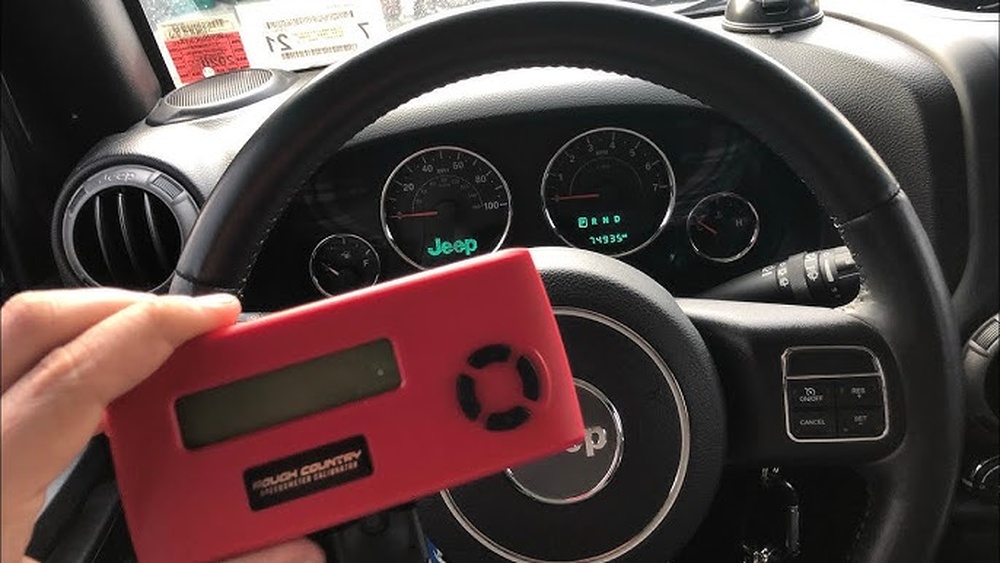
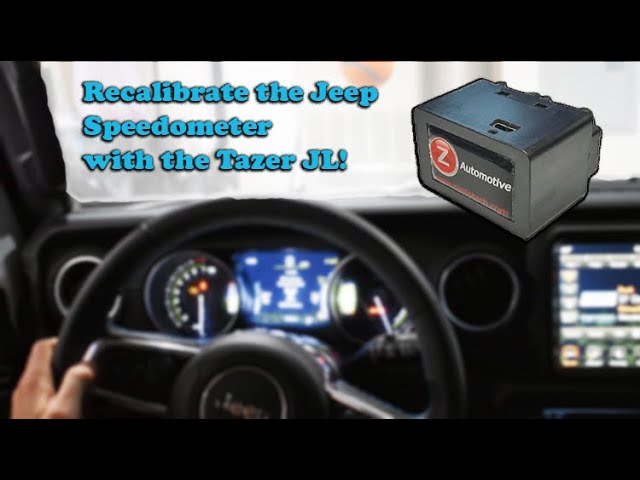
- For JK/JL, use an OBD-II programmer or app. Plug it into the OBD-II port under the dashboard.
4. Enter Tire And Gear Data
With the programmer/app, enter the new tire diameter and gear ratio. Follow the on-screen instructions. Make sure to save and confirm changes.
5. Test Your Speedometer
Take your Jeep for a drive. Use a GPS app or device to check actual speed. Compare this to your speedometer reading. If it’s off by more than 1 mph at highway speeds, repeat calibration.
6. Fine-tune If Needed
Sometimes, tire wear or inflation changes diameter. If your speed is still off, adjust tire size in the programmer up or down by 0. 5 inches and test again.
Common Mistakes And Tips
Many Jeep owners make small errors that lead to incorrect calibration:
- Relying on tire label only: Always measure your tire. Factory specs can be wrong.
- Ignoring gear changes: If you swapped gears, you must update the ratio.
- Not double-checking: Always use GPS to verify speed after calibration.
- Skipping software updates: Make sure your programmer/app is updated for your Jeep model.
Here is a quick comparison of calibration methods:
| Method | Cost | Accuracy | Time |
|---|---|---|---|
| OBD-II Programmer | $100-$300 | High | 10-20 min |
| Gear Swap | $20-$50 | Medium | 30-60 min |
| Professional Shop | $100-$200 | High | 1-2 hours |

Non-obvious Insights
- Tire pressure changes diameter more than you expect. Under-inflated tires can make your speedometer read slow. Always check pressure before calibrating.
- Some OBD-II tools allow you to calibrate for different tire brands. Tires with the same advertised size from two brands can have different real diameters.
Advanced Calibration: Using Jscan And Apps
If you prefer DIY and tech, apps like JScan let you calibrate with your smartphone. You need a Bluetooth OBD-II adapter. The app guides you through the steps:
- Connect to OBD-II port
- Select your Jeep model
- Enter tire diameter and gear ratio
- Save changes
A big advantage is keeping your Jeep’s computer up-to-date. Some apps also let you adjust for future changes, like new tires.
For deeper info on tire and gear calculations, check Jeep’s official site.

Frequently Asked Questions
How Do I Know If My Speedometer Is Inaccurate?
If you notice your speedometer reading lower or higher than your GPS speed, especially after changing tires or gears, it’s likely inaccurate. You may also notice odd transmission shifting or faster odometer readings.
Can I Calibrate My Speedometer At Home?
Yes, most Jeep owners can calibrate at home using an OBD-II programmer or app. For older models, swapping the speedometer gear is a simple mechanical job.
What Happens If I Don’t Calibrate After Changing Tires?
You risk speeding tickets, incorrect mileage, and possible transmission problems. Your Jeep’s computer relies on accurate speed data.
How Much Does Professional Calibration Cost?
A shop usually charges $100–$200, depending on Jeep model and method. DIY methods are cheaper but require some tools.
Does Calibration Affect My Jeep’s Warranty?
Software calibration is safe and does not affect warranty. Physical gear swaps do not void warranty if done correctly, but always check with your dealer.
Calibrating your speedometer on a Jeep Wrangler gives you peace of mind and keeps your vehicle running smoothly. Take the time to do it right, and you’ll enjoy better accuracy, safer driving, and fewer surprises on the road.