Measuring the caster angle on a Jeep is essential for anyone who wants a smooth ride, stable steering, and safe handling. If you drive off-road or have modified your Jeep’s suspension, understanding and checking caster angle becomes even more important. Many Jeep owners overlook this, but the right caster angle can prevent steering problems and tire wear.
Let’s explore how to measure caster angle on a Jeep, what tools you need, common mistakes, and practical tips to make the process easier. Whether you’re a DIY enthusiast or just want to understand your vehicle better, this guide will help you get reliable results.
What Is Caster Angle And Why Does It Matter?
Caster angle is the tilt of the steering axis when viewed from the side of your Jeep. Think of it as the angle between the vertical line and the line through your steering pivot (usually the ball joints or kingpin). In simple words, it affects how your Jeep tracks straight and how the steering wheel returns to center.
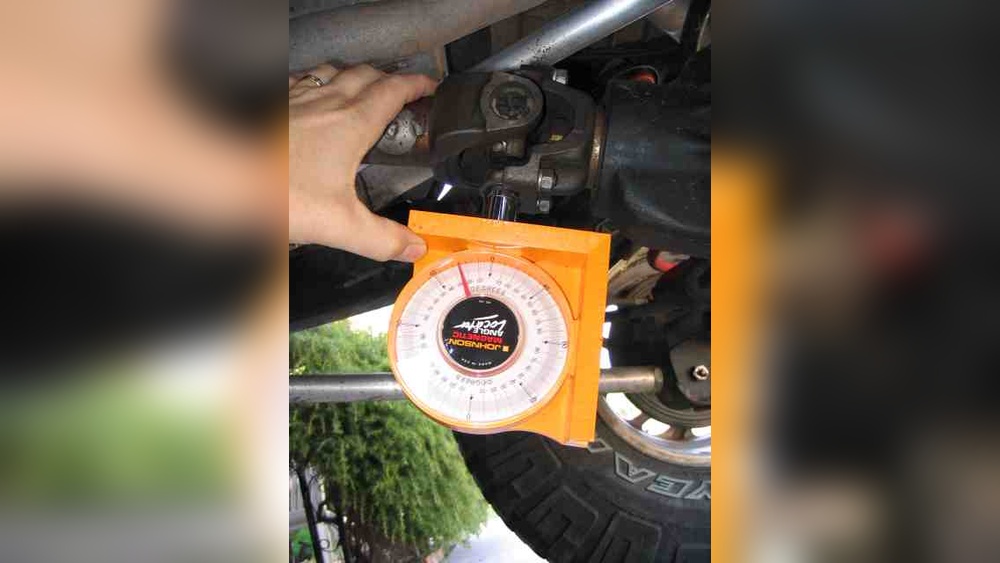
A positive caster angle means the top of the steering axis tilts toward the rear. This improves straight-line stability. Negative caster angle tilts forward, which can make steering twitchy and unsafe.
Most Jeep models use positive caster for good road manners and safe off-road driving. Typical caster angle for a Jeep Wrangler (JK/JL) ranges from 4° to 7°. Too little caster makes your Jeep wander on highways. Too much can make steering heavier.
Tools Needed For Measuring Caster Angle
You don’t need expensive equipment. Here’s what you’ll need:
- Digital angle finder or bubble gauge
- Tape measure
- Jack and jack stands
- Socket set
- Wheel chocks
- Flat surface (garage floor is best)
Some shops use high-end alignment machines, but you can get accurate results with basic tools at home.
Step-by-step Guide: Measuring Caster Angle Jeep
Follow these steps to measure your Jeep’s caster angle confidently.
1. Park On A Level Surface
Always start on a flat, level surface. Uneven ground will affect your readings. Use a bubble level to check.
2. Secure The Jeep
Place wheel chocks behind the rear tires. Set the parking brake. Safety matters!
3. Remove Front Wheels
Jack up the front end and support it with jack stands. Remove both front wheels to access the axle and knuckle easily.
4. Locate The Steering Knuckle
Find the upper and lower ball joints on the steering knuckle. The caster angle is the tilt between these points.
5. Measure The Angle
- Place the digital angle finder against the flat face of the knuckle (near the upper ball joint).
- Make sure the device sits flush and parallel to the axis.
- Note the angle reading.
6. Adjust If Necessary
If your reading is outside the recommended range (for most Jeeps: 4–7° positive), you may need to adjust. On many Jeep models, you can change caster by rotating cam bolts on the control arms or using caster correction kits.
7. Recheck After Adjustment
Always measure again after adjusting. Small changes can make a big difference in steering.
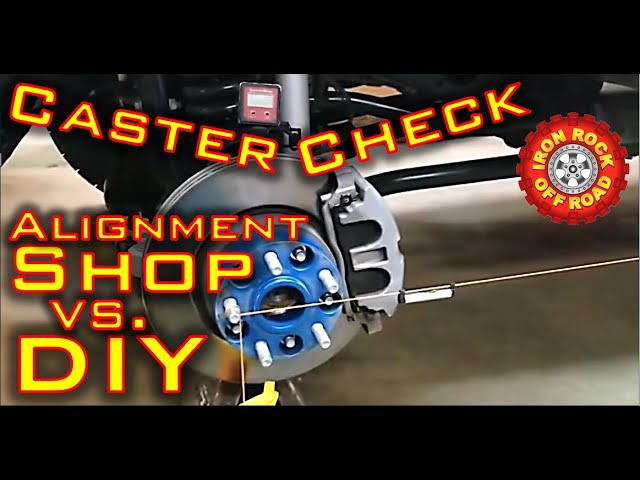
Comparison: Diy Vs. Shop Measurement
Sometimes it helps to see how home measurement compares to professional shops.
| Factor | DIY Method | Professional Shop |
|---|---|---|
| Accuracy | Good (±0.5°) | Excellent (±0.1°) |
| Cost | Low (under $50) | High ($80–$150 per alignment) |
| Convenience | Home, anytime | Shop appointment needed |
| Skill Required | Basic tools, patience | Trained technician |
For most Jeep owners, the DIY method is accurate enough unless you drive aggressively or have specialized needs.
Real-world Example: Jeep Wrangler Jk
Suppose you have a 2014 Jeep Wrangler JK. After installing a lift kit, your steering feels loose. You measure the caster angle and find it’s only 2° positive—too low for stability.
By rotating the cam bolts on your lower control arms, you adjust the angle to 5° positive. The steering improves immediately, and the Jeep tracks straighter. This simple fix can save you from expensive tire wear and improve safety.
Common Mistakes When Measuring Caster Angle
Many people make errors that lead to wrong readings or poor handling.
- Measuring on an uneven surface: Always use a flat floor.
- Wrong placement of angle finder: The tool must sit flush on the knuckle.
- Ignoring other alignment specs: Caster is linked to camber and toe.
- Forgetting to re-tighten bolts: Loose parts affect alignment and safety.
- Not checking after driving: Suspension settles—recheck after a short drive.
These mistakes are easy to avoid with careful attention.
Caster Angle Data For Popular Jeep Models
Here’s a quick reference for recommended caster angles.
| Jeep Model | Year Range | Recommended Caster Angle |
|---|---|---|
| Wrangler JK | 2007–2018 | 4.2–6.2° |
| Wrangler JL | 2018–present | 5–7° |
| Grand Cherokee | 2011–2021 | 3.5–6° |
| Cherokee XJ | 1984–2001 | 6–8° |
Always check your manual or trusted sources for exact values.
Tips For Accurate Measurement
- Use a digital angle finder for better precision.
- Clean the knuckle before measuring.
- Double-check readings from both sides.
- Drive the Jeep for a few miles, then re-measure.
- Record your results for future reference.
A lesser-known tip: If you have a lifted Jeep, your caster angle often drops. Adding adjustable control arms can restore proper caster and improve handling.
Frequently Asked Questions
What Happens If My Jeep’s Caster Angle Is Incorrect?
Incorrect caster can cause steering instability, poor return-to-center, and uneven tire wear. If too low, your Jeep may wander; if too high, steering can feel heavy.
Can I Measure Caster Angle Without Removing Wheels?
Yes, but removing the wheels makes it easier and more accurate. With wheels on, access to the knuckle is limited.
How Do Lift Kits Affect Caster Angle?
Lift kits change suspension geometry, often reducing positive caster. After lifting, always check and adjust caster angle for safe handling.
What Tools Are Best For Measuring Caster Angle?
A digital angle finder is the easiest and most accurate tool for DIY measurement. Bubble gauges work too but may be less precise.
Is Professional Alignment Worth It?
If you need perfect accuracy or have complex suspension changes, a professional shop is best. For most routine checks, DIY is sufficient. You can learn more about wheel alignment at Wikipedia.
Measuring caster angle on your Jeep is not difficult, but it is important for safety and performance. With the right tools and careful steps, you can keep your Jeep driving straight and smooth, whether on highways or off-road trails.