Owning a Jeep Wrangler gives you the freedom to explore both city streets and rugged terrain. One of its most powerful features is the 4X4 system, which lets you drive confidently on snow, mud, sand, or rocky paths. But shifting into 4X4 isn’t as simple as pressing a button. You need to understand the process, the system options, and when to use each mode. If you’re new to Wranglers, this guide will help you shift safely and get the most out of your vehicle.
Understanding Jeep Wrangler 4×4 Modes
Jeep Wranglers offer several 4X4 modes. Each mode is suited for different driving conditions. Knowing when and how to use each will protect your Jeep and keep you safe.
| Mode | Best Use | Speed Limit |
|---|---|---|
| 2H (Two-wheel drive) | Dry pavement | No limit |
| 4H (Four-wheel drive high) | Snow, sand, gravel | Below 55 mph |
| 4L (Four-wheel drive low) | Deep mud, rocks, steep hills | Below 25 mph |
| Neutral | Towing | N/A |
How To Shift Into 4×4 Jeep Wrangler: 4 Key Steps
Each step is important for smooth and safe shifting. Let’s break down the four main items you must handle.
1. Prepare Your Jeep
Before shifting, check your surroundings and vehicle status.
- Make sure you’re not on dry pavement; shifting to 4X4 on dry roads can damage the system.
- Reduce speed. For most shifts, the Jeep should be moving under 55 mph.
- If possible, drive straight. Avoid turning the wheels while shifting.
Non-obvious insight: Many beginners forget to check tire pressure. Uneven tires make 4X4 systems work harder and can cause damage.
2. Shift Into 4h (four-wheel Drive High)
4H is the most-used mode for slippery or loose surfaces.
- With the Jeep moving slowly (under 55 mph), take your hand off the accelerator.
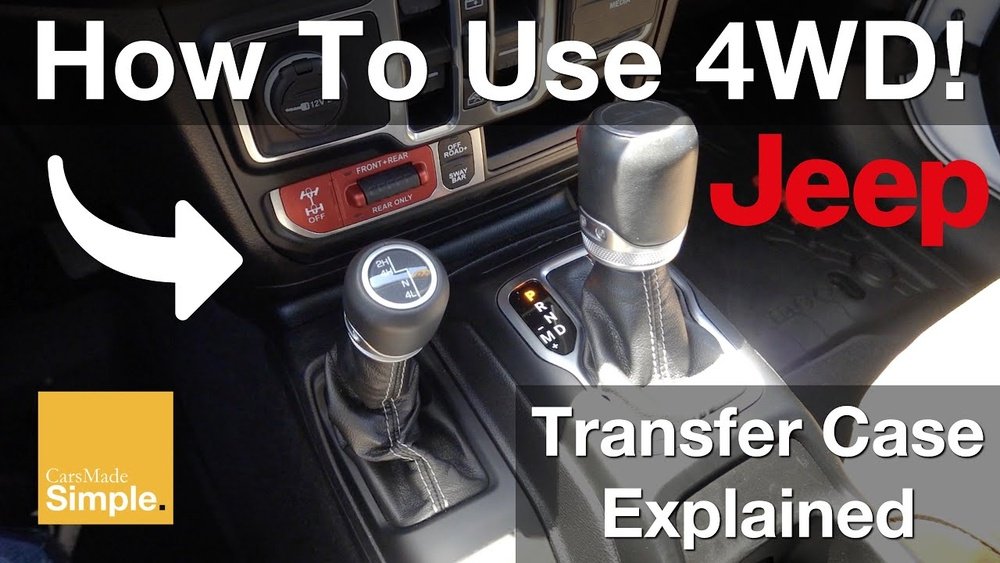
- Firmly grasp the transfer case lever (usually found next to the gear shifter).
- Pull the lever from 2H to 4H. You’ll feel a slight click.
- Resume driving. The 4X4 indicator light should turn on.
You can shift into 4H “on the fly” (while driving), but never while accelerating or turning sharply. Tip: If the 4X4 light doesn’t activate, gently reverse for a few feet, then try again.
3. Shift Into 4l (four-wheel Drive Low)
4L gives you maximum torque for tough situations.
- Stop the Jeep completely. Shift the automatic transmission to Neutral (N) or the manual transmission to clutch-in.
- Firmly pull the transfer case lever from 4H to 4L. It may require more force than the 2H to 4H shift.
- Wait for the 4L indicator light to turn on.
- Shift back to Drive (D) or release the clutch, then drive at low speed.
Common mistake: Shifting into 4L while moving can damage the transfer case. Always come to a full stop.
4. Shift Back To 2h (two-wheel Drive)
Once you’re back on paved roads, switch back to 2H.
- Slow down to under 55 mph.
- Take your foot off the gas.
- Move the transfer case lever from 4H or 4L to 2H.
- The 4X4 indicator should turn off.
Non-obvious insight: Staying in 4H or 4L on dry roads increases tire wear and uses more fuel. Always return to 2H for normal driving.
Key Differences: 4h Vs. 4l
To make it easier, here’s a quick comparison:
| Feature | 4H | 4L |
|---|---|---|
| Speed | Up to 55 mph | Up to 25 mph |
| Torque | Moderate | High |
| Best Terrain | Snow, sand, gravel | Mud, rocks, steep climbs |
When Should You Use Each Mode?
Knowing when to use each mode protects your Jeep and keeps you safe.
- 2H: Everyday driving, dry pavement.
- 4H: Rain, snow, loose surfaces, light off-roading.
- 4L: Deep mud, steep hills, rock crawling, heavy towing.
- Neutral: If you need to tow your Jeep with all four wheels on the ground.

Practical Tips For Safe Shifting
- Always slow down before shifting modes.
- Don’t force the lever; if it resists, check your speed and transmission.
- Keep your tires evenly inflated.
- Listen for odd sounds after shifting. Clicking or grinding may signal a problem.
- Regularly check your transfer case fluid.
Helpful example: If you’re driving in heavy snow and feel the wheels slipping, shift from 2H to 4H while keeping straight and steady. If you get stuck, stop completely and shift to 4L for maximum traction.
Data: Jeep Wrangler 4×4 Usage
According to Jeep, most Wrangler owners use 4H for about 70% of their off-road driving. Only 20% switch to 4L, usually for extreme conditions. Staying in 2H saves fuel and wear.
| Mode | Average Usage (%) |
|---|---|
| 2H | 60 |
| 4H | 30 |
| 4L | 10 |

Frequently Asked Questions
How Do I Know If My Jeep Is In 4×4 Mode?
Look for the 4X4 indicator light on your dashboard. It shows when you’re in 4H or 4L. If you don’t see it, the transfer case may not be fully engaged.
Can I Shift Into 4h While Driving?
Yes, you can shift into 4H on the fly if you’re moving below 55 mph and driving straight. Avoid shifting while turning or accelerating.
When Should I Use 4l Instead Of 4h?
Use 4L for slow-speed situations like deep mud, steep hills, or rocky terrain. It gives you more torque but limits speed.
Will Shifting Into 4×4 Damage My Jeep?
If done correctly, shifting into 4X4 won’t harm your Jeep. Problems usually happen when shifting at high speed, on dry pavement, or forcing the lever.
Where Can I Learn More About Jeep Wrangler 4×4 Systems?
You can find detailed information on the official Jeep website: Jeep Wrangler Official Site.
Shifting into 4X4 on your Jeep Wrangler is simple once you know the right steps. With practice, you’ll handle snow, mud, and tough trails confidently. Always follow these steps, watch your speed, and respect your Jeep’s limits. With proper care, your Wrangler will keep you exploring for years to come.