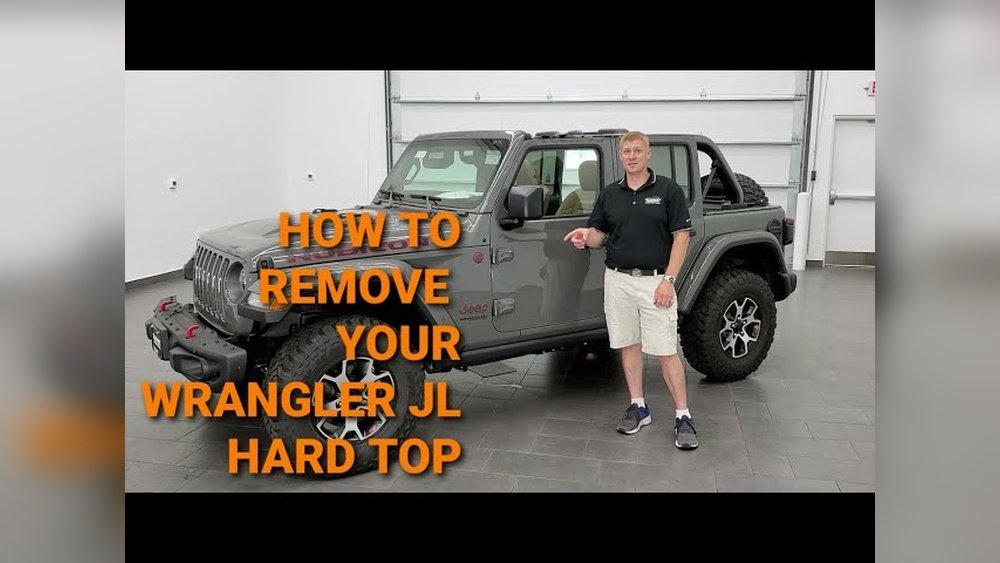
Removing the hardtop from your Jeep JL can transform your driving experience. Many owners love the open-air feeling, but the process can seem confusing if you’ve never done it before. With the right steps, tools, and tips, you can safely remove your Jeep JL hardtop, enjoy the sun, and avoid common mistakes. This guide helps you do it right, even if you’re not an expert.
Understanding The Jeep Jl Hardtop
The Jeep JL hardtop is made of strong fiberglass and is designed to keep your vehicle secure from weather and theft. It’s heavier and more durable than a soft top. Removing it gives you more freedom but needs careful handling because it weighs over 100 lbs and is awkward to move.
Key Features
- Three-piece design: Two front panels (called Freedom Panels) and a large rear section.
- Multiple bolts and connectors: Keep the top secure.
- Electrical connections: For rear wiper and defroster.
Knowing these features helps you plan your removal process and avoid damaging parts.
Tools And Equipment Needed
You don’t need many tools, but having the right ones makes the job easier:
- Torx bit set (mainly T40 and T50)
- Ratchet or wrench
- Storage bags for bolts and Freedom Panels
- Step stool if you’re not tall
- Friend or lift system (for the rear section)
- Microfiber cloth (optional, for cleaning seals)
If you try to remove the hardtop alone, a lift system can help. Most people need at least one extra person for the heavy rear piece.

Step-by-step Removal Process
Follow these steps to remove your Jeep JL hardtop safely and smoothly.
1. Remove Freedom Panels
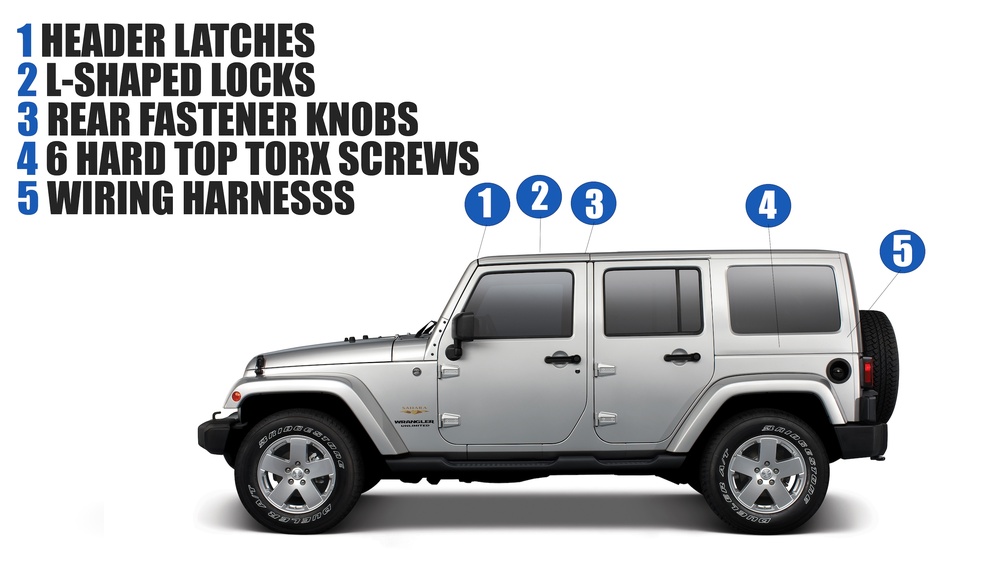
- Unlock the latches above the driver and passenger seats.
- Turn the fasteners to release the panels.
- Lift each panel out and store them in a protective bag.
2. Disconnect Electrical And Washer Connections
- Open the rear cargo door.
- Find the wire harness and washer hose on the left side of the cargo area.
- Press the tab and pull to unplug the connector.
- Remove the washer hose by pulling gently.
Not disconnecting these can cause damage when lifting the hardtop.
3. Remove Bolts From The Hardtop
- Use your Torx bit to remove the bolts along the top edge inside the cargo area.
- There are usually 8 bolts on a four-door Jeep JL, fewer on two-door models.
| Location | Number of Bolts | Torx Size |
|---|---|---|
| Cargo area sides | 6 | T40 |
| Roll bar | 2 | T50 |
Store bolts in a bag so you don’t lose them.
4. Lift Off The Rear Hardtop Section
- With a friend, stand on each side of the Jeep.
- Carefully lift the hardtop straight up and away.
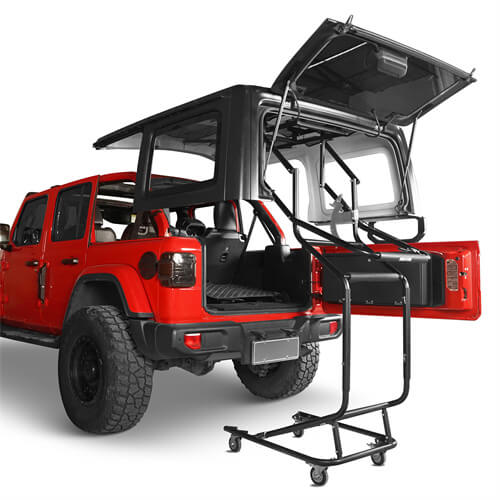
- Place it on a soft surface or use a storage cart.
If you want to do this alone, consider a hoist system for your garage.
5. Store The Hardtop And Panels
- Keep the hardtop in a dry place, away from direct sunlight.
- Use Jeep-specific storage bags for the Freedom Panels.
- Make sure electrical connectors are covered to protect from dust.
| Storage Option | Protection Level | Recommended For |
|---|---|---|
| Storage bags | High | Freedom Panels |
| Hardtop cart | Medium | Full hardtop |
| Garage hoist | Very High | Full hardtop, solo removal |
Practical Tips And Common Mistakes
Many beginners miss small details when removing their hardtop. Here are two non-obvious tips:
- Check weather seals: Inspect seals for dirt or wear before reinstalling. Clean them with a microfiber cloth to keep leaks away.
- Label your bolts: Mark each bolt bag by location. This makes reinstallation faster and prevents mixing up lengths.
Common mistakes:
- Forgetting to disconnect the electrical harness or washer hose, which can rip wires.
- Lifting the hardtop unevenly, risking cracks or scratches.
- Storing panels without covers, leading to scratches or warping.
If you’re unsure, watch a removal video or ask a friend with Jeep experience. Jeep forums and communities often have helpful guides and advice.
Safety And Handling Advice
The Jeep JL hardtop is heavy and bulky. Here’s how to stay safe:
- Always lift with your knees, not your back.
- If possible, use a mechanical lift or hoist.
- Keep children and pets away during removal.
- Don’t rush; take your time, especially with connectors.
If you live in an area with strong winds, avoid removing the hardtop outside. A sudden gust can cause accidents.
Reinstallation Tips
Putting the hardtop back on is just as important as removal. Here’s how to make it easy:
- Line up the rear section carefully, using guide pins.
- Reconnect all electrical and washer hoses before bolting down.
- Tighten bolts snugly, but don’t over-torque—this can crack the fiberglass.
- Check all seals and latches for a tight fit.
- Test the rear wiper and defroster after reconnecting.
Many people forget to test electrical functions before finishing. Always check before driving.

Frequently Asked Questions
How Heavy Is The Jeep Jl Hardtop?
The full hardtop weighs between 100–140 lbs, depending on the model and extra features. Most people need help to lift it safely.
Can I Remove The Hardtop By Myself?
It’s possible with a garage hoist system, but not recommended without one. The rear section is bulky and can be damaged if dropped.
Will Removing The Hardtop Affect My Jeep’s Warranty?
No, removing the hardtop is allowed and does not void your Jeep warranty. Just avoid damaging electrical connectors or seals.
Do I Need To Buy Extra Tools?
Most Jeep JL models include a Torx set in the glove box. If yours is missing, buy a Torx set with T40 and T50 bits. Storage bags and carts are optional but helpful.
Where Can I Find More Detailed Instructions?
The official Jeep owner’s manual includes diagrams and step-by-step instructions. For more visual help, visit Jeep’s official manual page.
Removing your Jeep JL hardtop opens up a world of adventure. With the right tools, careful steps, and smart storage, you can do it safely and efficiently. Enjoy the fresh air and freedom of open-top driving, and remember to protect your hardtop for long-lasting fun.