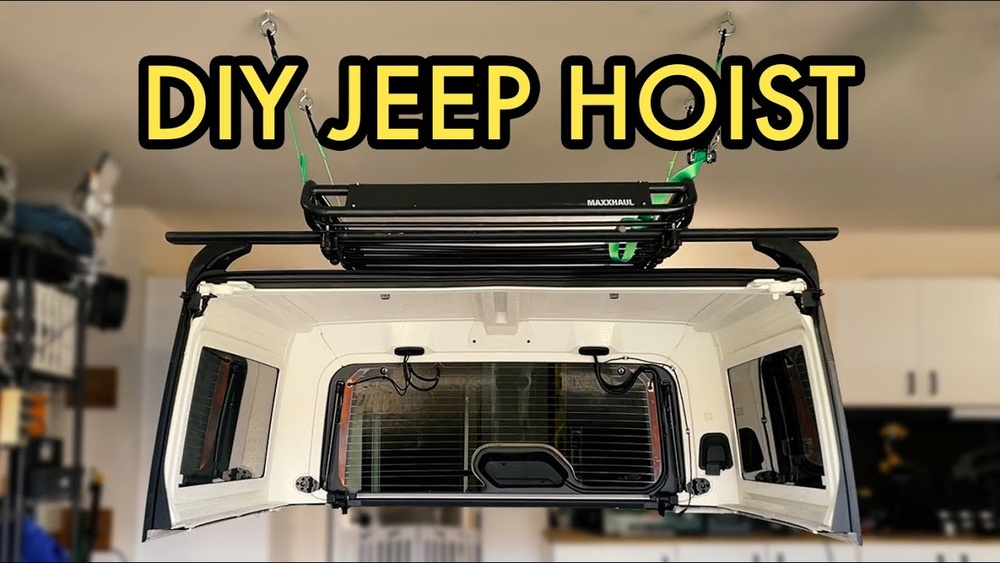
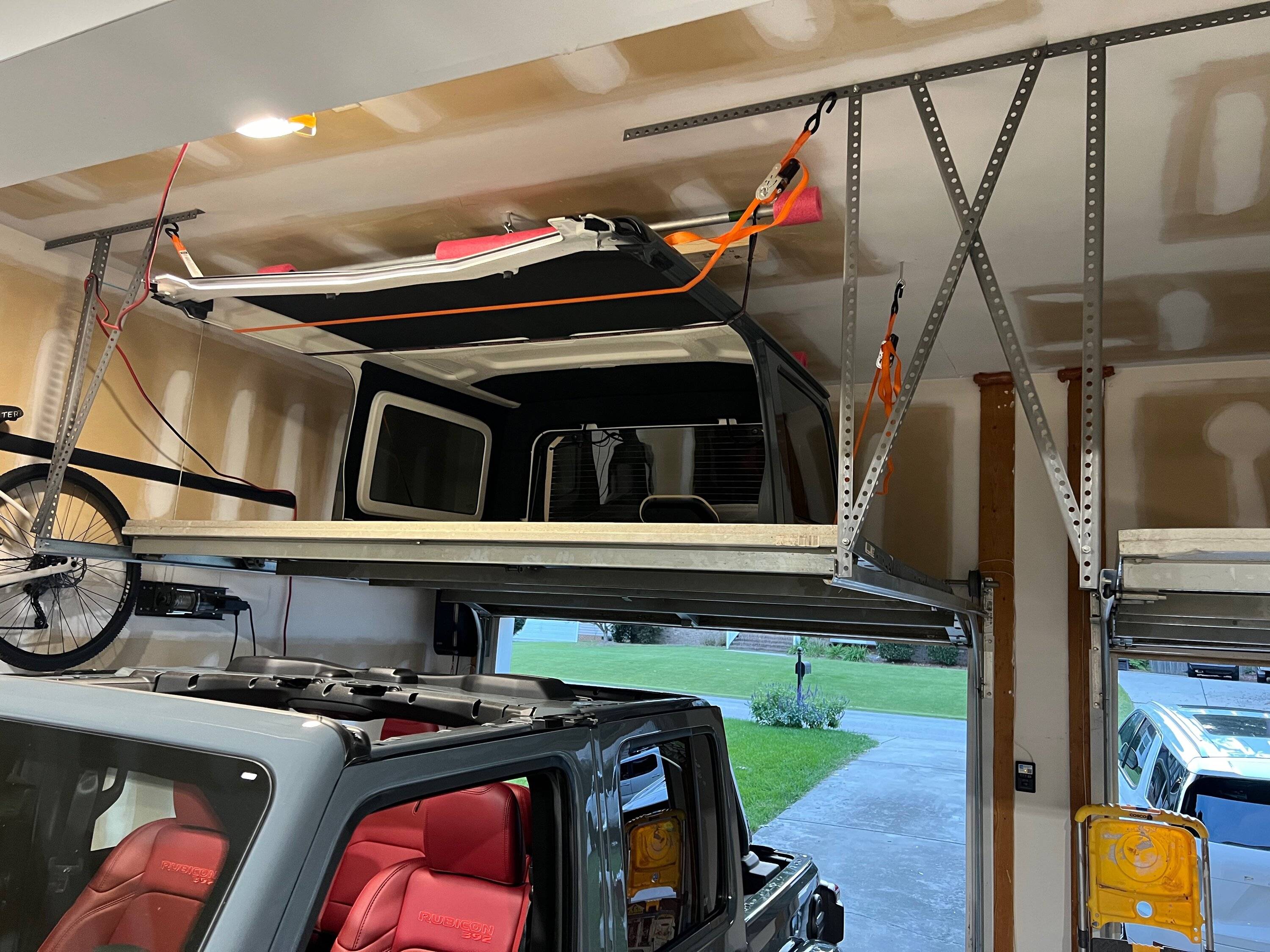
Taking the hardtop off your Jeep can be a challenge. It’s heavy, awkward, and if you drop it, repairs are costly. Many Jeep owners dream about an easy way to lift the top safely by themselves. The answer is a Jeep hardtop hoist—a simple garage tool that lets you raise, lower, and store the hardtop with little effort. This guide walks you through building a durable, reliable hoist for your Jeep, even if you have limited DIY experience.
Why Build A Jeep Hardtop Hoist?
Buying a commercial hoist can cost $150–$400. Building your own can save money and let you customize it for your garage. Besides saving cash, a homemade hoist means you don’t have to rely on friends to help every time summer comes around.
You also reduce the risk of damaging your hardtop, which can cost over $2,000 to replace.
Tools And Materials Needed
Before starting, gather all the parts. Most are available at hardware stores.
- 2″ x 4″ wooden beams (8 feet long) – 2 pieces
- Eye bolts (¼” or ⅜”) – 4 pieces
- Lag screws – at least 4, suitable for your ceiling joists
- Nylon lifting straps – 2 pieces (rated at least 500 lbs)
- Pulley blocks – 2 to 4, heavy-duty
- Rope (3/8” braided, 25 feet, 500 lb rating)
- Locking cleat or tie-down hook
- Cordless drill
- Stud finder
- Wrenches and screwdrivers
- Ladder
- Measuring tape
- Pencil
Pro tip: Always choose hardware rated for at least double the weight of your Jeep hardtop (typically 120–150 lbs).
Planning Your Hoist
Measure your garage ceiling height and check for strong ceiling joists. The joists must support the combined weight of the hardtop and hoist hardware. Space the eye bolts to match the length and width of your Jeep’s hardtop, usually around 60″ x 40″.
Here’s a quick comparison of common Jeep hardtop weights:
| Jeep Model | 2-Door Hardtop | 4-Door Hardtop |
|---|---|---|
| Wrangler JK | ~120 lbs | ~140 lbs |
| Wrangler JL | ~115 lbs | ~140 lbs |
| Gladiator | N/A | ~150 lbs |
If your ceiling is low, ensure you have enough clearance to lift the top above your Jeep and drive out underneath.
Step-by-step Assembly
1. Locate The Ceiling Joists
Use a stud finder to find joists above your Jeep’s parking spot. Mark them with a pencil. This is critical for safety. Never mount a hoist in just drywall.
2. Mount The Eye Bolts
Drill pilot holes into the joists where you marked them. Screw in the eye bolts tightly. Space them to match the hardtop’s lift points (front and rear). For wider tops, use all four corners.
3. Attach Pulleys And Rope
Hang pulleys from the eye bolts. Thread the rope through the pulleys so you can lift the top evenly. Run both ends of the rope to a wall-mounted locking cleat or tie-down hook for easy control.
Here’s a simple layout for two types of hoists:
| System | Number of Pulleys | Difficulty | Approx. Cost |
|---|---|---|---|
| Basic Pulley | 2 | Easy | $50–$70 |
| 4-Point Pulley | 4 | Medium | $90–$120 |
4. Prepare Lifting Straps
Loop nylon straps under the hardtop’s front and rear edges. Attach the free ends to the pulleys’ hooks or carabiners. Double-check that the straps are even to keep the top level as you lift.
5. Lifting The Hardtop
Remove bolts from your Jeep’s hardtop. Stand clear, then slowly pull the rope, raising the top a few inches at a time. Make sure it’s balanced. Once fully lifted, tie off the rope securely at the cleat. Drive your Jeep out from under the suspended top.
Safety tip: Never leave the hardtop hanging for months. Prolonged suspension can stretch straps or weaken your ceiling mounts.

Tips For A Safer And Smoother Hoist
- Always check your hardware for wear or rust before each use.
- If you feel unsure, ask a friend to spot you the first time.
- Use gloves to protect your hands when handling rope or straps.
- Periodically inspect your garage ceiling for cracks or movement.
Some Jeep owners add a manual winch or electric hoist for even easier lifting. This costs more, but is ideal if you remove the top often.
Common Mistakes To Avoid
- Skipping the joist check – Never trust drywall or weak beams.
- Using old rope or straps – Material can weaken over time.
- Uneven lifting – Always double-check strap positions.
- Overloading hardware – Always use parts with a higher weight rating than needed.
- Not tying off properly – The locking cleat or hook must hold the load securely.
Cost Comparison: Diy Vs Commercial Hoist
A homemade hoist saves money but requires basic tools and time.
| Hoist Type | Approximate Cost | Customization |
|---|---|---|
| DIY Hoist | $50–$120 | High |
| Commercial Hoist | $150–$400 | Low |
For more on Jeep hardtop removal and accessories, the ExtremeTerrain removal guide is a useful resource.
Final Thoughts
Building your own Jeep hardtop hoist is a smart investment. It brings safety, convenience, and savings. The best part? You can lift the top whenever you want—without waiting for help. Take your time with installation, and always choose strong, reliable parts.
Once you’ve built it, you’ll wonder how you ever lived without it.
Frequently Asked Questions
How Much Weight Should My Hoist Handle?
Your hoist should be rated for at least double your Jeep’s hardtop weight. Most Wrangler tops are 115–150 lbs, so a 300 lb rating is safe.
Can I Use A Bike Hoist Kit Instead?
While some bike hoists work, they often aren’t rated for the extra weight and size. Always check weight ratings and anchor hardware securely.
Is It Safe To Leave My Hardtop Hanging?
Short-term suspension (weeks) is generally safe if installed correctly. For long-term storage, build a shelf or support the top on stands.
Will This System Work In A Carport Or Outdoor Space?
This design is best for garages with strong, covered ceilings. Outdoor use isn’t recommended due to weather and security risks.
What If My Garage Ceiling Is Too Low?
If clearance is tight, consider a wall-mounted hoist or a rolling cart. Never force the top above your Jeep if it doesn’t fit safely.