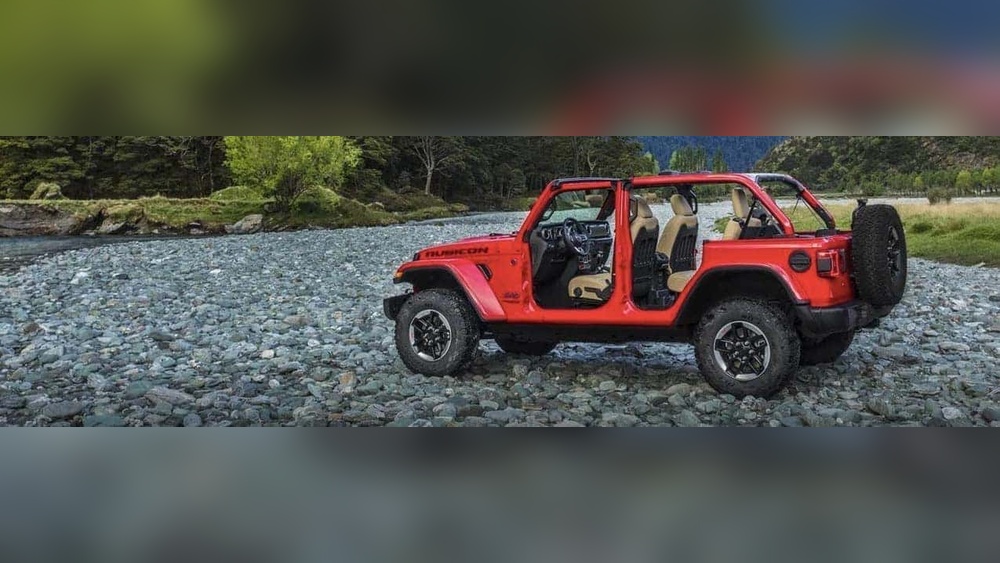
Hauling kayaks on a Jeep Wrangler is a smart way to enjoy outdoor adventures. With its rugged design and removable roof, the Wrangler offers flexibility but also some challenges when carrying long gear like kayaks. If you want to transport your kayak safely and easily, understanding the best methods and equipment is key.
This guide will walk you through the options, tips, and common mistakes, so you can hit the water with confidence.
Choosing The Right Kayak Rack For Your Jeep Wrangler
Not all racks fit every Wrangler. The model year and roof style—hardtop, soft top, or no top—affect your options. Most kayak racks are designed for hardtop Wranglers because they have strong mounting points. If you have a soft top, you’ll need special racks that attach to the frame or bumper.
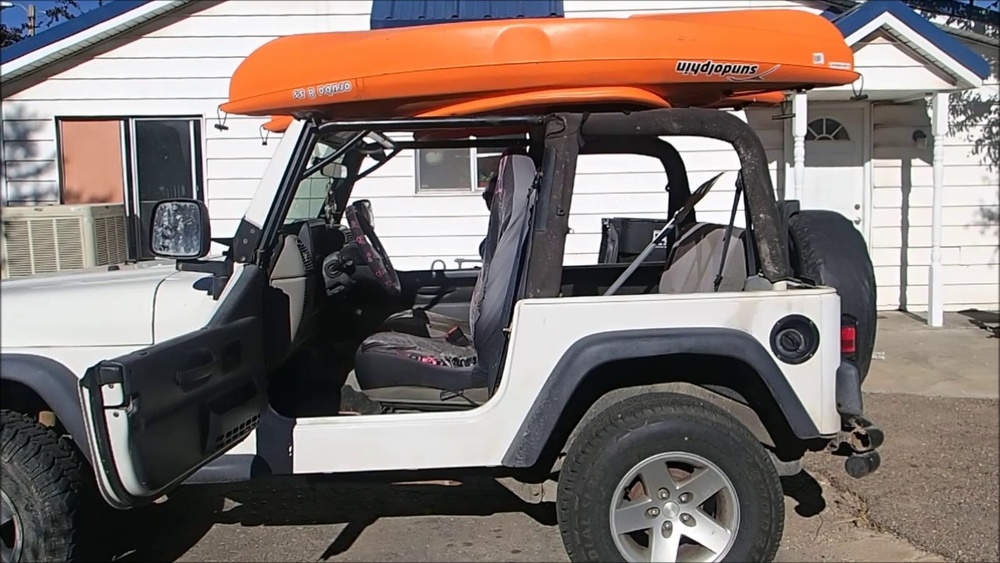
Here’s a quick comparison of popular rack types:
| Rack Type | Best For | Load Capacity | Installation Difficulty |
|---|---|---|---|
| Roof Rack | Hardtop owners | Up to 150 lbs | Medium |
| Hitch Rack | No roof/soft top | Up to 100 lbs | Easy |
| Roll Bar Rack | Soft top/no top | Up to 80 lbs | Hard |
Roof racks are most common, but hitch racks are gaining popularity for their simplicity. Always check the weight rating—many kayaks weigh between 35 and 80 lbs. For two kayaks, make sure the rack supports the combined weight.
Preparing Your Jeep And Kayaks
Before mounting anything, inspect your Jeep’s roof and mounting points. Clean surfaces and check for rust or damage. This step is often skipped, but loose bolts or weak spots can cause accidents.
Measure your kayak’s length. Most recreational kayaks are 8–12 feet long. The Wrangler’s roof is shorter, so the kayak will overhang. Make sure the rack’s crossbars are spaced to balance the kayak and prevent tipping.
Gather the right gear:
- Rack system (compatible with your roof type)
- Tie-down straps (ratchet or cam style)
- Bow and stern lines (for extra security)
- Padding (foam blocks or rack pads)
A common mistake is using old, frayed straps. Always check your gear for wear.
How To Load And Secure Kayaks
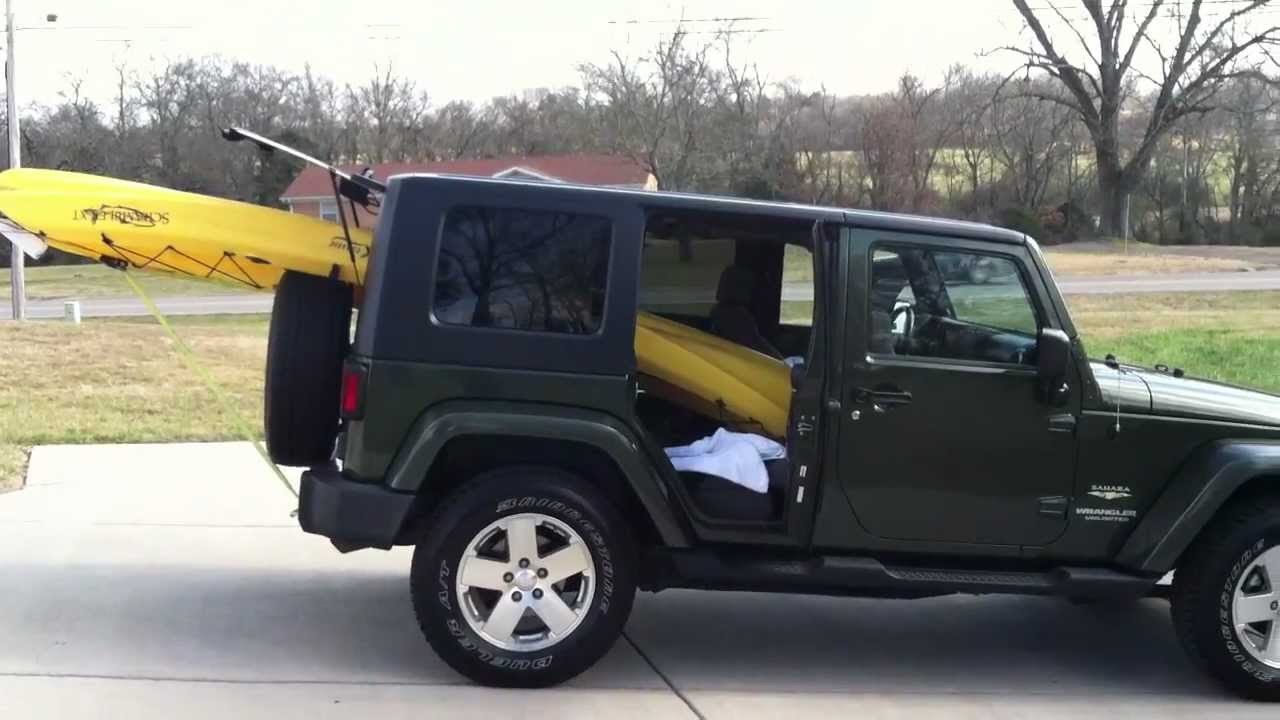
Loading kayaks can be tricky, especially on taller vehicles like the Wrangler. Here’s a step-by-step process:
- Place foam pads or rack pads on crossbars.
- Lift the kayak onto the roof. For heavy kayaks, ask for help.
- Center the kayak on the rack, with equal overhang front and back.
- Loop tie-down straps over the kayak and secure them to the rack.
- Tighten straps until snug, but don’t crush the kayak hull.
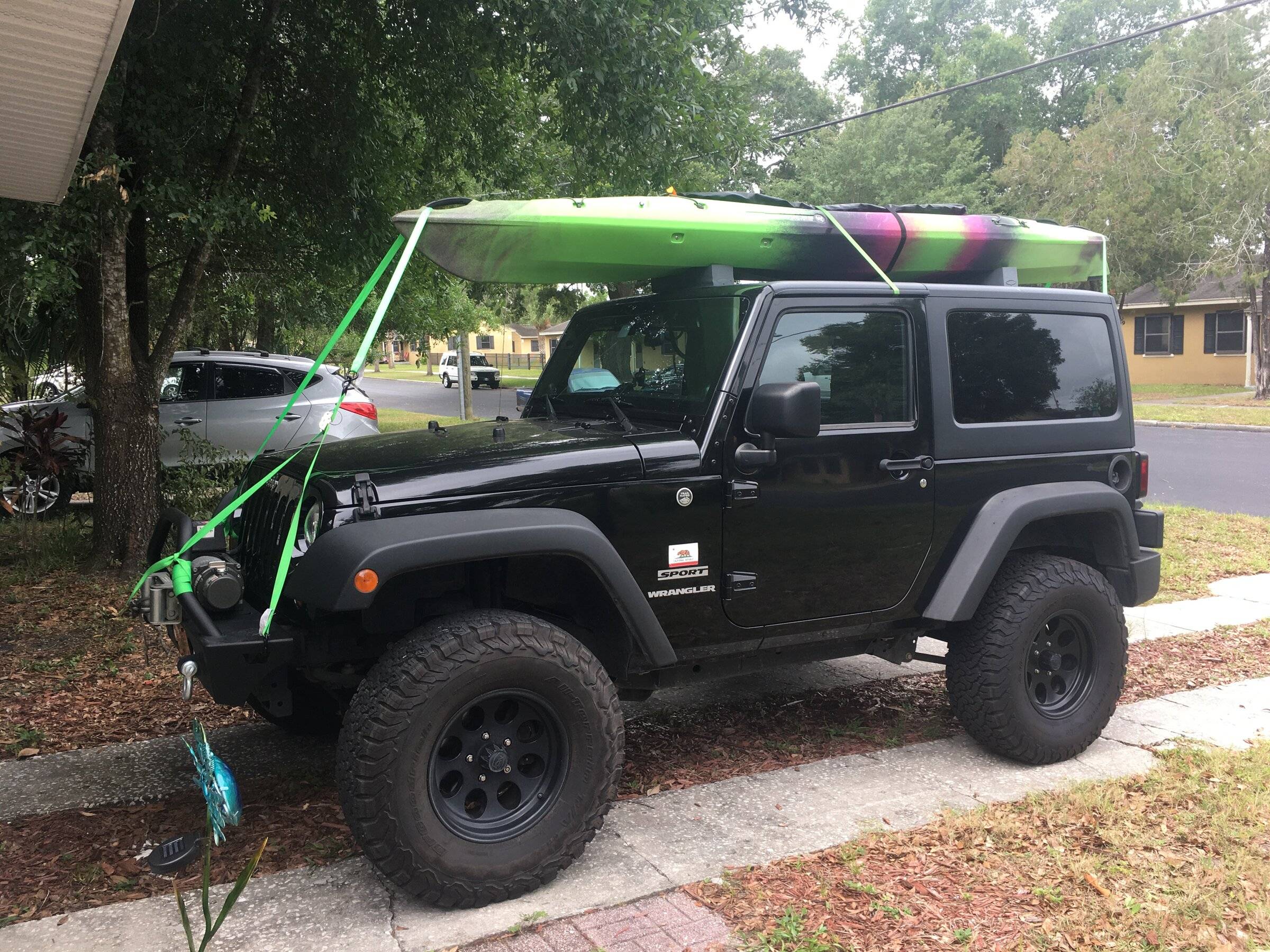
- Attach bow and stern lines to the front and rear bumpers or tow hooks.
- Check for movement by gently shaking the kayak.
Some kayaks have fragile hulls. If you own a lightweight fiberglass kayak, use extra padding to prevent cracks.
Here’s a simple comparison of tie-down options:
| Type | Strength | Ease of Use | Best For |
|---|---|---|---|
| Ratchet Strap | High | Medium | Heavy kayaks |
| Cam Strap | Medium | Easy | Light kayaks |
| Rope | Low | Hard | Short trips |
Driving Tips When Hauling Kayaks
The shape and length of kayaks affect driving. Expect wind noise and some drag. Avoid sudden stops or sharp turns, especially if the kayak overhangs.
Keep these tips in mind:
- Drive slower than usual, especially in strong winds.
- Check straps at every stop; they can loosen during travel.
- Avoid parking garages and low bridges.
- Use a red flag at the end of the kayak if it sticks out more than 3 feet (required by law in many states).
An extra insight: the kayak can sway or vibrate at highway speeds. If you notice movement, pull over and tighten straps. Many beginners forget to check at each stop, leading to lost gear.
Common Mistakes To Avoid
Many Jeep owners make these errors:
- Skipping bow and stern lines: Only using roof straps is risky.
- Over-tightening straps: Can damage kayak hulls.
- Ignoring weight limits: Every rack has a max load—exceeding it can break the rack or roof.
- Using the wrong rack for soft tops: Soft tops can’t handle roof racks—use frame or hitch racks instead.
- Not checking state laws: Overhang rules vary; always check before you drive.
A less obvious mistake is forgetting about rain. Wet straps can stretch, so check tension after driving in wet conditions.
Best Kayak Rack Brands For Jeep Wrangler
Quality matters. Some trusted brands include:
- Thule
- Yakima
- Rhino Rack
These companies offer racks tailored for Wranglers. Look for lifetime warranties and easy-to-follow instructions. Reviews show that Thule and Yakima racks have the best customer ratings for durability and ease of installation.
You can find more technical details on kayak racks at REI’s expert advice page.
Frequently Asked Questions
How Many Kayaks Can A Jeep Wrangler Carry?
Most Wranglers can safely carry 1–2 kayaks on a roof rack. Check your rack’s weight limit and consider the length. Longer kayaks may require extra tie-downs.
Can I Haul Kayaks With A Soft Top Jeep?
Yes, but you need a frame-mounted or hitch rack. Never attach heavy loads directly to a soft top. Look for racks that use the roll bars or trailer hitch.
Do I Need Extra Padding For My Kayak?
Padding is important for fiberglass or lightweight kayaks. Foam blocks or rack pads prevent dents and cracks. Heavy plastic kayaks are tougher, but padding still reduces slip and noise.
What’s The Safest Way To Secure Kayaks?
Use two tie-down straps across the roof, plus bow and stern lines to the bumpers. Ratchet straps are strong but cam straps are easier for beginners. Always double-check tightness before driving.
Are There Legal Requirements For Kayak Overhang?
Most states require a red flag if your kayak sticks out more than 3 feet from the rear. Some states have stricter rules, so check local laws before your trip.
With the right rack, careful loading, and safe driving habits, your Jeep Wrangler can carry kayaks to any adventure spot. Proper preparation prevents damage to your gear and your vehicle. By following these steps, you’ll enjoy more time on the water and less time worrying about transport.