If you own a Jeep or plan to upgrade one, knowing how much lift your vehicle has is important. A lift affects how your Jeep looks, handles, and performs off-road. But many owners are unsure how to measure the lift accurately. This guide walks you through simple steps to measure the lift on a Jeep, helps you understand what the numbers mean, and explains some common mistakes people make.
What Is Jeep Lift And Why Measure It?
A Jeep lift means raising the height of your Jeep’s suspension or body. Most people install lifts to fit bigger tires, gain more ground clearance, or improve off-road ability. Measuring the lift tells you how much higher your Jeep is compared to its stock (original) height. This measurement is useful for:
- Choosing the right tire size
- Checking legal height limits
- Ensuring safe handling
For example, a 2-inch suspension lift allows you to install larger tires for rocky trails, while a 4-inch lift might be needed for extreme off-roading. Accurate measurements help avoid problems like poor steering, rubbing tires, or unsafe driving.
Tools You Need To Measure Jeep Lift
You do not need fancy tools. Most Jeep owners can measure lift with:
- Tape measure (preferably longer than 36 inches)
- Flat surface (like a driveway or garage)
- Stock height reference (from manual or online sources)
- Notebook and pen (for recording measurements)
Some shops use advanced tools, but for home measurement, a tape measure is enough.
Steps To Measure The Lift On A Jeep
Follow these steps to measure your Jeep’s lift correctly:
1. Park On A Level Surface
Always measure on a flat, even surface. This avoids errors caused by uneven ground. Make sure the tires are inflated properly.
2. Find The Reference Points
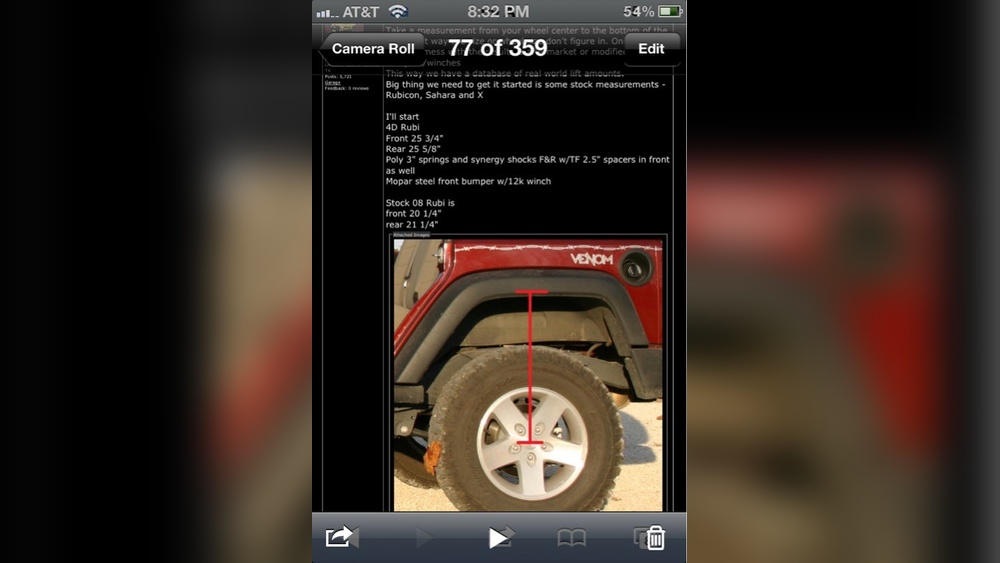
You need to compare your Jeep’s current height to the original (stock) height. The most common reference points are:
- Bottom of the frame rail
- Center of the wheel hub
- Top of the fender
Most owners use the fender-to-ground measurement because it is easy and reliable.
3. Measure Current Height
Take your tape measure and check the distance from the ground up to the top of the fender (directly above the wheel). Measure all four corners (front left, front right, rear left, rear right). Record each value.
Example measurements:
- Front left: 39 inches
- Front right: 39.5 inches
- Rear left: 40 inches
- Rear right: 40 inches
4. Find The Stock Height
Look up your Jeep’s original fender height. You can find this in the owner’s manual, on forums, or from official sources. For example, a stock Jeep Wrangler JK often has a front fender height of 36 inches and rear of 37 inches.
5. Calculate The Lift
Subtract the stock height from your measurement. For example:
- Front left: 39 inches (current) – 36 inches (stock) = 3-inch lift
- Rear left: 40 inches (current) – 37 inches (stock) = 3-inch lift
Repeat for each corner. If all corners are equal, your Jeep sits level. If not, you may have a rake (front or rear higher).
Comparing Lift Types And Effects
There are different kinds of lifts. Each affects your Jeep in unique ways. Here’s a simple comparison:
| Lift Type | Height Added | Common Uses |
|---|---|---|
| Suspension Lift | 2-6 inches | Off-road, bigger tires |
| Body Lift | 1-3 inches | Looks, tire clearance |
| Spacer Lift | 1-2 inches | Budget, mild upgrades |
Suspension lifts change the whole system. Body lifts just raise the body. Spacer lifts are quick fixes but don’t improve performance much.

Stock Height Reference For Popular Jeeps
Knowing your stock height makes measuring easier. Here are common stock heights for popular models:
| Model | Front Fender Height | Rear Fender Height |
|---|---|---|
| Wrangler JK | 36 inches | 37 inches |
| Wrangler JL | 37 inches | 38 inches |
| Grand Cherokee | 33 inches | 34 inches |
These numbers can change with trim or tire size. Always check your exact model.
Common Mistakes When Measuring Lift
Many Jeep owners make errors that affect their results. Here are some mistakes to avoid:
- Measuring with uneven tire pressure
- Using the wrong reference point (like bumper instead of fender)
- Forgetting to subtract stock height
- Measuring on sloped surfaces
- Not checking all corners (can miss uneven lift)
A non-obvious tip: Always measure after driving for a few minutes. Suspension settles after movement, giving more accurate numbers.
Why Accurate Measurement Matters
A small difference in lift can affect tire fit, handling, and legality. For example, some states limit how much you can lift a vehicle. If you plan to join off-road groups, they may require a minimum or maximum lift.
Another insight: If your lift is uneven (front higher than rear), it may cause poor braking or steering. Checking all four corners helps you spot this early.
Practical Example: Measuring A Wrangler Jl
Suppose you installed a 2-inch suspension lift on a Wrangler JL. The stock front fender height is 37 inches. After installation, you measure 39 inches at the front fender.
Calculation:
- 39 inches (current) – 37 inches (stock) = 2-inch lift
If the rear measures 40 inches and the stock was 38 inches:
- 40 inches (current) – 38 inches (stock) = 2-inch lift
This means your Jeep is lifted evenly.
Frequently Asked Questions
How Do I Know If My Jeep Has A Suspension Or Body Lift?
Check under your Jeep. If you see new springs, shocks, or control arms, it is a suspension lift. If you find spacers between the frame and body, it is a body lift.
Can I Measure Lift With Bigger Tires Installed?
Yes, but tire size affects fender height. For best accuracy, use original-size tires or subtract the extra height added by larger tires.
Is It Possible For The Lift To Settle Over Time?
Absolutely. Suspension parts can settle after months, especially with heavy use. Re-measure a few months after installation for the most accurate reading.
Why Do Some Jeeps Have Uneven Lift?
Uneven lift can happen if springs are not installed correctly, or if weight is not balanced (for example, heavy bumpers or gear on one side). Always check all four corners.
Where Can I Find Stock Height Data For My Jeep?
You can look in your owner’s manual, ask at a dealership, or visit official sources like Jeep’s official website.
Measuring the lift on your Jeep is simple but important. With the right tools and careful steps, you can get accurate numbers and understand how your Jeep’s height affects its performance. A good measurement helps you make smarter choices about tires, handling, and off-road adventures.