Setting adjustable control arms on your Jeep JK can transform how your rig handles, especially when you lift your suspension or tackle off-road trails. Many new Jeep owners think installing adjustable arms is just about bolting them on, but proper setup is critical for safety, tire life, and smooth driving. If you want your Jeep JK to drive straight, handle bumps, and flex its suspension without issues, setting the arms right matters as much as the parts you buy.
This guide walks you through the process, explaining not just the steps but also the reasons behind each adjustment. You’ll learn practical tips, common mistakes, and how to make sure your Jeep JK is dialed in for both the road and the rocks.
Why Adjustable Control Arms Matter
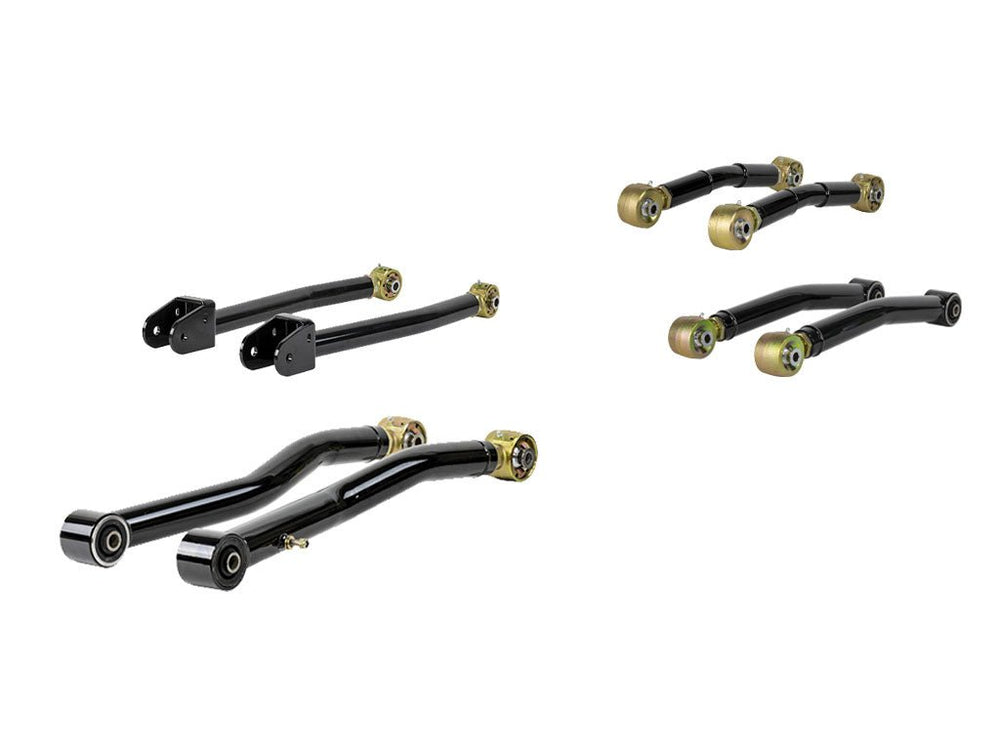
Adjustable control arms allow you to fine-tune your Jeep’s suspension geometry after a lift or alignment change. The factory arms fit only stock height and angles. When you lift your Jeep JK, the axles rotate and shift, causing poor alignment, vibration, and fast tire wear.
Key benefits of adjustable arms:
- Correct caster and pinion angles for better handling and less vibration.
- Center the axles in the wheel wells.
- Improve articulation (flex), essential for off-roading.
- Make future adjustments easier after modifications.
Many beginners overlook the need to reset caster angle after a lift. Without this, your Jeep may feel unstable or the steering won’t return to center.
Tools And Preparation
Before you start, have these tools ready:
- Floor jack and jack stands
- Socket and wrench set
- Tape measure
- Angle finder (digital or bubble)
- Penetrating oil
- Torque wrench
- Marker or paint pen
If you’re working on your driveway, ensure the surface is flat and the Jeep is secure. Loosen bolts with the weight on the tires, then support the Jeep on jack stands. Spray all control arm bolts with penetrating oil—they’re often rusted and tight.
Step-by-step: Setting Adjustable Control Arms
1. Measure And Record
Before removing anything, measure the wheelbase (center of front to rear wheel) on both sides. Record the length of your stock control arms and note any differences left to right. This helps set a baseline and avoid “dog tracking,” where the Jeep doesn’t drive straight.
2. Remove Old Arms And Compare
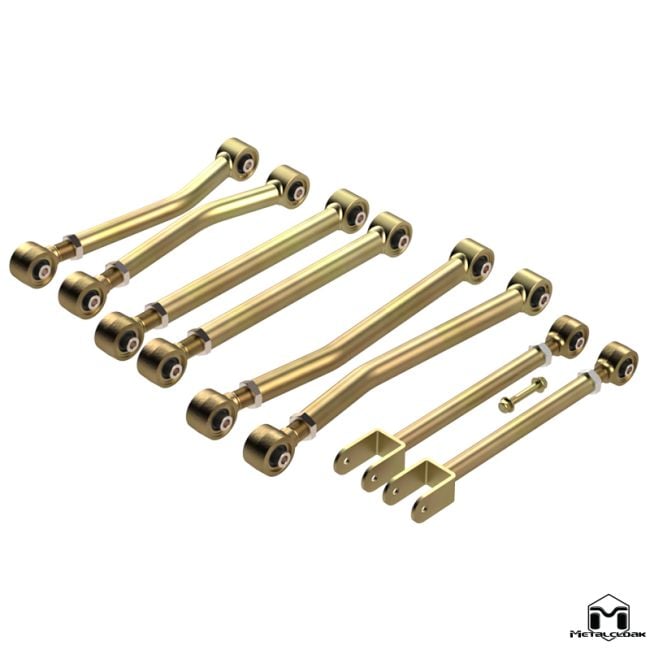
With the Jeep safely supported, remove the stock control arms one at a time. Lay the new adjustable arms next to the old ones and set them to the same length as your factory arms for a starting point. Do not tighten the jam nuts yet.
3. Install And Hand-tighten
Install the new arms in place, starting with the frame end, then the axle end. Only hand-tighten the bolts at this stage. This lets you adjust the arms while installed, which is more accurate than adjusting off the vehicle.
4. Center The Axle
To keep your axle centered:
- Measure the distance from the tire to the fender on both sides.
- Adjust the arm length in small increments until both sides match.
- For the rear, check that the driveshaft runs straight and doesn’t touch the exhaust or skid plates.
5. Set Caster And Pinion Angle
Caster is the angle of your steering axis—too little, and your Jeep will wander; too much, and the steering feels heavy.
- Use the angle finder on the axle’s upper ball joint.
- Stock caster for a JK is about 4–5 degrees positive. With lifts over 3”, aim for 5–7 degrees.
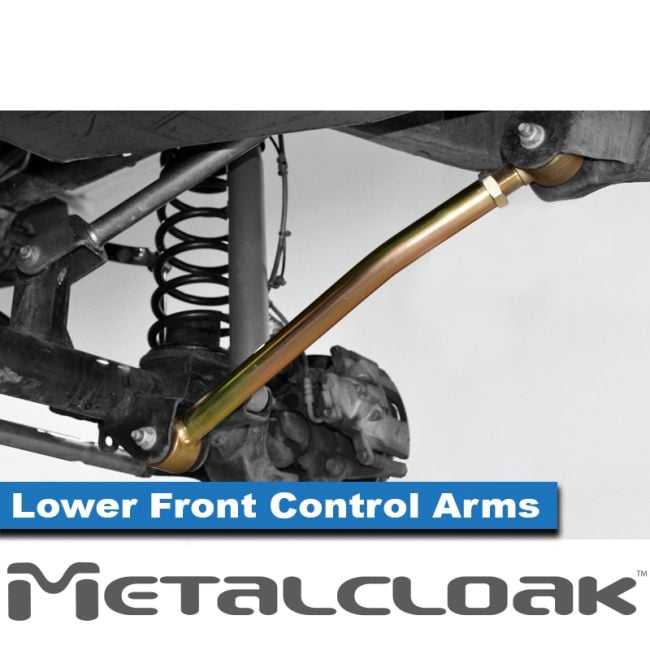
- Adjust the front lower arms longer to increase caster, or shorter to reduce it.
- For the rear, focus on pinion angle: The driveshaft and the pinion should align closely to avoid vibration.
- Always check both sides—sometimes they need slightly different lengths to get the angles right.
6. Final Torque And Jam Nuts
With everything adjusted, torque all bolts to factory specs (usually 125 ft-lbs for control arm bolts). Tighten the jam nuts on the adjustable ends—loose jam nuts are a common cause of clunks and shifting arms.
Pro tip: Cycle the suspension by bouncing the Jeep or jacking up each corner to make sure nothing binds or contacts the frame.
Comparing Arm Types And Adjustability
Here’s a quick look at how fixed vs adjustable control arms compare:
| Feature | Fixed Arms | Adjustable Arms |
|---|---|---|
| Ease of Alignment | Poor | Excellent |
| Compatibility with Lifts | Limited | Wide Range |
| Cost | Lower | Higher |
| Custom Tunability | None | Full Control |
Common Mistakes To Avoid
Many new Jeep owners make these errors when installing adjustable arms:
- Skipping measurements: Not measuring before and after leads to misalignment.
- Over-tightening before setup: Tighten bolts only after all adjustments.
- Ignoring jam nuts: Loose jam nuts are a frequent source of noise.
- Missing alignment shop visit: After DIY setup, always get a professional alignment.
Real-world Example
Let’s say you lift your Jeep JK 3 inches. After installing adjustable control arms, you set the front caster to 6 degrees and center the rear axle. On your first drive, the Jeep tracks straight and the steering wheel returns to center without effort.
Tire wear is even after 5,000 miles—proof your setup is right.
Quick Reference: Stock Vs. Adjusted Specs
| Parameter | Stock Value | Recommended After Lift |
|---|---|---|
| Front Caster Angle | 4-5° | 5-7° |
| Rear Pinion Angle | Parallel to driveshaft | 1° below driveshaft |
| Axle Centering | Factory set | Re-check and adjust |
Helpful Tips For Best Results
- Mark the jam nut position with a paint pen after tightening. This helps spot if it ever loosens.
- Always re-torque bolts after your first off-road trip.
- Use a digital angle finder for more accurate readings.
- Some shops use alignment racks that don’t always measure caster accurately on lifted Jeeps—double-check numbers yourself.
Frequently Asked Questions
How Often Should I Check Adjustable Control Arms After Installation?
It’s smart to check bolt torque and jam nuts after 500 miles, then at every oil change or after tough off-roading. Vibrations or clunks usually mean something has loosened.
Can I Set Adjustable Control Arms Without An Alignment Shop?
You can set them close at home using measurements and an angle finder, but a professional alignment is recommended for best results and tire life.
What Are Signs My Control Arms Are Not Set Correctly?
Common signs include wandering steering, uneven tire wear, vibrations, and the Jeep pulling to one side.
Do Adjustable Control Arms Improve Off-road Performance?
Yes, they allow greater suspension flex and keep the axles centered, reducing stress on joints and improving traction off-road.
Are All Brands Of Adjustable Control Arms The Same?
No, quality and features vary. Look for forged ends, high-quality bushings, and strong welds. Avoid the cheapest options—saving money up front can lead to worn parts or breakage. For more details, see this Jeep control arms guide.
Getting your Jeep JK’s adjustable control arms set right is more than just installation—it’s about dialing in the perfect ride for your style and safety. Take your time, measure twice, and enjoy the improved feel both on and off the trail.