Getting under the hood of your Jeep Renegade might seem tricky at first, especially if you’re new to cars or just bought your first Renegade. But it’s actually a simple process once you know the steps. Whether you need to check the engine oil, refill the windshield fluid, or inspect the battery, opening the hood is your starting point. This guide will walk you through each step in clear language, with practical tips and safety advice. You’ll also find helpful tables and answers to common questions, so you never feel lost.
Locating The Hood Release
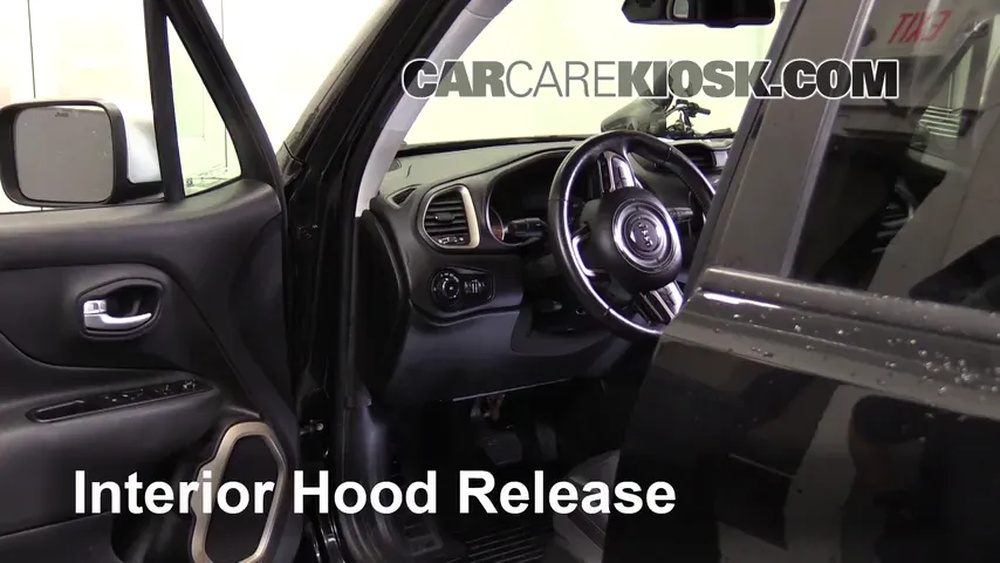
Most Jeep Renegade models follow a similar design, but knowing exactly where to look can save time. The hood release is always inside the cabin, usually on the driver’s side.
- Sit in the driver’s seat.
- Look under the dashboard, close to the left footwell.
- You’ll see a small lever with a hood icon.
Many drivers confuse the hood release with the fuel door lever. Jeep marks the hood lever with a tiny car symbol showing the front hood open, but it’s easy to miss. If you drive a newer model, the lever might be slightly higher or covered for safety.
| Model Year | Lever Location | Icon Color |
|---|---|---|
| 2015–2018 | Under dash, left side | White/gray |
| 2019–2021 | Near door, lower panel | White |
| 2022–present | Integrated with fuse box area | Silver |
Releasing The Hood Latch
Pulling the lever inside releases the first lock, but the hood won’t open fully yet. You need to release a second latch found under the hood itself.
- Step outside the car.
- Stand at the front, facing the grille.
- Slide your fingers under the center edge of the hood.
- Feel for a safety latch—usually a small tab or lever.
Push this tab to the side or up (depending on the model). The hood will now lift freely.
Common Mistakes When Opening The Hood
- Not pulling the inside lever hard enough: If the hood doesn’t pop, try again with more force.
- Missing the safety latch: Many beginners forget this step. Always check for the second latch.
- Trying to lift from the sides: The latch is only in the center.
A quick tip: If your Renegade’s hood feels stuck, check for dirt or debris around the latch. Sometimes, a little cleaning helps.

Lifting And Securing The Hood
Once you’ve released both latches, gently lift the hood. Some Renegade models use hydraulic struts that hold the hood open automatically, while others have a prop rod.
| Model Year | Support Type | Ease of Use |
|---|---|---|
| 2015–2017 | Prop rod | Manual, basic |
| 2018–2022 | Hydraulic struts | Semi-automatic |
| 2023–present | Hydraulic struts | Automatic, easy |
If your Renegade uses a prop rod:
- Look for the rod attached to the side of the engine bay.
- Lift it and fit it into the hole or slot on the underside of the hood.
If hydraulic struts are installed, just lift the hood and it stays open. Always make sure the hood is secure before working underneath.
Checking Under The Hood
Now that the hood is open, you can check fluid levels, inspect belts, or look for leaks. Here are the most common things owners check:
- Engine oil level (yellow dipstick)
- Coolant reservoir (transparent container, usually green or orange fluid)
- Windshield washer fluid
- Battery terminals
A surprising insight: The Renegade’s engine bay is compact, so parts are closer together compared to larger SUVs. Take care when reaching in—accidentally touching the hot engine can happen.
| Component | Location | Tip |
|---|---|---|
| Engine oil dipstick | Front, right side | Check when engine is cold |
| Coolant tank | Back, left corner | Never open when hot |
| Washer fluid | Front, left side | Top off monthly |
| Battery | Front, center | Clean terminals regularly |

Closing The Hood Safely
To close the hood:
- Remove the prop rod if used, and clip it back in place.
- Gently lower the hood until it’s about 12 inches from the latch.
- Let it drop from this height—it should click shut.
Don’t slam the hood down hard, as this may damage the latch or dent the hood. If it doesn’t close fully, press down gently until you hear the lock.
Safety Advice
- Always check hands are clear before closing.
- Never leave tools inside the engine bay.
- After closing, pull up gently on the hood to confirm it’s locked.
Non-obvious Insights For Jeep Renegade Owners
- Lubricate the latch: Over time, the hood latch can stick. A small spray of silicone lubricant keeps it moving smoothly.
- Check hood alignment: If the hood seems uneven or doesn’t close easily, it might be misaligned after minor accidents or rough terrain use.
These tips help prevent long-term issues and make your routine checks easier.

When The Hood Won’t Open
If the hood won’t open after pulling the lever:
- Ask someone to press down on the hood as you pull the inside lever. This can release a stuck latch.
- Try gently tapping the front grille. Sometimes vibrations help loosen the lock.
- If nothing works, visit your local dealer or mechanic. For more troubleshooting, Jeep’s official guide at Jeep Owner Manuals offers detailed help.
Frequently Asked Questions
How Often Should I Open The Hood To Check Fluids?
Check engine oil and coolant monthly, especially before long trips. Washer fluid can be checked every few weeks.
Can I Open The Hood If The Battery Is Dead?
Yes. The hood release is mechanical, not electric, so a dead battery won’t stop you from opening the hood.
Is It Safe To Open The Hood After Driving?
Wait at least 10–15 minutes after driving for the engine to cool. Opening the hood immediately can expose you to hot surfaces and steam.
What Should I Do If The Hood Latch Breaks?
If the latch breaks, avoid forcing the hood. Take your Renegade to a qualified mechanic for repair. Using tools can cause further damage.
Are All Jeep Renegade Models The Same For Opening The Hood?
Most models are similar, but the lever’s exact position and hood support type can vary. Always check your owner’s manual for model-specific instructions.
Opening your Jeep Renegade’s hood is a quick process once you know how. With these clear steps and practical advice, you can confidently check under the hood and keep your SUV in top shape. Taking care to follow safety tips and looking out for non-obvious issues will help you avoid common problems and keep your vehicle running smoothly.