Getting your Jeep Wrangler into 4×4 mode is essential for off-roading, driving on slippery roads, or tackling tough terrain. Many new owners worry about doing it wrong, damaging their transmission, or simply not knowing when and how to shift. Understanding the process can help you use your Jeep’s capabilities safely and confidently. This guide explains everything you need to know, including step-by-step instructions, practical tips, and common mistakes.
Understanding Jeep Wrangler 4×4 Modes
The Jeep Wrangler uses a part-time four-wheel drive system, which means you only activate 4×4 when needed. Most modern Wranglers (like the JK, JL, and Gladiator) have two main 4×4 modes:
- 4H (4 High): For driving at normal speeds on snow, sand, or dirt.
- 4L (4 Low): For slow-speed driving over rocks, deep mud, or steep hills.
You can switch between 2H (regular driving) and 4H while moving, but 4L requires you to stop. Some older Wranglers may have slightly different systems, but the basics are similar.
Here’s a quick comparison of the main modes:
| Mode | Terrain | Speed | How to Use |
|---|---|---|---|
| 2H | Dry pavement | Any | Normal driving |
| 4H | Snow, sand, light off-road | Up to 55 mph | Shift while moving |
| 4L | Rocks, deep mud, steep hills | Under 25 mph | Shift when stopped |
Step-by-step: How To Put Your Jeep Wrangler In 4×4
Follow these steps to safely engage 4×4 in your Jeep Wrangler:
- Check your terrain. Only use 4×4 on loose, slippery, or uneven surfaces. Using it on dry pavement can harm the drivetrain.
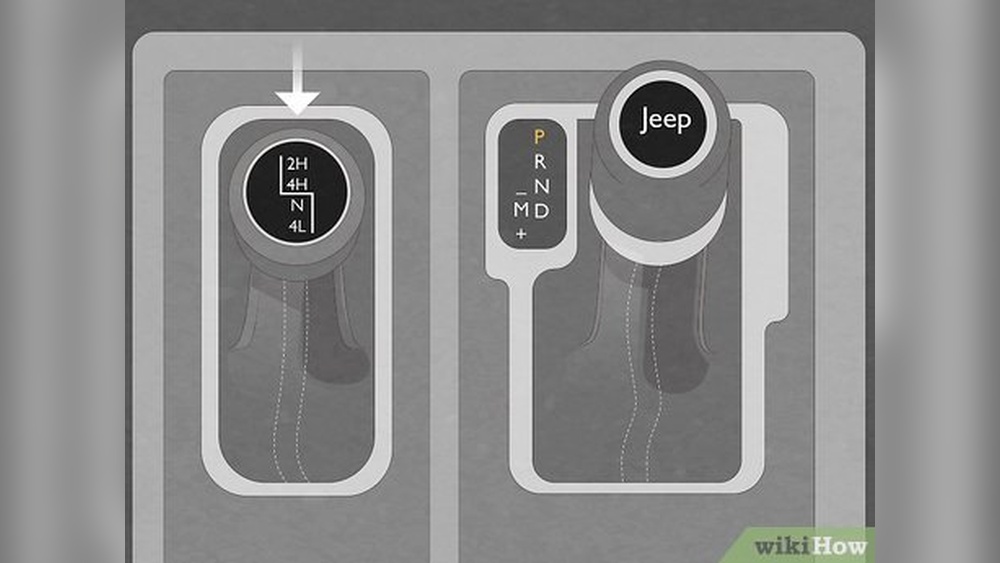
- Locate the transfer case shifter. This is usually next to the main gear shifter. It may be a lever or, in newer models, an electronic switch.
- For 4H (4 High):
- Keep your Jeep moving under 55 mph.
- Take your foot off the accelerator.
- Pull the transfer case shifter from 2H to 4H. You may feel a slight change, but it’s usually smooth.
- Resume driving—your Jeep is now in 4×4.
- For 4L (4 Low):
- Stop your Jeep completely.
- Shift the main transmission into Neutral.
- Firmly move the transfer case shifter from 4H to 4L.
- Wait for the 4×4 indicator light to confirm engagement.
- Shift back to Drive and move slowly.
- To return to 2H:
- For 4H, simply shift back while moving.
- For 4L, come to a stop, shift into Neutral, then move the shifter back to 4H or 2H.
Older models may require more force or a slightly different technique, so check your owner’s manual for specific instructions.
When Should You Use 4×4?
Knowing when to use 4×4 is just as important as knowing how. Jeep Wranglers are built for tough conditions, but using 4×4 on the wrong surface can cause problems. Here are some examples:
- Snowy roads: Use 4H for better traction.
- Loose sand: Engage 4H to avoid getting stuck.
- Rock crawling: Switch to 4L for maximum control and torque.
- Steep hills: Use 4L to climb or descend safely.
Never use 4×4 on dry pavement—it can make steering difficult and damage the system.
Common Mistakes And How To Avoid Them
Many beginners make mistakes that can lead to expensive repairs. Here are some common errors:
- Engaging 4×4 on dry pavement: This puts stress on the drivetrain. Only use 4×4 when the wheels can slip.
- Trying to shift into 4L while moving: Always stop and shift into Neutral before going into 4L.
- Ignoring indicator lights: If the 4×4 light doesn’t come on, the system may not be fully engaged. Don’t force it—try again or check for issues.
- Not reading the manual: Different model years may have unique procedures. Always consult your manual if unsure.

Practical Tips For Smooth Shifting
- Practice in a safe area. Try engaging and disengaging 4×4 in your driveway or a parking lot before heading off-road.
- Listen for noises. Grinding or clunking can mean you’re shifting wrong. Stop and try again slowly.
- Watch your speed. Don’t shift into 4H above 55 mph, and never use 4L at high speeds.
- Don’t forget tire pressure. Off-roading often requires lower tire pressure for better grip. Remember to inflate them before returning to normal roads.
Here’s a quick overview of tire pressure and speed limits for different modes:
| Mode | Recommended Tire Pressure | Max Speed |
|---|---|---|
| 2H | 32-35 psi | No limit |
| 4H | 28-32 psi (off-road) | 55 mph |
| 4L | 20-28 psi (off-road) | 25 mph |
Real-world Examples And Data
Jeep Wrangler owners often use 4×4 for different purposes. For example, in the US, over 60% of Wrangler drivers report using 4×4 several times per year, mostly for snow and off-roading. In states with heavy snowfall, such as Colorado and Michigan, 4×4 usage is nearly double compared to warmer regions.
A non-obvious insight: engaging 4×4 regularly keeps the system lubricated and prevents rust. Many people forget to use 4×4 during dry months, which can cause problems later.
Another tip: if your Jeep has been sitting unused, drive a few miles in 4H once a month. This keeps the transfer case and axles in good condition.

Frequently Asked Questions
How Do I Know If My Jeep Is In 4×4?
Check the 4×4 indicator light on your dashboard. When you shift into 4H or 4L, the light should turn on. You may also notice a change in how the Jeep handles.
Can I Shift Into 4×4 While Driving?
You can shift from 2H to 4H while driving below 55 mph. To shift into 4L, you must stop and put the transmission in Neutral before shifting.
Is It Safe To Drive In 4×4 All The Time?
No. Only use 4×4 on slippery, loose, or uneven surfaces. Driving in 4×4 on dry pavement can damage the drivetrain and make handling difficult.
What Should I Do If My Jeep Won’t Shift Into 4×4?
Stop, shift to Neutral, and try again. If it still doesn’t work, check your owner’s manual or visit a mechanic. Sometimes, the system needs a slight movement or adjustment.
Where Can I Find More Information?
Visit the official Jeep Owner’s Manual for detailed instructions and troubleshooting tips.
Putting your Jeep Wrangler in 4×4 is simple once you know the steps and understand when to use each mode. Use these tips and data to get the most from your Jeep—whether you’re driving through snow, sand, or rocky trails. Always practice safe shifting, pay attention to your vehicle’s signals, and read your manual for specific guidance. With the right technique, you’ll enjoy all the power and control your Jeep offers.