Jeep owners love to personalize their vehicles, and one unique tradition is placing small rubber ducks on the dashboard. These Jeep ducks are more than just decorations—they’re part of a friendly culture called “Jeep Ducking.” If you drive a Jeep, you’ve probably seen ducks sitting neatly on the dash, even while the car is moving. But how do these ducks stay put, especially during turns, bumps, or when the Jeep goes off-road? Let’s explore the methods, science, and tips behind keeping Jeep ducks secure on your dashboard.
Why Do People Put Ducks On Their Jeep Dash?
Jeep ducking started in Canada in 2020 and quickly spread worldwide. Owners leave a duck on another Jeep as a sign of friendship, encouragement, or just for fun. Many drivers keep their gifted ducks on the dashboard as a badge of honor.
This simple act has created a sense of community, leading to millions of ducks exchanged and displayed.
The Challenge: Keeping Ducks In Place
Jeep dashboards are not perfectly flat. They have curves, vents, and sometimes textured surfaces. When you drive, the movement and vibration can make any object slide or tip over. The following factors affect how well ducks stay:
- Material of the duck: Most are made of rubber or silicone.
- Dashboard surface: Can be smooth or textured, sometimes sloping.
- Driving style: Off-roading and sharp turns increase movement.
- Size and weight: Larger ducks are heavier and may be more stable.
Let’s look at the most common solutions drivers use.

Methods To Secure Jeep Ducks
Jeep owners use several clever methods to keep ducks from sliding or falling. Here are the most effective ones:
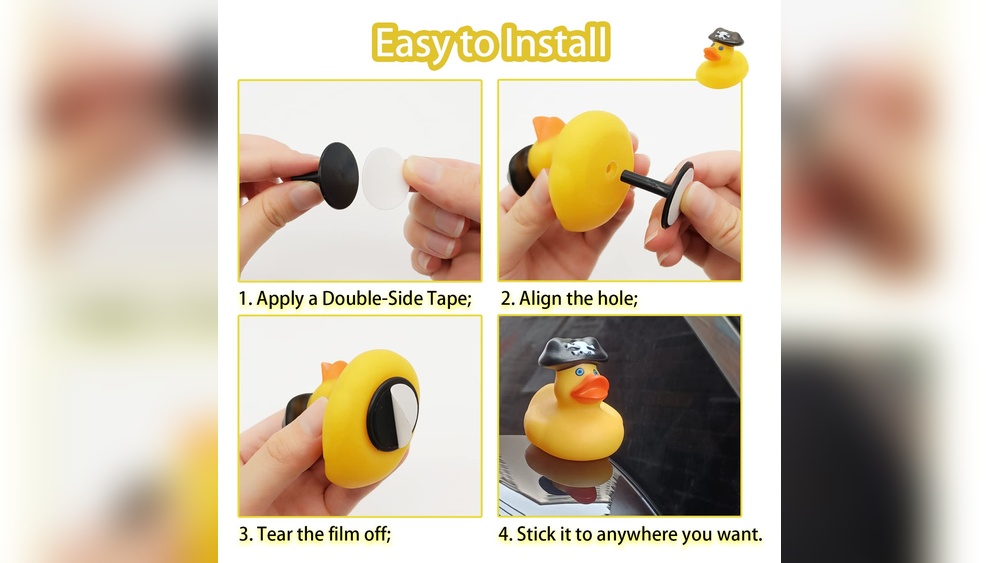
1. Using Double-sided Tape
Many people use double-sided tape to stick the duck’s base to the dash. This tape is thin, nearly invisible, and holds well even during bumpy rides. Popular brands like 3M offer automotive-grade tapes that can handle heat and sunlight.
- Pros: Reliable, easy to apply, leaves duck in place.
- Cons: May leave residue, needs replacement after some time.
2. Velcro Strips
Velcro is another favorite. One strip goes on the duck’s bottom, and the other on the dashboard. It allows you to remove and reposition the duck easily.
- Pros: Adjustable, reusable, strong grip.
- Cons: Can be visible, sometimes affects dash appearance.
3. Adhesive Putty
Some drivers use adhesive putty (like Blu Tack) to stick ducks. The putty is soft, moldable, and easy to remove without leaving marks.
- Pros: No residue, quick to use, ideal for light ducks.
- Cons: Weak grip during extreme heat or heavy motion.
4. Suction Cups
A few ducks come with suction cups at the base. If your dashboard is smooth, suction cups work well, especially for larger ducks.
- Pros: Simple, no damage, reusable.
- Cons: Only works on glass or very smooth surfaces.
5. Weighted Ducks
Some ducks are sold with weighted bases—either thicker rubber or small metal inserts. These sit firmly even on slightly sloped dashboards.
- Pros: No adhesives, easy to move.
- Cons: Not all ducks are weighted, less stable on steep surfaces.
6. Dashboard Mats
Owners sometimes place a non-slip dashboard mat and set ducks on top. These mats grip the dash and prevent objects from sliding.
- Pros: Protects dash, holds multiple ducks, easy to clean.
- Cons: Mats can shift if not fitted well.
Which Method Works Best?
Here’s a comparison of the main methods:
| Method | Grip Strength | Ease of Removal | Damage to Dash |
|---|---|---|---|
| Double-sided Tape | High | Medium | Possible Residue |
| Velcro | High | Easy | Minimal |
| Adhesive Putty | Medium | Easy | None |
| Suction Cups | Medium | Easy | None |
| Weighted Ducks | Low-Medium | Easy | None |
| Dashboard Mats | Medium | Easy | None |

Science Behind Staying Power
Rubber ducks stick better than plastic ones because rubber naturally grips surfaces. The friction between the duck’s base and the dash keeps it from sliding. Weight helps too—heavier ducks have more resistance against movement. But adhesive methods give the best stability.
Here’s a quick look at duck materials and their sticking ability:
| Material | Grip Quality | Suitability for Dash |
|---|---|---|
| Rubber | High | Best |
| Silicone | Medium | Good |
| Plastic | Low | Average |
Practical Tips For Jeep Duck Display
If you want your Jeep ducks to stay safely on your dash, consider these practical tips:
- Clean the dashboard before placing anything. Dust and oils reduce grip.
- Test different locations. Flat surfaces near the windshield work best.
- Avoid placing ducks near airbags for safety reasons.
- If using tape or Velcro, check for heat resistance.
- Rotate your ducks—change their position to avoid sun fading.
A common mistake is using regular tape, which loses stickiness quickly and leaves marks. Another is placing ducks too close to vents; airflow can move them or dry adhesives.
Real-world Examples
Many Jeep owners share their ducking stories online. Some use creative solutions like tiny magnets (if their dashboard has metal parts) or glue dots. Others make custom stands for their favorite duck. According to a survey by JeepDuck. com, about 70% of Jeep owners use adhesive products, while 20% prefer dashboard mats.
Only 10% rely on weighted ducks or suction cups. This shows most people value security over easy removal.
Safety And Legal Concerns
It’s important to keep the dashboard clear near airbags and driving controls. Some states have rules about dashboard decorations, especially for larger ducks that might block your view. Always check your local regulations, and keep ducks away from anything that could interfere with safe driving.
If you want more details on the Jeep duck tradition, visit Wikipedia.
Jeep ducking is a fun way to connect, but keeping your ducks safe and secure is key. With the right methods and a little care, you can proudly display your collection without worry.
Frequently Asked Questions
How Many Jeep Ducks Can You Safely Display On Your Dashboard?
You can usually display 3–5 Jeep ducks without blocking your view or interfering with controls. Always leave space near airbags and vents.
Will Adhesives Damage My Dashboard?
High-quality, automotive-grade adhesives rarely damage dashboards, but cheap tapes may leave sticky residue. Test on a small area first.
Do Dashboard Mats Work For All Ducks?
Most non-slip mats hold light and medium-sized ducks, but heavy ducks may slide if the mat isn’t grippy enough. Choose mats designed for automotive use.
Can Jeep Ducks Withstand Extreme Heat?
Rubber and silicone ducks can handle most temperatures, but adhesives may weaken in high heat. Velcro and dashboard mats are more reliable in hot climates.
Is Jeep Ducking Legal Everywhere?
Decorating with Jeep ducks is legal in most places, but larger decorations that block your view may violate traffic laws. Check your local regulations before adding many ducks.
Jeep ducking is a joyful tradition, and with the right techniques, your ducks will stay secure and visible for everyone to enjoy.