The Jeep Grand Cherokee 3. 6 is a popular SUV, known for its reliability and strong performance.
One of the most important parts under the hood is the serpentine belt. This belt keeps many engine accessories running, like the alternator, power steering pump, and air conditioner.
If the serpentine belt fails, your Jeep can quickly lose power or stop working. Knowing the layout and function of the serpentine belt is key for maintenance and repairs.
In this article, you’ll find a clear diagram explanation, step-by-step guidance, and tips that most beginners overlook.
What Is The Serpentine Belt?
The serpentine belt is a long, winding rubber belt. It wraps around several pulleys in the engine. Instead of having separate belts for each engine accessory, the serpentine belt powers them all at once. For the Jeep Grand Cherokee 3.6, this means one belt controls the alternator, air conditioning compressor, power steering pump, and more.
A worn or broken serpentine belt can cause:
- Loss of power steering
- Battery not charging
- Engine overheating
- Air conditioner failing
It’s important to inspect this belt regularly. Most belts last between 60,000 to 100,000 miles, but extreme heat or rough driving can shorten this lifespan.
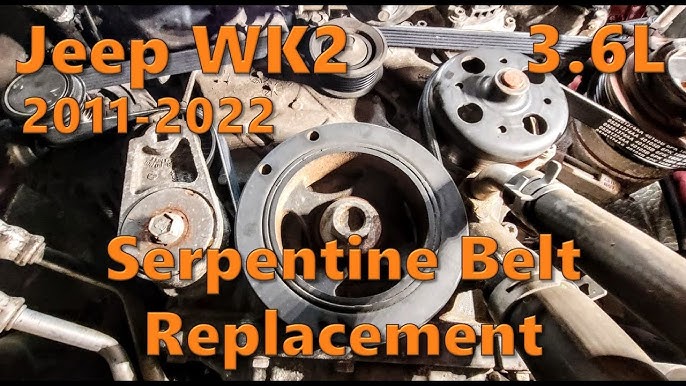
Jeep Grand Cherokee 3.6 Serpentine Belt Diagram
Understanding the serpentine belt routing is vital, especially if you plan to change it yourself. The diagram shows how the belt snakes around each pulley. Here are three items you must know about:
1. Belt Routing And Pulley Locations
The belt follows a specific path across multiple pulleys. Missing a step can cause engine damage or improper function.
| Pulley Name | Location | Function |
|---|---|---|
| Crankshaft Pulley | Bottom center | Drives the belt |
| Alternator Pulley | Top left | Charges battery |
| Power Steering Pump Pulley | Top right | Power steering |
| AC Compressor Pulley | Lower right | Air conditioning |
| Idler Pulley | Middle | Keeps tension |
| Tensioner Pulley | Middle left | Adjusts belt tension |
The diagram usually starts at the crankshaft pulley, then moves up to the alternator, across to the power steering pump, down to the AC compressor, and finally winds back to the idler and tensioner pulleys. Always double-check your vehicle’s manual or look for the sticker under the hood.
2. Tensioner Operation And Replacement
The tensioner pulley keeps the serpentine belt tight. If the tensioner fails, the belt can slip or fall off. Most beginners forget to check this part when replacing the belt.
Signs of a bad tensioner:
- Squeaking or chirping noises
- Belt looks loose or wobbly
- Engine accessories not working
To replace the tensioner:
- Locate the tensioner (usually near the alternator).
- Use a wrench to turn the tensioner and release belt tension.
- Remove the old belt.
- Check the tensioner for smooth movement.
- Install the new belt, making sure it follows the correct diagram.
Here’s a simple comparison table for tensioner types:
| Type | Ease of Replacement | Common Problems |
|---|---|---|
| Spring-loaded | Easy | Spring weakens |
| Hydraulic | Medium | Leaks, slow movement |
| Manual | Hard | Needs adjustment |
For the Jeep Grand Cherokee 3.6, a spring-loaded tensioner is most common.
3. Correct Belt Installation Steps
Installing the serpentine belt correctly is critical. Missing a pulley or twisting the belt can cause serious damage. Here’s how to do it:
- Make sure the engine is cool.
- Draw or take a photo of the belt routing diagram before removal.
- Remove the old belt using the tensioner.
- Inspect all pulleys for wear or dirt.
- Place the new belt over the crankshaft pulley first.
- Follow the diagram, wrapping the belt around each pulley in order.
- Use the tensioner to finish installation.
- Double-check that the belt sits in the grooves and matches the diagram.
Common mistakes beginners make:
- Forgetting to check the tensioner and idler pulleys
- Installing the belt backwards (wrong routing)
- Not checking for cracks or fraying on the new belt
If you ever feel unsure, ask a professional or check the official Jeep guide. You can find more details at Jeep Official Site.
Practical Tips And Insights
Most people overlook these useful tips:
- Always replace the tensioner and idler pulleys with the belt. Old pulleys can cause new belts to wear faster.
- After installing, run the engine for a few minutes and listen for odd noises.
- If your belt squeaks after installation, it may be too tight or too loose.
- Use quality belts. Cheap belts often stretch or crack sooner.
Another insight: If your Jeep’s engine bay is dirty, clean it before starting. Dirt and oil can make the belt slip. Also, use gloves—serpentine belts can be tough on your hands.
Data: Belt Failure Statistics
Serpentine belt failure is one of the most common reasons for roadside breakdowns. According to AAA, nearly 20% of engine failures are related to belt issues. For the Jeep Grand Cherokee, regular maintenance can reduce the risk by more than 80%.
Here’s a quick comparison of belt life expectancy:
| Driving Conditions | Average Belt Life | Recommended Inspection Interval |
|---|---|---|
| Normal | 80,000 miles | 20,000 miles |
| Hot climate | 60,000 miles | 15,000 miles |
| Heavy towing | 50,000 miles | 10,000 miles |

Frequently Asked Questions
<!– wp:rank-math/faq-block {"questions":[{"id":"faq-question-3c3a708c2165","title":"How Do I Know If My Serpentine Belt Needs Replacing?","content":"If you hear squeaks, see cracks, or notice engine accessories failing, check the belt. Replace it if it looks worn or damaged.
“,”visible”:true},{“id”:”faq-question-989b53e97363″,”title”:”Can I Drive With A Broken Serpentine Belt?”,”content”:”No. A broken belt means your alternator, power steering, and air conditioning will stop working. It can also cause engine overheating.
“,”visible”:true},{“id”:”faq-question-38f81d9df63d”,”title”:”What Tools Do I Need For Serpentine Belt Replacement?”,”content”:”You’ll need a wrench or socket set, gloves, and possibly a belt routing diagram. Some models require a special tensioner tool.
“,”visible”:true},{“id”:”faq-question-31749ba0cc58″,”title”:”How Much Does It Cost To Replace The Serpentine Belt On A Jeep Grand Cherokee 3.6?”,”content”:”The average cost for parts and labor is $80-$200. Doing it yourself can save money, but always buy a quality belt.
“,”visible”:true},{“id”:”faq-question-8cde069fd0c0″,”title”:”Where Can I Find The Correct Serpentine Belt Diagram?”,”content”:”Check under the hood for a sticker, your owner’s manual, or visit the Jeep Official Site for diagrams and guides.
Keeping your Jeep Grand Cherokee 3.6’s serpentine belt in good shape means fewer breakdowns and better performance. With the right diagram and tools, you can handle maintenance confidently. If you ever feel unsure, don’t hesitate to seek help from a trusted mechanic.
“,”visible”:true}]} –>How Do I Know If My Serpentine Belt Needs Replacing?
If you hear squeaks, see cracks, or notice engine accessories failing, check the belt. Replace it if it looks worn or damaged.
Can I Drive With A Broken Serpentine Belt?
No. A broken belt means your alternator, power steering, and air conditioning will stop working. It can also cause engine overheating.
What Tools Do I Need For Serpentine Belt Replacement?
You’ll need a wrench or socket set, gloves, and possibly a belt routing diagram. Some models require a special tensioner tool.
How Much Does It Cost To Replace The Serpentine Belt On A Jeep Grand Cherokee 3.6?
The average cost for parts and labor is $80-$200. Doing it yourself can save money, but always buy a quality belt.
Where Can I Find The Correct Serpentine Belt Diagram?
Check under the hood for a sticker, your owner’s manual, or visit the Jeep Official Site for diagrams and guides.
Keeping your Jeep Grand Cherokee 3.6’s serpentine belt in good shape means fewer breakdowns and better performance. With the right diagram and tools, you can handle maintenance confidently. If you ever feel unsure, don’t hesitate to seek help from a trusted mechanic.