Jeep owners know that the front suspension is the heart of their vehicle’s ride and off-road ability. Whether you drive a classic Wrangler or a newer Grand Cherokee, understanding the parts and layout of the front suspension makes a big difference.
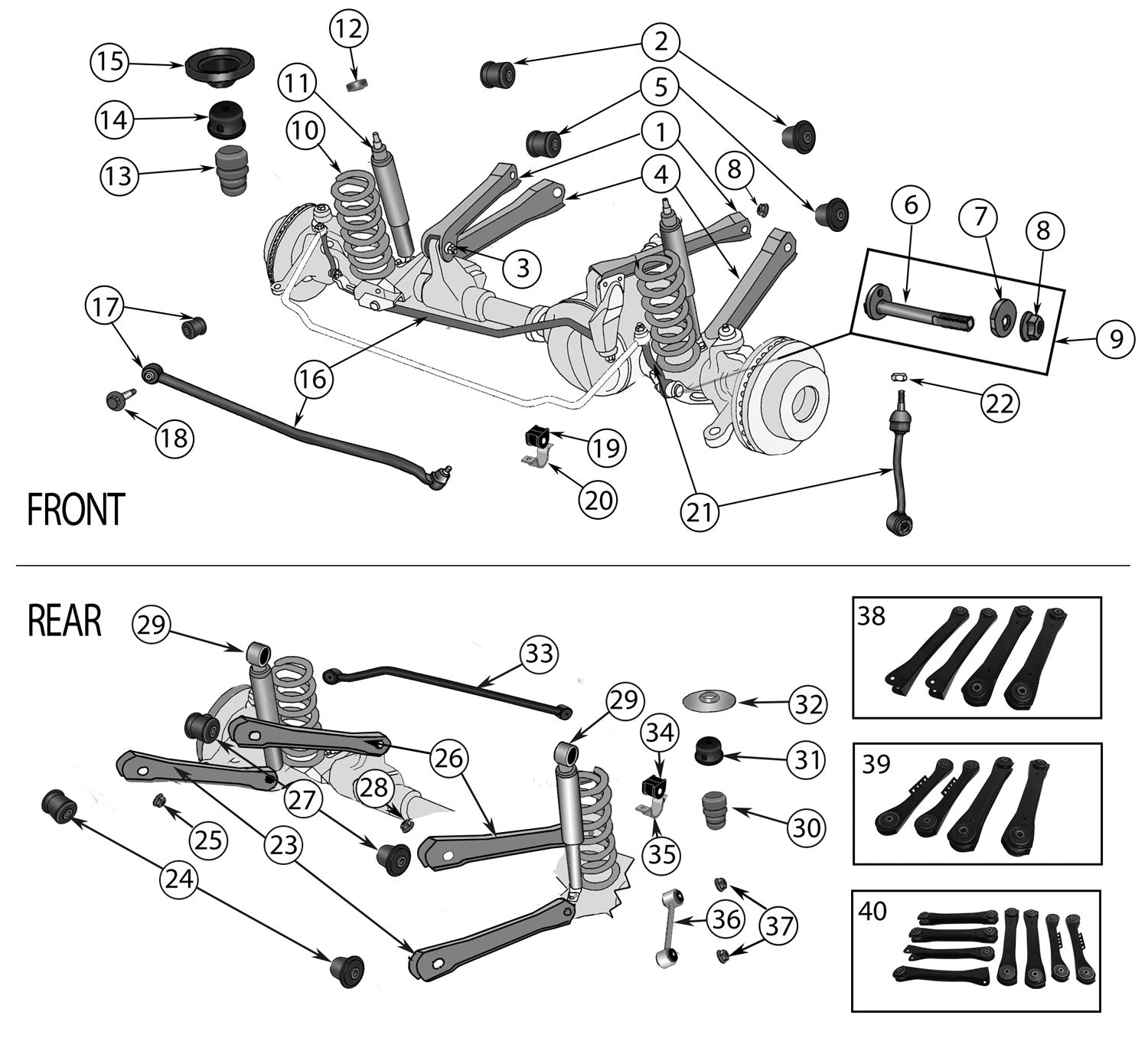
It can help you diagnose problems, choose upgrades, and keep your Jeep riding smoothly for years. In this guide, you’ll get a clear overview of the Jeep front suspension diagram, the main components, and why each part matters.
Jeep Front Suspension: The Basics
The front suspension in most Jeeps is either a solid axle or an independent system. Classic models like the Wrangler (TJ, JK, JL) use a solid axle, which is tough and great for off-road use. Many newer models, such as the Grand Cherokee, use independent front suspension (IFS) for a smoother on-road ride. The diagram for each system looks different, but both share key parts.
Key Components In A Jeep Front Suspension Diagram
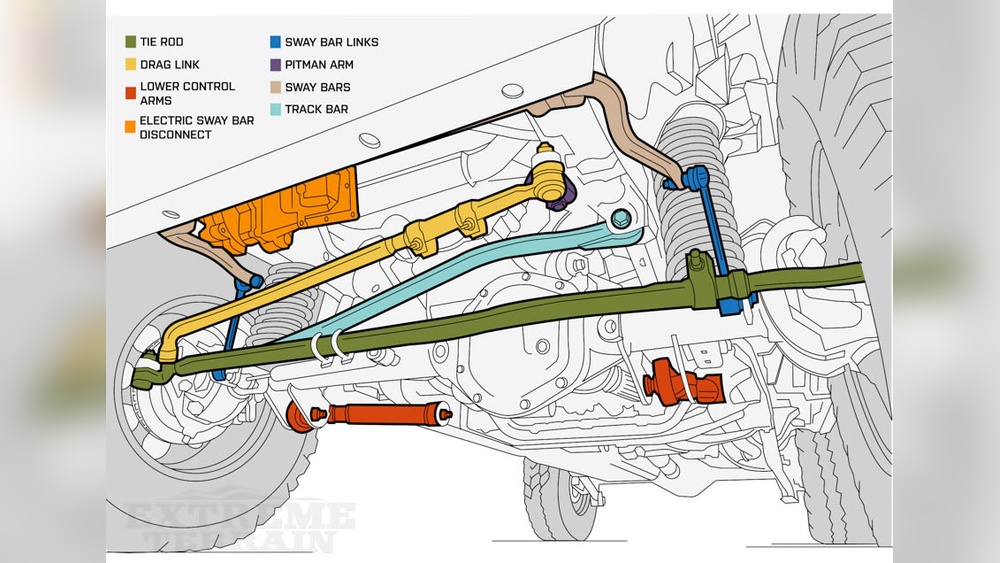
- Axle housing
- Coil springs or torsion bars
- Shock absorbers
- Control arms (upper and lower)
- Track bar (panhard rod)
- Steering knuckle
- Ball joints
- Sway bar
- Tie rod
- Drag link
Each part connects and interacts to absorb bumps, support the vehicle, and allow the wheels to move up and down while keeping the ride stable.
Solid Axle Vs. Independent Front Suspension
To understand your Jeep’s front suspension, it helps to compare the two main designs.
| Feature | Solid Axle | Independent Front Suspension (IFS) |
|---|---|---|
| Ride Comfort | Rougher | Smoother |
| Off-road Strength | Very High | Moderate |
| Articulation | Excellent | Limited |
| Common Models | Wrangler, Gladiator | Grand Cherokee, Cherokee |
Solid axles are easy to lift and modify for off-roading. IFS offers better handling on highways but can be more complex to repair.
Main Parts Explained
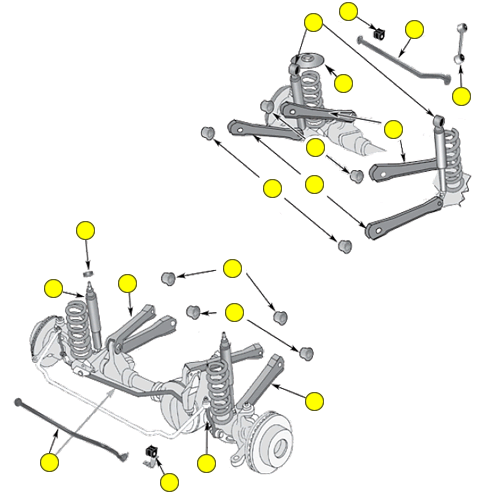
Let’s break down the main components you’ll see in a Jeep front suspension diagram and what each one does.
Axle Housing
The axle housing supports the wheels and holds the differential. In solid axles, this is one fixed piece from left to right. In IFS, each wheel has its own half-shaft.
Coil Springs Or Torsion Bars
Coil springs are the most common in Jeeps. They absorb bumps and support the vehicle’s weight. Some IFS models use torsion bars instead, which twist to give a similar effect.
Shock Absorbers
Shock absorbers control the up-and-down motion. Without them, your Jeep would bounce out of control after every bump.
Control Arms
Control arms keep the axle or wheels centered and allow for up-and-down movement. Solid axle setups have upper and lower control arms; IFS uses arms for each wheel.
Track Bar (panhard Rod)
The track bar keeps the axle from moving side-to-side. If it’s worn, you’ll feel loose steering or “death wobble.”
Steering Knuckle And Ball Joints
The steering knuckle connects the wheel hub to the suspension. Ball joints let it turn left and right with the steering.
Sway Bar
The sway bar links the left and right sides of the suspension. It reduces body roll on corners, making your Jeep safer at speed.
Tie Rod And Drag Link
These parts connect the steering box to the wheels. The tie rod controls both wheels, while the drag link goes from the steering box to one wheel.
Jeep Front Suspension Diagram Example
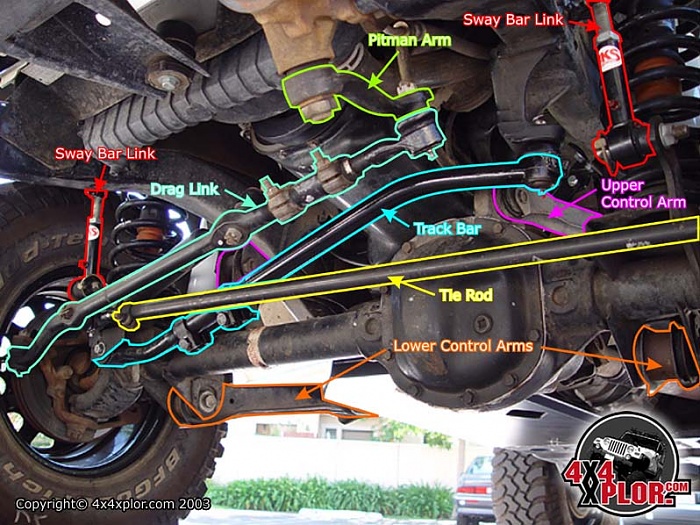
Seeing a diagram helps everything make sense. Here’s a simple layout for a solid axle Jeep:
| Part | Location | Main Function |
|---|---|---|
| Coil Spring | Above axle, left and right | Support vehicle weight |
| Shock Absorber | Near coil spring | Dampen movement |
| Track Bar | Across axle, diagonal | Prevent side-to-side movement |
| Upper Control Arm | Above axle to frame | Center and locate axle |
| Lower Control Arm | Below axle to frame | Support and guide axle |
| Sway Bar | Front crossmember to axle | Reduce body roll |
| Steering Knuckle | Ends of axle | Connects wheel hub |
IFS diagrams look more complex, with each wheel having its own control arms and half-shafts.
Common Problems And What To Watch For
Many Jeep owners notice issues like death wobble, uneven tire wear, or clunking noises. These often come from worn track bars, control arm bushings, or ball joints. If your steering feels loose or you hear a knock over bumps, it’s time to check these parts.
A less obvious problem is sagging coil springs. Over time, the Jeep’s front end can droop, hurting both ride height and alignment. Replacing springs can restore the original ride.
Another point beginners miss: upgrading only one component (like just the shocks) rarely solves ride or handling issues. The suspension works as a system, so balance is key.
Upgrading Your Jeep’s Front Suspension
If you want better off-road performance or a smoother ride, consider these upgrades:
- Heavy-duty control arms: Stronger and longer-lasting, especially for lifted Jeeps.
- Adjustable track bar: Keeps the axle centered after a lift.
- Performance shocks: Improve comfort and control.
- Quick-disconnect sway bar links: Let you remove the sway bar off-road for better articulation.
Remember, lifting your Jeep changes angles and stresses. After any suspension changes, get a professional alignment and check all bolts and bushings.
Real-world Example: Wrangler Jk Front Suspension
The Wrangler JK (2007-2018) uses a solid front axle with coil springs and four control arms. Many owners lift their JK for off-road use, which often leads to steering and alignment problems if not done correctly.
| Component | Stock JK | Lifted JK |
|---|---|---|
| Track Bar | Fixed length | Often needs adjustable |
| Control Arms | Factory length | May need longer or adjustable |
| Driveshaft Angle | Factory correct | Can require adjustment |
Many beginners miss that even a small lift can change the way suspension and steering linkages work. Always check for interference or binding after a lift.
Frequently Asked Questions
<!– wp:rank-math/faq-block {"questions":[{"id":"faq-question-689bbb4913a4","title":"What Is The Purpose Of The Track Bar In A Jeep Front Suspension?","content":"The track bar keeps the axle aligned under the Jeep, stopping it from moving side to side. Without it, steering would feel loose, and the vehicle could become unstable.
“,”visible”:true},{“id”:”faq-question-2918988e3d5f”,”title”:”How Do I Identify Worn Suspension Components?”,”content”:”Look for clunking noises, uneven tire wear, or vibrations. You can also lift the Jeep and check for play in the ball joints, control arms, and track bar.
“,”visible”:true},{“id”:”faq-question-9e11a2559761″,”title”:”Can I Upgrade Just One Part Of My Jeep’s Suspension?”,”content”:”You can, but it’s best to upgrade parts together for balance. For example, upgrading shocks without stronger control arms might not give the best results.
“,”visible”:true},{“id”:”faq-question-eabd961c7254″,”title”:”How Often Should I Check My Jeep’s Suspension?”,”content”:”Check it every oil change if you drive off-road often. Otherwise, inspect every 10,000 miles or at least once a year.
“,”visible”:true},{“id”:”faq-question-e7435de0d6f4″,”title”:”Where Can I See A Detailed Jeep Front Suspension Diagram Online?”,”content”:”You can find clear diagrams and explanations on the official Jeep Maintenance page.
Understanding your Jeep’s front suspension is more than just looking at a diagram—it’s about knowing how each part affects your drive. With this knowledge, you can keep your Jeep safe, reliable, and ready for any adventure.
“,”visible”:true}]} –>What Is The Purpose Of The Track Bar In A Jeep Front Suspension?
The track bar keeps the axle aligned under the Jeep, stopping it from moving side to side. Without it, steering would feel loose, and the vehicle could become unstable.
How Do I Identify Worn Suspension Components?
Look for clunking noises, uneven tire wear, or vibrations. You can also lift the Jeep and check for play in the ball joints, control arms, and track bar.
Can I Upgrade Just One Part Of My Jeep’s Suspension?
You can, but it’s best to upgrade parts together for balance. For example, upgrading shocks without stronger control arms might not give the best results.
How Often Should I Check My Jeep’s Suspension?
Check it every oil change if you drive off-road often. Otherwise, inspect every 10,000 miles or at least once a year.
Where Can I See A Detailed Jeep Front Suspension Diagram Online?
You can find clear diagrams and explanations on the official Jeep Maintenance page.
Understanding your Jeep’s front suspension is more than just looking at a diagram—it’s about knowing how each part affects your drive. With this knowledge, you can keep your Jeep safe, reliable, and ready for any adventure.