If you own a Jeep Wrangler, knowing how to use the 4×4 system is key to unlocking its full potential. Whether you’re tackling slippery roads, climbing over rocks, or driving through mud, engaging the right 4×4 mode can make all the difference.
But if you’re not sure when or how to switch between 2WD, 4WD High, and 4WD Low, you might not be getting the most out of your Jeep—or worse, you could damage it. This guide will walk you through exactly how to use the 4×4 on your Jeep Wrangler, step by step.
By the end, you’ll feel confident handling any terrain with ease and keeping your Jeep in perfect shape. Ready to take control? Let’s dive in.
Jeep 4×4 Basics
The Jeep Wrangler’s 4×4 system helps you drive on tough roads and rough terrain. It sends power to all four wheels to improve traction. This makes driving safer and easier on dirt, mud, snow, and rocks.
Understanding how the 4×4 works is important. Knowing when and how to use each mode keeps your Jeep running well. It also prevents damage to the drivetrain. Here are some basics to get started with your Jeep’s 4×4 system.
Types Of 4×4 Systems
Jeep Wranglers use part-time 4×4 systems. This means you switch between two-wheel drive (2WD) and four-wheel drive (4WD). The system has high and low gear ranges. The low range gives more power at slower speeds.
Some Wranglers have Command-Trac or Rock-Trac systems. Both offer 4WD with different gear ratios for off-road strength. These systems let you choose the best setting for the road or trail.
When To Use 4wd Modes
Use 2WD on dry, smooth roads to save fuel and reduce wear. Switch to 4 High (4H) when roads are wet, snowy, or slippery. It gives better traction without losing speed.
Use 4 Low (4L) for slow, tough driving. This mode works best on steep hills, deep mud, or rocky paths. It gives maximum power and control at low speeds.
Differences Between 4h And 4l
4 High (4H) is for moderate off-road conditions. It keeps your speed steady and shares power evenly to all wheels. Use it on gravel, light mud, or snow.
4 Low (4L) reduces speed but boosts torque. It helps climb steep slopes or pull heavy loads. Use 4L only at low speeds and in rough terrain. Shifting into 4L usually requires stopping or slowing down.
Engaging 4×4 On Jeep Wrangler
The Jeep Wrangler’s 4×4 system offers powerful traction for tough terrain. Engaging the 4×4 properly ensures better control and safety. Understanding how to use each mode helps optimize your driving experience.
Use the 4×4 High for slippery roads and light off-road conditions. Switch to 4×4 Low for steep climbs, deep sand, or mud. Neutral mode is for safe towing and vehicle recovery.
Shifting Into Four-wheel Drive High
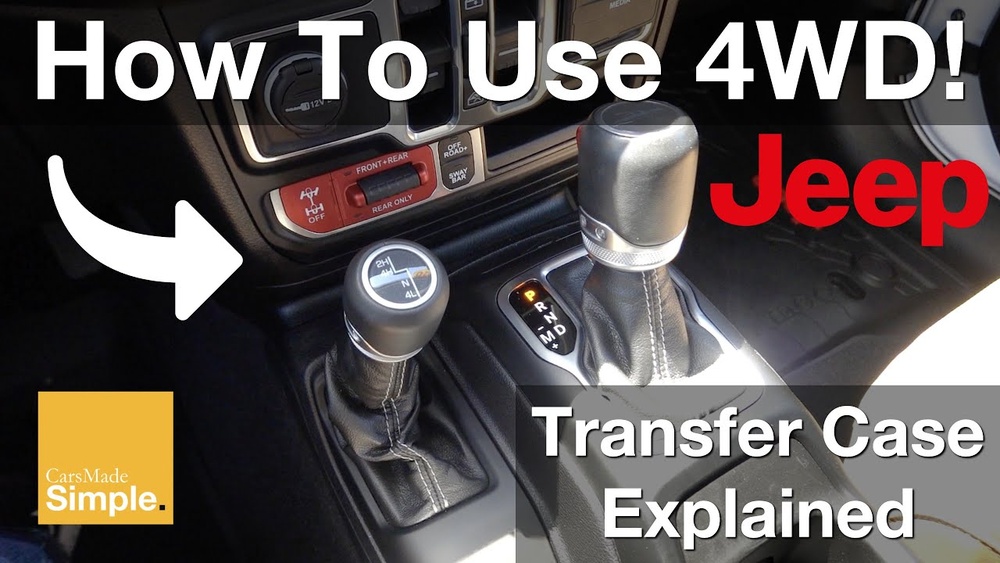
Shift into 4×4 High while driving under 55 mph. Simply move the transfer case lever from 2H to 4H. The system will engage front and rear wheels for better traction. Use 4H on wet, snowy, or gravel roads for added grip.
Activating Four-wheel Drive Low
Stop the Jeep or drive slowly below 5 mph. Shift the transmission into neutral. Move the transfer case lever from 4H to 4L. This setting delivers maximum torque and power at low speeds. Use 4L for rock crawling, deep mud, or steep hills.
Using Neutral For Towing And Recovery
Put the transfer case in Neutral to disconnect the drivetrain. This allows safe towing without damaging the transmission. Use Neutral mode when recovering a stuck Jeep with a winch or tow strap. Always follow manufacturer guidelines for towing distances and methods.
Off-road Techniques
Off-road driving with a Jeep Wrangler requires specific techniques to handle rough terrain safely and effectively. Using the 4×4 system correctly helps maintain traction and control. Understanding how to approach mud, sand, hills, and rocky paths improves your off-road experience. Each type of terrain demands different skills and adjustments to your driving style. Practice these techniques to navigate challenging environments with confidence.
In mud and sand, traction is limited. Engage four-wheel drive to distribute power evenly. Keep your speed steady and avoid sudden acceleration. Use low gear to maintain control and prevent wheel spin. Avoid sharp turns that can dig your wheels deeper. If you start to slip, gently ease off the accelerator. Always follow existing tracks to reduce the risk of getting stuck.
Climbing And Descending Hills
Use four-wheel drive low for climbing steep hills. Maintain a slow, steady speed to avoid losing traction. Keep your wheels pointed straight uphill. Avoid sudden braking or acceleration on the ascent. When descending, shift to four-wheel drive low for better control. Use engine braking by keeping the vehicle in gear. Apply light, steady brake pressure to prevent sliding. Choose a path with the most stable surface for better grip.
Crossing Rocks And Obstacles
Approach rocks and obstacles slowly in four-wheel drive low. Use a spotter to guide you over difficult sections if possible. Place your wheels carefully to avoid damage to the undercarriage. Keep steady throttle input to maintain momentum without spinning wheels. Use a low gear to control speed and power. Avoid sudden movements that may cause loss of balance. Take your time and stay focused on each step forward.
Maintaining Traction
Maintaining traction is key for safe and effective driving in rough or slippery conditions. Your Jeep Wrangler’s 4×4 system helps power all wheels, but proper traction depends on several factors. Adjusting tire pressure, using locking differentials, and avoiding wheel spin all play important roles. These steps keep your Jeep steady and improve control on tough terrains.
Tire Pressure Adjustments
Lowering tire pressure increases the tire’s contact with the ground. This provides better grip on loose surfaces like sand or mud. Check your Jeep’s manual for recommended pressures for off-road use. Avoid dropping pressure too low, as it can damage tires or wheels. Inflate tires back to normal levels before driving on pavement.
Using Locking Differentials
Locking differentials force both wheels on an axle to turn at the same speed. This helps keep traction when one wheel slips. Engage the lockers only when needed, such as in deep mud or rocks. Driving with lockers on dry pavement can cause tire wear and driveline damage. Learn how to activate them smoothly for the best results.
Avoiding Wheel Spin
Wheel spin wastes power and reduces traction. Apply throttle gently and steadily to avoid spinning wheels. If a wheel begins to spin, ease off the gas to regain control. Use low-range 4×4 for slow, controlled power delivery on difficult surfaces. Keeping traction steady prevents getting stuck and preserves vehicle parts.
Safety Tips For 4×4 Use
Using the 4×4 system on your Jeep Wrangler can enhance your driving experience and safety. It helps in tough terrains and slippery conditions. Still, proper safety practices are crucial. Follow these tips to stay safe and protect your vehicle.
Driving At Appropriate Speeds
Drive slower than usual when using 4×4. Rough surfaces and loose soil reduce traction. High speeds increase the risk of losing control. Adjust your speed to match road and weather conditions. Smooth, steady driving helps maintain grip and vehicle stability.
Understanding Vehicle Limits
Know your Jeep Wrangler’s capabilities and limits. Avoid overloading the vehicle or pushing it beyond design. Steep hills, deep mud, and water crossings require caution. Recognize when terrain is too dangerous to proceed. Respecting these limits prevents accidents and vehicle damage.
Emergency Recovery Gear
Carry essential recovery tools on every trip. Items like a tow strap, shovel, and jack can help in emergencies. A winch is useful for self-recovery in tough spots. Keep a first-aid kit and flashlight within reach. Being prepared ensures you can handle unexpected situations safely.

Common Mistakes To Avoid
Using the 4×4 system on your Jeep Wrangler can greatly improve your off-road experience. Avoiding common mistakes helps protect your vehicle and ensures smooth driving. Many drivers make simple errors that can cause damage or reduce performance. Understanding what to avoid keeps your Jeep running well and safe.
Using 4l On Dry Pavement
4L or 4 Low is for slow, tough terrain like mud or rocks. Using 4L on dry pavement can harm your Jeep’s drivetrain. It causes extra stress on parts and can lead to costly repairs. Always switch back to 2H or 4H on regular roads. Avoid turning sharply or speeding in 4L on dry surfaces.
Shifting 4×4 At High Speeds
Shifting into 4×4 mode at high speeds can damage the transfer case. The best practice is to slow down before changing modes. Some Jeep models allow shifting at low speeds but never do it when driving fast. Sudden shifts can cause jerks, loss of control, or mechanical failure. Always follow the recommended speed guidelines for safe shifting.
Ignoring Vehicle Feedback
Your Jeep gives signals when something is wrong with the 4×4 system. Strange noises, vibrations, or warning lights need attention. Ignoring these signs can worsen problems and lead to breakdowns. Pay close attention to how your Jeep feels and sounds. Early maintenance saves money and keeps your off-road adventures smooth.
Jeep Wrangler 4×4 Maintenance
Maintaining the 4×4 system of a Jeep Wrangler ensures it performs well on tough terrains. Regular care helps avoid costly repairs and keeps the vehicle reliable. This section covers key maintenance tasks to protect your Jeep’s drivetrain.
Checking Transfer Case Fluid
The transfer case shifts power between front and rear axles. Checking its fluid level is vital. Low or dirty fluid can cause damage and poor performance. To check, park on level ground and remove the fill plug. The fluid should reach the bottom of the hole. Use the manufacturer’s recommended type and replace fluid every 30,000 miles or as stated in your manual.
Inspecting Drive Shafts And Axles
Drive shafts and axles transfer power to wheels. Inspect them for dents, cracks, or rust. Look at the CV boots for tears or leaks. Damaged boots let dirt enter and cause joint failure. Grease joints regularly and replace worn parts immediately. This keeps your Jeep’s 4×4 system working smoothly and prevents breakdowns off-road.
Routine 4×4 System Tests
Test your 4×4 system often to catch problems early. Shift between 2WD and 4WD modes on dry pavement to check engagement. Listen for unusual noises or vibrations. Test both high and low range gears. A smooth shift means the system is healthy. Early testing prevents unexpected failures during off-road adventures.

Frequently Asked Questions
How Do I Turn On 4×4 On My Jeep Wrangler?
To turn on 4×4 in your Jeep Wrangler, slow down, shift to neutral, then move the transfer case lever to 4H or 4L.
When Should I Use 4h Or 4l?
Use 4H for driving on slippery surfaces at normal speeds, like snow or gravel. Use 4L for low-speed, tough terrain requiring maximum torque, such as steep hills or deep mud.
Is It Okay To Switch From 4h To 2h While Driving?
Yes, you can switch from 4H to 2H while driving at low to moderate speeds. Slow down and shift smoothly.
Do I Put My Jeep In 4h Or 4l For Snow?
Use 4H (four-high) for driving on snowy roads at normal speeds. Use 4L (four-low) only for deep snow or steep, slippery terrain requiring maximum torque.
Conclusion
Using the 4×4 on a Jeep Wrangler improves your control on tough roads. Shift carefully between modes to match the terrain. Remember to slow down and keep your Jeep steady. Practice in safe areas to gain confidence and skill. Proper use helps avoid damage and keeps you safe.
Enjoy your off-road adventures with better traction and handling. Keep these tips in mind for a smooth ride every time.