Few things scare Jeep owners more than the death wobble. If your steering wheel shakes violently at high speeds or after hitting a bump, you know the feeling. This guide explains why death wobble happens, how to fix it, and how to prevent it in the future. Whether you own a Jeep Wrangler, Cherokee, or another Jeep model, you’ll learn everything you need to get your vehicle safe and stable again.
What Is Death Wobble?
The term death wobble describes a sudden, strong shaking of the front wheels and steering. It usually happens at speeds over 40 mph, especially after hitting a pothole or rough road. The steering wheel moves back and forth rapidly, and the whole vehicle feels unstable.
Death wobble is not just annoying—it’s dangerous. It can make you lose control of your Jeep, especially in traffic or on highways. The problem affects solid front axle Jeeps most, like the Wrangler (TJ, JK, JL), but it can happen to other models too.
Common Symptoms
- Violent steering wheel shake
- Front end vibration
- Vehicle pulls left or right
- Noise from suspension
- Loss of control feeling
Death wobble is often confused with normal vibrations, but it’s much stronger and feels like the Jeep is coming apart. If you experience it, stop driving until you fix the cause.
Main Causes Of Jeep Death Wobble
Understanding the root causes is essential before fixing death wobble. The problem is usually not just one part—it’s a combination of worn or loose components.
Key Factors
1. Loose Track Bar
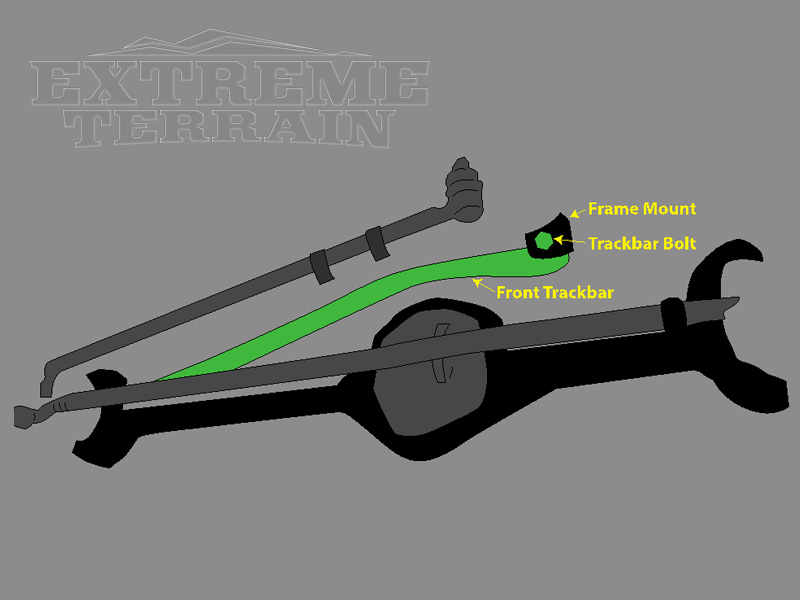
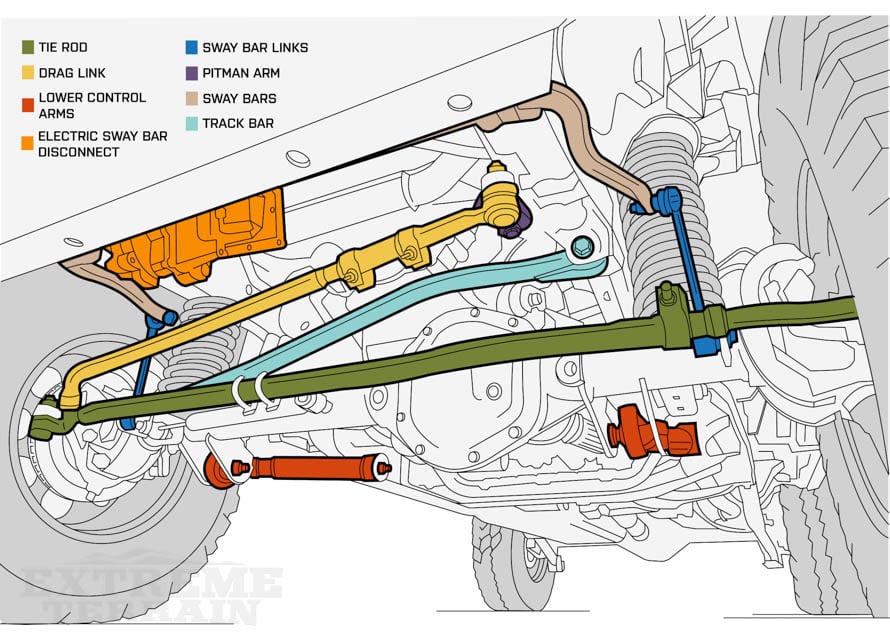
The track bar connects your axle to the frame. If its bolts are loose or bushings are worn, the axle moves side-to-side, causing wobble.
2. Worn Ball Joints
Ball joints allow your wheels to turn smoothly. When they wear out, steering becomes unstable.
3. Bad Tie Rod Ends
Tie rods connect your steering system. Worn ends create slack and make the wobble worse.
4. Faulty Steering Stabilizer
The stabilizer (shock absorber) helps control the steering. If it’s leaking or weak, vibrations increase.
5. Old Suspension Bushings
Bushings cushion the suspension. When they crack or get soft, parts move too much.
6. Improper Wheel Alignment
Wrong alignment means the tires don’t point straight, increasing stress and vibration.
7. Bent Wheels Or Tires
Damaged or unbalanced tires and wheels can trigger death wobble.
8. Lift Kits And Aftermarket Parts
If you lifted your Jeep or added non-stock parts, the geometry may be wrong, causing wobble.
Comparison Table: Most Common Causes
| Cause | Percentage of Cases | Repair Cost (USD) |
|---|---|---|
| Loose Track Bar | 40% | $80–$300 |
| Worn Ball Joints | 25% | $200–$600 |
| Bad Tie Rod Ends | 15% | $120–$400 |
| Faulty Steering Stabilizer | 10% | $50–$150 |
| Other/Multiple Issues | 10% | $100–$800 |
Most cases involve more than one issue. Fixing just one part may not solve the problem.
How To Fix Death Wobble In Jeep
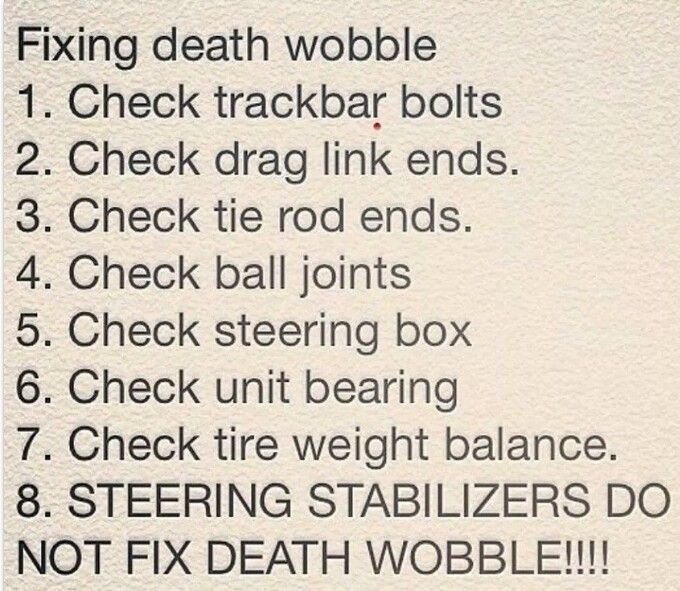
Solving death wobble means checking and repairing several parts. Here’s a step-by-step plan for beginners.
Step 1: Inspect The Track Bar
Start with the track bar. It’s the most common cause.
- Check both ends for looseness.
- Tighten bolts to factory specs (usually 85–125 ft-lbs).
- Inspect bushings. If cracked or soft, replace them.
Pro Tip: Use a torque wrench. Loose bolts can look tight but cause wobble.
Step 2: Examine Ball Joints
Lift the Jeep and shake the tire top-to-bottom. If you feel movement, the ball joints may be worn.
- Look for grease leaks or play.
- Replace if needed. OEM ball joints cost about $50–$100 each.
Insight: Cheap aftermarket ball joints wear out faster. Use quality parts for long-term stability.
Step 3: Check Tie Rod Ends
With the Jeep lifted, move the tire side-to-side. Excess play means the tie rod ends are bad.
- Inspect all tie rods and drag links.
- Replace worn parts. Expect $120–$400 total for parts and labor.
Step 4: Inspect Steering Stabilizer
Remove the steering stabilizer and test by compressing it. If it moves easily or leaks, replace it.
- New stabilizers cost $50–$150.
- Don’t rely on the stabilizer alone. It hides problems—it doesn’t fix them.
Step 5: Inspect Suspension Bushings
Look for split, dry, or mushy bushings in the control arms and track bar. Replace damaged bushings.
Step 6: Check Wheel Alignment
Incorrect alignment causes tire wear and wobble.
- Get a professional alignment. Cost: $80–$150.
- Ask for “toe-in” adjustment for stability.
Step 7: Inspect Wheels And Tires
Look for bent wheels or uneven tires.
- Balance all tires.
- Replace any damaged wheels or tires.
Step 8: Review Lift Kit Or Aftermarket Parts
Lifted Jeeps can develop death wobble if the suspension angles are wrong.
- Check that the track bar and drag link are parallel.
- Use drop brackets or adjustable parts if needed.
Repair Steps Table: Difficulty And Cost
| Repair Step | Skill Level | Time Needed | Cost Range (USD) |
|---|---|---|---|
| Track Bar Tightening | Beginner | 30 min | $0–$50 |
| Ball Joint Replacement | Intermediate | 2–4 hrs | $200–$600 |
| Tie Rod End Replacement | Intermediate | 1–2 hrs | $120–$400 |
| Steering Stabilizer Change | Beginner | 20 min | $50–$150 |
| Wheel Alignment | Professional | 1 hr | $80–$150 |
Preventing Death Wobble
Once you fix death wobble, you want to keep it away. Regular maintenance is key.
Tips For Prevention
- Check bolts monthly. Suspension bolts loosen over time, especially after off-roading.
- Inspect bushings and joints every oil change.
- Balance tires regularly. Unbalanced tires increase vibration.
- Avoid cheap aftermarket parts. They may not fit right or last long.
- Get alignment after any suspension change. Even small lifts can affect geometry.
Practical Example
After installing a lift kit, Joe noticed a mild vibration. He checked the track bar and found loose bolts. Tightening them stopped the wobble. Later, he replaced old bushings and got an alignment. No more death wobble.
Pros And Cons Of Fixing Death Wobble Yourself
If you’re handy with tools, you can fix death wobble at home. But there are risks.
Pros
- Save money on labor
- Learn about your Jeep
- Quick fixes for minor issues
Cons
- Tools needed (torque wrench, ball joint press)
- Time consuming for beginners
- Risk of missing hidden problems
- Some repairs need professional alignment
If you’re unsure, it’s safer to let a mechanic handle complex repairs.
Cost Breakdown: Fixing Death Wobble
Fixing death wobble can be affordable, or expensive, depending on the parts involved.
- Track bar tightening: Free if DIY, $50 at shop
- Ball joint replacement: $200–$600 (parts + labor)
- Tie rod ends: $120–$400
- Steering stabilizer: $50–$150
- Wheel alignment: $80–$150
- Bushings: $40–$120
Most Jeep owners spend $250–$850 to solve death wobble, depending on severity.
Non-obvious Insights
- Death wobble can return after repairs if you don’t fix all causes. For example, tightening the track bar works, but worn bushings can trigger wobble again weeks later.
- Lifted Jeeps are more likely to get death wobble. Always check the angles and parallelism of track bar and drag link after installing lift kits.
Jeep Models Most Affected
Wrangler models with solid front axles are most at risk. The JL, JK, and TJ are common. Cherokees (XJ) also get wobble, but less often.
Jeep Death Wobble Frequency Table
| Jeep Model | Wobble Frequency | Notes |
|---|---|---|
| Wrangler JK | High | Most common after lift kits |
| Wrangler JL | Medium | Improved steering, but still at risk |
| Cherokee XJ | Medium | Solid axle design |
| Wrangler TJ | High | Older suspension, frequent wobble |
| Grand Cherokee | Low | Less common, mostly on lifted versions |
When To See A Mechanic
If your Jeep still wobbles after tightening and replacing basic parts, or if you’re unsure about alignment, see a professional. Some repairs, like ball joint replacement, need special tools and experience.
Look for shops with Jeep experience. They can spot issues quickly and prevent future problems.
Useful Resources
For deep technical details and more advice, visit the Death Wobble Wikipedia page. It covers the mechanical causes and history.
Short Conclusion
Death wobble in Jeep is serious, but fixable. Start with the track bar, inspect steering and suspension, and check alignment. Most cases need a mix of repairs. Regular maintenance and quality parts help prevent it from coming back. If you’re not confident, ask a professional mechanic.
Your Jeep will be safer and more enjoyable to drive.
Frequently Asked Questions
What Is Jeep Death Wobble?
Death wobble is a violent shaking of the steering and front wheels at speed, usually after hitting a bump. It makes the Jeep feel unstable and is caused by loose or worn suspension and steering parts.
Can I Drive With Death Wobble?
It’s unsafe to drive with death wobble. Stop your Jeep and fix the problem before driving again. It can lead to loss of control and accidents.
How Much Does It Cost To Fix Death Wobble?
Costs range from $250 to $850 for most repairs. It depends on which parts are worn and if you do the work yourself or hire a mechanic.
Does A Steering Stabilizer Fix Death Wobble?
A steering stabilizer may reduce vibrations, but it does not solve death wobble by itself. You must fix the root cause—loose or worn suspension parts.
Are Lifted Jeeps More Likely To Get Death Wobble?
Yes, lifted Jeeps often have changed suspension angles, which increases the risk. Always check geometry and get alignment after installing lift kits.
—
Meta Title: How To Fix Death Wobble In Jeep: Causes, Solutions & Prevention
Meta Description: Learn how to fix death wobble in Jeep. Step-by-step guide covers causes, repair options, costs, prevention tips, and FAQs for Jeep Wrangler, Cherokee & more.