How To Shift Jeep Wrangler Into 4wd: Easy Guide For Beginners
A Jeep Wrangler is famous for its off-road power and strong 4WD system. But if you’re new to driving a Wrangler, shifting into 4WD can feel confusing. Many beginners worry about damaging their vehicle or getting stuck because they use the wrong method. The good news? Shifting into 4WD is simple once you know how.
This guide will show you exactly how to shift a Jeep Wrangler into 4WD, explain the different 4WD modes, and share important tips and warnings. You’ll also learn about the pros and cons of using 4WD, real-world examples, and common mistakes to avoid.
By the end, you’ll feel confident using your Jeep’s full abilities—whether you’re on snowy roads or rocky trails.
Understanding Jeep Wrangler 4wd Systems
Before shifting, it’s important to know what type of 4WD system your Jeep Wrangler has. Jeep offers a few different systems, and each works a bit differently.
Part-time 4wd Vs. Full-time 4wd
Most Jeep Wranglers use a part-time 4WD system, but some have a full-time 4WD option.
| 4WD Type | Description | Best Use |
|---|---|---|
| Part-Time 4WD | Driver selects 2WD, 4WD High, or 4WD Low | Off-road, snow, mud, sand |
| Full-Time 4WD | Always active, can be used on any surface | Mixed driving, changing conditions |
Part-time 4WD is not for dry pavement. Using it on dry roads can cause damage because all wheels turn at the same speed. Full-time 4WD uses a center differential, so you can leave it on all the time.
4wd Modes Explained
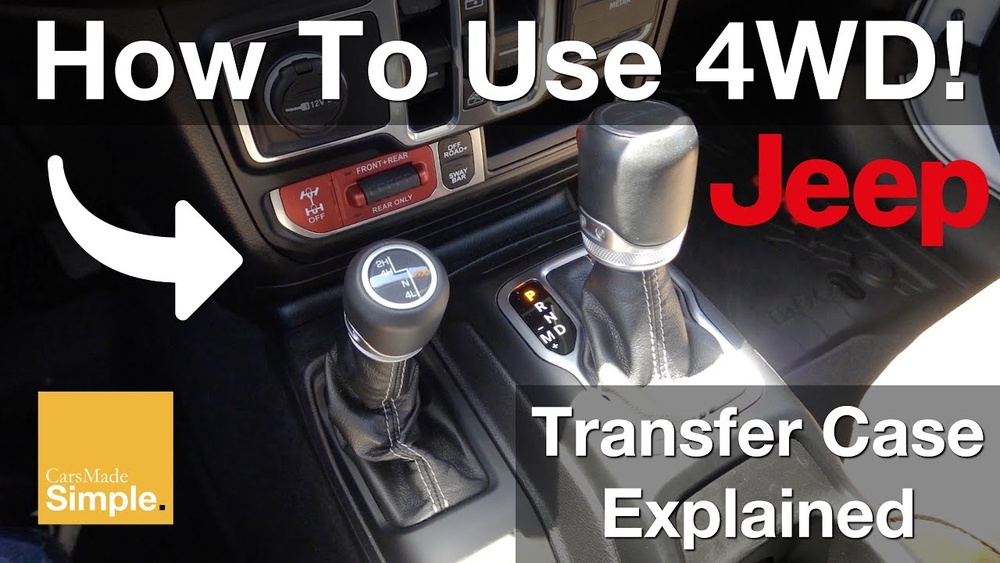
Most Jeep Wranglers have these main settings on the transfer case lever:
- 2H (Two-Wheel Drive High): Normal driving, rear wheels only.
- 4H (Four-Wheel Drive High): For slippery or loose surfaces, up to highway speeds.
- N (Neutral): Disconnects the drivetrain, used for towing.
- 4L (Four-Wheel Drive Low): For maximum traction, low-speed crawling.
Some newer models with the Selec-Trac system may also have 4WD Auto.
When Should You Shift Into 4wd?
Knowing when to use 4WD is just as important as knowing how. Using the right mode protects your Jeep and gives better control.
- Use 4H when driving on snow, loose gravel, sand, or muddy roads.
- Use 4L for steep hills, deep mud, or rocky terrain—any place where you need slow, strong power.
- Stay in 2H for dry, paved roads.
Key insight: Many beginners try to use 4WD on dry pavement. This can cause driveline binding and expensive repairs. Always shift back to 2H as soon as you’re back on clear, dry roads.

How To Shift Jeep Wrangler Into 4wd: Step-by-step
Let’s get practical. Here’s how to shift most Jeep Wranglers into 4WD. (Always check your owner’s manual for your model’s details. )
Shifting From 2h To 4h (high)
You can shift from 2H to 4H while driving, as long as you’re going below about 45 mph (72 km/h).
- Ease off the gas: Take your foot off the accelerator.
- Keep the Jeep rolling: Stay under 45 mph. Slower is better if you’re new.
- Firmly pull the 4WD lever: Move it straight from 2H to 4H. You may feel a slight bump.
- Gently press the gas: Keep driving as normal.
That’s it! The 4WD indicator light should come on.
Tip: If the lever feels stuck, shift to neutral, then try again.
Shifting From 4h To 4l (low)
4L is for rough, slow, off-road driving. You must stop the Jeep before shifting.
- Stop the vehicle: Let the wheels stop turning.
- Shift to neutral: Put the transmission in N (automatic) or press the clutch (manual).
- Pull the lever from 4H to 4L: Use a steady motion. You may hear a click.
- Shift back to drive (or 1st gear): Begin moving slowly.
Never shift into 4L while moving fast. This can damage the transfer case.
Going Back To 2h
When the rough section ends:
- Stop or slow down: Under 45 mph.
- Shift from 4H or 4L to 2H: Use the lever.
- Return to drive: Keep moving.
If you just finished using 4L, always stop and shift to neutral before returning to 2H.
Example: Real-world Shifting
Suppose you’re driving on a paved road that turns to deep gravel. As the road gets loose, slow down and shift to 4H. If you reach a steep, muddy hill, stop, shift to neutral, and move the lever to 4L.
When you return to the main road, shift back to 2H to protect your Jeep.
Tips For Using 4wd Safely
Using 4WD is not just about shifting. Here are important safety tips:
- Shift before you’re stuck: If you wait until you’re stuck, it’s harder for 4WD to help.
- Avoid sharp turns: In 4WD, turning sharply can stress the drivetrain.
- Do not use 4WD on dry pavement: This is a common mistake and can break expensive parts.
- Check the indicator light: If the 4WD light does not come on, the system may not be engaged.
Non-obvious insight: After using 4L, some drivers notice a clunk or resistance when returning to 2H. This is normal but should not be extreme. If you hear grinding, have your Jeep checked.
Common Mistakes To Avoid
Many new Jeep owners make these errors:
- Forgetting to shift back to 2H: This increases tire wear and fuel use.
- Shifting too fast: Forcing the lever can damage gears. Always use steady pressure.
- Using 4L at high speed: 4L is only for slow driving—never use it above 25 mph.
- Ignoring strange noises: Grinding or loud clunks mean something is wrong.
Comparing Jeep 4wd With Other Brands
How does the Wrangler’s 4WD system compare to other SUVs? Here’s a quick look:
| Vehicle | 4WD Type | Max Speed in 4H | Low Range (4L) |
|---|---|---|---|
| Jeep Wrangler | Part-Time/Full-Time | 45 mph | Yes |
| Toyota 4Runner | Part-Time | 55 mph | Yes |
| Ford Bronco | Full-Time/Advanced | 55 mph | Yes |
| Honda CR-V | AWD | Always On | No |
Insight: Not all SUVs offer a true low range (4L) like the Wrangler. This is one reason Jeep is so popular with off-road fans.
Pros And Cons Of Using 4wd In Your Jeep Wrangler
Understanding the benefits and drawbacks helps you use 4WD wisely.
Pros
- Better traction: Handles snow, mud, and off-road obstacles.
- More control: Makes steep hills and rough trails safer.
- Increases Jeep’s value: 4WD is a key selling point.
Cons
- Worse fuel economy: Using 4WD uses more gas.
- Increased tire wear: Tires wear faster in 4WD.
- Possible damage: Using 4WD incorrectly can break parts.
Cost Of Repairs
If you misuse 4WD, repairs can be expensive. Common costs include:
- Transfer case repair: $1,000–$2,500
- Driveline repair: $500–$1,500
- Tire replacement: $500–$1,200 for a set
Tip: Use 4WD only when needed to avoid these costs.
How To Tell If 4wd Is Working
Many beginners are unsure if 4WD is really engaged. Here’s how to check:
- Look for the 4WD light: It should appear on your dashboard.
- Feel the steering: Turning feels tighter in 4WD.
- Listen for sounds: You may hear a light clunk as 4WD engages.
- Test on loose ground: All wheels should spin if you press the gas.
If the light does not appear or your Jeep drives the same as in 2H, 4WD might not be working. Have a mechanic check it.

Table: Quick Reference For Shifting Modes
Here’s a handy summary for shifting your Jeep Wrangler:
| Mode | How to Shift | When to Use | Speed Limit |
|---|---|---|---|
| 2H | Default | Dry pavement | Any |
| 4H | Shift on the fly (below 45 mph) | Snow, gravel, mud | 45 mph |
| 4L | Stop, shift to neutral, then shift | Steep hills, deep mud | 25 mph |
Practical Tips For First-time Jeep Owners
- Practice in a safe area: Try shifting in an empty parking lot or dirt road before going off-road.
- Read your manual: Every Jeep model is a little different. Some have electronic levers.
- Use 4WD regularly: Engaging 4WD every month keeps parts lubricated.
- Check your tires: Uneven tire size can cause problems in 4WD.
- Ask for help: If you’re unsure, join a Jeep club or ask a mechanic for a demo.
Non-obvious tip: Some Wranglers have a “shift delay” when moving from 4H to 4L. Wait a few seconds after moving the lever for everything to engage.
Useful Resources
For more technical details on Jeep Wrangler 4WD systems, see the official Jeep Wrangler Wikipedia page.
Frequently Asked Questions
1. Can I Shift My Jeep Wrangler Into 4wd While Driving?
Yes, you can shift from 2H to 4H while moving as long as your speed is under 45 mph. For 4L, always stop the vehicle and shift to neutral first.
2. Is It Ok To Leave My Wrangler In 4wd All The Time?
No. Only use part-time 4WD on slippery or loose roads. Keeping it in 4WD on dry pavement can damage the drivetrain. If you have full-time 4WD, you can leave it on.
3. What Should I Do If My 4wd Won’t Engage?
First, check if you’re following the steps correctly—speed, transmission in neutral, etc. If the 4WD light does not come on, try again. If it still fails, have a mechanic inspect the system.
4. What Is The Difference Between 4h And 4l?
4H is for normal off-road or slippery driving at higher speeds. 4L is for slow, extreme conditions like rocks or deep mud. 4L gives more power but less speed.
5. Will Using 4wd Improve My Jeep’s Fuel Economy?
No, 4WD uses more fuel. Only use it when needed for extra traction.
Shifting your Jeep Wrangler into 4WD is one of the best ways to unlock its power and adventure. With the right steps and a little practice, you can switch modes safely and enjoy everything your Jeep has to offer. Use these tips, avoid common mistakes, and your Wrangler will be ready for any road or trail that comes your way.