Every Jeep owner faces this question sooner or later: Are all Jeep lug patterns the same? If you plan to upgrade your wheels, swap tires, or buy aftermarket rims, knowing your Jeep’s lug pattern is essential.
Many people think all Jeeps use the same bolt pattern, but the truth is more complex. Understanding these differences can save you time, money, and headaches when shopping for wheels.
What Is A Lug Pattern?
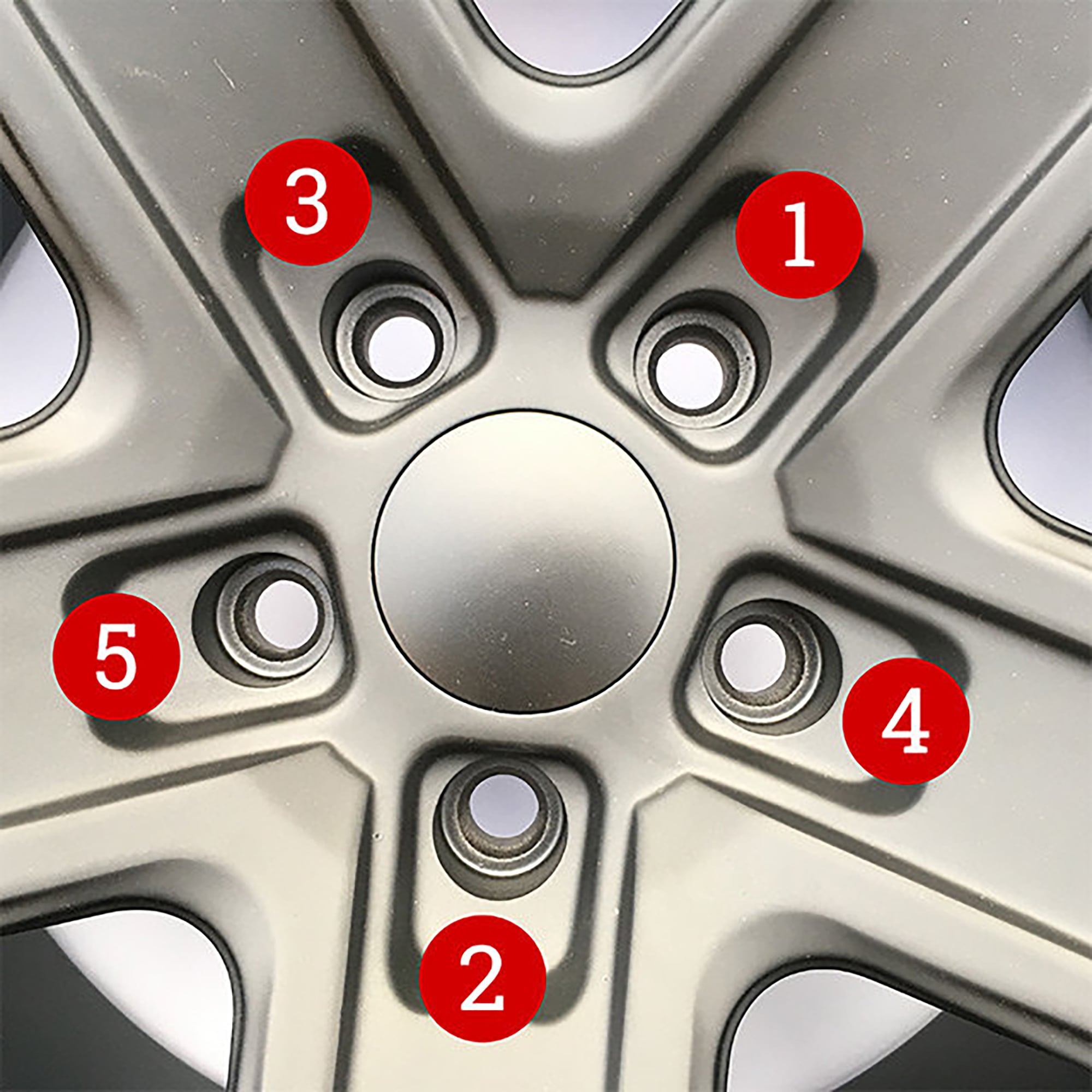
A lug pattern, also called a bolt pattern, is the arrangement of the bolts on a vehicle’s wheel hub. It’s described using two numbers: the number of lug holes and the diameter of the circle they form. For example, “5×114.3” means five lug holes arranged in a circle with a diameter of 114.3 millimeters.
Why does this matter? Wheels must match your Jeep’s lug pattern to fit properly. Even a small difference makes a wheel unusable or unsafe.
Jeep Lug Patterns Through The Years
Jeep vehicles have a rich history, and their lug patterns have changed over time. Let’s look at some common Jeep models and their typical bolt patterns.
| Jeep Model | Years | Lug Pattern |
|---|---|---|
| Wrangler (YJ/TJ) | 1987-2006 | 5×4.5″ (5×114.3 mm) |
| Wrangler (JK/JL) | 2007-present | 5×5″ (5×127 mm) |
| Cherokee (XJ) | 1984-2001 | 5×4.5″ (5×114.3 mm) |
| Grand Cherokee | 1999-2010 | 5×5″ (5×127 mm) |
| Gladiator (JT) | 2020-present | 5×5″ (5×127 mm) |
As you can see, there isn’t a single universal lug pattern for all Jeeps. Even similar models can have different patterns depending on the year.
Why Lug Patterns Change
Jeep engineers change lug patterns for several reasons:
- Safety improvements: Larger, stronger bolts can support heavier vehicles and bigger tires.
- Design upgrades: New axle or brake systems may require a different hub and bolt pattern.
- Market demand: Some patterns are more popular, making it easier to find aftermarket wheels.
For example, the move from a 5×4.5″ to a 5×5″ pattern in the Wrangler JK (2007+) allowed for larger brakes and better off-road performance.
How To Find Your Jeep’s Lug Pattern
If you’re not sure about your Jeep’s lug pattern, here are some ways to find it:
- Check your owner’s manual. Manufacturers usually list the bolt pattern in the specifications.
- Look online. Many sites list lug patterns by year and model.
- Measure yourself. Use a ruler or tape measure. For a 5-lug wheel, measure from the center of one lug to the outer edge of the second lug, skipping one lug in between.
- Ask a professional. Tire shops and dealerships can tell you the correct pattern.
A common mistake is confusing wheel size with bolt pattern. Make sure you’re measuring the circle through the lug holes, not the rim size.
Common Jeep Lug Patterns Compared
Here’s a quick comparison of the two most popular Jeep bolt patterns:
| Bolt Pattern | Common Models | Typical Years |
|---|---|---|
| 5×4.5″ (5×114.3 mm) | Wrangler YJ/TJ, Cherokee XJ | 1984-2006 |
| 5×5″ (5×127 mm) | Wrangler JK/JL, Grand Cherokee, Gladiator | 2007-present |
Notice how the switch happened around 2007 for the Wrangler. This is a detail many new Jeep owners miss.
Swapping Wheels Between Jeep Models
Some drivers hope to swap wheels between different Jeep models. This can work if the bolt pattern, center bore, and offset match. However, not all wheels are interchangeable. For example, wheels from a 2005 Wrangler (5×4.5″) won’t fit a 2018 Wrangler JL (5×5″) without adapters.
Adapters can help, but they add cost and complexity. More importantly, using the wrong wheels can lead to vibrations or even dangerous failures. Always double-check all measurements before swapping.
Two Non-obvious Insights
- Center bore size matters: Even if the bolt pattern matches, the wheel’s center hole must fit snugly over the hub. Some Jeep wheels have a different center bore, so mixing and matching can cause issues.
- Offset affects handling: The wheel offset (distance from hub mounting surface to centerline) changes how far wheels stick out. The wrong offset can make steering feel odd or stress the suspension.
These details often surprise new Jeep owners who focus only on bolt patterns.
Practical Tips When Buying Jeep Wheels
- Always confirm year, model, and trim before shopping.
- If buying used wheels, check for cracks or bends, especially around bolt holes.
- Don’t rely on seller claims—measure or verify yourself.
- If using spacers or adapters, choose high-quality brands to avoid safety risks.
- Keep in mind that mixing steel and alloy wheels on the same axle is not recommended.
For more technical wheel fitment details, you can refer to the Wikipedia: Wheel stud pattern page.
Frequently Asked Questions
What Does “5×5” Mean In Jeep Lug Patterns?
5×5 means the wheel has five lug bolts arranged in a circle with a diameter of five inches (127 mm). This is a common pattern for newer Wranglers and Grand Cherokees.
Can I Use Wheels From An Old Cherokee On A New Wrangler?
Usually not. Most old Cherokees use a 5×4.5″ pattern, while new Wranglers use 5×5″. The wheels will not fit without adapters.
Do All Jeep Wranglers Have The Same Lug Pattern?
No. For example, YJ and TJ Wranglers (1987–2006) use 5×4.5″, while JK and JL Wranglers (2007–present) use 5×5″. Always check your model’s year.
Is It Safe To Use Wheel Adapters?
Adapters can work if installed correctly and made from quality materials. However, they may add stress to your wheel bearings and should only be used when necessary.
How Do I Measure My Jeep’s Lug Pattern?
For a 5-lug pattern, measure from the center of one lug hole to the outer edge of the second lug hole, skipping one. Use inches or millimeters for accuracy.
Whether you’re upgrading for style or off-road performance, knowing your Jeep’s lug pattern is a must. Double-check your specs, pay attention to details like center bore and offset, and don’t hesitate to seek expert advice. This way, you’ll keep your Jeep safe—and looking great—on any adventure.